Introduction
Choosing between DX53D Galvalume Steel Coil and AZ150 Galvalume Steel Coil can determine the longevity, thermal reflectivity, and cost-efficiency of your roofing projects in 2025. This concise guide, tailored for operators, procurement and technical evaluators, compares performance, pricing and application scenarios — from lightweight roofing to heavy-duty cladding — and highlights how suppliers like Shandong Hongteng Fengda Metal Materials Co. Ltd. meet diverse needs and support related products such as Galvanized Steel Wire Rope. Whether you prioritize upfront cost, corrosion resistance or installation ease, read on to decide which coil best suits your project requirements.
In large-scale construction and industrial roofing procurement, decision-makers, quality-control staff and installation teams need concise technical guidance that balances metallurgical facts with practical on-site considerations. This introduction frames the key concerns: substrate grade and formability (for example DX53D and similar cold-rolled grades), coating type and mass (AZ150 and other aluminum-zinc coatings), expected service life under specific exposure (urban, coastal, industrial), thermal reflectivity for energy efficiency, and total installed cost including ancillary items such as H-beam supports, Z-beam purlins, and fasteners. For infrastructure projects that also require hoisting, anchorage or safety equipment, coordination with supply of items such as Galvanized Steel Wire Rope 1470Mpa to 1960Mpa and Hot dipped Galvanized Steel Wire Rope is common, so procurement teams should evaluate the full bill of materials rather than isolate coil price alone.
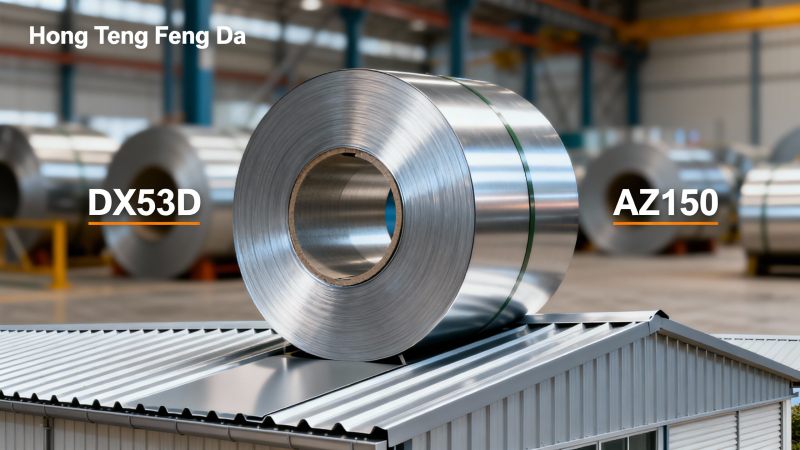
This guide targets a wide professional audience: users/operators who must handle and form coils on-site, technical evaluators who test coating adhesion and salt-spray performance, procurement professionals negotiating coating weights and delivery terms, project managers and engineers specifying load-bearing members like H-beam and Z-beam, and after-sales/service teams responsible for maintenance. Throughout the article we reference industry-relevant standards, coating mass conventions, practical installation notes and lifecycle cost considerations to help you choose between DX53D Galvalume Steel Coil and AZ150 Galvalume Steel Coil with confidence.
Material and Coating: Understanding DX53D vs AZ150
A correct technical comparison begins by separating substrate designation from coating specification. DX53D is a substrate grade commonly used for cold-rolled steel coils; it denotes a base steel optimized for formability and drawing, which matters when roofing profiles require tight bends or deep embossing. In contrast, AZ150 denotes an aluminum-zinc alloy coating with a nominal total coating mass of approximately 150 g/m² (combined both sides), which is a way manufacturers quantify corrosion protection. When specifiers say “DX53D Galvalume Steel Coil,” they are typically referring to a DX53D substrate that has been coated with an aluminum‑zinc alloy (often meeting industry references such as ASTM A792 / EN 10346 equivalents), while “AZ150 Galvalume” highlights the coating mass and expected durability.
From a mechanical perspective DX53D offers excellent formability and consistent tensile properties suitable for most roofing profiles and flashings; it reduces cracking during bending and punching operations compared with higher-strength cold-rolled grades. For roofing fabricators and installers, this means fewer rejects and faster roll-forming throughput when producing trapezoidal sheets or standing-seam panels. Meanwhile, the AZ150 coating provides a specific corrosion barrier performance: its aluminum-rich matrix with zinc sacrificial properties slows corrosion processes and improves cut-edge protection compared to pure zinc coatings at similar mass levels.
When evaluating performance, teams should require supplier test data such as salt spray (neutral salt spray/ASTM B117) comparative hours to failure, cut-edge corrosion behavior, and coating adhesion post-forming. A DX53D substrate with an AZ150 coating typically balances ease of fabrication with enhanced corrosion resistance and solar reflectivity. That said, coating thickness tolerance, passivation or paint systems, and pre-treatment (e.g., chromate passivation, phosphate) influence final system performance; these details are often decisive in coastal or industrial exposures where chloride or sulfur compounds accelerate corrosion.
Corrosion Resistance, Thermal Performance and Life-Cycle Expectations
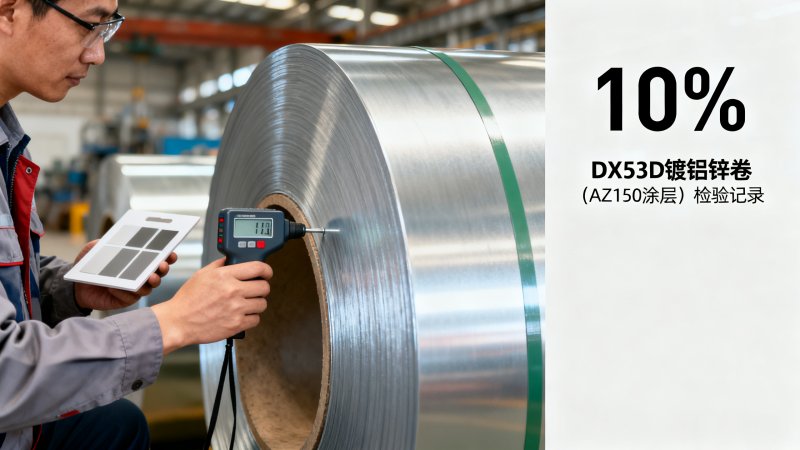
For roofing, the relevant metric is not only initial coating mass but how that coating performs over time in the project’s microclimate. AZ150 Galvalume Steel Coil is specified because the 150 g/m² coating mass (approximate) delivers a predictable service life under a wide range of conditions: urban, suburban and many rural sites. In moderate inland environments, an AZ150 system over a DX53D substrate can provide decades of useful life before serious perforation, especially when combined with a paint system or additional passivation. Thermal reflectivity of aluminum-rich coatings is also superior to standard hot-dipped galvanized finishes; higher reflectivity reduces heat gain for non-insulated roofs and contributes to building energy performance.
Quantifying life-cycle advantage: specifiers should request accelerated corrosion testing and reflectance measurements. Typical lab results show Galvalume surfaces retain higher solar reflectance and emissivity values compared with bare zinc coatings, which reduces roof substrate temperature and can lower HVAC loads. In high-chloride coastal environments or heavily polluted industrial zones, AZ150 performs better than lower coating masses, but project teams should still consider painted systems or thicker coatings and periodic maintenance. Combining AZ150 coated coils with appropriate drainage, flashings and compatible fasteners reduces crevice corrosion risk — an important detail when using accessories such as Hot diped-Galvanized Pipe and Galvanized Steel Wire Rope for rooftop safety systems or suspended loads.
Corrosion resistance is not an absolute guarantee; fastener selection, profile design, water retention, and rooftop chemicals (acids, cleaners) affect longevity. Hence, life-cycle cost models should include initial coil price, forming yield, painting or PVDF finish costs, maintenance intervals, and expected replacement cycle. In many projects, the improved durability and reflectivity of an AZ150-coated DX53D coil justify a modest premium versus uncoated or lower-mass alternatives.
Cost, Procurement and On-Site Practicalities
Procurement decisions hinge on both unit price per ton and total installed cost. DX53D Galvalume Steel Coil is typically priced based on substrate thickness, coil width, coating mass (AZ grade), and surface finish (skin-passed, oiled, pre-painted). When comparing DX53D Galvalume Steel Coil to an explicitly specified AZ150 coil, buyers must ensure they are comparing identical terms: coil width, inner diameter, tensile/yield ranges, and surface treatments. Volume discounts, lead times, and supplier logistics from producers like Shandong Hongteng Fengda Metal Materials Co. Ltd. can materially change procurement math — for projects requiring H-beam purlins, Z-beam supports and ancillary hardware, integrated supply agreements reduce interface risk.
On-site practicalities also influence cost: DX53D’s formability reduces scrap and labor for complex profiles; AZ150 reduces premature maintenance costs in corrosive environments. For rooftop tasks requiring rigging or safety anchors, related materials such as Galvanized Steel Wire Rope (both Hot dipped Galvanized Steel Wire Rope and high-strength Galvanized Steel Wire Rope 1470Mpa to 1960Mpa) must be coordinated for compatibility with coil-based systems. Rebar and Hot diped-Galvanized Pipe used in adjacent civil works similarly benefit from coherent corrosion protection strategies across the project.
Supply chain note: Shandong Hongteng Fengda’s end-to-end capabilities — from steelmaking and rolling to coating and finishing — support faster turnaround and consistent QA documentation. For customers seeking mixed deliveries (coils plus processed items or additional products like 45# Carbon Steel Round Bar), bundling can simplify scheduling and reduce freight costs. Procurement teams should request mill certificates, coating weight reports, and sample panels to verify paint adhesion, reflectivity and cut-edge performance before large-scale acceptance.
Application Scenarios, Installation Best Practices and Compatibility
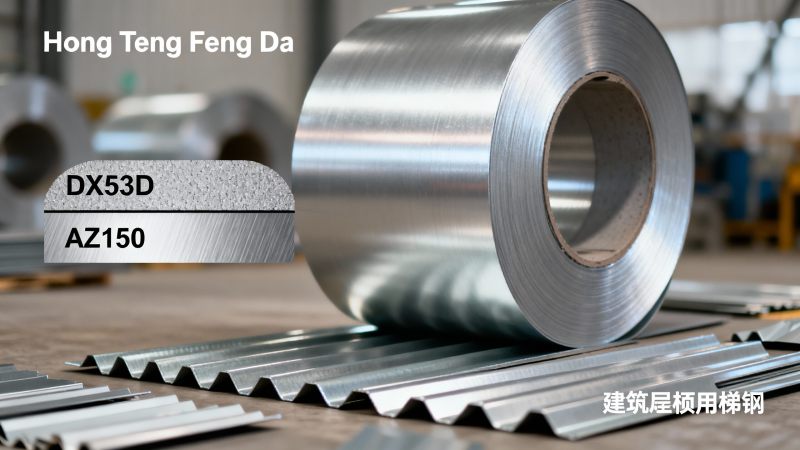
Selecting the right coil depends on the specific application. For lightweight roofing such as agricultural sheds, warehouse overlays and low-slope residential projects, the DX53D substrate with standard AZ coatings provides a cost-effective balance of formability and corrosion protection. For architectural standing-seam roofs or façades where long-term appearance and reflectivity are critical, specifying AZ150 or higher coating mass plus PVDF or polyester paint increases aesthetics and longevity. In coastal or industrial projects that interface with structural elements like H-beam and Z-beam, coordination of galvanic compatibility is essential: fasteners, flashings and adjacent members should be of compatible coatings to avoid accelerated corrosion due to dissimilar metals.
Installation best practices include: ensuring panels are formed to minimize water traps, applying compatible sealants at overlaps, using coated fasteners with neoprene washers to prevent crevice corrosion, and avoiding contaminants on the coated surface. For rooftop fall protection and rigging, select the appropriate Galvanized Steel Wire Rope and pipe fittings specified for expected loads; if wire rope is used for lifting panels or temporary bracing, confirm breaking strength (for example Galvanized Steel Wire Rope 1470Mpa to 1960Mpa variants) and that any hot-dipped galvanized finishes maintain ductility after bending.
Maintenance guidance: periodic inspections for debris accumulation, ponding water, and fastener condition prolong performance. Touch-up paint procedures at cut edges and fastener penetrations slow corrosion initiation. For large projects, quality-control staff should perform batch sampling for coating mass, adhesion and thickness, and record results in an inspection register to maintain traceability. With correct specification and installation, DX53D with AZ150 coating delivers reliable, energy-efficient roofing performance across many building types.
Summary and Recommended Next Steps
In summary, the choice between DX53D Galvalume Steel Coil and AZ150 Galvalume Steel Coil is not binary; it combines substrate selection, coating mass and the project’s exposure profile. DX53D substrate excels where forming and fabrication yield are priorities. AZ150 coating mass delivers a proven balance of corrosion resistance and thermal reflectivity that often reduces life-cycle costs for roofing and cladding. Procurement should weigh initial coil price against formability benefits, expected service life, and integrated costs for fasteners, H-beam or Z-beam supports, and ancillary items such as Galvanized Steel Wire Rope and Hot diped-Galvanized Pipe.
Shandong Hongteng Fengda Metal Materials Co. Ltd. can support those assessments through documentation, sample panels and bundled supply options that include processing and logistics. For technical evaluators and project managers, request coating mass certificates, salt spray and reflectivity data, and ensure on-site tests post-installation. For purchasing teams, negotiate delivery windows and bundled rates for complementary items like rebar, welded mesh and structural profiles to reduce overall project risk and cost.
Take action: contact your Shandong Hongteng Fengda representative to request technical datasheets, mill certificates and sample coils for testing, or to obtain quotations that include processing and delivery. For immediate assistance on specification matching, installation best practices or bundled procurement including H-beam, Z-beam and safety hardware, reach out and secure the right coil specification for your 2025 roofing project. Immediately contact their sales team to learn more and to obtain tailored proposals that match your project exposure, budget and installation timeline.
- rolled steel coil
- galvanized steel wire
- galvanized pipe
- steel coil
- galvanized steel
- Profile
- Hot diped-Galvanized Pipe
- AZ150 Galvalume Steel Coil
- DX53D Galvalume Steel Coil
- Rebar
- Galvanized Steel Wire Rope
- Hot dipped Galvanized Steel Wire Rope
- Galvanized Steel Wire Rope 1470Mpa to 1960Mpa
- Z-beam
- H-beam
Related recommendations
 Why Does Galvanized Pipe Corrode Over Time and When Should It Be Replaced?Galvanized pipe corrodes as its zinc coating wears away from moisture, chemicals, and age. Learn the warning signs, repair limits, and the right time to replace it.
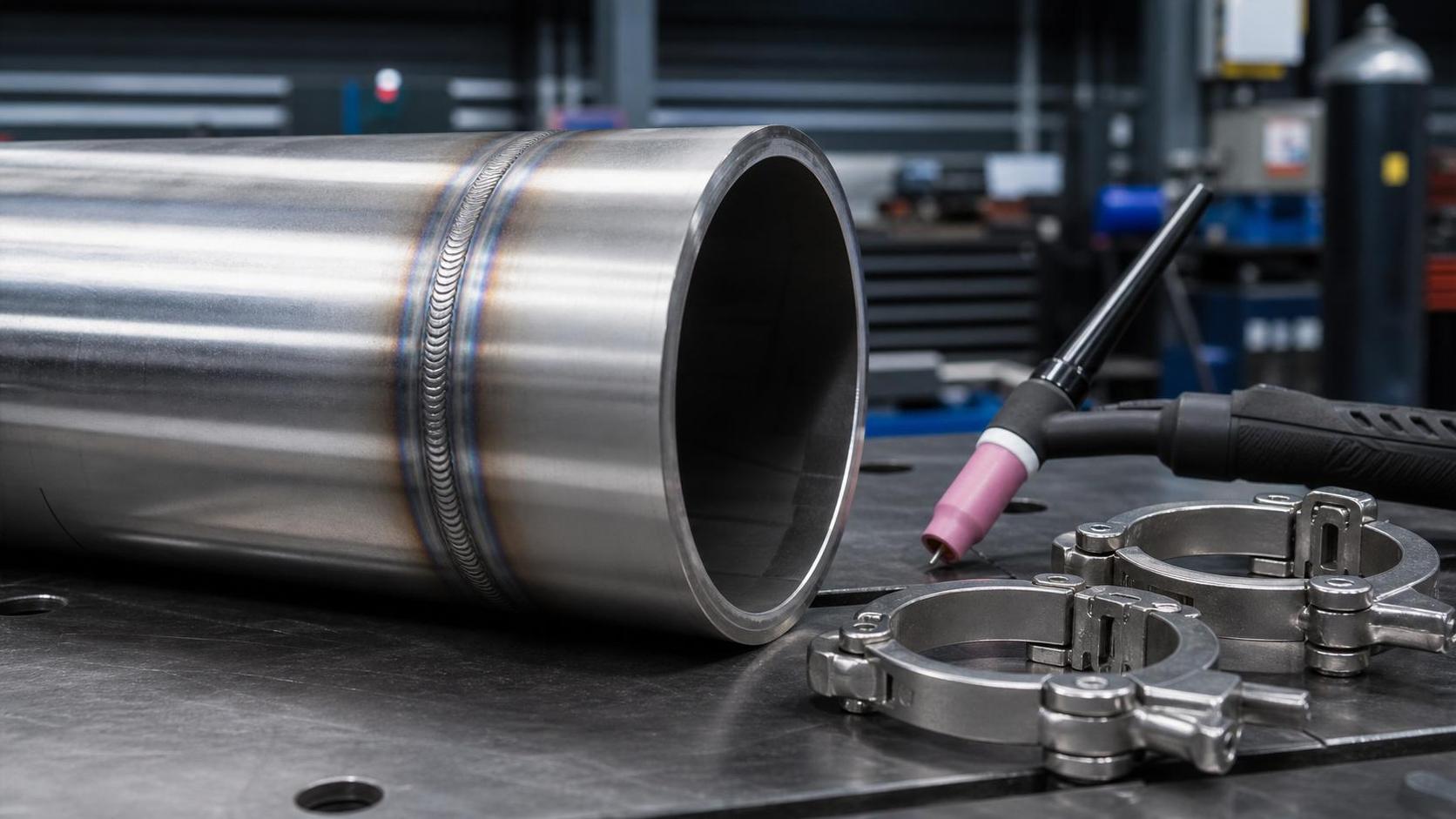
 Common SS Pipe Welding Problems and How to Prevent ThemSS pipe welding problems can lead to leaks, corrosion, and costly repairs. Learn the main defects, warning signs, and practical prevention tips to improve weld quality and service life.
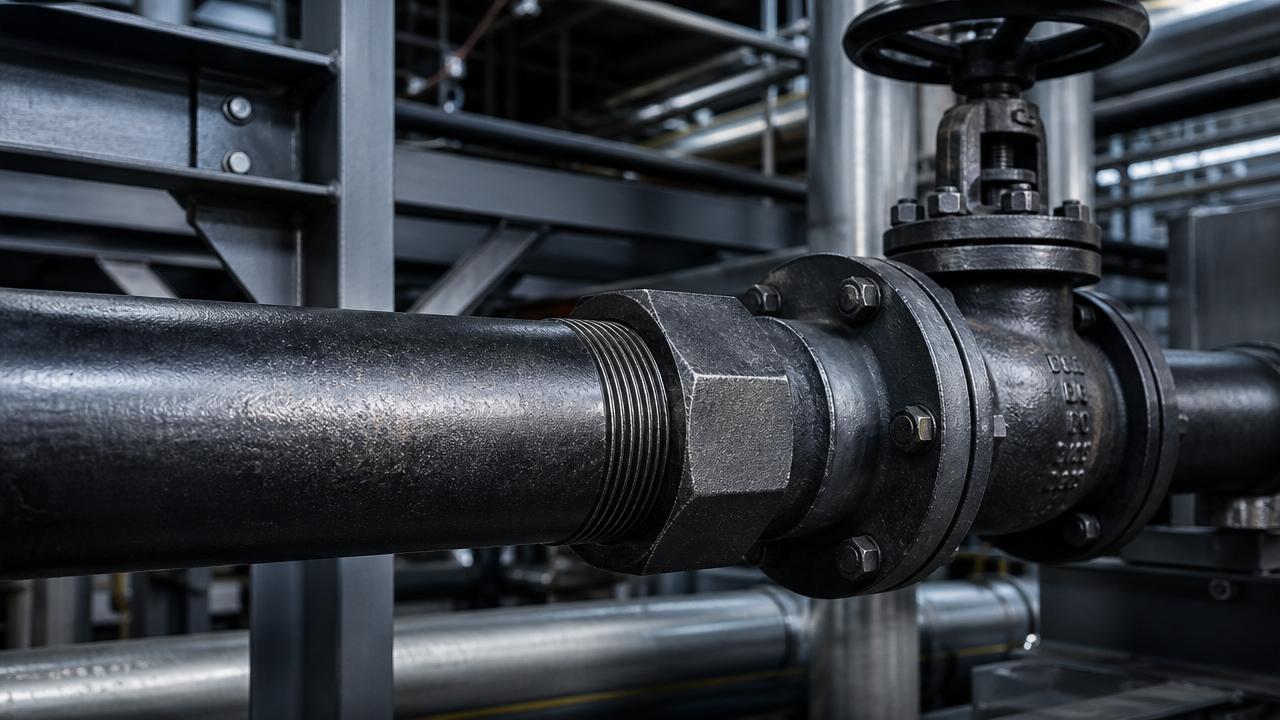
 What Is Black Pipe Best Used For in Gas Lines, Steam, and Industrial Plumbing?Black pipe is ideal for gas lines, steam, and industrial plumbing where strength and heat resistance matter. Learn when it fits best, where it fails, and how to choose wisely.
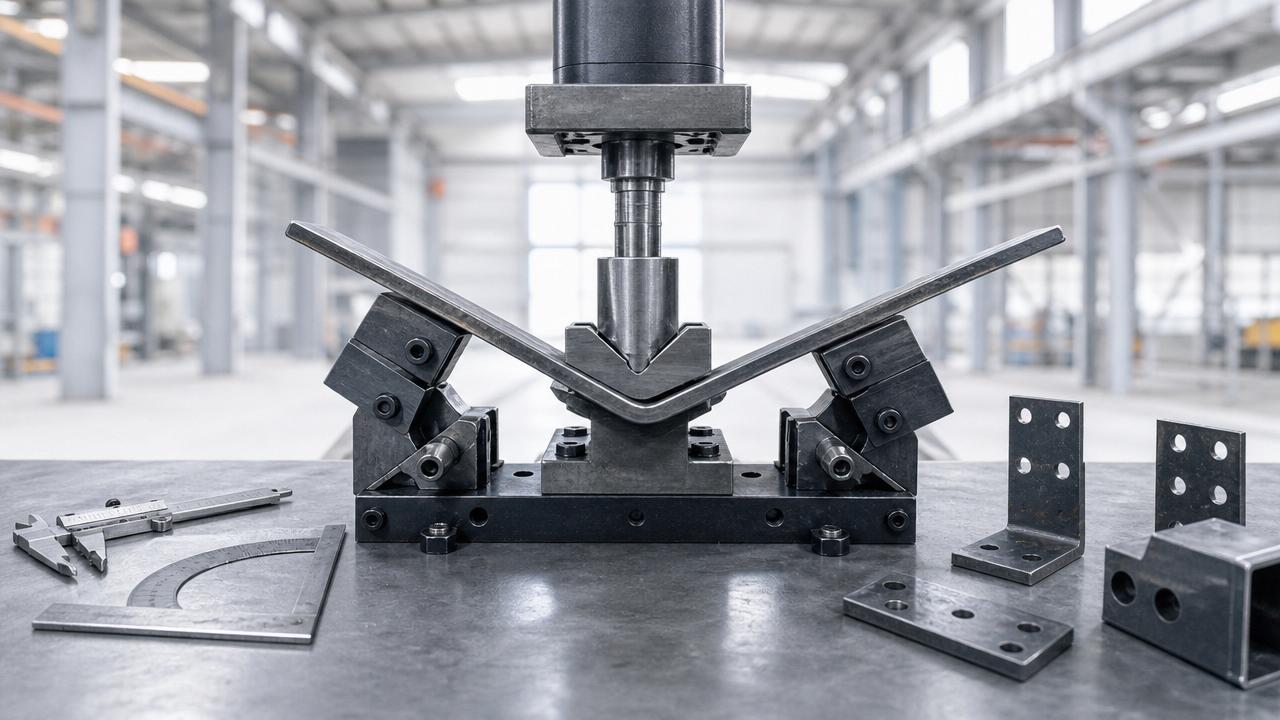
 Bending Angle Iron Without Losing Alignment: Practical StepsBending angle iron without losing alignment: learn practical field steps, tool choices, and inspection tips to reduce rework and keep steel repairs accurate.
Please give us a message


Please enter what you want to find