Choosing the wrong corrosion resistant steel pipe can trigger costly rework, early failures, and repeated maintenance interruptions. For after-sales maintenance teams, selection mistakes often come from overlooking service environment, coating compatibility, pressure demands, and standard compliance. This article explains the most common errors and how the right steel supply partner helps reduce risk, improve durability, and keep repair work under control.
Why do corrosion resistant steel pipe selection mistakes create so much rework?
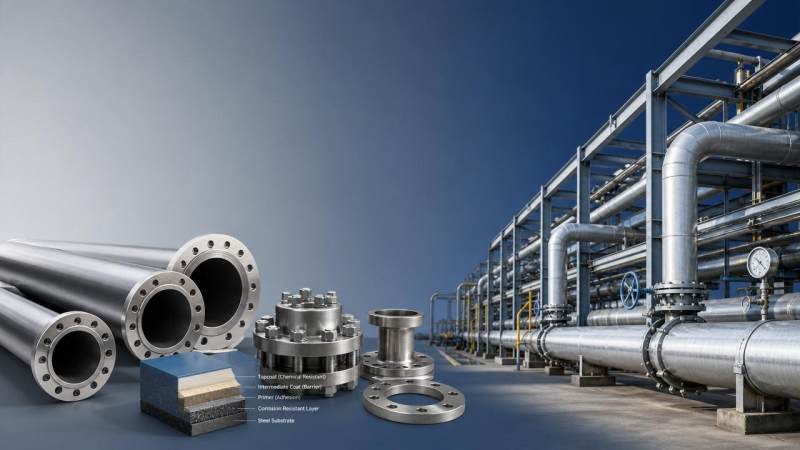
For after-sales maintenance personnel, the main problem is not simply replacing a damaged pipe. The real burden is repeated shutdowns, emergency labor, uncertain root causes, and pressure from end users who expect a permanent fix.
A corrosion resistant steel pipe is often chosen under time pressure. Teams may focus on diameter, wall thickness, and price, while missing the full corrosion mechanism. That gap is where rework starts.
In steel-related industrial systems, corrosion rarely comes from one factor alone. Moisture, chlorides, temperature fluctuation, media velocity, weld quality, coating failure, and cleaning chemicals can all interact and shorten service life.
- The selected pipe grade resists atmospheric corrosion, but not chemical exposure inside the line.
- The coating performs well in storage, but loses adhesion after field welding or thermal cycling.
- The pipe meets basic strength needs, yet fails at joints because welding consumables were not matched to the base metal.
- A substitute material is approved for speed, but its compliance documents do not match project requirements.
When those details are missed, repair work expands from one replacement task into surface treatment, re-welding, retesting, recoating, and sometimes structural adjustment around the pipe route.
What are the most common corrosion resistant steel pipe selection errors?
The most frequent mistakes are practical, not theoretical. They happen during urgent procurement, cross-border sourcing, or maintenance planning when technical data is incomplete. The table below shows where selection usually goes wrong.
These errors are common because maintenance teams are usually measured by response speed first. Yet pipe performance depends on service conditions, fabrication method, and standards as much as it depends on the base material itself.
Error 1: treating all corrosive environments as the same
A coastal installation, a chemical wash line, a humid factory ceiling, and an underground utility route do not attack steel in the same way. If the corrosion resistant steel pipe is selected without defining the real environment, the maintenance team may install a pipe that only solves one part of the problem.
Error 2: focusing on pipe body but ignoring joints
Failures often begin at the weld, flange, threaded connection, or cut edge. Pipe selection should include joining method, heat-affected zone exposure, and field repair coating strategy. Otherwise the strongest pipe section can still fail at the weakest installation point.
Error 3: using a standard grade without checking pressure and temperature cycles
Some maintenance jobs need a fast replacement, but pressure fluctuation, fluid surges, and hot-cold cycles can accelerate cracking or coating damage. A corrosion resistant steel pipe must be evaluated for both chemical resistance and mechanical service conditions.
How should after-sales teams evaluate the service environment before ordering?
A reliable selection process starts with environment mapping. This step reduces guesswork and helps suppliers recommend a practical solution instead of a generic one.
- Identify whether corrosion is internal, external, or both. A pipe exposed to weather may still fail faster from the process fluid inside.
- Record media composition, including water content, salts, acids, cleaning agents, and suspended solids that can cause erosion-corrosion.
- Check operating temperature and pressure range, not only nominal design values. Start-stop cycles and peak conditions matter.
- Review installation constraints such as bending, field cutting, welding access, and coating touch-up conditions.
- Confirm local or project-specific compliance requirements, especially where ASTM, EN, JIS, or GB references are required.
This is also where a broader steel supplier can add value. Many industrial repairs involve pipe supports, beam modifications, or reinforcement parts alongside the piping replacement itself. In such cases, combining sourcing reduces coordination risk. For example, when support frames need upgrading, a buyer may also require Structural Steel I Beam products for industrial structure applications, with common standards such as JIS, DIN, GB, EN, and ASTM used for alignment across the project.
Which selection factors matter most for corrosion resistant steel pipe in maintenance work?
After-sales teams usually need a simple decision framework. The following table helps compare the main evaluation points during repair planning and replacement sourcing.
This table shows that a corrosion resistant steel pipe should be chosen as a system component, not as a standalone commodity. Material, coating, fabrication, and documentation must work together.
Why wall thickness and corrosion allowance are often underestimated
Maintenance teams sometimes match the original pipe size exactly, assuming that a like-for-like replacement is safest. But if the first installation failed early, the original thickness may not have included enough corrosion allowance for the real operating environment.
Why coating compatibility matters as much as the steel
Even a suitable corrosion resistant steel pipe can underperform if the applied coating cannot tolerate site welding, abrasion, UV exposure, or chemical cleaning. A maintenance plan should define where the pipe will be shop-finished and where field repair coating will be required.
How do standards and supplier capability reduce replacement risk?
For global industrial projects, standards are not paperwork only. They help ensure that dimensions, tolerances, chemistry, and mechanical properties are understood the same way across procurement, fabrication, installation, and inspection.
Hongteng Fengda supports buyers with structural steel manufacturing and export experience across North America, Europe, the Middle East, and Southeast Asia. That matters when maintenance projects need stable supply, specification matching, and coordinated documentation under ASTM, EN, JIS, and GB references.
- Strict quality control helps buyers avoid dimensional inconsistency that complicates field fit-up.
- Customized solutions are useful when standard replacement parts do not match an older installation.
- Stable production capacity supports urgent schedules without forcing risky substitutions.
- Cross-standard familiarity helps reduce confusion when projects involve mixed regional requirements.
For maintenance teams, that means fewer surprises during approval, fewer corrections after arrival, and better control over shutdown duration.
What does a practical procurement checklist look like for after-sales maintenance?
A good buying process should help the team move fast without skipping critical checks. Use the following checklist before confirming a corrosion resistant steel pipe order.
This kind of checklist reduces rushed decisions. It also makes supplier communication clearer, which is critical when multiple steel components must arrive together for one repair package.
Are lower-cost substitutions really saving money?
Not always. The cheapest corrosion resistant steel pipe on paper may become the most expensive option after labor, shutdown losses, coating repairs, and repeat failure are included.
Maintenance economics should be judged by lifecycle impact. A better material match can reduce call-backs, spare inventory uncertainty, and service interruptions. That is especially true in remote or continuously operating facilities where access is difficult.
- A low-price substitute may have acceptable strength but poor corrosion behavior in chlorides.
- A pipe with limited documentation can be delayed at inspection, extending outage time.
- A faster-to-source option may still cause extra field modification if tolerances are inconsistent.
A capable supplier helps buyers compare not only unit price, but also fabrication suitability, dimensional stability, coating route, and delivery reliability.
FAQ: what do maintenance teams ask most about corrosion resistant steel pipe?
How do I choose a corrosion resistant steel pipe for mixed indoor and outdoor exposure?
Start by separating internal and external risks. Outdoor humidity, rain, and airborne salts affect the outside surface, while process fluid affects the inside. If the line also sees temperature swings, check coating adhesion and joint protection in addition to the pipe material.
What should I confirm before approving an equivalent grade?
Do not rely on name similarity alone. Confirm chemical composition range, mechanical properties, dimensional tolerance, applicable standard, and whether the substitute affects welding, coating, or inspection requirements. Equivalent does not always mean interchangeable in a maintenance context.
Can field welding damage the corrosion protection of a steel pipe?
Yes. Heat can burn or weaken nearby coating, and poorly treated weld zones often become the first corrosion sites. A repair plan should define weld procedure, cleaning method, and post-weld coating restoration before installation begins.
What else should be sourced together with replacement piping?
Check supports, brackets, channels, beams, connection plates, and any structural members affected by the failure. In some industrial repairs, support reinforcement is required at the same time. Where that happens, buyers may coordinate related steel items such as Structural Steel I Beam sections, available in grades like Q195-Q235, Q345, SS400, A36, and S235 series for industrial structure needs, depending on project specification.
Why choose us for maintenance-driven steel sourcing and project support?
When after-sales teams face recurring corrosion issues, they need more than a price list. They need a supplier that understands standards, fabrication constraints, industrial structure coordination, and export execution.
Hongteng Fengda provides structural steel products and customized solutions for global construction, industrial, and manufacturing projects. With modern manufacturing facilities, strict quality control, and experience serving multiple international markets, the company helps buyers reduce sourcing risk and keep maintenance schedules under control.
- Ask for parameter confirmation if you need to match an existing steel component or review dimensional tolerances.
- Request product selection support when your maintenance job involves both pipe-related steel parts and structural members.
- Confirm delivery timing early if your repair window is fixed or your outage cost is high.
- Discuss custom solutions if standard sections do not fit older installations or OEM replacement requirements.
- Check certification and standard alignment in advance when ASTM, EN, JIS, or GB documentation is necessary.
- Ask about sample support and quotation details if you need to compare options before final approval.
If your team is trying to avoid repeat repairs caused by poor corrosion resistant steel pipe selection, a detailed technical review before ordering is the fastest way to reduce rework later. Clear service data, proper standard matching, and dependable steel supply make every maintenance shutdown easier to control.
Please give us a message


Please enter what you want to find