Choosing the right seamless steel pipe size is a critical step in project planning.
Small specification mistakes often create delays, rework, cost growth, and performance concerns.
A seamless steel pipe is not selected by diameter alone.
Wall thickness, tolerance, pressure class, length, standard, and end use all matter.
When these details are overlooked, projects face procurement confusion and installation problems.
The following questions explain the most common seamless steel pipe size mistakes and how to avoid them.
Why is diameter-only selection a common seamless steel pipe mistake?
Many planning documents mention only outer diameter.
That creates an incomplete description of the seamless steel pipe requirement.
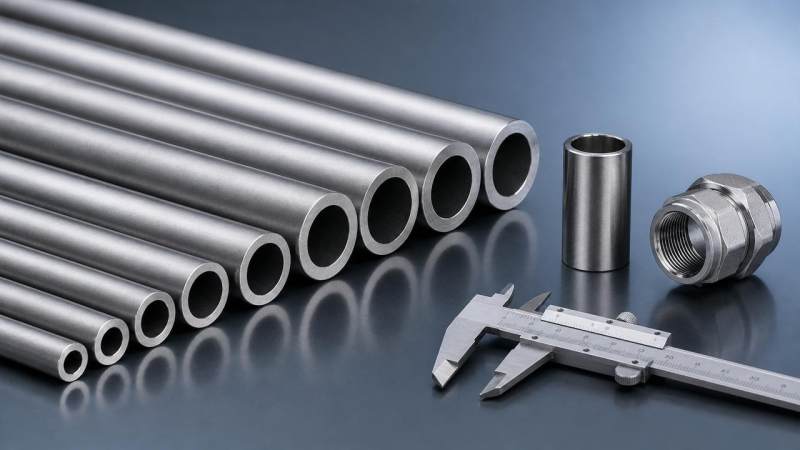
Two pipes may share the same diameter but have different wall thicknesses.
This changes internal flow area, pressure capacity, weight, and welding preparation.
In structural or industrial steel applications, thickness directly affects mechanical performance.
A wrong schedule can also impact supports, connections, and transport cost.
For example, a seamless steel pipe for fluid service may need flow efficiency.
A similar diameter used for load-bearing fabrication may need stronger wall performance.
The safer practice is to define:
- outer diameter
- wall thickness or schedule
- steel grade
- applicable standard
- length range
- end treatment and tolerance
A complete seamless steel pipe description reduces sourcing errors early.
How do standard and tolerance misunderstandings affect project planning?
A second mistake is assuming all sizes are universal across standards.
In reality, ASTM, EN, JIS, and GB requirements may differ.
The seamless steel pipe size may appear similar on paper.
However, tolerance limits, testing rules, and material properties may not match.
This becomes serious when imported steel products are used in regulated projects.
If the drawing references one standard and procurement follows another, inspection may fail.
Tolerance issues also affect fit-up.
A seamless steel pipe with acceptable mill variation may still conflict with tight assemblies.
Bolt spacing, clamp dimensions, and support brackets can be affected.
Check these items before ordering:
- required production standard
- diameter and thickness tolerance
- mechanical property requirements
- test and inspection certificates
- surface condition and straightness
Clear specification alignment improves seamless steel pipe acceptance and installation accuracy.
What happens when application conditions are ignored?
A seamless steel pipe should always be sized for real service conditions.
Ignoring temperature, pressure, corrosion, or load can lead to underdesign or overdesign.
Underdesign creates risk.
Overdesign increases cost, weight, handling difficulty, and lead time.
This issue is not limited to pipe systems.
Across steel project planning, matching product selection to the real site condition is essential.
For containment or waterfront structures, sheet piles may be more suitable than pipe-based solutions.
In such cases, Hot Rolled Steel Sheet Pile can support retaining wall and water retaining wall applications.
U Sheet Pile options include S275, S355, S390, S430, SY295, SY390, and ASTM A690.
They follow EN10248, EN10249, JIS5528, JIS5523, and ASTM production standards.
Single length can exceed 80m, with rich specifications and custom dimensions.
That flexibility often reduces construction difficulty and overall cost.
The lesson is practical.
Do not size a seamless steel pipe without confirming the operating environment first.
Which planning and procurement gaps cause seamless steel pipe size errors?
Size mistakes often start before purchasing.
Drawings, BOM lists, and supplier quotations may describe the same seamless steel pipe differently.
One document may use nominal size.
Another may use millimeter dimensions.
A third may list only schedule or pressure grade.
Without a unified format, errors spread quickly.
Lead time is another hidden factor.
Some seamless steel pipe sizes are standard stock items.
Others require custom rolling, special testing, or bundled export arrangements.
Late changes then affect delivery and fabrication sequence.
To reduce planning gaps, use this checklist:
- Match drawing dimensions with order descriptions.
- Confirm nominal size and actual dimensions together.
- Verify stock availability before finalizing schedules.
- Request mill certificates and standard references early.
- Review transport length limits and cutting allowances.
A coordinated review saves time and improves seamless steel pipe procurement accuracy.
How can teams compare seamless steel pipe options more effectively?
The best comparison method is to evaluate performance and implementation together.
Do not compare a seamless steel pipe by price per ton alone.
A cheaper option may create higher fabrication, inspection, or maintenance costs later.
Use a simple decision table during planning.
This table makes seamless steel pipe decisions easier to review and document.
What are the fastest ways to prevent seamless steel pipe sizing problems?
Prevention depends on disciplined technical review.
Every seamless steel pipe requirement should be checked from design to delivery.
The most effective steps are straightforward.
- Define size with OD, thickness, and length together.
- State the material grade and standard clearly.
- Match the pipe to pressure, load, and environmental exposure.
- Review tolerances against actual connection details.
- Confirm fabrication and shipping constraints before purchase.
- Request supplier clarification when any item looks incomplete.
Reliable steel supply also matters.
A qualified structural steel manufacturer with stable production can reduce sourcing risks.
Support for ASTM, EN, JIS, and GB standards improves global project coordination.
Whether the need is seamless steel pipe or another steel solution, consistency protects schedules.
Seamless steel pipe FAQ summary and next step
Most seamless steel pipe size mistakes are preventable.
They usually come from incomplete specifications, standard confusion, or poor application review.
When size data is complete, procurement becomes faster and field issues decrease.
Before final approval, review every seamless steel pipe item against service demands and installation details.
If the project also involves retaining or water control structures, compare alternatives carefully.
Products such as Hot Rolled Steel Sheet Pile may offer better site efficiency in specific conditions.
A detailed technical check today can prevent expensive corrections later.
Use this guide as a working reference when planning your next seamless steel pipe requirement.
Please give us a message


Please enter what you want to find