Can 201 stainless steel pipe handle everyday indoor applications without compromising durability or value? For many end consumers, the answer depends on moisture exposure, maintenance needs, and budget. In this article, we explore where 201 stainless steel pipe performs well indoors, where its limitations appear, and how to choose the right option for long-term use.
For home users, shop owners, and light project buyers, material selection is rarely about chemistry alone. It is usually about 4 practical questions: Will it rust indoors, how long will it last, how much maintenance is needed, and is the lower upfront price worth it over 3 to 10 years?
In the steel industry, 201 stainless steel pipe is widely discussed because it offers a cost-conscious alternative to higher-grade stainless options. For indoor use, that can be enough in many cases, but not in every room, climate, or installation condition.
Where 201 Stainless Steel Pipe Fits Best Indoors
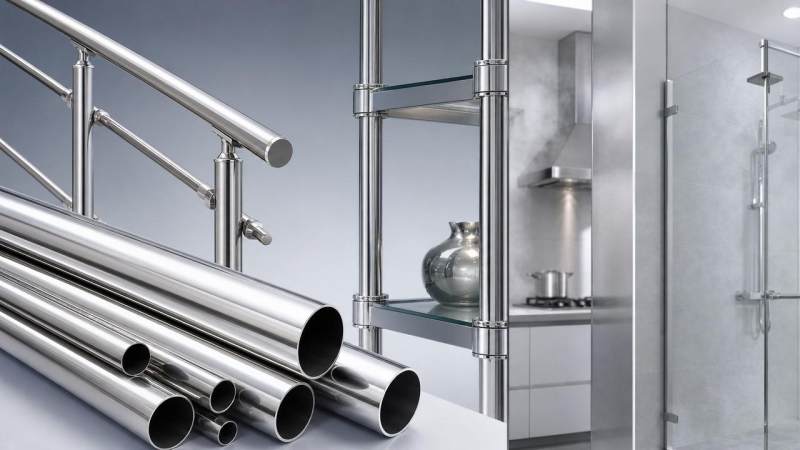
The biggest strength of 201 stainless steel pipe is value. It is commonly selected for interior decorative, structural-light, and non-critical support uses where direct exposure to rain, salt, or harsh chemicals stays close to zero.
Typical indoor applications include handrails, furniture frames, partition supports, display racks, curtain rods, and decorative tubing. In spaces with relative humidity below about 60% to 70%, and with routine cleaning every 1 to 3 months, its performance is often acceptable for daily use.
Common indoor environments
Not all interiors are equal. A dry retail store, an office lobby, and a bedroom create a very different corrosion risk compared with a laundry room, a semi-open corridor, or a kitchen near steam and cleaning agents.
- Low-risk areas: bedrooms, offices, indoor retail displays, dry storage rooms
- Medium-risk areas: living rooms, enclosed staircases, shopping mall railings
- Higher-risk indoor areas: bathrooms, kitchens, laundry spaces, indoor pool surroundings
Why price-sensitive buyers choose it
Compared with 304 stainless alternatives, 201 stainless steel pipe often lowers initial material cost by a noticeable margin, especially in decorative or medium-volume purchases. For end consumers, this can free 10% to 25% of a project budget for other finishes, fittings, or installation work.
That said, the lower purchase price only makes sense when the indoor environment does not push the material beyond its comfort zone. If moisture is frequent, the savings can disappear through polishing, replacement, or earlier repair.
The table below helps compare common indoor scenarios and whether 201 stainless steel pipe is a reasonable choice for each one.
The key takeaway is simple: 201 stainless steel pipe works best when indoor humidity stays moderate and contact with water is brief rather than constant. Once the environment shifts from decorative dryness to frequent moisture, the risk profile changes quickly.
Its Limits: Corrosion Risk, Maintenance, and Service Life
For many end consumers, the biggest misunderstanding is assuming all stainless steel performs the same. It does not. The word “stainless” signals corrosion resistance, but actual resistance level depends on grade, finish, fabrication quality, and exposure conditions.
When 201 stainless steel pipe is installed in damp interiors, tea staining, surface discoloration, and local rust spots can appear earlier than expected. This is especially true if chloride-containing cleaners are used, ventilation is weak, or water remains on the surface for more than several hours at a time.
What shortens indoor lifespan
- High humidity above 75%
- Frequent condensation on the pipe surface
- Contact with bleach, acidic cleaners, or salty residue
- Rough fabrication, poor weld finishing, or contamination during installation
- Neglected cleaning over 6 to 12 months
A polished finish may improve the visual result, but surface treatment alone cannot fully offset an unsuitable environment. Buyers should look at the full use condition, not only the appearance on the day of delivery.
Expected service reality
In a dry indoor area, 201 stainless steel pipe can remain functional and presentable for many years. In a wet area, visible deterioration may begin much sooner, sometimes within 1 to 3 years depending on ventilation, maintenance, and exposure frequency.
By comparison, in the same high-moisture indoor space, a higher grade may justify the extra cost because it reduces polishing frequency, replacement risk, and long-term visual complaints from end users.
To make the trade-off clearer, the following table compares practical buying factors rather than only material labels.
For end consumers, this means the right choice is not always the cheapest quote. It is the material that fits the room condition, expected service period, and acceptable maintenance routine.
How to Choose the Right Pipe for Indoor Projects
A good purchasing decision starts with 3 checks: environment, function, and finish. If buyers evaluate these clearly before ordering, they reduce the chance of choosing a grade that looks economical at first but creates avoidable issues later.
Check 1: Define the environment
Ask whether the pipe will stay in a dry enclosed room, a semi-humid public interior, or a wet zone. If the location involves steam, regular splashing, or chemical cleaning more than once a week, caution is necessary.
Check 2: Understand the function
Decorative tubes and light support members place different demands on the material. A wardrobe rail or display frame is not exposed like a frequently touched handrail, and neither is equal to a bathroom support pipe that faces moisture every day.
Check 3: Review surface finish and fabrication
Surface quality matters. Smooth polishing reduces contamination retention and makes cleaning easier. Weld areas should be neat, and cut edges should be properly finished. Even with the same grade, poor processing can shorten useful life by a meaningful margin.
A practical buyer checklist
- Confirm whether the project area is dry, semi-humid, or wet
- Estimate expected service life: 2 years, 5 years, or 10+ years
- Decide how often cleaning can realistically be done
- Ask for finish details and weld treatment
- Match the pipe grade to actual use, not only to budget
In some projects, buyers also compare stainless pipe with coated carbon steel components for surrounding structures, panels, or covers. For example, when corrosion protection, fabrication flexibility, and cost efficiency matter in auxiliary parts, Galvanized Steel Sheet may be considered for non-decorative indoor enclosures, backing elements, or formed support components.
Such coated sheet products are commonly available in thicknesses from 0.12mm to 6.00mm, widths from 600mm to 1500mm, and lengths from 1m to 12m. Typical grades include DX51D, SGCC, and S250GD, with zinc layer options around 60 to 275g/m² and compliance with standards such as ASTM, EN, JIS, and GB.
This does not replace 201 stainless steel pipe in visible railing or furniture applications, but it shows how experienced steel suppliers support mixed-material project planning. The right material often depends on where appearance, corrosion resistance, formability, and budget intersect.
Maintenance Tips and Sourcing Advice for End Consumers
If you already plan to use 201 stainless steel pipe indoors, proper maintenance can extend service performance. Most problems begin not because the pipe fails immediately, but because minor moisture and residue remain on the surface month after month.
Simple maintenance steps
- Wipe the surface dry after visible water exposure
- Clean with a mild neutral solution instead of chloride-heavy chemicals
- Inspect welds, joints, and corners every 2 to 3 months
- Improve ventilation in enclosed wet rooms
- Remove early discoloration before it develops into deeper staining
What to ask a supplier before ordering
Whether you buy for a home renovation, retail fitting, or small construction project, ask at least 5 questions: grade confirmation, tube dimensions, finish type, welding quality, and recommended use environment. These details are more useful than vague promises about “premium quality.”
Reliable steel manufacturers and exporters also help buyers compare options across standards, processing methods, and delivery needs. Companies serving international projects often work under ASTM, EN, JIS, and GB references, which supports clearer communication on specifications and tolerances.
For buyers sourcing from China, stable production capacity, consistent quality control, and dependable lead times can reduce risk significantly. This is particularly important when your project includes more than one steel category, such as stainless tubes, structural profiles, beams, or custom-formed components.
When 201 is enough—and when it is not
201 stainless steel pipe is often enough for dry interior decoration, light-duty furniture, display structures, and enclosed spaces with controlled humidity. It becomes less ideal when appearance must remain flawless in wet zones for 5 to 10 years with minimal maintenance.
If your priority is the lowest initial cost in a low-risk indoor area, it can be a sensible option. If your priority is long-term corrosion resistance in kitchens, bathrooms, or semi-humid commercial interiors, moving to a higher grade is usually the safer decision.
For indoor projects, 201 stainless steel pipe delivers the best value when the environment is dry, the finish is well processed, and maintenance expectations are realistic. It is not a universal answer, but it can be a practical one for the right application and budget range.
Hongteng Fengda supports global buyers with structural steel products, customized solutions, and dependable manufacturing service across standard and OEM requirements. If you are evaluating indoor steel materials for decorative, structural, or mixed-component projects, contact us to discuss specifications, compare options, and get a practical sourcing solution tailored to your application.
Please give us a message


Please enter what you want to find