Procurement managers face critical decisions when sourcing steel products: should you work directly with mills or traders? This article compares mill direct vs trader MOQs (minimum order quantities) in steel procurement, analyzing lead times, pricing structures, and flexibility. As a structural steel manufacturer, we'll help you evaluate which option delivers better value for your construction or industrial project while mitigating risks in supply chain planning.
Understanding Mill Direct vs Trader MOQs in Steel Procurement
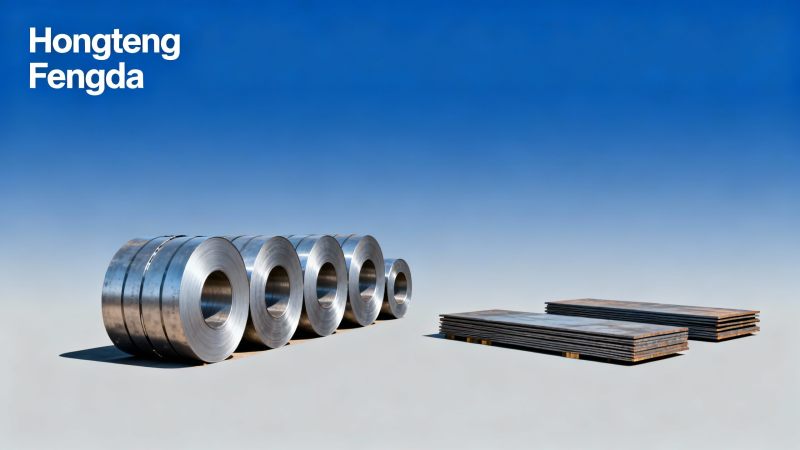
When planning your 235JR Patterned steel plate procurement, understanding MOQ differences between mills and traders is crucial. Mills typically enforce higher MOQs (often 20-50 metric tons) due to production efficiency requirements, while traders aggregate demand and offer lower MOQs (sometimes as little as 5 tons). However, traders' flexibility comes with trade-offs in pricing and lead time control. Procurement managers must weigh these factors against project timelines and budget constraints.
Market Overview: Steel Procurement Landscape
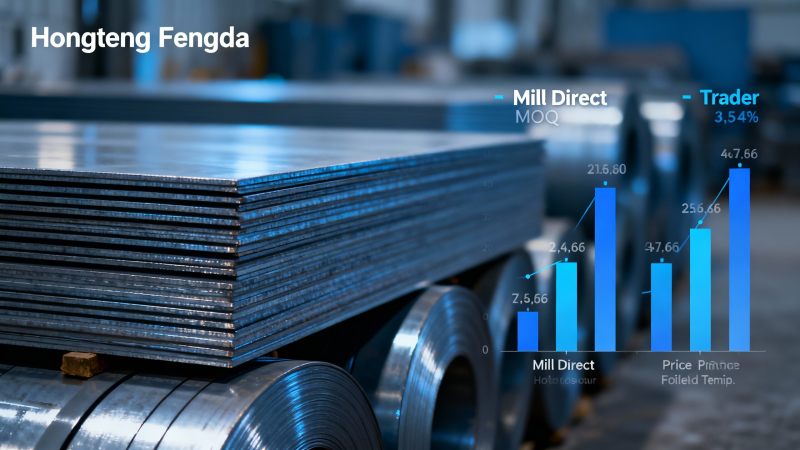
The global structural steel market shows distinct regional variations in MOQ practices. Asian mills, particularly in China where we operate, often maintain stricter MOQ policies for standard products like angle steel and channel steel. European and North American traders frequently provide more flexible terms but at 15-25% price premiums. Current market volatility makes lead time planning especially critical - our manufacturing data shows mill-direct orders average 6-8 weeks production time, while trader-supplied materials range from immediate availability to 4-week waits depending on inventory levels.
Comparison Analysis: Key Decision Factors
- MOQ Flexibility: Traders win for small projects needing under 10 tons
- Pricing Structure: Mill-direct saves 8-12% on large orders over 30 tons
- Lead Time Reliability: Mills provide more predictable schedules (variance ±5 days vs traders' ±15 days)
- Customization: Only mills handle non-standard specifications for products like cold formed steel profiles
- Quality Control: Direct mill access allows better production monitoring and ASTM/EN standard compliance verification
Procurement Guide: Questions to Ask Suppliers
Smart steel procurement requires asking the right questions:
- What are your actual MOQ thresholds for different product categories?
- How do you handle lead time fluctuations during peak seasons?
- Can you provide mill test certificates for each batch?
- What's your policy on partial shipments for large orders?
- How do you manage quality disputes for products like steel beams?
Why Choose Hongteng Fengda for Your Steel Needs
As an experienced structural steel manufacturer, we bridge the gap between mill-direct benefits and trader flexibility. Our hybrid model offers:
- MOQs as low as 15 tons for standard products (50% below typical mill requirements)
- Mill-direct pricing without trader markups
- Customized lead time planning with 95% on-time delivery record
- Full compliance with ASTM, EN, JIS, and GB standards
- Technical support for specialized applications including 235JR Patterned steel plate configurations
Related recommendations
 Is acero galvanizado para exterior vulnerable to white rust formation during monsoon storage?Acero galvanizado para exterior *is* vulnerable to white rust in monsoons — but it’s preventable. Discover proven storage & handling strategies that protect your structural steel.
 Does ASTM A 36 plate meet impact toughness requirements for low-temperature bridge girders?Does ASTM A 36 plate meet low-temp bridge requirements? Short answer: no—unless specially tested. Discover why toughness matters more than strength in cold climates.
 Does ASTM A653 certification cover both zinc-coated and zinc-iron alloy coated steels?ASTM A653 covers both zinc-coated and zinc-iron alloy coated steels—but they’re not interchangeable. Learn key differences in testing, performance & certification.
 Does acero prepintado require surface pretreatment before welding or cutting?Does acero prepintado require pretreatment before welding or cutting? Discover when grinding is essential—and when it’s not—for safety, weld integrity & corrosion resistance.
Please give us a message


Please enter what you want to find