Common coating failures in galvanized pipe steel can quickly lead to rust, shorter service life, and rising maintenance costs. Early identification helps limit corrosion spread, avoid repeated repairs, and protect overall project reliability.
In steel structures, coating defects rarely appear without warning. Peeling, cracking, white rust, dull spots, and uneven zinc coverage usually reflect handling, storage, fabrication, or environmental problems that need targeted correction.
This guide explains how common galvanized pipe steel failures appear in real service scenarios. It also shows what to check first, how to compare risk levels, and which corrective actions improve long-term steel performance.
When galvanized pipe steel problems appear on site
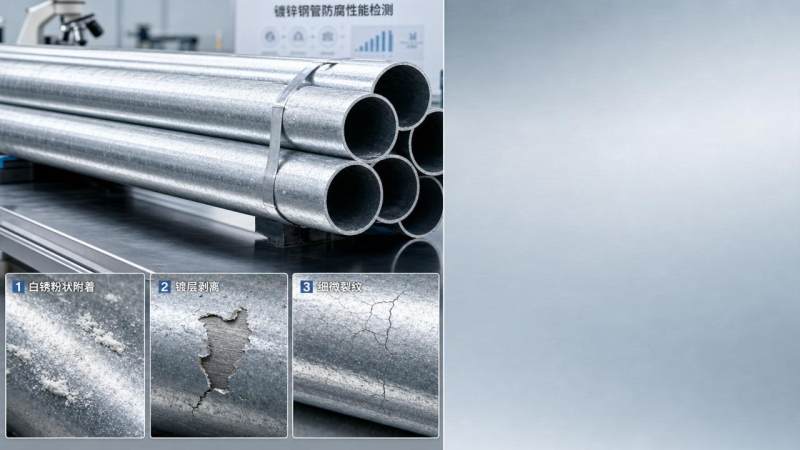
Galvanized pipe steel performs well in many outdoor and industrial environments. However, failure patterns differ between storage yards, fabrication shops, humid construction sites, and installed service lines.
A pipe showing white rust after delivery needs a different response than a pipe showing coating cracks after bending. Correct judgment depends on where the defect started and how the steel was used.
Environmental moisture, mechanical stress, contamination, and coating thickness variation can each trigger visible damage. For galvanized pipe steel, surface symptoms should always be linked to process history.
How to judge common galvanized pipe steel failure scenarios
Scenario 1: White rust during storage or transport
White rust is one of the most common galvanized pipe steel issues. It often appears as a chalky, powdery, or patchy white deposit on zinc-coated surfaces.
This usually develops when moisture remains trapped between stacked pipes. Poor ventilation, wet packaging, and rapid temperature changes make the risk much higher.
Key inspection points include surface uniformity, residue thickness, affected area percentage, and whether the zinc layer has been consumed below the top surface film.
- Check bundle spacing and drainage conditions.
- Review rain exposure during shipping or yard storage.
- Look for wet wrapping or condensed water inside bundles.
Scenario 2: Peeling or flaking after fabrication
Peeling on galvanized pipe steel often appears after cutting, forming, threading, welding, or impact handling. The zinc layer may detach in flakes near edges or stressed areas.
Root causes may include poor surface preparation before galvanizing, weak metallurgical bonding, excessive forming radius, or damage from rough tools and contact points.
This scenario needs careful review of fabrication steps. If peeling is limited to worked zones, the issue may be mechanical rather than a full coating process failure.
Scenario 3: Cracking in bent or cold-worked sections
Cracks can appear on galvanized pipe steel when forming stress exceeds coating ductility. Tight bends, low-temperature handling, and unsuitable base steel grades increase this risk.
Fine surface cracks may first look minor, but they create direct entry points for moisture. Over time, corrosion starts at exposed steel or weakened zinc lines.
Inspect bend radius, crack direction, and whether the defect follows deformation zones. Cross-check with fabrication records and base material strength.
Scenario 4: Uneven coating in exposed outdoor service
Uneven appearance on galvanized pipe steel may show as dark patches, bare-looking areas, runs, rough spots, or inconsistent brightness. Not every color variation means immediate failure.
The real concern is thickness inconsistency. Thin zones lose corrosion protection faster, especially in marine air, industrial pollution, or splash-contact applications.
When repeated zinc consistency is required in roll-formed or fabricated steel products, midstream material control becomes critical. A suitable reference is Gi Coil, available in G40 galvanized steel, thickness 0.12mm-3.5mm, width 600mm-1500mm, and zinc coating weights from 60-275g/m² or 80-275g/m² depending on process route.
Such material options support corrosion resistance and help extend steel life expectancy. Standards including ASTM, EN, JIS, GB, AISI, and DIN are commonly important for project matching.
Why galvanized pipe steel failures differ by application conditions
Not all galvanized pipe steel defects carry the same urgency. A cosmetic variation in dry indoor storage is very different from coating loss in coastal structural support systems.
Application conditions change the failure speed, inspection frequency, and repair choice. The table below helps compare scenario-based priorities.
What to inspect first before deciding repair or replacement
A practical galvanized pipe steel inspection should begin with defect location, spread pattern, and service environment. Fast visual judgment is useful, but should not replace thickness verification.
Use a step-by-step approach:
- Identify whether the failure is cosmetic, sacrificial, or substrate-exposing.
- Record affected percentage and whether the defect is localized.
- Measure zinc thickness at sound and suspect positions.
- Review storage, transport, and fabrication history.
- Match findings to environmental severity.
This method reduces unnecessary replacement of usable galvanized pipe steel while preventing underreaction to serious coating breakdown.
How to match the response to different service scenarios
For temporary storage exposure
Keep pipes dry, elevated, and ventilated. Avoid sealed wet packaging. Separate bundles after rain exposure and remove standing moisture immediately.
For fabrication-related damage
Control tool contact, bending radius, and edge protection. Repair exposed zones with approved zinc-rich methods where specification allows.
For harsh outdoor or industrial environments
Increase inspection frequency and prioritize measured coating retention. In severe corrosion zones, minor-looking galvanized pipe steel defects can accelerate quickly.
- Use thicker zinc coatings for longer service demands.
- Consider environment-specific coating systems when zinc alone is insufficient.
- Document recurring failure positions for root-cause correction.
Common judgment mistakes that lead to repeat galvanized pipe steel failures
One common mistake is treating all white rust as surface-only damage. In some cases, prolonged moisture can consume enough zinc to reduce future protection.
Another mistake is assuming bright appearance means adequate coating. Some galvanized pipe steel areas may look acceptable while still having insufficient thickness.
Peeling near cut edges is also often blamed only on installation. The real cause may come from earlier impact, unsuitable forming, or poor handling during transport.
Ignoring the original steel specification creates another risk. Material grade, coating mass, and standard compliance all influence how defects should be judged and repaired.
Next steps to improve coating reliability and reduce maintenance risk
Build a simple inspection checklist for galvanized pipe steel covering receipt, storage, fabrication, and installation stages. Early records make later root-cause analysis much faster.
Compare failure patterns by scenario instead of using one general rule. This helps decide whether drying, repair, recoating, segregation, or replacement is the right action.
For projects needing reliable zinc-coated steel supply, consistent standards, stable production, and application-matched specifications matter as much as price. Better input control means fewer coating problems later.
By understanding how galvanized pipe steel fails in different real-world conditions, maintenance decisions become more accurate, corrosion risk drops, and steel service life remains more predictable.
Please give us a message


Please enter what you want to find