Choosing the right metal wire for fencing is more complex than it seems, and common selection mistakes can lead to higher costs, safety risks, and poor long-term performance. For buyers and project teams working with structural steel for construction, understanding material strength, corrosion resistance, and application fit is essential. This guide explains where many users go wrong and how to make smarter, more reliable fencing wire decisions.
Why fencing wire selection often goes wrong in steel projects
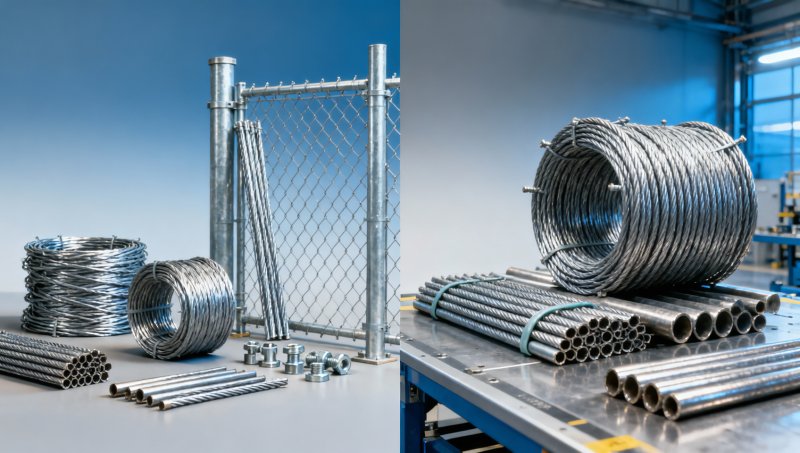
Many fencing failures do not start at installation. They start at procurement. In steel-related projects, teams often focus on unit price, visible appearance, or short-term availability, while overlooking service life, coating suitability, and wire behavior under real load conditions. This is common in perimeter fencing, temporary construction barriers, livestock enclosures, industrial partitions, and handrail support systems.
A typical mistake is treating all steel wire as interchangeable. In reality, low-carbon wire, high-tensile wire, galvanized wire, PVC-coated wire, and specialty alloy options perform differently under humidity, salt exposure, impact, and repeated tension. A fence that works for a dry inland warehouse may fail early in a coastal site within 12–24 months if material selection is not matched to the environment.
For procurement managers and technical evaluators, the challenge is rarely just choosing a wire diameter. The decision usually involves 4 linked variables: base steel grade, tensile requirement, corrosion protection method, and installation scenario. If one of these is misunderstood, maintenance frequency can rise from annual inspection to quarterly repair, which increases labor cost and operational disruption.
For global buyers, another source of error is specification translation. A quote may mention standard names such as ASTM, EN, JIS, or GB, but if coating thickness, wire tolerance, or packaging method is unclear, the delivered product may still be unsuitable. This is why experienced structural steel suppliers emphasize both document clarity and application-based recommendation rather than price-only comparison.
The most common selection mistakes
- Choosing fencing wire by diameter alone without checking tensile strength, elongation, or expected impact load.
- Using untreated or lightly oiled carbon steel wire in outdoor environments where galvanizing or additional coating is required.
- Ignoring site conditions such as coastal air, industrial chemicals, water splash zones, or animal contact.
- Comparing suppliers only on ex-works price instead of total lifecycle cost over 3–5 years.
- Failing to align wire choice with posts, mesh design, fastening method, and installation tension.
How to match wire material, coating, and environment
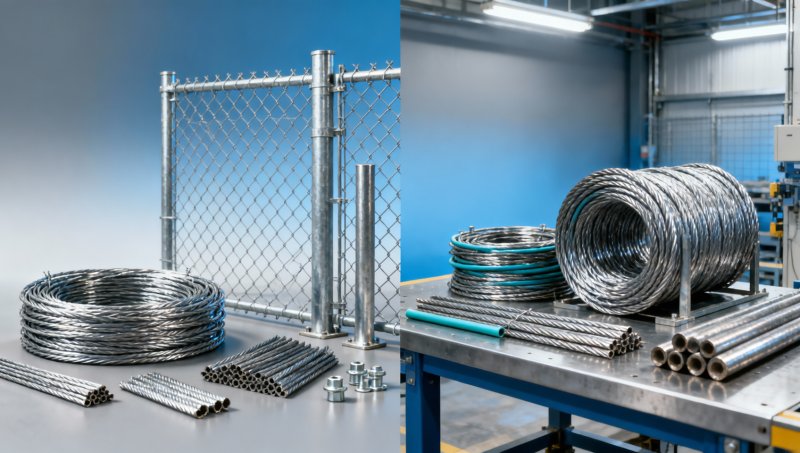
The right fencing wire selection starts with environment mapping. In practice, users should first classify the site into at least 3 basic conditions: indoor or dry area, standard outdoor area, and aggressive outdoor area. Aggressive environments include coastal zones, locations exposed to frequent rain, chemical plants, wastewater sections, and agricultural sites with high humidity or fertilizer exposure.
Carbon steel remains a widely used fencing material because it is cost-effective, mechanically reliable, and easy to process into mesh, line wire, or framed components. However, bare carbon steel is rarely the right answer for long-term external fencing. Surface treatment matters. Common options include galvanized finish, anti-rust oil, black or color painting, passivation, phosphating, lacquer sealing, and PVC coating, each serving different durability and budget goals.
For projects that require both structural reliability and component compatibility, buyers often evaluate related steel products together. In fence posts, brackets, reinforcement pins, gate shafts, and fabricated support parts, round steel bar may be selected alongside fencing wire. For example, 45# Carbon Steel Round Bar is commonly considered when a project needs excellent strength and wear resistance for auxiliary fence components used in construction, handrail, railing, balcony, or fence assemblies.
This matters because fencing systems are rarely isolated products. A durable wire combined with weak support hardware can still lead to premature failure. In engineering procurement, it is better to review the whole steel package, including round bars, hot rolled or cold rolled profiles, and coated components, especially when custom fabrication, welding, or OEM support is required within a 2–4 week production window.
Quick environment-based selection logic
The table below helps buyers compare common fencing wire selection paths based on environment, maintenance expectations, and budget control. It is especially useful for project managers, distributors, and sourcing teams reviewing multiple suppliers.
The key takeaway is simple: there is no single best fencing wire for every project. The correct choice depends on exposure level, expected lifespan, and replacement cost. A slightly higher initial material cost often prevents repeated repair labor, emergency replacement, and safety complaints later.
What technical teams should confirm before approval
- Confirm whether the wire will carry only enclosure function or also resist frequent impact, animal pressure, or security loading.
- Define whether the expected service period is short-term, medium-term, or longer than 5 years.
- Check if the project requires compatibility with ASTM, EN, JIS, or GB related documents for procurement or inspection records.
- Review packaging and transport conditions, especially for export shipments where surface damage during 7–15 day sea transit can affect coating integrity.
What buyers should compare beyond price
A low quotation can hide expensive downstream issues. In fencing wire procurement, the total decision should include purchase price, usable life, installation efficiency, scrap rate, rework frequency, and maintenance planning. Financial approvers often focus on the first number on the quotation sheet, but project managers usually feel the impact of poor selection during installation and operation.
For example, two wire options may look similar in a catalog, yet differ in coating consistency, coil handling, weldability, or break resistance. If one option causes a 3%–5% higher installation loss due to brittleness or coating cracks, the apparent savings disappear quickly. This is especially important for distributors and contractors working on medium or large-volume orders.
Experienced sourcing teams use a structured evaluation sheet with at least 5 checkpoints: base material quality, coating performance, dimensional consistency, compliance documentation, and delivery reliability. For imported steel products, consistency between trial order and repeat order is often more valuable than a one-time discount.
Hongteng Fengda supports this type of evaluation by supplying structural steel products with stable production capacity, strict quality control, and alignment with major international standards such as ASTM, EN, JIS, and GB. For buyers managing fence-related steel assemblies, this reduces sourcing fragmentation and helps control both quality risk and lead time pressure.
A practical comparison table for procurement decisions
Use the following comparison table when screening fencing wire suppliers or reviewing quotations for steel fence systems. It highlights factors that affect real project cost rather than only unit price.
This comparison framework is valuable not only for large infrastructure projects but also for regional distributors and fabricators. A good fencing wire decision protects installation quality, operational safety, and commercial predictability at the same time.
A useful rule for budget discussions
If the fence is expected to remain in place for more than 3 years, buyers should compare lifecycle cost instead of purchase price alone. If the installation is temporary and under controlled conditions, a simpler material choice may be acceptable. The decision should match project duration, environment severity, and replacement difficulty.
How to reduce selection risk during specification and inspection
Most fencing wire mistakes can be prevented before the order is placed. The strongest approach is to align technical, purchasing, and quality teams around a clear review process. In many projects, 6 inspection points are enough to filter out major risk: steel grade confirmation, diameter verification, coating method, packaging integrity, relevant standard reference, and intended application match.
The specification sheet should never rely on broad wording such as “high quality steel wire.” Instead, it should state intended use, outdoor or indoor condition, estimated service period, preferred finish, and acceptance criteria. Even a short but specific requirement list helps suppliers respond with the correct option instead of generic stock material.
For quality control and safety managers, receiving inspection is just as important as purchase specification. Visual checks should look for coating continuity, rust spots, packaging damage, and obvious diameter irregularity. Where the project is sensitive, sample checks from more than 1 coil or bundle provide a better picture than inspecting only the top layer.
When projects include related steel parts such as bars, posts, or fabricated accessories, consistency matters across the entire supply package. Products like 45# Carbon Steel Round Bar may be specified for fence-related components that need excellent strength, wear resistance, and compatibility with fabrication plans involving lengths such as 2 m, 5 m, 6 m, or 12 m and diameter ranges from 5–2500 mm.
A 4-step control process for project teams
- Define use conditions: security fencing, site perimeter, decorative fence, livestock enclosure, or industrial partition.
- Match steel and coating: select carbon steel type and surface protection according to exposure and maintenance plan.
- Verify supply details: confirm standards, dimensions, packaging method, and shipment schedule before PO release.
- Inspect on receipt: check appearance, documentation, random samples, and installation compatibility before site use.
Typical warning signs of poor fencing wire choice
- The wire feels overly brittle during bending or tying, suggesting mismatch between material condition and application.
- Coating flakes or cracks during handling, indicating weak protection for outdoor exposure.
- Delivered batches vary noticeably in finish or consistency, creating installation and quality control difficulties.
- The supplier cannot explain which environments the wire is suitable for or how it compares with alternatives.
FAQ: practical answers for fencing wire buyers and users
How do I choose fencing wire for coastal or humid environments?
Start with corrosion risk, not price. In coastal or high-humidity locations, buyers should prioritize stronger protective systems such as galvanized wire with additional coating when necessary. Also review connectors, ties, and support parts because mixed performance across components often shortens fence life. For installations expected to remain outdoors for more than 3–5 years, this step is especially important.
What matters more: wire thickness or wire strength?
Both matter, but neither should be judged in isolation. A thicker wire may still perform poorly if its tensile behavior, coating, or flexibility is unsuitable. Technical evaluators should review at least 3 things together: diameter, material grade, and service condition. For impact-prone fencing, strength and fastening compatibility often matter more than simple size increase.
How long is a normal delivery cycle for fencing-related steel products?
Delivery depends on product type, finish, and order volume. In common export practice, standard steel items may move within 2–4 weeks for production scheduling, while shipment transit can add 7–15 days or more depending on destination and shipping mode. Custom fabrication, special coatings, or mixed-product orders usually require earlier planning.
Can one supplier support both fencing wire decisions and related structural steel components?
Yes, and this often reduces procurement complexity. When a supplier understands structural steel, coatings, fabrication needs, and export documentation, buyers can coordinate fence posts, bars, profiles, and related support components through a more unified process. This improves consistency, simplifies communication, and reduces sourcing gaps between civil, fabrication, and installation teams.
Why work with a structural steel partner that understands full project requirements
Fencing wire selection is not just a materials question. It is a project risk question. Buyers need to balance cost, service life, standards, delivery schedule, and application fit. Users need reliable performance. Quality teams need traceable specifications. Decision-makers need fewer sourcing surprises. That is why technical support from a structural steel manufacturer is valuable even for apparently simple fence-related purchases.
Hongteng Fengda supplies structural steel products for global construction, industrial, and manufacturing projects, with capabilities covering standard specifications and OEM solutions. With modern manufacturing facilities and strict quality control, the company supports buyers who need dependable supply, consistent product quality, and clear communication across North America, Europe, the Middle East, and Southeast Asia.
If you are comparing fencing wire options, evaluating steel support parts, or planning a broader fence system package, you can consult on practical details before ordering. This includes parameter confirmation, material and coating selection, delivery cycle planning, compliance reference, sample support, and quotation alignment for standard or custom requirements.
For teams that want to reduce sourcing risk and avoid common fencing wire selection mistakes, the most efficient next step is to share your application scenario, environment condition, target service period, and required standards. Based on that information, a more suitable steel solution, accessory match, and supply schedule can be proposed with greater accuracy.
Please give us a message


Please enter what you want to find