Even a small leak in stainless coil pipe can lead to costly downtime, safety risks, and repeated maintenance work. For after-sales maintenance teams, understanding the most common leak points and their root causes is essential to faster troubleshooting and long-term prevention. This guide outlines practical ways to identify leakage issues early and improve system reliability through better inspection, installation, and material control.
In steel-processing lines, heat exchange systems, fluid transfer loops, and compact industrial assemblies, stainless coil pipe is widely selected for corrosion resistance, strength, and flexible routing. Yet field leaks still occur when material grade, bending quality, joint design, pressure control, or maintenance discipline do not match operating conditions.
For after-sales maintenance personnel, the practical goal is not only to stop leakage fast, but also to prevent repeat failures within 30, 60, or 90 days after repair. That requires a methodical approach covering leak location, service environment, installation history, inspection records, and replacement material consistency.
Where Stainless Coil Pipe Leaks Usually Start
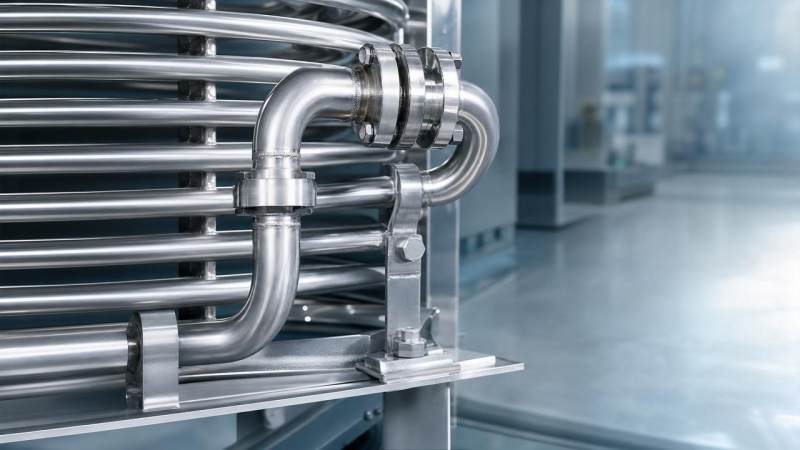
Most stainless coil pipe leakage cases can be traced to 5 common zones: welded joints, bend radii, threaded or compression connections, support contact points, and wall-thinned sections exposed to corrosion or vibration. Each zone fails in a different way, so correct diagnosis saves both labor hours and replacement cost.
Weld Seams and Heat-Affected Areas
Leaks at weld seams often appear as pinholes, linear seepage, or moisture rings after pressure cycling. In many plants, these failures emerge after 6–18 months when welding parameters, filler compatibility, or post-weld cleaning were not properly controlled.
If stainless coil pipe is exposed to chlorides, condensate, or unstable temperature swings, the heat-affected zone may become the first weak point. Surface discoloration, undercut, incomplete penetration, and residual slag should be checked before assuming the base pipe itself is defective.
Bends, Coils, and Mechanical Stress Points
Tight coiling or forced re-bending can reduce wall thickness on the outer arc and create stress concentration on the inner arc. When bend radius falls below recommended practice for the wall thickness, microcracks may form and later grow under 1.5–3.0 MPa cyclic service pressure.
Maintenance teams should pay close attention to stainless coil pipe installed near pumps, valves, compressors, or moving frames. Even a vibration amplitude that seems minor can loosen fittings or accelerate fatigue if the pipe lacks proper clamps every 1–1.5 meters.
Connections, Threads, and Sealing Surfaces
Many recurring leaks are not in the tube body but at the connection interface. Over-tightening can deform ferrules or sealing faces, while under-tightening leaves a path for seepage. In service calls, technicians often find leakage begins after emergency reassembly without torque consistency or seal replacement.
Where threaded transitions connect stainless sections to carbon steel or galvanized components, galvanic differences and poor sealing selection can shorten service life. This is especially important in wet, coastal, chemical, or high-condensation environments.
Quick Visual Clues During Field Inspection
- Brown or rainbow discoloration near welds
- Salt-like deposits or white residue at fittings
- Repeated moisture spots after shutdown and restart
- Flattened bend sections or scratched outer surfaces
- Loose supports, metal-to-metal rubbing, or clamp wear marks
The table below helps maintenance teams distinguish leak location from probable root cause and first action. This reduces guesswork during the first 30 minutes of troubleshooting.
A clear pattern emerges: recurring stainless coil pipe failures usually develop where stress, contamination, or assembly variation is concentrated. The earlier these patterns are documented, the easier it becomes to prevent the next repair cycle.
Root Causes Behind Repeated Leakage in Service
Stopping a leak is only step 1. Preventing the same failure from returning requires root cause analysis. In practice, repeated stainless coil pipe leakage often comes from 4 categories: material mismatch, installation error, operating condition drift, and incomplete inspection routines.
Material Selection That Does Not Match the Medium
Not every stainless grade performs equally in every environment. Systems carrying chloride-rich water, acidic condensate, cleaning chemicals, or mixed-temperature fluids may need tighter material review than systems handling clean air or mild process water.
After-sales personnel should verify at least 3 items before replacement: medium composition, operating temperature range, and actual pressure fluctuation. A pipe that works well at 25°C may fail much faster at 80°C when chloride exposure and stagnant moisture are present together.
Installation Deviations During Assembly
Improper alignment during fit-up can introduce permanent stress even before the system is pressurized. If technicians must force stainless coil pipe into position by hand, the pipe is already storing strain that may later concentrate at the fitting shoulder or weld toe.
Common field deviations include unsupported spans longer than 1.5–2 meters, mixed-metal contact without isolation, damaged tube ends after cutting, and skipped cleaning before assembly. Each of these raises the chance of leakage under thermal expansion and pressure cycling.
Operating Changes Not Reflected in Maintenance Plans
Many systems do not fail under original design conditions. They fail after the process changes. Added pump capacity, longer shift hours, more aggressive cleaning chemicals, or higher start-stop frequency can push the same stainless coil pipe beyond the assumptions of earlier maintenance plans.
If a line that was inspected every 6 months now runs at higher temperature and 20% more daily operating hours, inspection intervals should be shortened to every 8–12 weeks in high-risk zones. Otherwise, small seepage may progress unnoticed into shutdown-level leakage.
The Role of Adjacent Pipe Materials in System Protection
In mixed-material systems, durability is influenced by more than one pipe type. For support structures, low-pressure transfer lines, or external protective routing, corrosion-resistant alternatives can reduce the burden on sensitive stainless sections. One practical option is Galvanized Pipe for general low-pressure fluids such as water, gas, and oil, or for support frame applications where a zinc-coated surface helps extend service life.
For buyers comparing replacement and auxiliary materials, galvanized steel products are commonly available in DX52D and multiple standards such as ASTM, EN, JIS, and GB. Typical dimensions include lengths from 1–12 m, thickness from 0.1 mm to 300 mm, and tolerance around ±0.15 mm, which can help standardize procurement for industrial and civil building projects.
This does not replace stainless coil pipe in corrosive precision loops, but it can improve the surrounding system layout. Better material matching across the full line reduces galvanic risk, simplifies maintenance planning, and avoids using premium stainless in sections where zinc-coated steel is sufficient.
The following comparison highlights how maintenance teams can think about leak risk not only at the failed point, but across the connected piping and support environment.
The key point is system thinking. Maintenance outcomes improve when the team reviews not only the leaking stainless coil pipe section, but also supports, fittings, transitions, and nearby corrosion sources that may be accelerating failure.
How After-Sales Teams Can Prevent Future Leaks
A useful prevention plan should be simple enough for field execution and detailed enough for repeatability. In most industrial settings, a 5-step routine gives maintenance crews a realistic method to reduce stainless coil pipe leakage events over the next 3–12 months.
Step 1: Standardize Inspection Frequency by Risk Level
High-risk lines should be checked every 2–4 weeks, medium-risk lines every 2–3 months, and stable low-risk lines every 6 months. Risk should be based on temperature variation, fluid chemistry, vibration exposure, and previous leak history rather than calendar habit alone.
Step 2: Use a Repeatable Leak Verification Method
Do not rely only on visual confirmation. Combine 3 methods whenever possible: pressure hold testing, surface cleaning followed by visual observation, and non-destructive inspection for suspect welds. This helps separate active leakage from old residue or condensation.
Step 3: Control Replacement Quality
Every replacement section should be checked for outer surface defects, end squareness, wall consistency, and material marking. If the maintenance store holds mixed batches, introduce a simple traceability card with date, supplier, standard, and application zone. Four recorded fields can prevent major confusion later.
Minimum Replacement Checklist
- Confirm fluid type and service temperature
- Verify pipe size, wall thickness, and connection type
- Inspect bends, ends, and sealing surfaces before installation
- Record torque, test pressure, and inspection date
- Review the repaired point after 24–72 hours of operation
Step 4: Improve Support and Isolation Design
A technically sound pipe can still fail if support design is weak. Use protective liners at clamps, avoid sharp contact edges, and isolate dissimilar metals where moisture is likely. In vibration-prone zones, adding one correctly positioned support may prevent repeated leakage better than replacing the same pipe twice.
Step 5: Build Feedback Into Procurement and Manufacturing
Leak prevention improves when service data reaches procurement and suppliers quickly. If 3 similar failures occur in the same zone within 6 months, escalate the issue. Review whether the problem is tied to material specification, forming accuracy, welding practice, or unsuitable connection design.
For global buyers, working with manufacturers that maintain stable production, dimensional consistency, and compliance with ASTM, EN, JIS, or GB helps reduce variation from batch to batch. That is especially important when replacement parts must fit existing systems without repeated field modification.
Practical Questions Maintenance Teams Often Ask
How can we tell whether a leak is from corrosion or installation stress?
Corrosion-related leaks usually show pitting, discoloration, deposits, or local wall loss. Stress-related leaks are more likely to appear near bends, fitting shoulders, or misaligned joints. If the failed area is clean but located at a forced connection point, installation stress is a strong suspect.
Should stainless coil pipe always be replaced with the same material?
Not automatically. The replacement must match the actual service condition, not only the original drawing. If process chemistry, temperature, or operating hours have changed, the maintenance team should recheck material suitability before issuing the same replacement again.
What is the most overlooked cause of repeat leakage?
Poor support and incomplete root cause recording are both common. Many teams repair the visible leak but do not record whether the line vibrated, rubbed, overheated, or shifted during operation. Without that record, the same stainless coil pipe failure mode tends to return.
When should we involve the supplier?
Involve the supplier when failure patterns repeat across multiple batches, when dimensions appear inconsistent, or when the system requires customized steel solutions. Early communication can shorten troubleshooting time and help align replacement materials with the actual industrial application.
Leak prevention in stainless coil pipe is rarely about one single fix. It is the result of better inspection timing, better material matching, better joint control, and better feedback between maintenance, procurement, and manufacturing. For after-sales teams, that means fewer emergency repairs, lower repeat work, and more stable system performance.
Hongteng Fengda supports global industrial and construction buyers with reliable steel products, customized solutions, and consistent quality control across internationally recognized standards. If you need support with pipe-related steel sourcing, structural components, or a more durable material plan for your maintenance environment, contact us today to get a tailored solution, discuss product details, and explore more practical options for your project.
Please give us a message


Please enter what you want to find