Why Cleaning Standards for Stainless Steel Pipe Coil Are Becoming More Important
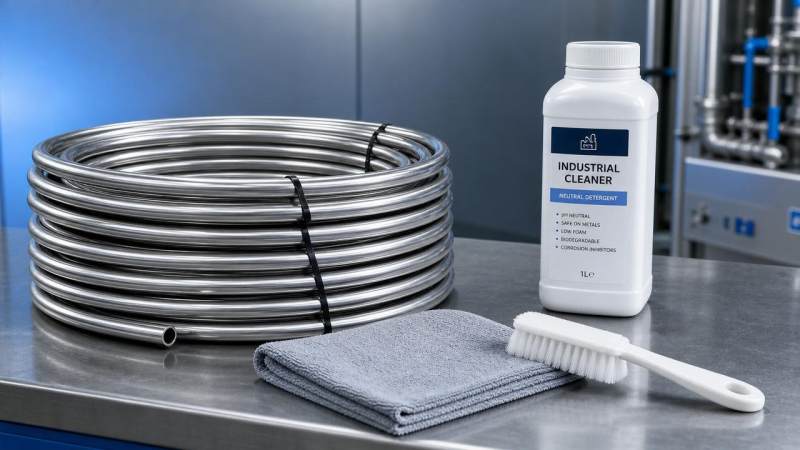
Proper care can greatly extend the service life of a stainless steel pipe coil while preserving its strength, appearance, and performance.
Whether used in household, industrial, or light commercial settings, regular cleaning helps prevent corrosion, buildup, and premature wear.
In this guide, we share practical cleaning tips to help end users maintain a stainless steel pipe coil efficiently and avoid common mistakes.
Across the steel industry, maintenance expectations are changing.
Users now expect a stainless steel pipe coil to deliver longer service life, lower downtime, and stable surface quality under tougher operating conditions.
That shift matters because cleaning is no longer only about appearance.
It directly affects corrosion resistance, heat transfer efficiency, hygiene, and total lifecycle cost.
In many applications, poor maintenance shortens the working life of a stainless steel pipe coil faster than normal mechanical wear.
Current Use Conditions Show a Clear Shift Toward Higher Maintenance Demands
A stainless steel pipe coil is often exposed to moisture, chlorides, dust, grease, process residue, or temperature cycling.
These conditions have become more common as systems run longer and cleaning intervals are sometimes delayed.
At the same time, surface finish expectations are rising.
Even minor staining on a stainless steel pipe coil can trigger concerns about contamination, corrosion risk, or process instability.
This is especially true in compact systems where a coil handles pressure, flow, and heat exchange in a limited space.
As a result, cleaning practices are moving from reactive repair to preventive care.
Common trend signals seen in daily operation
- More deposits appear in hard water or mineral-rich environments.
- Grease and airborne particles accumulate faster in mixed-use facilities.
- Higher humidity increases surface spotting and hidden crevice moisture.
- Longer operating cycles reduce opportunities for full manual inspection.
- Incorrect cleaners damage passive layers on stainless surfaces.
The Main Drivers Behind Better Stainless Steel Pipe Coil Cleaning Practices
Several practical factors are pushing users to improve stainless steel pipe coil maintenance routines.
These drivers align with broader steel product trends.
Buyers increasingly value not only material grade, but also maintenance predictability and long-term operating reliability.
That same principle applies across structural steel supply.
For example, projects using Q195 angle steel often pay close attention to finish, standards, and application suitability.
Typical options include equal and unequal sections, thickness from 3-24mm, and finishes like black, bright, polishing, pickled, or blasting.
With compliance to ASTM, AISI, EN, DIN, JIS, and GB, such materials support building structures, bridges, towers, warehouse shelves, and power piping.
How These Changes Affect Service Life, Safety, and Performance
The impact of poor cleaning on a stainless steel pipe coil is usually gradual, then suddenly expensive.
Surface contamination may look minor at first.
However, trapped moisture and deposits can create localized corrosion points over time.
In thermal systems, scale buildup may also reduce efficiency.
That means the stainless steel pipe coil works harder while delivering less effective performance.
Frequent cleaning with the wrong chemicals causes a different problem.
Harsh chlorine bleach, strong hydrochloric acid, and abrasive pads can scratch the surface or weaken the passive film.
Once that protective layer is damaged, a stainless steel pipe coil becomes more vulnerable to staining and corrosion.
Operational effects often include
- Shorter maintenance intervals
- Reduced heat exchange consistency
- Higher risk of leakage from neglected corrosion points
- More difficult visual inspections
- Greater total ownership cost over time
What Deserves More Attention in Daily Stainless Steel Pipe Coil Care
A good cleaning routine for stainless steel pipe coil maintenance should be simple, repeatable, and gentle on the material.
The goal is to remove contaminants before they become corrosive or difficult to clean.
Core maintenance points
- Use soft cloths, non-abrasive sponges, or nylon brushes.
- Choose warm water with mild detergent for routine cleaning.
- Rinse thoroughly to remove chemical residue.
- Dry the surface after cleaning to reduce water spots.
- Inspect bends, joints, and hidden contact points for trapped deposits.
- Increase cleaning frequency in coastal, humid, or high-dust environments.
Common mistakes that should be avoided
- Using steel wool or carbon steel brushes
- Leaving salt, bleach, or acidic solution on the surface
- Ignoring discoloration near welded or stressed areas
- Cleaning too aggressively instead of more regularly
- Skipping the final rinse and drying step
Practical Judgments for Different Cleaning Situations
Not every stainless steel pipe coil needs the same cleaning method.
Cleaning intensity should match the type of contamination and the operating environment.
When the contamination returns quickly, the issue may be environmental rather than procedural.
In that case, better drainage, shielding, ventilation, or water treatment may be necessary.
A Smarter Maintenance Direction Supports Long-Term Steel Performance
The long-term trend is clear.
Steel products are increasingly evaluated by lifecycle reliability, not only by initial strength or price.
For a stainless steel pipe coil, that means cleaning must be treated as part of performance management.
A simple schedule, the right cleaning agents, and regular visual checks can significantly reduce failure risk.
This mindset matches the broader service approach of Hongteng Fengda.
As a structural steel manufacturer and exporter from China, the company supports global projects with stable quality, international standards compliance, and dependable delivery.
Its solutions cover angle steel, channel steel, beams, cold formed profiles, and customized components for construction and industrial use.
If a stainless steel pipe coil is already showing buildup, spotting, or early discoloration, start with a gentle cleaning review this week.
Then document the results, adjust the interval, and remove any chemical or environmental causes that keep contamination returning.
Consistent care is the simplest way to protect a stainless steel pipe coil and preserve steel value over time.
Please give us a message


Please enter what you want to find