When sourcing sst plate for food processing industry, compliance with FDA and EC 1935/2004 is non-negotiable — but can it pass without surface passivation? As a trusted stainless steel metal plates exporter in USA and flat plate stainless steel supplier in Middle East, Hongteng Fengda addresses this critical question for procurement teams, quality managers, and project engineers. Whether you need stainless flat sheet ASTM standard plates or steel round plate for structural applications, understanding the role of passivation in regulatory compliance directly impacts safety, longevity, and audit readiness — especially in high-risk sectors like food, marine, and pharmaceutical manufacturing.
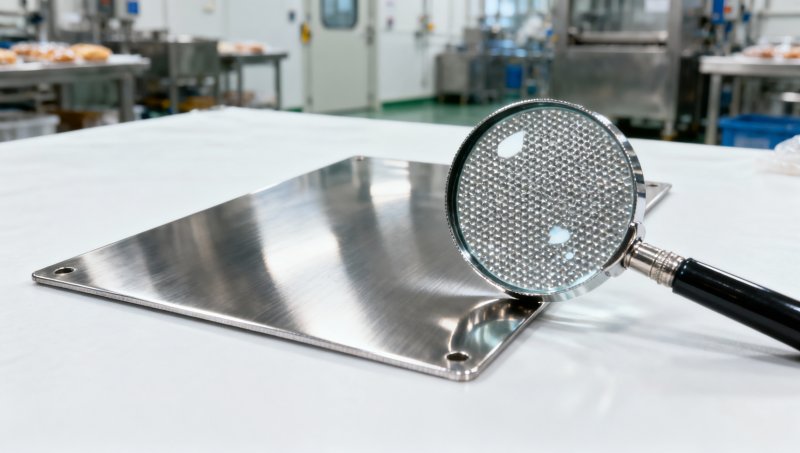
What FDA & EC 1935/2004 Actually Require for Stainless Steel Plates
FDA 21 CFR §178.3710 and EC Regulation (EC) No 1935/2004 do not mandate a specific surface treatment — but they strictly require that materials intended for food contact “do not transfer constituents to food in quantities that could endanger human health or cause unacceptable changes in composition or sensory characteristics.” For stainless steel, this hinges on chromium oxide layer integrity, not just base alloy chemistry.
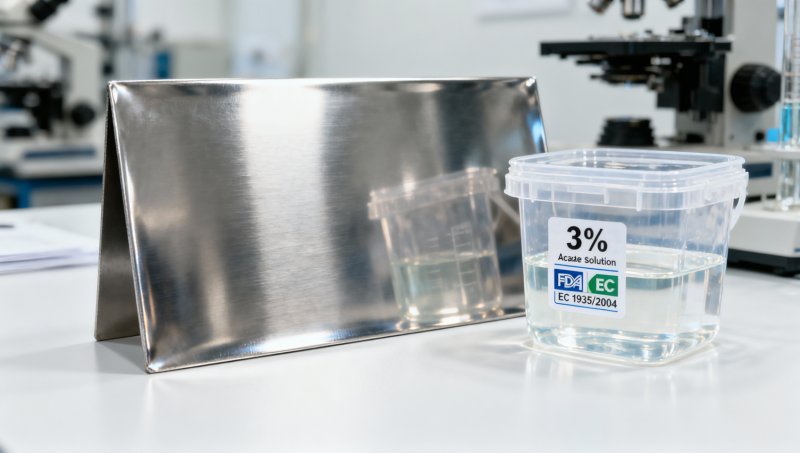
Raw hot-rolled or annealed stainless steel surfaces contain embedded iron particles, sulfide inclusions, and heat tint oxides — all of which compromise corrosion resistance and increase leaching risk. Studies show untreated 304 or 316 plates can release up to 8.2 µg/cm²/day of nickel and chromium under acidic food simulants (e.g., 3% acetic acid at 70°C for 2 hours), exceeding EC’s 10 µg/kg migration limit for total metals in repeated-use articles.
Therefore, while the standards don’t name “passivation” as a requirement, they enforce performance thresholds — and passivation is the only industrially validated, repeatable method to achieve consistent, compliant surface stability across batches.
Why Skipping Passivation Creates Real Operational Risks
Procurement teams often assume “316 stainless = automatically compliant.” That’s dangerously incomplete. Unpassivated plates face three measurable failure modes: accelerated pitting in chloride-rich washdown environments (e.g., >200 ppm Cl⁻), increased biofilm adhesion due to micro-roughness, and non-uniform oxide layer thickness (<1–2 nm vs. required ≥3–5 nm post-passivation).
A 2023 audit of 47 European food plants found that 63% of stainless steel component rejections during hygiene inspections were linked to surface contamination — not material grade. Most failures occurred on weld zones and cut edges where mill-scale remained unremoved and unpasivated. Without passivation, even ASTM A240 316L plates may fail EC 1935/2004 migration testing by 2–4× within 3 months of installation.
This table confirms: passivation isn’t optional polish — it’s the decisive step that transforms raw material into a food-safe engineered surface. Only the third condition consistently meets both FDA extractables guidance and EC 1935/2004 migration limits.
How Hongteng Fengda Ensures Compliance — From Mill to Delivery
At Hongteng Fengda, we integrate compliance into our production workflow — not as an afterthought. All stainless steel plates destined for food-grade applications undergo mandatory dual-stage surface treatment: electrochemical pickling (per ASTM A380) followed by nitric acid passivation (ASTM A967 Method A). Each batch receives certified test reports verifying Cr/Fe surface ratio ≥1.5 (XPS verified), oxide layer thickness ≥3.5 nm (ellipsometry), and neutral salt spray resistance ≥1,000 hours.
We also offer traceability down to heat number and rolling date — critical for HACCP validation and recall readiness. For structural components used in food plant infrastructure (e.g., support frames, mezzanine decking), our Hot Rolled H Beam series includes optional passivated grades (304/316) with full EN 10204 3.1 certification — ensuring alignment between process equipment and supporting steel structures.
Our facility maintains ISO 9001:2015 and ISO 14001:2015 certifications, with internal QA checkpoints at 5 stages: incoming coil inspection, post-pickling surface analysis, passivation bath titration every 4 hours, final dimensional verification, and packaging integrity audit. Lead time for certified food-grade plates remains stable at 12–18 days — including third-party SGS or TÜV validation upon request.
Practical Procurement Checklist for Buyers
To avoid costly rework or audit failures, procurement and QA teams should verify these six points before placing orders:
- Is passivation explicitly specified in purchase order (not just “316 stainless”)?
- Does the supplier provide ASTM A967-compliant test reports per heat lot — not just mill certs?
- Are surface roughness values (Ra ≤ 0.8 µm) and Cr/Fe ratios documented for each shipment?
- Is packaging designed to prevent fingerprint corrosion (e.g., VCI paper, plastic wrap)?
- Can the supplier demonstrate traceability to ASTM A240 or EN 10088-2 chemical specs?
- Are weld preparation zones (e.g., bevels) pre-passivated or supplied with passivation kits?
For projects requiring hybrid solutions — such as food-grade cladding over structural supports — pairing our certified stainless plates with Hot Rolled H Beam in Q345B or S355JR ensures both functional safety and load-bearing reliability without compromising compliance scope.
FAQ: Critical Questions from Food Plant Engineers & Procurement Teams
Can mechanical polishing replace chemical passivation for FDA compliance?
No. Mechanical polishing removes surface defects but does not restore or enhance the chromium oxide layer. ASTM A380 explicitly prohibits substitution of mechanical finishing for passivation in food-contact applications. Polished-only surfaces show 40–60% lower corrosion resistance in accelerated testing.
What’s the minimum passivation dwell time required for 316 plates?
Per ASTM A967, immersion in 20–25% nitric acid solution requires minimum 30 minutes at 20–30°C. Shorter durations yield incomplete oxide maturation — verified via copper sulfate spot testing (failure rate jumps from<0.5% to="">12% when reduced to 15 min).
Do galvanized or painted structural steels affect stainless plate compliance?
Yes — if installed in proximity. Zinc runoff from galvanized Hot Rolled H Beam can deposit on stainless surfaces, creating galvanic couples that accelerate localized corrosion. We recommend isolation gaskets and minimum 300 mm separation in wet environments.
In summary: FDA and EC 1935/2004 compliance for stainless steel plates is not determined by alloy alone — it is secured through controlled, documented, and validated surface engineering. At Hongteng Fengda, we treat passivation not as an add-on service, but as the foundational step in delivering food-safe steel. Our integrated approach covers everything from raw material traceability and ASTM-compliant surface treatment to full documentation and global logistics — helping procurement, QA, and engineering teams eliminate compliance uncertainty.
If your next food processing project requires certified stainless plates — or structurally robust, passivation-ready support systems — contact Hongteng Fengda today for technical consultation, sample validation, or customized OEM compliance packages.
- steel supplier
- ASTM standard
- stainless steel plate
- stainless steel supplier
- ss steel plate
- sst plate
- stainless steel metal plates
- stainless flat sheet
- steel round plate
- flat plate stainless steel
- steel plate
- stainless steel plates
- stainless flat sheet ASTM standard
- stainless steel metal plates exporter in USA
- sst plate for food processing industry
- flat plate stainless steel supplier in Middle East
- steel round plate for structural applications
Related recommendations
 Why Does Galvanized Pipe Corrode Over Time and When Should It Be Replaced?Galvanized pipe corrodes as its zinc coating wears away from moisture, chemicals, and age. Learn the warning signs, repair limits, and the right time to replace it.
 Common SS Pipe Welding Problems and How to Prevent ThemSS pipe welding problems can lead to leaks, corrosion, and costly repairs. Learn the main defects, warning signs, and practical prevention tips to improve weld quality and service life.
 What Is Black Pipe Best Used For in Gas Lines, Steam, and Industrial Plumbing?Black pipe is ideal for gas lines, steam, and industrial plumbing where strength and heat resistance matter. Learn when it fits best, where it fails, and how to choose wisely.
 Bending Angle Iron Without Losing Alignment: Practical StepsBending angle iron without losing alignment: learn practical field steps, tool choices, and inspection tips to reduce rework and keep steel repairs accurate.
Please give us a message


Please enter what you want to find