Knowing how to calculate I beam weight correctly is essential for engineers, buyers, and project managers who need accurate material estimates, safe load planning, and cost control. This guide explains the key dimensions, common calculation mistakes, and practical selection factors while helping global buyers compare related structural products from a trusted China Steel Supplier for construction and industrial applications.
In structural steel procurement, even a small error in beam weight can affect transport planning, quotation accuracy, crane selection, fabrication workflow, and on-site installation safety. For a distributor, the problem may be inventory mismatch. For a contractor, it may mean a budget gap across hundreds of meters of steel sections. For a quality or safety manager, inaccurate weight data can lead to improper handling methods or weak documentation.
This article focuses on the dimensions that matter, the formulas used in practice, and the points global buyers should verify before placing an order. It is written for technical evaluators, procurement teams, project managers, and decision-makers who need practical steel knowledge instead of vague theory.
Why Accurate I Beam Weight Calculation Matters in Real Projects
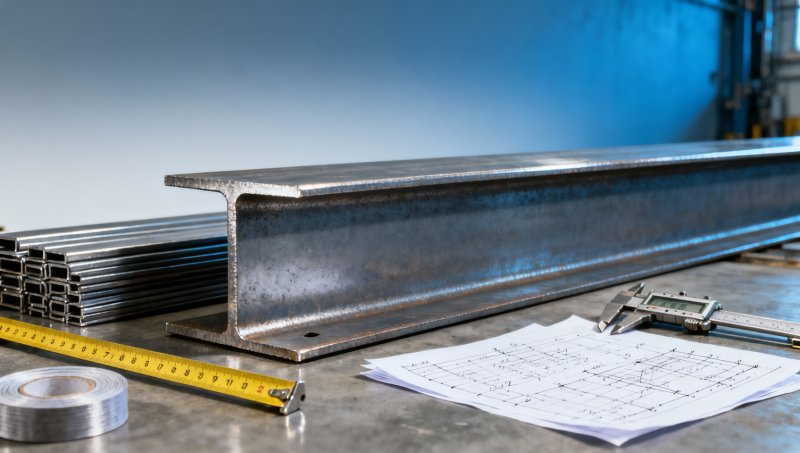
I beam weight is not only a theoretical value from a handbook. In real projects, it directly influences 4 major areas: material budgeting, structural planning, logistics cost, and installation method. If the estimated weight per meter is off by even 3% to 5%, the total deviation across 20 tons or 200 tons of steel can become significant for both finance approval and site execution.
For example, procurement teams often compare supplier offers on a per-ton basis, while engineers may specify beam sections by size and length. If the beam designation is understood differently between ASTM, EN, JIS, and GB standards, the section weight may not match the expected value. This creates risk during quotation review, customs documentation, and final invoicing.
Accurate calculation also supports lifting and storage safety. A 6 m beam and a 12 m beam with the same profile obviously do not have the same total mass, but handling plans are still sometimes prepared using rough assumptions. In industrial workshops, warehouses, and construction sites, this can affect forklift load selection, crane tonnage, and rack design.
For international buyers sourcing from China, reliable weight calculation helps reduce disputes. Hongteng Fengda, as a structural steel manufacturer and exporter, supports projects that need standard steel beams, cold formed profiles, angle steel, channel steel, and customized structural components under ASTM, EN, JIS, and GB related requirements. In this context, understanding beam weight is part of better sourcing control, not just engineering math.
Key project impacts of beam weight errors
- Underestimated weight may lead to insufficient freight budgeting, especially for container and bulk shipment planning.
- Overestimated weight can distort cost comparisons between suppliers and make a quotation appear less competitive than it really is.
- Incorrect section data may cause fabrication shops to prepare the wrong cutting, welding, or handling sequence.
- Weight mismatch in delivery documents may slow inspection, receiving, and payment approval.
The table below shows where weight accuracy matters most across the steel supply chain.
The main takeaway is simple: beam weight affects far more than steel math. It influences commercial decisions, execution efficiency, and operational safety from the first inquiry to final installation.
The Dimensions You Must Check Before Calculating I Beam Weight
To calculate I beam weight correctly, you need the right dimensions first. The most important dimensions are overall height, flange width, web thickness, flange thickness, and total length. If one of these values is missing or interpreted from the wrong standard table, the result can be misleading even if the formula itself is correct.
Many users make the mistake of relying only on nominal beam size. For example, two beams described as “200 mm I beam” may differ in web thickness, flange thickness, root radius, and theoretical weight per meter. Standard designation does not always tell the full story. Technical teams should always confirm the exact section drawing or standard table before approving a purchase.
Another important point is unit consistency. Dimensions may be listed in mm, while length may be entered in m and density in kg/m³. If the conversion is not handled correctly, the final weight can be wrong by a factor of 10, 100, or even 1000. Steel density is commonly taken as 7,850 kg/m³ for theoretical calculations, though some project documents may round it slightly for convenience.
In purchasing and quality review, it is also useful to separate theoretical weight from actual delivered weight. Surface condition, rolling tolerance, and cutting method can create some difference. For this reason, theoretical weight is excellent for planning, but receiving inspection should still refer to the applicable standard tolerance requirements.
Critical dimensions for I beam calculation
The table below summarizes the dimensions and why each one matters.
When specifications are exchanged across countries, always verify whether the beam is a standard rolled section or a customized fabricated section. This matters because fabricated beams may include weld allowances, plate thickness variations, or design changes that do not appear in standard catalogs.
A practical checklist before calculation
- Confirm the standard system: ASTM, EN, JIS, or GB.
- Check whether the section is nominal or exact dimension based.
- Verify all measurements are in mm before area calculation.
- Use a steel density of 7,850 kg/m³ unless the project specifies otherwise.
- Multiply unit weight by cut length, such as 6 m, 9 m, or 12 m.
How to Calculate I Beam Weight Step by Step
The basic logic is straightforward: first calculate the cross-sectional area, then multiply it by length, then multiply by steel density. In simplified form, beam weight = section area × length × density. If the area is calculated in mm², it must be converted into m² before applying density in kg/m³. This is where many manual calculations go wrong.
A simplified I beam area formula often used for estimation is: area = 2 × flange width × flange thickness + (overall height − 2 × flange thickness) × web thickness. This ignores fillet radii and rolling details, so it is suitable for preliminary estimation, not for replacing official standard section tables where exact theoretical weight is available.
Consider a sample section with an overall height of 300 mm, flange width of 150 mm, flange thickness of 10 mm, and web thickness of 6.5 mm. The simplified section area is 2 × 150 × 10 + (300 − 20) × 6.5 = 3,000 + 1,820 = 4,820 mm². Converting 4,820 mm² into m² gives 0.00482 m². For 1 m length, weight is 0.00482 × 7,850 = about 37.84 kg/m.
If the same beam is supplied in 12 m lengths, the theoretical weight is about 454.08 kg per piece. For a batch of 40 pieces, the approximate total becomes 18,163.2 kg, or about 18.16 tons. This type of calculation helps purchasing teams quickly estimate order value, transport requirements, and handling equipment needs before final technical confirmation.
Step-by-step method
- Collect exact beam dimensions from the drawing or standard table.
- Calculate cross-sectional area in mm² using the beam geometry.
- Convert mm² to m² by dividing by 1,000,000.
- Multiply by length in meters.
- Multiply by 7,850 kg/m³ to get theoretical weight in kg.
In practical sourcing, buyers should compare their manual estimate with the supplier’s theoretical weight table. If the difference is more than a small tolerance caused by simplified geometry, it is worth checking whether the profile standard, flange type, or dimensions are mismatched.
During project planning, buyers often source related steel products together, not only beams. In anti-slip platform areas, walkways, machine surroundings, or shipbuilding decks, patterned steel plates may be specified alongside structural members. For such applications, SS440 Patterned steel plate can be considered where anti-skid performance, decorative appearance, and bending resistance are required. Typical thickness ranges from 2 mm to 8 mm, with widths from 600 mm to 1800 mm and lengths from 2 m to 12 m, depending on project needs.
Common Calculation Mistakes and How to Avoid Them
The first common mistake is confusing standard designation with actual weight. For instance, users sometimes assume that beams with similar nominal sizes from different standards are interchangeable in both section properties and mass. In reality, dimensional differences in flange width and web thickness can create clear weight variation per meter.
The second mistake is forgetting root radii, tapered flanges, or profile-specific details. Simplified formulas are useful for quick estimation, but official handbooks or supplier section tables should be used for contract, fabrication, and inspection documents. On high-volume orders, even a 1 kg/m error can be meaningful over several hundred meters.
A third issue is unit conversion. Teams may mix mm, cm, and m in one formula. Another frequent problem is applying steel density incorrectly, especially when the section area has not yet been converted into square meters. This is a technical error, but it often reaches the commercial stage and affects bidding or supplier comparison.
The fourth mistake appears during procurement: using theoretical weight as the only acceptance basis without checking dimensional tolerance and standard compliance. Real delivered weight may vary within acceptable tolerance, so purchasing and QC teams should combine dimensional inspection, grade verification, and document review instead of focusing on one number alone.
Typical errors and corrective actions
The following comparison can help technical and purchasing teams identify avoidable mistakes before order confirmation.
These mistakes are preventable with a simple process: confirm standard, confirm geometry, confirm units, confirm weight table, and confirm tolerance. That 5-step workflow can save both technical revision time and commercial negotiation time.
Quick risk-control tips for buyers
- Ask for theoretical weight per meter in the quotation, not only total tonnage.
- Request material grade and standard reference on the same document.
- Check whether beams are hot rolled, fabricated, or customized OEM sections.
- For mixed orders, separate beam items from plate, angle, and channel items in packing lists.
How Global Buyers Should Use Weight Data for Selection and Procurement
For procurement teams, beam weight is useful only when connected to a broader decision process. Weight should be reviewed together with steel grade, section standard, coating requirement, fabrication scope, delivery term, and destination market. A low unit price is not necessarily cost-effective if the section selected creates unnecessary mass or difficult logistics.
Project managers should also think in terms of total system compatibility. For example, a project may require steel beams for the main frame, channels for support members, angle steel for bracing, and patterned plates for floor access or machinery platforms. In such cases, a supplier with stable production capacity and experience in multiple structural products can reduce coordination risk across 2 to 4 product categories within one shipment plan.
Hongteng Fengda serves buyers across North America, Europe, the Middle East, and Southeast Asia with structural steel products manufactured under commonly requested standards such as ASTM, EN, JIS, and GB. This matters because the buyer can discuss not only dimensions and tonnage, but also lead time, tolerance expectations, export packing, and custom processing requirements in one integrated sourcing conversation.
When related plate products are part of the project package, buyers may also evaluate anti-slip and decorative surfaces for industrial floors, transportation structures, or shipbuilding zones. In that context, the linked patterned plate option supports applications such as floor around equipment, decoration, construction, and machinery access areas. Buyers should compare thickness tolerance, width range, and certification needs before combining these items into one procurement batch.
Procurement factors beyond beam weight
- Section accuracy: verify dimensions and standard tables before PO approval.
- Material grade: match project requirement, such as A36, Q235B, or equivalent grade framework where applicable.
- Lead time: typical rolling and export preparation may range from 2 to 6 weeks depending on section size and quantity.
- Packaging and shipment: long sections may require different loading plans from plate products with 2 m to 12 m length.
- Inspection documents: align mill test documentation, dimensional checks, and quantity basis before dispatch.
A practical sourcing strategy is to ask for 3 sets of data in one quotation package: theoretical weight table, dimensional tolerance reference, and available production length range. This supports finance review, technical approval, and site planning at the same time.
FAQ for engineers, buyers, and project teams
How accurate is a manual I beam weight calculation?
A manual calculation is usually accurate enough for early estimation and budget comparison if exact dimensions are used. However, for purchasing contracts and QC records, official section tables are more reliable because they account for profile details that simplified formulas may ignore.
Should procurement use theoretical weight or actual weight?
Theoretical weight is the normal basis for planning, quoting, and comparing standard sections. Actual received weight may vary within tolerance, so procurement and QC should review both theoretical values and applicable standard tolerances rather than treating every small variation as nonconformity.
What documents should buyers request from a steel supplier?
At minimum, ask for the product specification, material grade, size list, theoretical weight information, inspection basis, and shipment details. For export projects, it is also useful to confirm standards, packaging, and lead time before production starts.
When should a buyer choose customized structural steel instead of a standard beam?
Customized sections are useful when the project needs non-standard dimensions, welded assemblies, OEM fabrication, or integrated structural components. In that case, unit weight should be recalculated from drawings and verified during technical review instead of relying on standard beam catalogs.
Calculating I beam weight without missing key dimensions is a practical skill that improves cost control, sourcing clarity, transport planning, and installation safety. The most reliable approach is to confirm the exact beam geometry, apply consistent units, use steel density correctly, and compare results against official section tables and tolerance standards. For global buyers seeking dependable structural steel supply from China, working with an experienced manufacturer helps connect technical data with production, export coordination, and project delivery needs.
If you need support with steel beams, angle steel, channel steel, cold formed profiles, customized structural components, or related project materials, contact Hongteng Fengda to discuss your specifications. You can request product details, weight confirmation, and a tailored sourcing solution for construction, industrial, and manufacturing applications.
Please give us a message


Please enter what you want to find