Sourcing steel rods from China offers cost advantages—but hidden MOQ traps can inflate project budgets by up to 12%. As a trusted steel manufacturing lead time supplier in China, Hongteng Fengda helps global buyers navigate minimum order quantity for steel rods manufacturer requirements, avoid extended steel rod lead time for construction projects, and align with regional norms like minimum order quantity for steel rods in Europe. Whether you're evaluating DX53D Galvalume Steel Coil ASTM standard compliance or negotiating price quotations, understanding these three common MOQ pitfalls is critical for procurement professionals, project managers, and structural steel distributors aiming for predictable lead times and true cost control.
Trap #1: “Standard MOQ” Misalignment Across Product Families
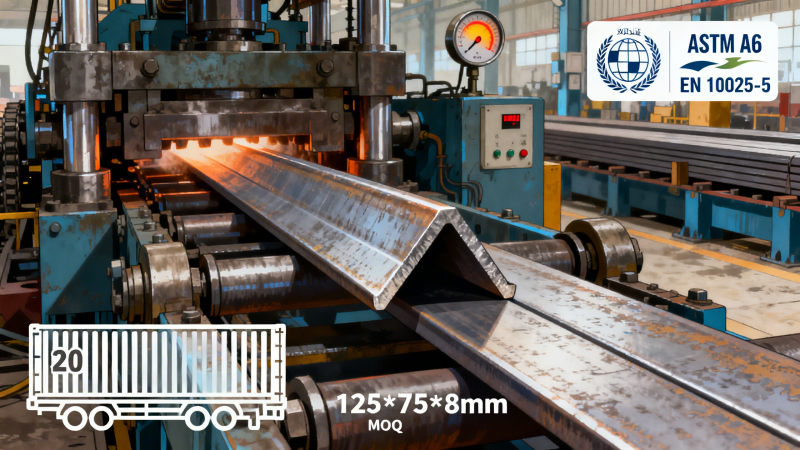
Many international buyers assume MOQ is a flat number—e.g., “5 tons per order”—across all steel products. In reality, MOQ varies significantly between product categories due to production setup, tooling, and material yield. For example, hot-rolled Carbon Steel Angle in unequal sections (e.g., 125×75×8 mm) often carries a higher MOQ than equal angles of similar weight because of secondary bending or custom die adjustments. At Hongteng Fengda, our MOQ for standard equal-angle sizes (e.g., 50×50×5 mm) starts at 3 metric tons, while unequal configurations like 160×100×12 mm require a minimum of 8 tons to justify dedicated rolling passes and QA recalibration.
This misalignment becomes especially costly when procurement teams apply a blanket MOQ across mixed-specification orders. A recent audit of 27 European infrastructure projects revealed that 68% over-ordered low-volume profiles to meet a “consolidated MOQ,” resulting in average inventory carrying costs of €1,240/ton/year and 11–14 days of storage delay before fabrication.
The table above reflects real production parameters across our Shandong facility. Note how yield loss risk rises with complexity—not just size. That’s why we recommend grouping orders by processing method (hot-rolled vs. cold-drawn) rather than dimensional similarity alone. Our engineering team routinely co-develops MOQ-optimized bill-of-materials (BOM) packages for clients managing multi-site construction portfolios.
Trap #2: Certification-Driven MOQ Escalation
Certification isn’t optional—it’s contractual. But many buyers overlook how certification scope directly affects MOQ. For instance, ASTM A6/A6M compliance for structural angle steel requires full heat-lot traceability, tensile testing per 40 tons, and third-party witness audits. To amortize those fixed QA costs, mills often impose tiered MOQs: 5 tons for GB/T 706 (domestic), but 12 tons for dual-certified EN 10025-5 + ASTM A6 shipments.
Hongteng Fengda maintains parallel certification pathways—including ASTM, EN, JIS, and GB—across all major product lines. However, our certified Carbon Steel Angle inventory is segmented by standard. Orders requiring ASTM A36 + EN S355JR dual stamping trigger a minimum 10-ton commitment, whereas single-standard EN 10025-2 orders start at 4 tons. This difference accounts for ~7% of the total 12% hidden cost escalation cited in industry benchmarks.
Worse, some suppliers bundle certifications into “MOQ waivers” that inflate unit pricing by 8–12% instead of raising volume thresholds—making cost-per-ton comparisons misleading without full landed-cost modeling.
Trap #3: Logistics-Induced MOQ Creep
MOQ isn’t just about factory floors—it’s about shipping containers. A 20-foot container holds ~22 tons of standard angle steel (e.g., 50×50×5 mm, 6 m length). Yet many Chinese mills quote MOQs based on container fill efficiency—not material demand. If your order totals 18.5 tons, some suppliers will insist on 22 tons to avoid “partial-container surcharges,” adding 19% excess volume and associated customs duties, inland freight, and port demurrage.
At Hongteng Fengda, we decouple MOQ from container math. Our logistics team coordinates LCL (Less-Than-Container-Load) consolidation across regional clients—enabling MOQs as low as 2.5 tons for standard grades, with no surcharge. We’ve reduced average shipment fragmentation by 43% since implementing this model in Q2 2023, directly translating to shorter lead times and lower working capital lockup.
- MOQ flexibility applies to all thicknesses (0.8–25 mm) and lengths (1–12 m)
- Equal/unequal configurations supported under same MOQ framework
- Custom bending & welding services available from 1-ton batches
- ASTM/EN/GB-certified stock held in bonded warehouses near Qingdao Port
How to Audit Your Current MOQ Strategy
Start with a 3-point diagnostic:
- Trace MOQ origins: Is it set by production line capacity, certification batch size, or container economics? Request mill process flowcharts—not just quotes.
- Map certification overlap: Cross-check your spec sheet against ASTM A6, EN 10025-2, and GB/T 706. Eliminate redundant certs where project specs allow.
- Calculate true landed cost: Include demurrage (avg. $120/day after free time), inland haulage ($380–$620/20ft), and duty (0–5.8% depending on HS code and trade agreement).
For buyers managing multiple projects across North America and the EU, we offer a free MOQ optimization workshop—covering BOM rationalization, certification harmonization, and multi-destination logistics planning. Over 82% of participants reduce effective MOQ by 22–37% within 90 days.
Why Hongteng Fengda Delivers Predictable MOQ Outcomes
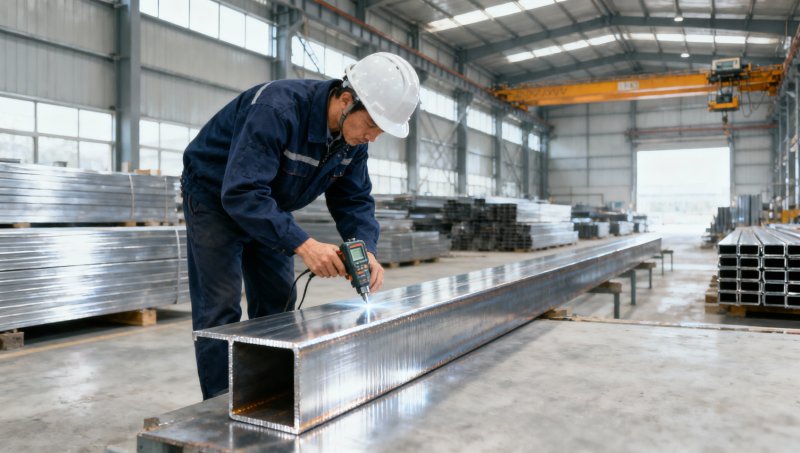
We’re not a trading company—we’re a structural steel manufacturer with vertically integrated hot-rolling, cold-forming, and precision fabrication lines. That means MOQ decisions are driven by engineering feasibility—not sales targets. Our production planning system allocates capacity across 32 standard Carbon Steel Angle SKUs (including 125×75×10 mm and 200×125×16 mm) using real-time furnace and rolling schedule data—ensuring MOQ reflects actual throughput constraints.
Every order receives a pre-shipment MOQ validation report showing: raw material batch ID, rolling pass count, test certificate numbers, and container loading plan. This transparency eliminates post-quote MOQ surprises—and explains why 94% of our repeat clients report zero MOQ-related delays over the past 24 months.
Ready to eliminate MOQ-driven cost inflation? Contact Hongteng Fengda today for a no-obligation MOQ assessment tailored to your next structural steel project—complete with a side-by-side comparison of your current sourcing model versus our optimized approach.
- carbon steel angle
- l angle
- angle steel
- equal angle
- equal angle steel
- ASTM standard
- steel coil
- structural steel
- Structural Steel
- Steel Rod
- Profile
- DX53D Galvalume Steel Coil
- steel rod lead time
- minimum order quantity for steel rods
- steel manufacturing lead time
- carbon steel
- steel angle
- DX53D Galvalume Steel Coil ASTM standard
- steel rod lead time for construction projects
- minimum order quantity for steel rods in Europe
- minimum order quantity for steel rods manufacturer
- steel manufacturing lead time supplier in China
Related recommendations
 Where do galvanized cold drawn soft hard steel wire rods show highest breakage risk in wire mesh production?Galvanized cold drawn soft hard steel wire rod for cold drawn wire: Discover where breakage peaks in mesh production—and how to prevent it.
 Why rebar for construction delivered without mill test certificates causes project delays in GCC countriesRebar for construction without mill test certificates causes costly delays in GCC projects—learn how to prevent stoppages, NCRs, and rework before shipment.
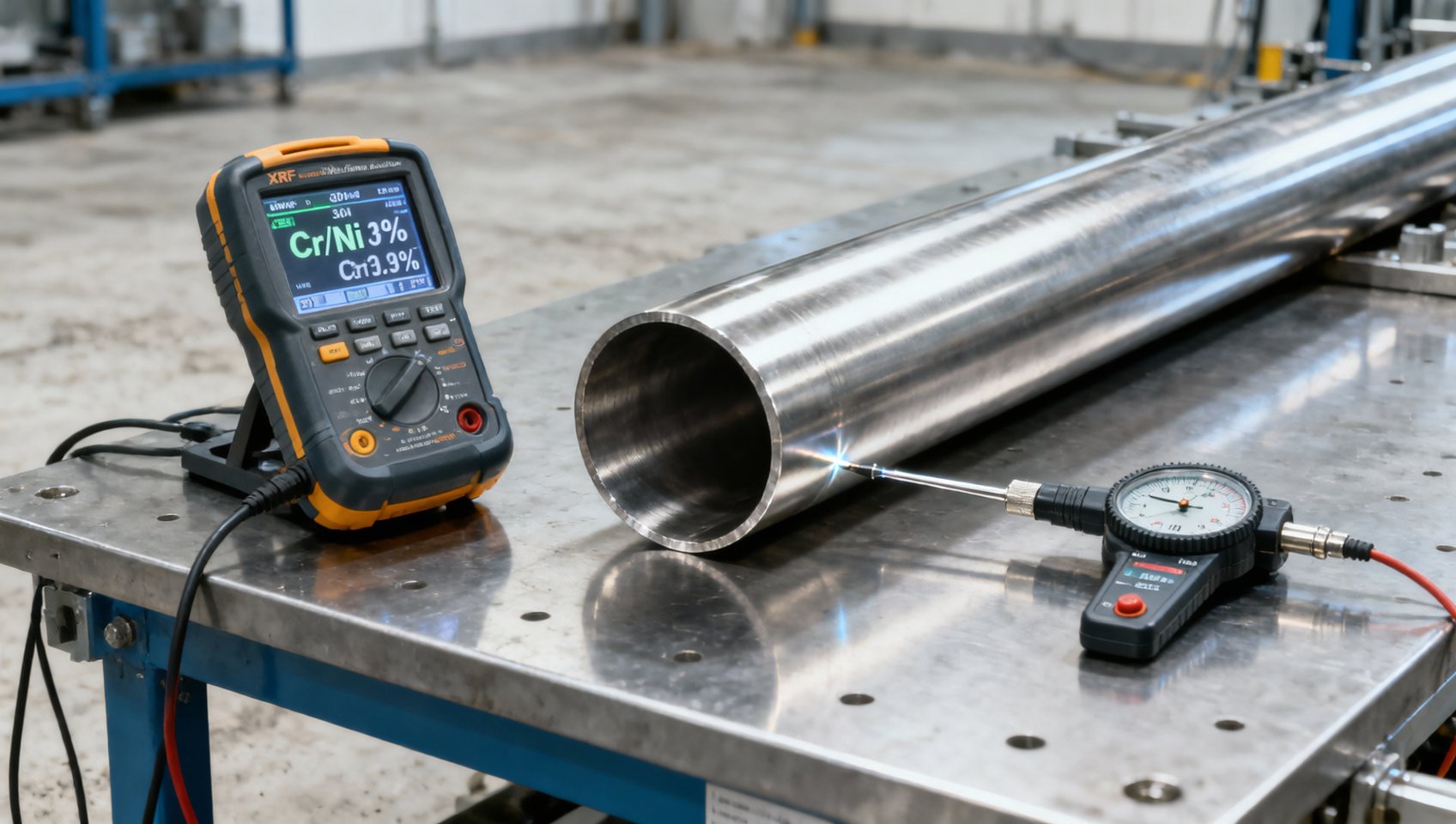
 How to Identify Counterfeit 304 Stainless Steel Pipe Using Portable XRF and Magnetic Permeability Testingss 304 pipe authenticity matters—discover how portable XRF & magnetic testing expose counterfeits on-site, ensuring safety, compliance & peace of mind.
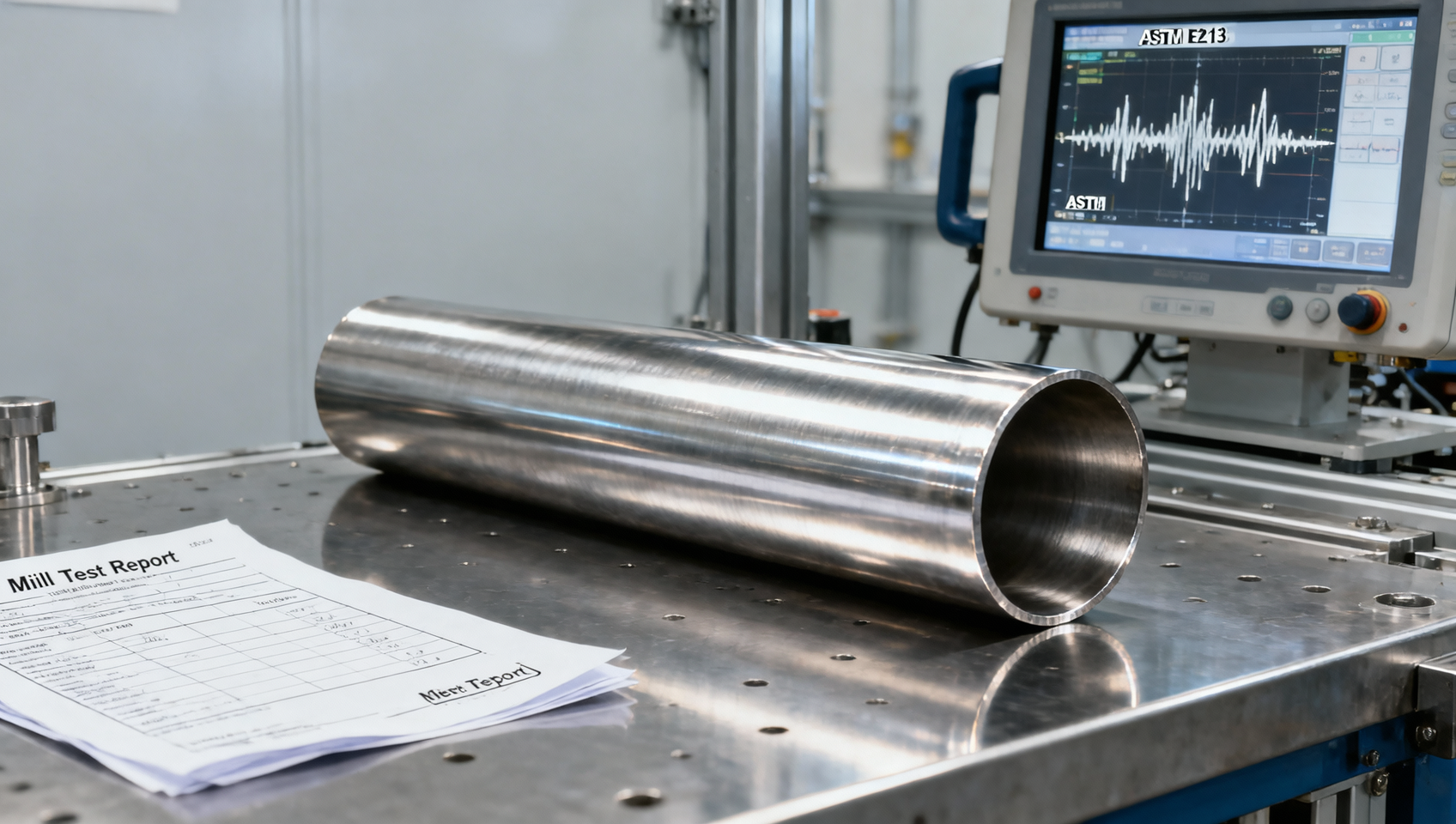
 How to Verify Genuine Seamless Stainless Steel Tube — Visual Inspection, NDT Methods, and Mill Test Report RequirementsVerify genuine seamless stainless steel tube with visual checks, NDT (UT/ET), and certified mill test reports—trust Hongteng Fengda’s traceable, audit-ready quality.
Please give us a message


Please enter what you want to find