Ensuring consistent quality is essential in steel manufacturing, especially for Steel Angles used in diverse structural and project applications. This guide provides practical quality control tips for achieving precision, strength, and reliability in production. As a trusted Structural Steel Manufacturer & Exporter from China, Hongteng Fengda shares proven methods to optimize inspection processes, improve weld integrity, and maintain compliance with global standards for both Steel Angles and U Channel Steel. Whether you are a quality manager, procurement specialist, or project engineer, understanding how to guarantee manufacturing excellence will give you greater confidence in the performance of your structures and reduce long-term maintenance costs.
Definition and Production Overview
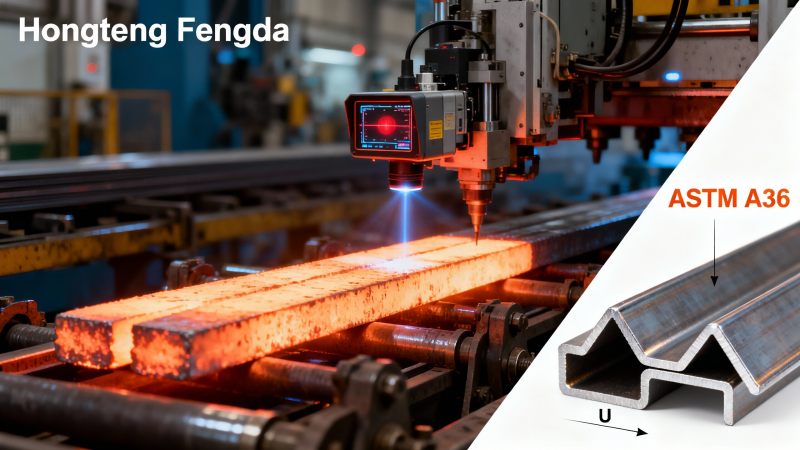
Steel Angles are L-shaped structural components fabricated from hot-rolled carbon steel, stainless steel, or low-alloy steel. These materials are widely used for load-bearing frameworks in construction, bridge engineering, machinery, and industrial assemblies. Each angle consists of two legs joined at a right angle, varying in thickness and length depending on the design standard or load requirement. During manufacturing, quality control must be maintained across every stage—billet selection, hot rolling, straightening, cutting, and surface finishing—to ensure dimensional tolerance consistency. Hongteng Fengda, based in China, integrates automated straightness detection, ultrasonic flaw inspection, and hardness testing systems to guarantee that every piece of angle steel delivered complies with ASTM A36, EN 10056, JIS G3192, and GB/T standard tolerances. The same approach applies to the production of U Channel Steel, which shares similar structural mechanics but has different load-bearing behavior under shear and torsional stress.
Market Overview and Industry Insights
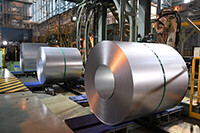
The global market for structural steels, including Steel Angles and U Channel Steel, has been expanding steadily due to growing urbanization, industrialization, and the revival of infrastructure projects across North America, the Middle East, and Southeast Asia. Demand for high-strength and precision-manufactured steel materials is rising because of stricter safety codes and sustainability awareness. Chinese manufacturers such as Hongteng Fengda play a key role by offering international buyers a stable supply chain, diverse product range, and excellent cost-performance ratio. In addition to carbon steel angles, premium materials such as galvanume and cold-formed steel profiles are gaining traction for corrosion-prone environments. The AZ150 Galvalume Steel Coil, for example, provides outstanding corrosion resistance due to its aluminum-zinc coating layer, making it a reliable choice for roofing structures and support frame applications. By applying zinc coating weights between AZ30 and AZ275 g/m², the coil supports various construction needs, enhancing longevity and overall product reliability.
Technical Performance and Quality Control Methods
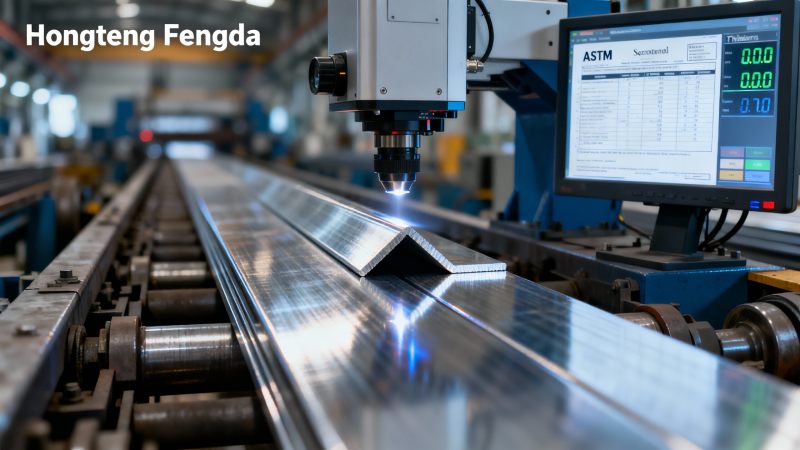
Effective quality control in Steel Angles production begins with raw material inspection. Before rolling, steel billets are verified for chemical composition, ensuring precise carbon, manganese, and silicon levels according to target yield strength and ductility. During hot rolling, temperature uniformity is tracked through infrared sensors. Post-rolling, dimensional accuracy is verified using laser scanners to ensure thickness, leg length, and corner radii remain within tolerance. Mechanical testing, including yield strength and elongation analysis, confirms conformance to technical parameters similar to those used for products like the AZ150 coil series, where tensile strength may range from 270 to 560 MPa depending on specification. Surface inspection is another critical step; all rust, scaling, or lamination must be removed through shot blasting or pickling, followed by coatings or galvanization as required. For welded assemblies, non-destructive tests—ultrasonic testing, magnetic particle inspection, and X-ray imaging—identify microcracks or lack of fusion. Quality documentation, material traceability tags, and batch certification under ISO 9001 and CE guidelines further help ensure every delivery meets customer and regulatory expectations.
Application Scenarios and Structural Benefits
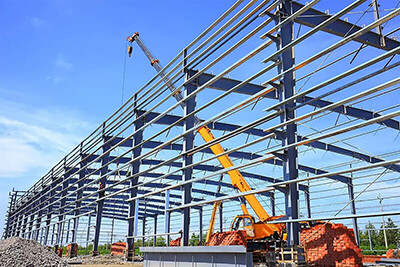
Steel Angles are versatile across construction sectors, including high-rise frameworks, commercial warehouses, bridge girders, transmission towers, and mechanical equipment supports. Their uniform geometry and ease of welding enable engineers to design efficient load-bearing networks. For example, equal-angle sections are ideal for bracing systems, while unequal angles effectively distribute stress where asymmetrical loading occurs. When paired with U Channel Steel components, structural rigidity improves under dynamic conditions. In offshore or coastal environments, galvanized or coated versions like the AZ150 Galvalume Steel Coil provide added corrosion protection, especially in areas prone to moisture and salt exposure. Hongteng Fengda’s structural steels undergo anti-corrosion treatment compatible with a wide range of coatings—from chromated and oiled to dry and AFP finishes—to meet diverse design specifications. For project managers and engineers, these product features minimize maintenance frequency and ensure steady load performance across decades of service.
Procurement Guide and Cost Optimization
Selecting the appropriate Steel Angle or U Channel Steel involves balancing mechanical suitability, corrosion protection, and cost efficiency. Technical evaluators must confirm that chosen materials align with structural load requirements and geographical conditions. Ordering from a reliable supplier like Hongteng Fengda allows global buyers to customize lengths, section dimensions, and surface finishes based on the application. Standard dimensions typically range from 25x25x3 mm for light-duty supports to 200x200x20 mm for heavy frameworks. Buyers should also verify factory capabilities—automated cutting, stamping, batch identification, and pre-shipment inspection coverage. It’s also wise to compare lifecycle costs: sometimes, a marginally more expensive angle with a superior anti-corrosion coating results in a longer replacement cycle, reducing total project expenditures. For instance, incorporating innovative materials comparable to AZ150-grade galvanized coils ensures resistance to oxidation and mechanical wear, enabling better ROI for infrastructure developers and industrial fabricators. Procurement teams should solicit detailed mill certificates covering tensile strength, elongation, and coating mass to ensure transparency throughout the sourcing process.
Standards, Certification, and Compliance
Compliance with regional and international standards is non-negotiable in structural steel projects. Steel Angles and U Channel Steel supplied by Hongteng Fengda strictly adhere to ASTM A36, ASTM A572, EN 10025, JIS G3101, and GB/T 700 specifications. These certifications ensure mechanical properties and chemical compositions align with design codes. Corresponding welding materials and galvanization standards must also comply with ISO 4042 and ASTM A153 for coating durability. Beyond mechanical parameters, certification under environmental and occupational safety frameworks like ISO 14001 and ISO 45001 reassures customers that sustainability and worker safety are considered throughout production. Quality inspectors should cross-check batch traceability markings on steel sections and verify independent laboratory reports for tensile and yield testing. This transparency promotes accountability across the supply chain, builds client confidence, and supports sustainable procurement strategies worldwide.
Case Studies and Successful Practices
Several noteworthy infrastructure projects have demonstrated how rigorous quality control in Steel Angles manufacturing drives performance excellence. In a recent bridge project located in a coastal region of Southeast Asia, Hongteng Fengda supplied customized galvanized steel angles and channels, achieving zero defect claims over a 24-month operational period. Ultrasonic flaw testing at four production checkpoints prevented microcrack propagation. Similarly, in North America, an industrial warehouse frame constructed using Hongteng Fengda’s hot-rolled equal angles reported excellent dimensional consistency, supporting precise bolt-hole alignment during assembly. These case studies highlight the implications of combining skilled process control with reliable material sourcing. By integrating statistical process control and real-time monitoring software, production teams maintained deviation parameters under ±0.3 mm per batch. Clients benefited from faster installation cycles and reduced rework expenses, illustrating the tangible gains from strict quality documentation and advanced inspection methodology.
FAQ & Common Misconceptions
Many buyers confuse the importance of angle surface finishes with structural strength. In fact, surface protection, such as galvanization or aluminized coating, does not increase mechanical resistance but extends product durability against corrosion. Another common misconception involves assuming U Channel Steel and Steel Angles are interchangeable. While both serve load-bearing functions, their differing geometries produce distinct bending and torsional performance profiles; therefore, engineers must match section type to stress conditions. Some believe that thicker angles always provide superior strength. However, unoptimized thickness increases weight, complicating transport and installation. Structural performance should instead focus on yield strength, joint design, and weld quality. Quality managers frequently ask about allowable tolerances: according to EN 10056-2, leg length deviations should not exceed ±2%, while twist limits are typically 0.4% of total length. Clarifying such details prevents design assumption errors and improves coordination between procurement, fabrication, and site execution departments.
Trends and Future Outlook
Looking ahead, the structural steel sector continues evolving toward digitalized quality assurance and sustainability-focused innovations. The application of automated inspection drones and AI-based defect analysis allows real-time monitoring of rolled and welded materials. Data-driven models can predict defect propagation and suggest corrective measures during production instead of after delivery. Environmental compliance is also becoming an industry benchmark, with low-carbon processes and recyclable coatings gaining traction among major steel exporters. Hongteng Fengda invests in low-emission furnaces and scrap recycling systems to reduce carbon footprint while increasing efficiency. Emerging hybrid materials, such as zinc-aluminum-magnesium coatings inspired by high-performance products like AZ150 coils, will further extend steel’s structural lifetime in harsh environments. Advanced laser welding, additive manufacturing for connection nodes, and next-generation corrosion inhibitors provide new opportunities for integrators seeking lighter yet stronger framework solutions. Companies adopting predictive maintenance and digital traceability will hold competitive advantages in both quality and sustainability dimensions over the next decade.
Why Choose Us
Selecting a manufacturing partner capable of consistent precision and comprehensive service is critical to long-term project success. As a distinguished Structural Steel Manufacturer & Exporter from China, Hongteng Fengda offers customers global-grade product consistency, flexible customization, and certified compliance across ASTM, EN, JIS, and GB standards. Our product portfolio includes Steel Angles, U Channel Steel, beams, cold-formed profiles, and tailored OEM structural components. Backed by modern rolling mills, CNAS-accredited laboratories, and automated inspection lines, we guarantee integrity from raw material input to final shipment. Our quality management philosophy emphasizes prevention rather than correction, ensuring every batch meets or exceeds project expectations. We also provide technical consultancy, material selection guidance, and after-sales support to help clients complete projects efficiently and safely. Choose Hongteng Fengda for reliable structural steel sourcing—where performance, quality, and partnership truly build together. For business inquiries or customized quotations, please contact our sales engineering team through our online communication portal today.
- channel steel
- steel i
- carbon steel angle
- l angle
- angle steel
- equal angle
- galvanized coils
- galvanized coil
- galvanized steel angle
- ASTM A572
- steel coil
- galvanized steel
- ASTM A36
- structural steel
- steel profiles
- U channel steel
- Steel Angles
- Structural Steel
- U Channel Steel
- Profile
- AZ150 Galvalume Steel Coil
- Galvanized
- carbon steel
- steel profile
- steel angle
Related recommendations
 The Ultimate Procurement Hub: How a Full-Spectrum Steel Portfolio Empowers Global Industrial SuccessIt covers a wide range of steel products, including steel plates, steel coils, profiles, and steel gratings, to meet diverse needs.
 The Vertical Integration Advantage: Why Full-Process Production is the Gold Standard for Global Steel SourcingIt possesses complete production technologies and equipment for coking, sintering, steelmaking, and rolling, forming a systematic production system.
 The Global Steel Pulse: Bridging Continents with Precision Engineering and Unrivaled Supply Chain ExcellenceOur products sell well throughout China and are exported to North America, Europe, the Middle East, and other parts of the world, covering a wide market.
 Velocity of Value: How Precision Processing and Rapid-Response Logistics Redefine the Global Steel Supply ChainEquipped with advanced leveling equipment and relying on a robust logistics system, we can respond to customer needs at any time.
Please give us a message


Please enter what you want to find