Looking for reliable custom steel profiles for demanding projects? As a China-based structural steel manufacturer and exporter, Hongteng Fengda delivers precision solutions for construction and industry, covering structural steel cutting, structural steel drilling, and products such as hot dip galvanized angle steel, hot dip galvanized steel beam, and ASTM standard steel pipe. With strict quality control and global supply experience, we help buyers source durable, cost-effective steel with confidence.
For project managers, technical evaluators, purchasing teams, distributors, and business decision-makers, custom steel profiles are not only about shape and size. They affect load performance, fabrication efficiency, corrosion resistance, installation speed, and total procurement cost. In many projects, even a tolerance difference of ±1% or a lead time gap of 7–15 days can influence the construction schedule and budget control.
Hongteng Fengda supports global buyers with standard and OEM structural steel solutions, including angle steel, channel steel, steel beams, cold formed steel profiles, and custom-processed components. By aligning production with ASTM, EN, JIS, and GB standards, the company helps buyers reduce sourcing risk, improve specification matching, and secure a more predictable supply chain for construction, industrial, and manufacturing applications.
Why Custom Steel Profiles Matter in Real Projects
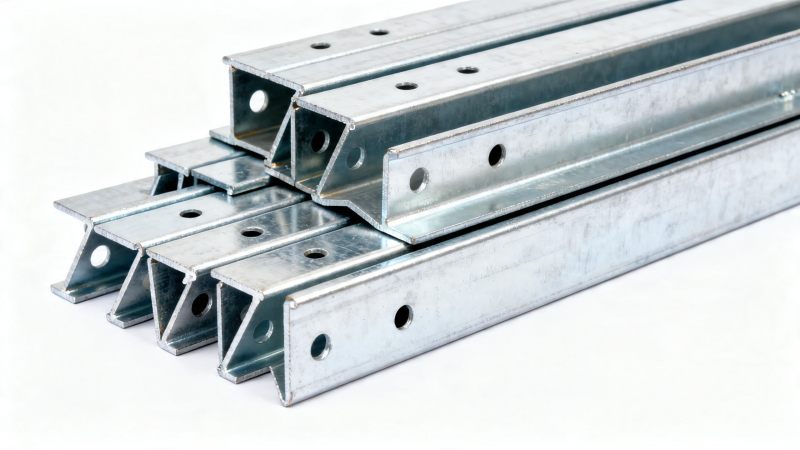
Standard steel sections work well for many routine applications, but large-scale construction and industrial projects often require more precise geometry, processing, and finishing. A custom steel profile can be designed around actual loading conditions, connection details, equipment layout, or installation constraints. This is especially important in steel structures, factory buildings, utility supports, bridges, platforms, and prefabricated systems where dimensional consistency directly affects assembly quality.
From an engineering perspective, custom processing can reduce unnecessary site work. Structural steel cutting, drilling, punching, and bending completed at the factory can lower field labor demand by 10%–25% in many common installation scenarios. It also helps avoid mismatch between design drawings and delivered steel members, which is a frequent cause of project delay, welding rework, or material waste.
From a procurement standpoint, custom steel profiles support better cost allocation. While the unit price of a processed section may be higher than that of a basic stock item, the total project cost can be lower after considering reduced scrap, faster assembly, fewer site modifications, and more reliable delivery planning. For overseas buyers, this is particularly valuable because reordering nonconforming material can add 2–6 weeks to a project timeline.
For quality and safety managers, custom steel profiles also make inspections easier. Clearly defined dimensions, documented tolerances, surface treatment requirements, and processing records allow faster incoming inspection and better traceability. This is useful in projects governed by multiple standards or where steel must meet environmental exposure demands such as outdoor humidity, coastal conditions, or industrial corrosion risk.
Typical project pain points solved by customization
- Mismatch between design drawings and available stock sizes.
- Too much site drilling or cutting, increasing labor and safety risk.
- Surface treatment not suitable for outdoor or corrosive environments.
- Unstable quality between batches, especially in cross-border procurement.
- Insufficient documentation for compliance review, inspection, or project approval.
Common applications for tailored structural steel
Custom profiles are widely used in industrial workshops, warehouse systems, machinery frames, commercial buildings, utility structures, transport infrastructure, and secondary steel systems. Depending on the use case, buyers may need hot dip galvanized angle steel for outdoor supports, galvanized steel beams for enhanced corrosion resistance, or pre-drilled channel sections for modular installation.
The table below outlines how different customization goals translate into practical project value.
The key takeaway is that customization is not an added feature for its own sake. It is a practical way to control fit-up, quality, schedule, and lifecycle performance. In competitive projects, those gains often matter more than the nominal steel price alone.
How Hongteng Fengda Delivers Custom Steel Profiles
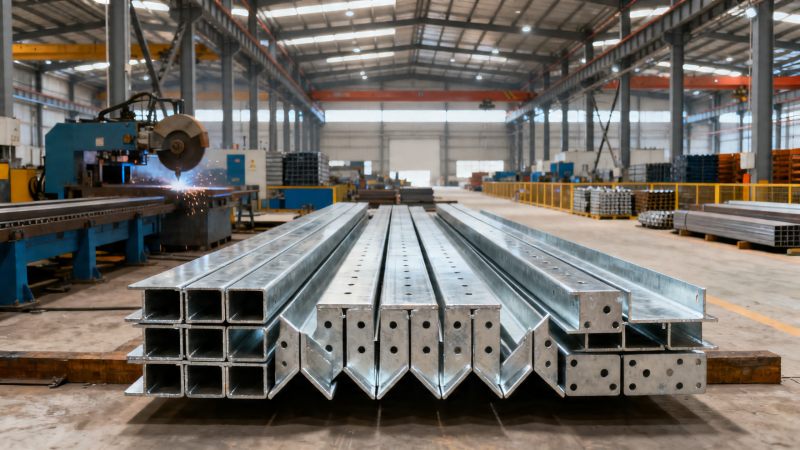
A dependable custom steel profile service starts with technical clarity. Hongteng Fengda works from drawings, application details, target standards, material grades, and processing requirements to define the most suitable manufacturing route. Depending on the project, this may involve hot rolled sections, cold formed profiles, cut-to-length members, drilled components, or galvanized finished products prepared for direct installation.
For many buyers, the difference between a smooth order and a costly delay lies in the early specification stage. Important inputs include section type, steel grade, dimension tolerance, hole positioning, coating method, bundle requirements, and shipping marks. When these details are confirmed before production, procurement teams can reduce the risk of discrepancy claims and delivery confusion, especially in international shipments with mixed SKUs.
Hongteng Fengda’s manufacturing focus covers angle steel, channel steel, steel beams, cold formed steel profiles, and customized structural components. Processing services can include cutting, drilling, punching, bending, and welding support according to project needs. This integrated approach is useful when buyers want to consolidate 3–5 processing steps with one supplier rather than split work across multiple vendors.
Quality control is another core part of the service model. In structural steel supply, buyers typically look for dimensional checks, surface condition review, grade confirmation, coating consistency, and packing stability. A controlled process with inspection before dispatch supports safer loading, clearer receiving checks, and fewer disputes after arrival at the jobsite or warehouse.
A practical 5-step service workflow
- Requirement review: drawings, standards, end use, quantity, and delivery destination are confirmed.
- Technical matching: material grade, section dimensions, tolerance, and processing details are aligned.
- Production planning: rolling, forming, cutting, drilling, and surface treatment are scheduled.
- Inspection and packing: dimensional checks, visual review, marking, and bundle preparation are completed.
- Export coordination: documents, shipment timing, and loading details are managed for international delivery.
Lead time and control points
Typical lead times vary by order complexity, processing depth, and surface treatment. For standard structural steel items, delivery preparation may fall within 7–20 days. For custom-processed sections, mixed sizes, or galvanized products, planning can extend to 2–4 weeks. Buyers handling project-critical schedules should confirm not only production time but also port handling, document preparation, and inland transport windows.
The following table shows the main checkpoints buyers should review before confirming a custom steel profile order.
A structured workflow helps all stakeholders. Engineers gain specification confidence, purchasers gain clearer comparison points, quality teams gain traceability, and finance teams gain better visibility into total landed cost rather than unit price only.
Product Integration: When Reinforcement and Structural Profiles Work Together
In many construction projects, custom structural steel profiles do not work alone. They are part of a broader material system that includes reinforcement products, steel pipe, and fabricated members. For civil engineering construction, houses, bridges, roads, highways, railways, culverts, tunnels, dams, and foundations, buyers often need both profile steel for structure and coil or bar products for reinforcement and forming efficiency.
A relevant example is Wire rod, which is commonly used in construction supply chains for rebars, beams, columns, walls, and slabs. Available model references such as HRB335, HRB400, and HRB500 cover multiple strength expectations for public facilities and building projects. Typical material options include Q195, Q235, Q345, ASTM A53 GrA/GrB, STKM11, ST37, ST52, and 16Mn depending on downstream processing and application focus.
From a sourcing perspective, this matters because project buyers frequently combine structural sections with reinforcement-related products in one procurement cycle. Common size references include 6mm, 8mm, 10mm, 12mm, 16mm, 20mm, 25mm, 32mm, and up to 50mm, with length options such as 5m–14m, 5.8m, 6m, 9m/12m, and 10m–12m. When these dimensions are aligned early with the structural package, handling and installation become more predictable.
Processing compatibility is also important. Products in this category may support bending, welding, decoiling, cutting, and punching, while surface treatments can include galvanized, PVC, black and color painting, transparent oil, and anti-rust oil according to project demand. For buyers serving mixed climates or long shipping routes, selecting the proper surface condition can reduce storage corrosion risk before installation.
Standards and configuration points buyers should compare
When coordinating structural steel profiles with reinforcement-related materials, buyers should look at standard compatibility, dimensional tolerance, processing service needs, and packing method. A tolerance level such as ±1% can be acceptable in many orders, but final suitability should still be matched to project drawings and fabrication needs.
The main point is not to treat structural sections and reinforcement materials as isolated purchases. In complex projects, better coordination between these steel categories improves forecasting, receiving, and on-site usage control. That is especially helpful for distributors, EPC teams, and contractors handling multi-item procurement packages.
How to Evaluate a Supplier for Quality, Cost, and Delivery
Choosing a custom steel profile supplier should go beyond asking for a low quotation. A more effective evaluation method is to compare at least 4 dimensions: technical matching, production capability, quality consistency, and delivery reliability. For international buyers, document support and export experience are often a fifth critical factor because customs, standards, and packing errors can create hidden cost even when the base material price appears competitive.
Technical matching means the supplier can understand and execute actual project requirements. This includes reading drawings, confirming drilling patterns, managing cut lengths, and aligning material grades to ASTM, EN, JIS, or GB requirements. If a supplier cannot clarify these points before production, the risk of nonconforming goods increases significantly, especially in OEM or made-to-order structural components.
Production capability should be reviewed in relation to order volume and processing intensity. A supplier may handle standard angle steel well but struggle with mixed custom items that require batching, punching, galvanizing, and special packing. Buyers should ask practical questions such as whether the supplier can maintain stable output over 2–4 consecutive production weeks, whether bundled shipments can be clearly marked, and how nonconformity is handled before dispatch.
Quality consistency is not only about passing one inspection. It is about receiving repeatable results from batch to batch. This is important for distributors, long-term procurement programs, and phased construction projects where supply may continue for several months. Stable dimensional accuracy, consistent coating condition, and complete shipping records reduce downstream risk for site teams and receiving personnel.
A practical supplier evaluation checklist
- Can the supplier produce according to ASTM, EN, JIS, or GB requirements relevant to your project?
- Are cutting, drilling, punching, galvanizing, or welding-related services available in one workflow?
- Is there a clear tolerance control method for dimensions, hole positions, and section straightness?
- Can the supplier explain packing, marking, and shipment preparation in detail?
- Does the team respond quickly enough for quotation review, drawing clarification, and issue handling?
Risk signals buyers should not ignore
There are several warning signs in steel sourcing. One is a quotation that ignores processing details and only lists a basic price. Another is vague communication around standards, coating, or tolerance. A third is weak export coordination, such as uncertain packing descriptions or incomplete document support. In practice, these issues can result in higher landed cost than a slightly higher but better-controlled offer.
For financial approvers and business evaluators, the best decision often comes from comparing total value over 3 metrics: material suitability, delivery predictability, and quality risk exposure. This approach gives a more reliable basis for approval than unit price alone.
FAQ and Buying Recommendations for Global Steel Procurement
Many buyers researching custom steel profiles are trying to answer practical questions before requesting a quotation. The points below address common concerns from engineers, distributors, procurement staff, and project leaders who need a clear decision path.
How do I choose between standard sections and custom steel profiles?
If your project uses repetitive dimensions, simple connections, and low site modification demand, standard sections may be sufficient. If your structure requires exact hole positions, fixed cut lengths, special coatings, or multi-part assemblies, custom processing is usually the better option. The decision should consider not just purchase price but also labor hours, installation speed, and rework risk.
What information should be prepared before asking for a quote?
At minimum, provide section type, material grade, dimensions, quantity, standard requirement, destination country, and any processing details such as drilling, cutting, or galvanizing. If available, include drawings and expected delivery timing. Providing 6–8 key data points at the start usually leads to a more accurate and faster quotation.
What is a reasonable delivery expectation for custom orders?
For common structural steel items with limited processing, buyers may expect around 7–20 days for production preparation. More customized profiles, mixed bundles, or galvanized components may require 2–4 weeks depending on quantity and factory scheduling. Ocean shipment and destination customs handling should be added separately when planning the full project timeline.
Which quality points should receiving teams inspect first?
Start with bundle count, section dimensions, visual surface condition, coating appearance, marking accuracy, and any critical hole or cut positions. For sensitive projects, compare delivered goods against the approved drawing or packing list immediately after unloading. Early inspection helps isolate transport damage from manufacturing deviation and supports faster issue resolution.
Final recommendation
A successful steel sourcing program depends on more than product availability. It requires a supplier that can understand project requirements, match standards, control processing quality, and support dependable export delivery. Hongteng Fengda combines structural steel manufacturing, custom processing, and global supply experience to help buyers manage cost, quality, and schedule with greater confidence.
If you are planning a construction, industrial, or distribution project and need reliable custom steel profiles, now is a good time to discuss your drawings, specifications, and delivery targets. Contact Hongteng Fengda to get a tailored solution, review product details, and explore the most suitable steel options for your application.
Please give us a message


Please enter what you want to find