High strength structural steel is essential for projects that demand durability, efficiency, and compliance. From understanding structural steel properties to selecting lightweight structural steel for modern fabrication, buyers need reliable supply and expert support. We also help customers source related products such as rebar for retaining wall applications, ensuring consistent quality, cost control, and dependable delivery for global construction and industrial projects.
What makes high strength structural steel supply reliable in real projects?
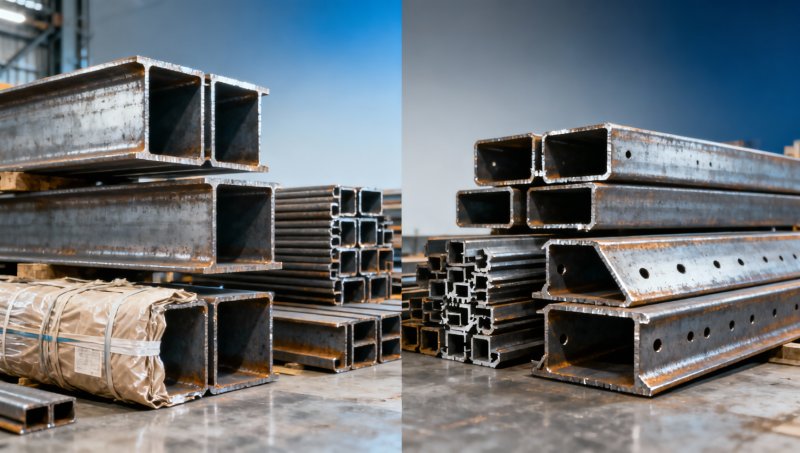
In steel procurement, supply reliability is not only about shipping material on time. It starts much earlier, with correct grade selection, process control, dimensional accuracy, and documentation that matches the intended engineering use. For buyers handling industrial buildings, plant expansions, equipment platforms, or export distribution, the real question is whether the steel delivered in 2–4 weeks will perform consistently during fabrication and service.
High strength structural steel is widely used when projects need a better strength-to-weight ratio, lower dead load, or longer spans without unnecessary material increase. In practical terms, this means fewer design compromises for project managers, more predictable welding and cutting for operators, and clearer compliance review for technical teams. Procurement staff also benefit because a stable supplier reduces the risk of mixed batches, rework, and late-stage specification changes.
At Hongteng Fengda, supply strength comes from combining manufacturing capability with export discipline. As a structural steel manufacturer and exporter from China, we provide angle steel, channel steel, steel beams, cold formed steel profiles, and custom structural steel components for customers across North America, Europe, the Middle East, and Southeast Asia. That matters when projects require standard products, OEM support, and delivery planning within one coordinated sourcing process.
For many buyers, the first screening usually focuses on 4 core points: grade range, compliance standard, processing scope, and delivery consistency. Those points affect not only direct material cost, but also freight efficiency, fabrication waste, site installation speed, and inspection workload. In structural steel supply, a lower invoice price can quickly become a higher project cost if tolerances, marking, packing, or lead time control are weak.
Why supply quality matters beyond the steel itself
High strength structural steel often enters multi-party projects where engineering, purchasing, finance, quality control, and site operations all review different risks. Engineering teams focus on section performance and standard compliance. Buyers compare quotations and lead time. Finance reviewers watch cash flow and total landed cost. Quality and safety personnel need traceability, tolerances, and test records. A reliable supplier must support all of these decision layers, not just produce steel sections.
This is why export experience matters. Material that is acceptable for domestic circulation may still face problems in overseas projects if the marking, documentation language, packing, or standard references are incomplete. In many cases, the critical issue is not whether the beam or channel can be produced, but whether the shipment can pass technical review and move smoothly from factory to fabrication shop to project site within the planned 20-day to 45-day procurement window.
- Material consistency: stable chemical and mechanical performance across batches reduces welding variation and fabrication adjustment.
- Processing support: cutting, punching, bending, and welding services can reduce 1–2 handling stages after arrival.
- Documentation readiness: mill-related records, specification sheets, and standard references improve technical approval efficiency.
- Lead time discipline: dependable production and shipping planning helps contractors avoid idle labor and equipment downtime.
How do buyers evaluate structural steel properties, grades, and processing options?
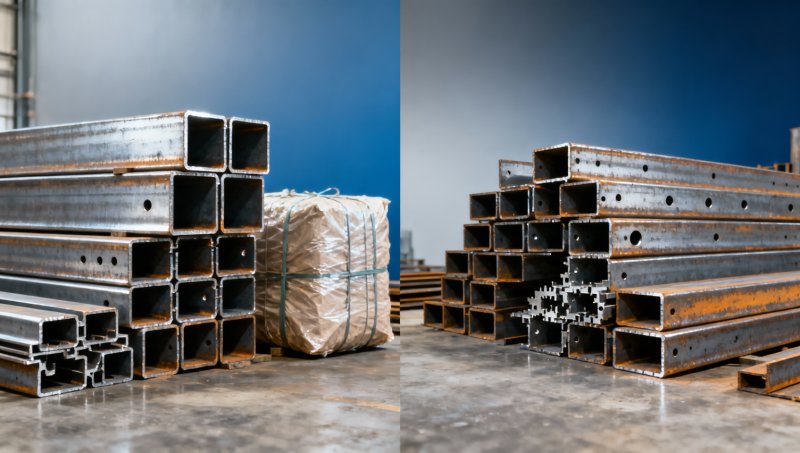
When buyers compare high strength structural steel, they should not treat all grades as interchangeable. The correct choice depends on load path, fabrication method, corrosion environment, and applicable standard system. Some projects prioritize economy and routine fabrication, while others need stronger sections to reduce tonnage or support longer spans. Understanding the relationship between strength, section shape, and processing capability is the starting point for a better sourcing decision.
For example, common structural steel supply may involve grades such as Q195-Q235, Q345, SS400, A36, ST37-2, S235J0, S235J2, SS355JR, and St52, depending on specification and destination market requirements. These grades are selected under ASTM, EN, JIS, GB, or DIN related frameworks for different applications. In actual procurement, the standard reference should always be checked together with size range, tolerance, and fabrication requirements, not reviewed in isolation.
Processing scope also changes the procurement value. A supplier that can provide hot rolled molding, cutting, punching, decoiling, bending, and welding within one chain can reduce coordination cost and shorten the production cycle by several days. This is especially useful for project managers handling phased installation or distributors who need mixed structural steel shipments in medium-volume or large-volume orders.
The table below summarizes practical evaluation dimensions that engineering teams, purchasers, and quality reviewers can use when assessing high strength structural steel supply for industrial structure applications.
This comparison shows why technical review should be connected to actual project execution. A section that looks cost-effective on paper may create hidden costs if the available length, flange size, or web thickness does not match fabrication needs. Good structural steel sourcing links design intent with manufacturing reality, especially when the project has a tight installation sequence or cross-border shipping constraints.
A practical product example in the middle of sourcing decisions
For buyers evaluating industrial structure support sections, one common option is I Beam Manufacturers. In this category, the available material range includes Q195-Q235, Q345, SS355JR, SS400, A36, ST37-2, St37, S235J0, S235J2, and St52. Typical specifications include thickness from 4.5mm to 15.8mm, flange width from 100mm to 400mm, web width from 100mm to 900mm, flange and web thickness from 6mm to 28mm, and length from 6m to 12m per piece.
For project teams, these sections are valuable because they cover both economic sections and support configurations used in industrial structures. Light I-beams can help where lower weight and narrower flanges are preferred, while wide flange types suit applications needing parallel legs and broader load distribution. With non-alloy carbon steel options, common processing such as hot rolled molding, cutting, punching, bending, and welding can also be coordinated with delivery that may be arranged within about 20 days for standard orders.
This kind of mid-range product family is often useful when distributors need flexible stock planning, or when EPC buyers want to reduce specification fragmentation across several project packages. It also makes comparison easier for finance and purchasing teams because dimensions, tolerances, standards, and processing options can be reviewed in one consolidated framework.
Three checks before confirming a section
- Confirm the design standard and destination market requirement, such as ASTM, EN, JIS, GB, or DIN references.
- Verify dimensional compatibility with the fabrication drawing, including flange width, web width, thickness, and required cutting length.
- Review whether pre-processing can save 1–3 operational steps after delivery, especially for punching, welding, or custom cut lengths.
Which standards, certifications, and inspection points should procurement teams focus on?
In global structural steel sourcing, standards and certifications are not a formality. They shape material acceptance, project approval, and the buyer’s risk exposure. If a project specification is based on ASTM or EN, but the supplier quotation only mentions a generic grade without a standard framework, the purchasing process can stall. For high strength structural steel, technical clarity at the quotation stage often saves 7–10 days of back-and-forth later.
Hongteng Fengda supports products aligned with major international standards including ASTM, EN, JIS, and GB. That does not mean every item is interchangeable across all codes; rather, it means buyers can discuss the relevant grade and specification path in a structured way. For quality control and safety managers, this helps establish a cleaner review workflow from inquiry to final shipment inspection.
The most useful inspection approach is usually a 5-point review: material grade, dimensions, tolerance, surface condition, and documentation consistency. On fabricated or pre-processed sections, buyers should also add hole location, cut accuracy, and weld appearance to the checklist. This is especially important in industrial structures where cumulative dimensional deviation can affect fit-up at multiple connection points.
The table below provides a practical standard and inspection reference for technical evaluators, procurement teams, and quality personnel.
A clear compliance framework supports faster purchasing decisions because each stakeholder sees the same technical basis. Engineers can verify applicability, quality teams can prepare inspection points, and commercial teams can compare quotations on a like-for-like basis. In cross-border steel transactions, this alignment is often more valuable than chasing the lowest unit price without technical transparency.
Common mistakes in structural steel compliance review
A frequent mistake is assuming that similar grade names mean identical performance across all standards. Another is approving a quotation before checking length availability, processing scope, or packing method. Buyers also sometimes overlook how rebar for retaining wall systems or other related steel products affect shipment consolidation and handling. When multiple steel categories are combined in one purchase plan, specification control becomes even more important.
- Do not compare quotations unless the standard, grade, size, and processing basis are clearly aligned.
- Do not ignore tolerance and length range if the steel will be directly fabricated after arrival.
- Do not separate commercial review from technical review; both should happen within the same approval cycle.
How can buyers control cost, lead time, and sourcing risk at the same time?
Cost control in high strength structural steel sourcing is rarely about choosing the lowest price per ton. Buyers should evaluate total project cost across at least 5 dimensions: material yield, processing cost, freight efficiency, installation speed, and non-conformance risk. A lower-cost section that causes extra cutting loss or slower installation may increase total spend. This is particularly relevant for project managers working with milestone-based schedules and limited crane or labor windows.
Lead time is equally important. In many structural steel projects, standard products may move within about 20 days for production, while customized or mixed orders can require longer planning depending on quantity, processing, and shipping method. Buyers should separate the schedule into 3 stages: specification confirmation, production and inspection, and shipment arrangement. This creates better visibility for engineering, procurement, and finance approval teams.
Risk also declines when sourcing is consolidated with a manufacturer that can support standard sections and customized components in parallel. Hongteng Fengda helps global buyers reduce sourcing risk by combining stable production capacity, consistent quality control, and dependable lead time management. For distributors and project contractors, that can simplify supplier coordination and reduce the chance of partial mismatch across a multi-item order.
The table below compares practical procurement strategies often used in structural steel purchasing.
For most B2B buyers, the third approach gives better total value when the project includes strict delivery timing, custom lengths, or mixed steel categories. The key is to define the requirement package early: grade, section, processing, packing, destination, and required documents. Once those 6 inputs are fixed, quotation comparison becomes much more meaningful and approval cycles usually move faster.
A simple 4-step sourcing workflow
- Confirm technical baseline: grade, standard, dimensions, quantity, application, and whether lightweight structural steel is preferred for load reduction.
- Review processing and compliance: cutting, welding, punching, tolerance, and required documentation for destination acceptance.
- Align commercial terms: target delivery cycle, shipment split plan, packing expectations, and quotation validity.
- Approve production and inspection sequence: this lowers the chance of late revision and improves on-time dispatch.
FAQ: what do engineers, purchasers, and project teams ask most often?
Below are common questions that appear during structural steel evaluation, quotation review, and project planning. They are especially relevant for buyers comparing high strength structural steel for industrial structures, export projects, or custom-fabricated applications.
How do I choose between standard structural steel and higher strength options?
Start from the structural demand, not from the catalog. If the project needs longer spans, lower dead load, or improved section efficiency, higher strength options may reduce tonnage or simplify design. If the application is routine and fabrication simplicity is the main priority, standard grades may be sufficient. Review 3 points together: required load performance, section availability, and fabrication method such as welding or punching.
What should I check first when comparing quotations from different steel suppliers?
Check whether the quotations are technically equivalent. Compare grade, standard, section dimensions, tolerance, processing scope, and delivery basis before comparing price. If one quotation includes cut lengths or punching and another does not, the lower price may not be the better value. A useful rule is to verify at least 6 items before commercial ranking: grade, standard, dimensions, processing, documents, and lead time.
What delivery period is typical for structural steel supply?
Typical lead time depends on whether the order is standard or customized. For some standard beam and section products, production may be arranged within about 20 days. Complex mixed orders, special processing, or export shipping windows can extend the full cycle. Buyers should ask for a staged schedule covering production, inspection, and dispatch instead of relying on one single date.
Is lightweight structural steel always the best choice?
Not always. Lightweight structural steel can reduce dead load and sometimes improve handling efficiency, but the best choice depends on span, connection design, fabrication method, and cost balance. In some industrial structures, a heavier but more available section can lower procurement complexity or reduce processing changes. The right decision comes from matching strength, geometry, availability, and total installed cost.
Can one supplier support both structural sections and related steel products?
Yes, and this is often useful for consolidated sourcing. In addition to structural steel products such as angle steel, channel steel, beams, and cold formed profiles, related items like rebar for retaining wall applications may also be coordinated depending on project needs. This can reduce procurement fragmentation, simplify logistics planning, and create better control over quality and delivery across the order package.
Why choose us for structural steel sourcing and what can you ask us to quote?
If your team is evaluating how to supply high strength structural steel with lower sourcing risk, Hongteng Fengda offers a practical combination of manufacturing capability, export experience, and project-oriented support. We supply standard structural steel and customized solutions for global construction, industrial, and manufacturing projects, with product coverage that includes angle steel, channel steel, steel beams, cold formed steel profiles, and custom structural steel components.
Our advantage is not only in production, but in coordination. We help buyers align grade selection, section dimensions, standards, processing options, and delivery planning in one workflow. This is useful when your project must meet ASTM, EN, JIS, or GB related requirements, or when your commercial and technical teams need one clear basis for quotation comparison and internal approval. Stable production capacity and strict quality control also support more dependable order execution.
You can contact us for specific support on 6 practical topics: parameter confirmation, product selection, delivery cycle planning, custom processing solutions, certification and standard matching, and sample or quotation discussion. If you already have drawings, section lists, or target grades, we can review them with your application scenario and recommend a more suitable structural steel supply path.
For faster communication, send your required grade, section type, size range, quantity, destination port, and whether you need cutting, punching, bending, or welding. With that information, we can help you evaluate feasible options, clarify lead time, and prepare a quotation that is easier for engineering, procurement, and project teams to act on.
Please give us a message


Please enter what you want to find