Custom steel profile orders can be delayed by design changes, raw material shortages, tooling time, quality inspections, and shipping disruptions. For buyers comparing H-beam, Z-beam, Rebar, Wire Products, or other Profile solutions, understanding these risks is essential. If you also wonder, is cheap steel from China reliable, this guide explains the real causes of delay and how to secure stable quality, lead times, and project performance.
Why do custom steel profile orders get delayed in real projects?
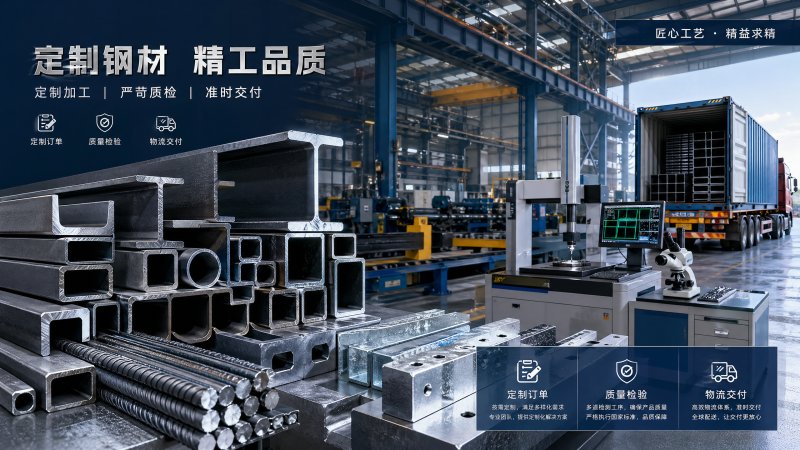
In the steel industry, delays rarely come from one single issue. Most late deliveries happen because several small disruptions stack together across design review, material sourcing, production scheduling, inspection, and export logistics. For project managers and procurement teams, the practical question is not whether delays can happen, but which delay points can be predicted 2–6 weeks in advance.
Custom orders are more exposed than standard stock items because they often require non-regular dimensions, specific grades, welding preparation, drilling, cutting, galvanizing, or document packages linked to ASTM, EN, JIS, or GB standards. Even a minor drawing revision, such as changing hole position tolerance or length from 6m to 9m, can reset nesting plans, machine setup, and final packing arrangements.
For technical evaluators and quality teams, another common risk is mismatch between the requested specification and the real service environment. A profile for bridging or shipbuilding may need different grade selection, corrosion treatment, or dimensional control than one used in a basic steel structure. If this is not aligned at the quotation stage, the order may pause during approval rather than during rolling.
For global buyers, supplier capability matters as much as price. A structural steel manufacturer with stable production planning, document control, and export experience can reduce hidden waiting time between steps. Hongteng Fengda supports buyers with customized structural steel solutions, standard-compliant production, and coordinated export service for North America, Europe, the Middle East, and Southeast Asia.
The 5 delay points that affect most custom steel profile orders
Before comparing suppliers, buyers should identify where schedule risk usually starts. In many projects, the delay pattern follows a repeatable sequence rather than a random event.
- Drawing and specification changes after quotation, especially when dimensions, grade, surface treatment, or tolerances are revised.
- Raw material availability, particularly for less common grades, stainless variants, galvanized requirements, or mixed-size batches.
- Tooling and setup time for custom cutting, punching, welding preparation, cold forming, or special packing.
- Inspection and documentation holds, including MTC review, dimensional checks, third-party inspection booking, and export papers.
- Port congestion, container booking changes, inland transport delays, or customs document corrections during export.
When these five points are managed early, delivery performance becomes much more predictable. That is especially important for enterprise decision-makers and finance approvers who need cost certainty, not just a low unit price.
Which stage causes the longest waiting time?
Not every stage consumes the same amount of time. In custom steel profile orders, the longest waiting time often appears before production starts, not during the actual rolling or cutting process. If the order includes grade confirmation, non-standard dimensions, or additional processing, the pre-production phase can easily take 3–10 working days before the first piece is made.
The table below helps buyers compare where lead time usually expands and what can be controlled internally versus what depends on market and logistics conditions.
This comparison shows why experienced buyers focus on approval speed, material planning, and export coordination. A supplier may quote a competitive ex-works price, but if schedule control is weak, the project cost can rise through crane idle time, labor waiting, or postponed installation milestones.
How design revisions trigger schedule resets
Design changes are one of the most underestimated causes of delay. In steel projects, even one revised drawing can affect cutting lists, material yield calculations, welding sequence, bundle marking, and loading plans. When the change happens after raw material booking, the order may need to be rescheduled into the next production slot.
This is especially relevant for OEM structural components. If the order includes 4–6 dimensional control points, hole alignment requirements, or coating instructions, the supplier must re-check whether existing tooling and stock still match the new scope. That review takes time, but it prevents larger downstream failures.
How should buyers evaluate a supplier before placing a custom order?
A reliable supplier evaluation should go beyond price per ton. Procurement personnel, technical reviewers, and business evaluators should assess whether the manufacturer can control material traceability, dimensional consistency, compliance documents, and export timing. In many steel sourcing projects, these four points matter more than a small unit-price difference.
For customized sections used in steel structures, machinery, shipbuilding, bridging, or automobile chassis, buyers should confirm process capability early. As an example of a profile commonly used across these sectors, H-beam can be supplied in grades such as Q235, Q345B, Q460C, SS400, S275JR, S355JR, A572, and A992, with flange thickness from 8–64mm, web thickness from 5–36.5mm, flange width from 50–400mm, web width from 100–900mm, and lengths from 1m–12m or as required.
Those figures matter because custom orders are not only about geometry. They also involve process route, rolling availability, cold rolled or hot rolled selection, surface condition, packing method, and applicable standards such as JIS G3101, EN10025, ASTM A36, ASTM A572, and ASTM A992. A manufacturer that handles these variables in one review cycle can shorten the quotation-to-production path.
Hongteng Fengda supports global buyers with standard structural steel products and OEM solutions. With modern manufacturing facilities and strict quality control, the company helps customers reduce sourcing risk, especially when projects require multiple product categories, coordinated shipment windows, or stable repeat supply.
A practical supplier checklist for steel procurement teams
Before issuing a purchase order, use a checklist that combines technical, commercial, and logistics concerns. This reduces late clarifications and makes internal approval faster for project owners and finance departments.
- Confirm 5 key technical items: grade, dimensions, tolerances, surface treatment, and applicable standard.
- Check 4 process items: rolling route, fabrication scope, inspection plan, and packing method.
- Review 3 schedule items: production lead time, inspection lead time, and shipping booking window.
- Verify 3 document items: MTC format, marking list, and export document requirements.
This checklist is useful for distributors, contractors, and industrial users because it aligns technical detail with real delivery risk. It also makes supplier comparison more objective during tender review.
Which product details affect lead time most?
The biggest lead-time drivers are usually non-standard grades, combined processing steps, and special coating or packaging. For example, galvanized or stainless material may require different sourcing and handling than carbon steel grades such as Q235B or S355JR. If the order mixes several materials in one shipment, the coordination time often grows.
Profiles designed for strong bending resistance, light weight, and simple construction can deliver cost advantages in project execution, but only when the selected specification truly matches the load path and installation method. Over-specifying a section can increase cost and sourcing time; under-specifying can trigger rejection, redesign, or safety review.
What can buyers do to reduce delay risk before production starts?
The most effective delay prevention happens before the order enters the workshop. Buyers who define the scope clearly at the RFQ stage usually avoid the most expensive schedule losses later. A structured pre-production workflow is particularly valuable for project-based purchasing, where one missed delivery can affect site installation for 1–3 weeks.
The table below summarizes the practical actions that reduce delay risk for custom steel profile orders. It is useful for procurement officers, quality managers, engineering teams, and distributors handling repeat export orders.
The core lesson is simple: lead time is managed through preparation. When buyers provide complete data, suppliers can lock material, reserve production capacity, and arrange inspection and shipment in parallel rather than in sequence.
A 4-step pre-order workflow that improves delivery performance
A practical workflow helps both sides move faster without sacrificing compliance or quality. This is useful for both new sourcing projects and repeat procurement contracts.
- Technical alignment: confirm drawings, grade, standard, tolerances, and fabrication scope.
- Commercial alignment: confirm quantity, incoterm, payment milestone, and split-shipment policy.
- Quality alignment: confirm inspection plan, MTC requirement, marking, and packing standard.
- Logistics alignment: confirm target shipping window, destination, and export documentation.
When these 4 steps are completed before PO release, the chance of avoidable delay drops significantly. It also gives internal stakeholders a clear approval path and cleaner budget forecasting.
Common misconceptions about cheap steel from China and delivery reliability
A common misconception is that lower-priced steel from China must mean unreliable quality or unstable delivery. In practice, the real issue is not country of origin alone, but supplier selection, process control, specification clarity, and export execution. Buyers often compare prices at the quotation stage but fail to compare inspection scope, standard compliance, or lead-time assumptions.
Another misconception is that custom orders can be treated like stock orders. They cannot. Custom steel profile manufacturing involves more engineering touchpoints, more approval nodes, and more logistics coordination. If one supplier quotes 15 days and another quotes 30 days, the difference may reflect scope realism, not inefficiency.
Experienced buyers also know that quality control does not only mean a final inspection. It means material traceability, in-process dimensional checks, standard-compliant manufacturing, and documentation readiness. This is why modern facilities and strict quality control are important for structural steel exports. They help prevent late-stage surprises that cost far more than an initial unit-price saving.
For distributors and project contractors, dependable lead times often come from stable communication and repeatable service processes. A manufacturer that regularly serves multiple export regions can better coordinate standards, packing, and shipment expectations across different market requirements.
FAQ for buyers comparing custom steel profile suppliers
How long does a custom steel profile order usually take?
A typical custom order may take 2–6 weeks depending on grade availability, quantity, processing scope, inspection requirements, and shipping arrangement. Standard sizes with simple processing usually move faster than mixed-grade, multi-process, or third-party-inspected orders.
What documents should buyers request before shipment?
At minimum, request the material test certificate, packing list, marking details, dimensional inspection record when needed, and export documents required by the destination market. If the project follows ASTM, EN, JIS, or GB requirements, make sure the purchase documents and inspection criteria reference the same standard set.
Which orders are most likely to be delayed?
Orders with late drawing changes, uncommon grades, tight tolerances, combined surface treatment, or incomplete document requirements face the highest risk. Mixed items in one container also require more coordination than single-product shipments.
How can procurement teams compare suppliers more accurately?
Compare at least 6 dimensions: grade capability, process scope, standards compliance, inspection support, confirmed lead time, and export experience. This approach gives a better view than comparing only unit price or nominal delivery days.
Why choose a supplier with both manufacturing and export coordination ability?
When custom steel profile orders involve several technical and logistics steps, buyers benefit from working with a supplier that can coordinate production, quality control, and export execution as one process. This is especially valuable for construction, industrial manufacturing, and cross-border projects where one missing document or delayed release can affect the entire installation schedule.
Hongteng Fengda provides structural steel products and customized solutions for global projects, including angle steel, channel steel, steel beams, cold formed steel profiles, and customized structural components. The company supports buyers who need standard specifications or OEM supply, while aligning production with major international standards such as ASTM, EN, JIS, and GB.
If you are evaluating a new custom steel profile order, you can consult on 6 key points before purchasing: material grade confirmation, dimensional review, processing scope, delivery cycle, certification or document needs, and shipping plan. This helps reduce unclear assumptions before money and schedule are committed.
For quotation and project planning, share your drawing, grade requirement, application scenario, quantity, target market, and expected delivery window. A clearer input usually leads to faster technical feedback, a more accurate lead-time assessment, and a sourcing plan better matched to project performance and budget control.
Please give us a message


Please enter what you want to find