Choosing between angle vs channel steel as a global supplier demands more than dimensional specs—it requires ironclad traceability, especially for critical applications like oil and gas, wind tower construction, mining equipment, and EN/JIS-certified projects. As a trusted angle vs channel steel OEM manufacturer, Hongteng Fengda implements three rigorous audit checks—material mill test reports (MTRs) with batch-level traceability, heat number mapping across cutting/welding processes, and digital QA documentation aligned with ASTM, EN, JIS, and GB standards. Whether you're submitting an angle vs channel steel quotation request or placing a bulk order, these checks ensure full compliance, safety accountability, and supply chain transparency from raw material to delivery.
Why Traceability Is Non-Negotiable for Angle vs Channel Steel in Critical Infrastructure
In high-stakes sectors such as offshore wind tower construction and sour-service oil & gas facilities, a single undocumented material substitution can trigger cascading compliance failures, project delays, or even structural liability. Unlike commodity-grade structural steel, angle vs channel steel for EN/JIS-certified projects must maintain unbroken lineage—from molten steel batch to final cut length. This is not a procurement formality; it’s a regulatory requirement under ISO 9001:2015 Clause 8.5.2 and EN 1090-1 Execution Class EXC3.
Hongteng Fengda’s traceability system covers all 12+ process steps: raw billet receipt → heat treatment → rolling → straightening → ultrasonic testing → surface inspection → marking → packaging → warehouse staging → loading → export customs clearance → destination handover. Each step logs time stamps, operator IDs, equipment IDs, and environmental parameters—ensuring full forensic readiness during third-party audits.
For example, a recent wind tower project in Sweden required full heat-number continuity across 3,200+ channel steel members (UPN 300×100×12 mm, EN 10279). Our digital traceability platform enabled real-time verification of every piece against its original MTR—reducing on-site QA review time by 65% versus paper-based systems.
Audit Check #1: Batch-Level Mill Test Reports (MTRs) with Full Heat Trace
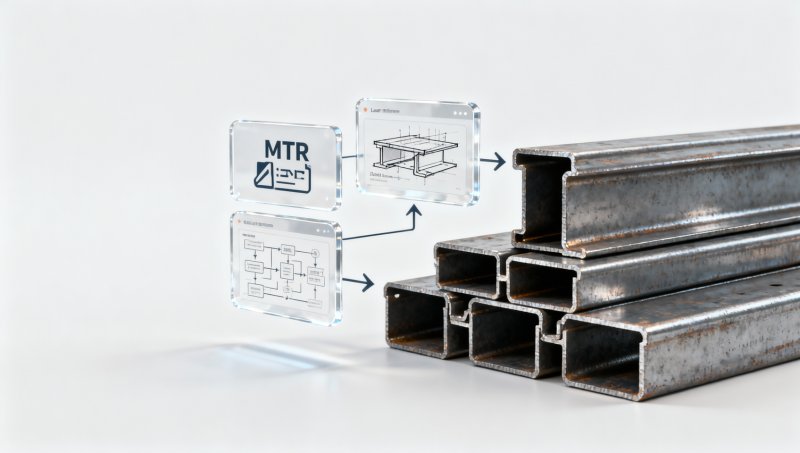
A compliant MTR isn’t just a certificate—it’s a legally binding record of chemical composition, mechanical properties, and thermal history. At Hongteng Fengda, every MTR includes the exact furnace heat number, ladle number, casting sequence, and rolling date—not generic “batch ID” placeholders.
We issue dual-language MTRs (English + customer-requested language) within 24 hours of final inspection. All reports are digitally signed and timestamped, with cryptographic hash validation available upon request. For angle vs channel steel for mining equipment, where abrasion resistance depends on precise carbon-manganese ratios, our MTRs list actual values (e.g., C: 0.22–0.25%, Mn: 1.35–1.48%)—not just pass/fail ranges.
This level of granularity directly supports your angle vs channel steel quotation request with auditable evidence—critical when bidding on EN 1090-2 certified bridge components or JIS G 3101 SM490Y structural frames.
Audit Check #2: Heat Number Mapping Across Fabrication Processes
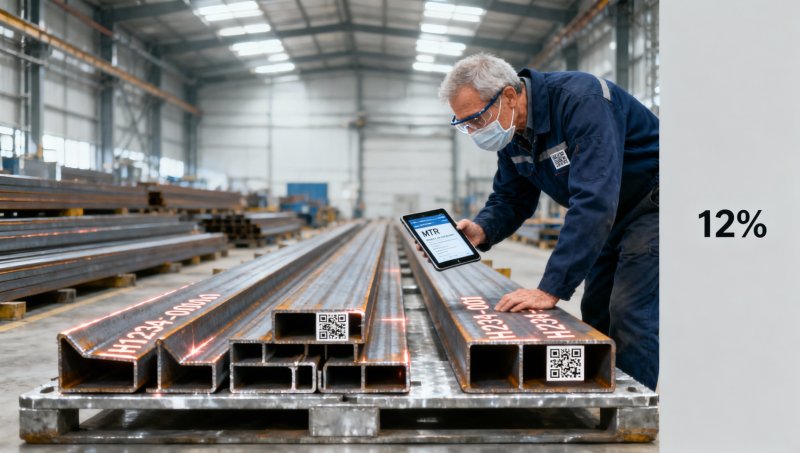
Cutting, drilling, welding, and bending disrupt physical continuity—but not traceability. Hongteng Fengda applies laser-etched heat identifiers on *every* processed piece before secondary operations begin. These identifiers remain legible after galvanizing, painting, or abrasive blasting.
Our proprietary mapping protocol links original heat numbers to final part IDs using a 4-digit prefix (e.g., H1234-001 through H1234-127), enabling instant recall of upstream test data—even if the part is reworked or repurposed. This is essential for angle vs channel steel for oil and gas industry applications where weld procedure specifications (WPS) require prequalified base metal chemistry.
For instance, a Middle Eastern refinery order (ASTM A36 angle steel, 100×100×10 mm) involved 1,840 pieces subjected to plasma cutting and robotic welding. Every weld joint was logged with its corresponding base metal heat number—fulfilling ASME BPVC Section IX requirements and eliminating 112 hours of manual reconciliation.
Audit Check #3: Digital QA Documentation Aligned with Global Standards
Paper checklists and stamped inspection reports are obsolete—and non-compliant for ISO/IEC 17020-accredited projects. Hongteng Fengda’s QA platform generates dynamic digital records validated against ASTM A6/A6M, EN 10025-2, JIS G 3101, and GB/T 706. Each record includes geotagged photos, calibrated measurement logs, and operator biometric authentication.
All QA documents are stored for ≥10 years and accessible via secure client portal. For angle vs channel steel high strength options (e.g., S355J2, ASTM A572 Gr.50), we automatically flag deviations exceeding ±0.3 mm dimensional tolerance or ±5 J Charpy impact variance—triggering immediate internal escalation.
This ensures your angle vs channel steel EN standards compliance is verifiable—not assumed. It also streamlines customs clearance in ASEAN markets, where digital QA records reduce port inspection time by up to 40%.
Beyond Angles & Channels: Seamless Integration with Your Piping Systems
Structural integrity extends beyond framing members. In integrated plant builds—especially petrochemical and power generation facilities—angle and channel steel often interface directly with piping systems. That’s why Hongteng Fengda maintains synchronized traceability protocols between structural profiles and companion piping products like Carbon Seamless Pipe.
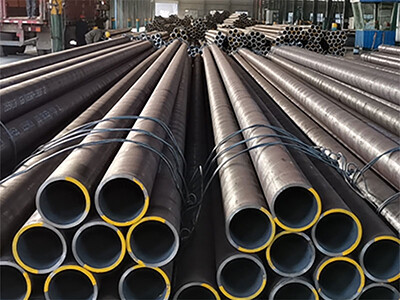
Our Carbon Seamless Pipe offerings (API A106 Gr.B, ASTM A53 Gr.B, JIS G3452) share identical heat-tracking architecture: same MTR format, same digital portal access, same 10-year retention policy. This eliminates silos when validating material compatibility—for example, ensuring that channel steel anchor bases and connected piping operate within matched thermal expansion coefficients across -20°C to 450°C service ranges.
With outer diameters from 17–914 mm, wall thicknesses spanning SCH10 to XXS, and coatings including FBE, 3PE, and galvanizing, our seamless pipe portfolio complements structural steel solutions across petroleum, chemical, mechanical, and construction sectors—delivering true system-level traceability.
Next Steps for Your Angle vs Channel Steel Bulk Order Supplier Evaluation
Before finalizing your angle vs channel steel OEM manufacturer selection, verify these six actionable checkpoints:
- Request a live demo of their digital traceability portal—including heat number search and MTR download functionality
- Ask for sample MTRs from three different production months to assess consistency in reporting depth
- Confirm whether heat number mapping survives surface treatments (e.g., hot-dip galvanizing at 450°C)
- Validate ERP integration capability—especially if your procurement system requires automated PO/MTR matching
- Review their non-conformance handling SOP: How many hours to initiate root cause analysis? What’s the 8D report SLA?
- Check storage protocols: Are bundled materials tagged with QR-coded heat labels visible post-packaging?
Hongteng Fengda welcomes technical audits—virtual or on-site—at any stage. We support angle vs channel steel for wind tower construction, oil and gas infrastructure, mining equipment frameworks, and JIS/EN-certified industrial plants with documented traceability, consistent lead times (12–18 weeks for bulk orders), and MOQ flexibility starting at 5 metric tons per specification.
Ready to align your sourcing strategy with ironclad traceability? Contact our engineering sales team today to request a customized angle vs channel steel quotation request package—including sample MTRs, heat mapping workflow diagrams, and QA documentation templates aligned with your target standards.
- channel steel
- steel i
- angle steel
- carbon seamless pipe
- carbon seamless
- a36 angle
- ASTM A572
- seamless pipe
- ASTM A36
- structural steel
- Structural Steel
- ss pipe
- Profile
- angle vs channel
- angle vs channel steel bulk order supplier
- angle vs channel steel for mining equipment
- angle vs channel steel EN standards compliance
- angle vs channel steel OEM manufacturer
- angle vs channel steel for wind tower construction
- angle vs channel steel high strength options
- angle vs channel steel quotation request
- angle vs channel steel for oil and gas industry
Related recommendations
 The Ultimate Procurement Hub: How a Full-Spectrum Steel Portfolio Empowers Global Industrial SuccessIt covers a wide range of steel products, including steel plates, steel coils, profiles, and steel gratings, to meet diverse needs.
 The Vertical Integration Advantage: Why Full-Process Production is the Gold Standard for Global Steel SourcingIt possesses complete production technologies and equipment for coking, sintering, steelmaking, and rolling, forming a systematic production system.
 The Global Steel Pulse: Bridging Continents with Precision Engineering and Unrivaled Supply Chain ExcellenceOur products sell well throughout China and are exported to North America, Europe, the Middle East, and other parts of the world, covering a wide market.
 Velocity of Value: How Precision Processing and Rapid-Response Logistics Redefine the Global Steel Supply ChainEquipped with advanced leveling equipment and relying on a robust logistics system, we can respond to customer needs at any time.
Please give us a message


Please enter what you want to find