Why do many engineers prefer Z-beam solutions when optimizing roof structures? Compared with traditional H-beam layouts, Z-beam designs can reduce steel weight, improve load distribution, and help control total project cost. For buyers asking, “is cheap steel from China reliable,” material quality, design accuracy, and supplier standards all matter. This article explores how structural steel manufacturers support safer, lighter, and more efficient roofing systems.
Why do Z-beam roof designs often use less structural steel?
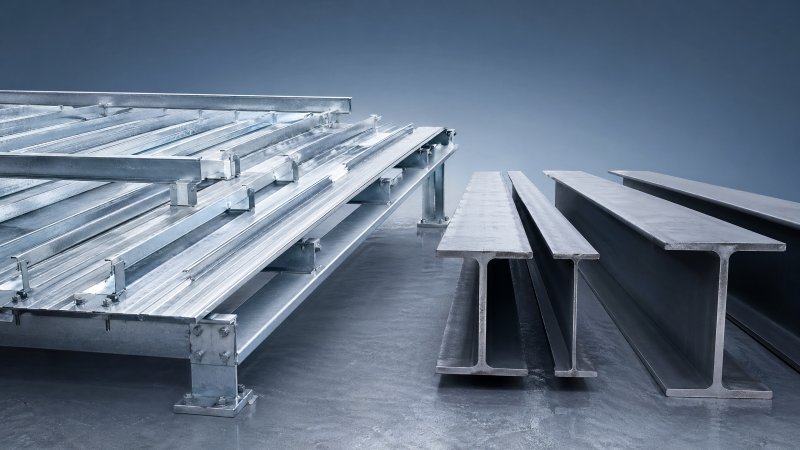
In roof systems, reducing steel weight is not only about choosing a lighter section. It is about matching section geometry to span, purlin spacing, wind uplift, dead load, and installation method. Z-beam designs are widely used because their shape allows efficient material placement away from the neutral axis, which helps achieve required bending performance with less steel mass in many practical roof applications.
For project managers and technical evaluators, the most important point is that a Z-beam roof system can lower total tonnage across repeated members. On industrial roofs with repetitive bays, even a modest reduction per member can add up over 100, 300, or 500 pieces. That affects freight cost, crane time, connection loads, and sometimes foundation demand as well.
For procurement teams and financial approvers, steel weight reduction matters because material cost is only one line item. A lighter roof frame can also simplify handling, shorten on-site lifting cycles, and reduce the risk of overdesign. In many projects, the real value comes from balancing strength, manufacturability, and delivery consistency rather than chasing the lowest quoted section price.
What makes Z-sections efficient in roofing?
Z-sections are commonly selected for purlins and secondary framing because they support overlapping connections over continuous spans. In 2-span or 3-span roof layouts, that continuity can improve load sharing and reduce peak bending moments compared with simpler single-span arrangements. This is one reason engineers can often specify thinner gauges or smaller section weights while still meeting design requirements.
Another advantage is practical installation. Z-beams are often easier to stack, transport, and align in repetitive roof grids. For operators and site supervisors, predictable section sizes and standardized hole positions can improve assembly speed. In export projects with tight lead times of 2–4 weeks for standard items or longer for custom profiles, design simplification also supports better planning.
- Efficient section geometry for secondary roof framing.
- Overlap capability that supports continuous-span behavior.
- Lower handling weight per member for installation teams.
- Potential savings in supporting members, connections, and logistics.
Z-beam vs H-beam in roof systems: where is the weight advantage?
Z-beams and H-beams do not serve exactly the same role in every project, so comparison must be made carefully. H-beams are often selected for primary frames, long spans, and heavy loads. Z-beams are commonly used for purlins, girts, and light-to-medium roof framing. The weight advantage appears when the design task fits the section’s intended function instead of forcing one profile to do every job.
The table below helps buyers, designers, and commercial teams compare typical decision factors. It does not replace structural calculation, but it provides a practical framework when reviewing quotations, shop drawings, and alternative steel proposals from different suppliers.
The key takeaway is simple: if a project uses H-beams in locations where cold formed or lighter secondary members can safely perform, the roof steel package may become unnecessarily heavy. But replacing H-beams without full design review is also risky. The right decision depends on span ranges, load combinations, deflection limits, and connection details.
When does the substitution make sense?
Z-beam solutions are often more attractive in buildings with regular bay spacing, moderate roof slopes, and repeated member lengths. They are also practical when transport efficiency matters, such as export orders loaded in bundles or containerized shipments. In these cases, reducing section weight by member and improving stack density can support measurable commercial advantages across the entire supply chain.
Common review points before changing a roof scheme
- Check whether the member is primary framing or secondary framing.
- Review span count, such as single-span, 2-span, or 3-span continuity.
- Confirm load cases including dead load, live load, wind uplift, and maintenance access.
- Evaluate drilling, punching, overlap length, and erection sequence before purchase approval.
Which technical and procurement factors matter most?
When global buyers compare structural steel suppliers, they often focus first on price per ton. That is understandable, but not sufficient. For a roof steel package, technical consistency is as important as raw cost. Section tolerance, yield level, straightness, hole accuracy, coating condition, and packing method all influence whether the theoretical weight saving from a Z-beam design becomes a real project saving.
This is where an experienced structural steel manufacturer adds value. Hongteng Fengda supplies angle steel, channel steel, steel beams, cold formed steel profiles, and customized structural steel components for projects across North America, Europe, the Middle East, and Southeast Asia. With production aligned to ASTM, EN, JIS, and GB requirements, buyers can compare options using recognized standards instead of relying only on informal descriptions.
In practical sourcing, technical evaluation usually follows 4 steps: confirm design loads, match section specification, review fabrication details, and verify quality documents before shipment. For projects with repeated roof members, small dimensional errors can multiply across dozens or hundreds of connections, so quality control should begin before mass production, not after delivery.
A useful checklist for buyers and engineers
The next table summarizes common procurement checkpoints. It is especially useful for purchasing managers, QA teams, and business evaluators who need a structured method to compare 2–3 suppliers in a short bidding window.
If a supplier can answer these points clearly, buyers have a much better basis for decision-making. That is also the best response to the question, “is cheap steel from China reliable?” Low price alone does not define reliability. Reliable supply comes from matched standards, controlled production, realistic lead times, and transparent communication throughout the order cycle.
A related product that supports roof and site work
In many roofing and construction projects, secondary materials are also needed for tying, fastening, mesh making, packaging, or temporary site barriers. One practical option is Mild Steel Wire Rod. Available in Q195 and Q235 low carbon steel, it is used in construction, wire mesh, packaging, decoration, breeding, and barrier isolation where flexibility and cost control are important.
Typical specifications include wire diameter from 0.25 mm to 5.0 mm, zinc coating thickness from 8 g/m2 to 25 g/m2, and tensile strength from 350 Mpa to 550 Mpa. Common packing options include 50–1,000 kg coils with plastic film inside and woven bag outside, or packaging with wire bobbin. For distributors and project buyers, these ranges help match usage frequency, handling method, and corrosion exposure.
How can buyers reduce risk when sourcing lighter roof steel from China?
Risk control starts before quotation approval. Buyers should provide design drawings, loading requirements, section schedules, and destination standards at the inquiry stage. If the supplier receives only a general description such as “light roof beam,” the quote may not reflect actual fabrication complexity. Clear scope definition reduces the chance of change orders, production delays, or unexpected commercial disputes later.
For procurement and project teams, a practical sourcing process usually includes 5 checkpoints: drawing review, technical clarification, sample or section confirmation when needed, production schedule agreement, and pre-shipment inspection. For customized structural steel components, this sequence is often more valuable than negotiating a small price reduction that later creates installation problems or rework costs.
Hongteng Fengda supports global buyers with both standard specifications and OEM solutions. That matters when a project needs not only steel beams, but also angle steel, channel steel, cold formed profiles, and related fabricated components in one coordinated supply package. Consolidated sourcing can simplify documentation, reduce communication gaps, and improve shipment planning across multiple product lines.
What should be clarified before order confirmation?
- Material grades and applicable standards such as ASTM, EN, JIS, or GB.
- Surface condition, galvanizing or other coating requirements if used.
- Member lengths, punching details, and whether overlap zones are included in fabrication scope.
- Packing method, loading plan, and destination-specific shipping constraints.
- Inspection documents, marking method, and receiving checklist at site or warehouse.
A common mistake in budget evaluation
Many teams compare suppliers only by ton price, but a lighter and better-matched roof design can change the required tonnage itself. That means the lowest unit price is not always the lowest project cost. A stronger commercial evaluation compares at least 3 dimensions: total steel weight, fabrication accuracy, and delivery reliability. This gives finance and management teams a more realistic basis for approval.
FAQ: practical questions about Z-beam roof systems and supply decisions
The questions below reflect common concerns from engineers, importers, distributors, project owners, and site teams. They help translate technical discussion into purchasing and implementation decisions.
Are Z-beams always better than H-beams for roofing?
No. Z-beams are often better for secondary roof framing, especially in repetitive bays and continuous-span purlin systems. H-beams remain important for primary load-bearing elements and heavier structural duties. The better option depends on span, load case, support condition, deflection limit, and how the roof system is connected to the main frame.
What is the usual lead time for structural roof steel orders?
Lead time varies by product type, quantity, and processing depth. Standard sections may move faster, while customized punched, cut-to-length, or bundled export packages take longer. A common commercial planning range is 2–4 weeks for simpler items, with additional time for documentation, port handling, and ocean shipment depending on destination.
How can quality teams verify reliability before shipment?
Quality teams should review material grade confirmation, dimensional checks, section count, marking clarity, and packing integrity. A 5-point inspection routine before shipment is often more effective than relying on a final visual glance. If the order includes custom profiles, it is also wise to confirm sample dimensions or first-batch measurements before full production continues.
Is lower-cost steel from China suitable for export projects?
It can be suitable when the supplier has stable manufacturing capability, recognized standard compliance, and clear quality control. The real question is not whether the steel is cheap, but whether the delivered steel matches drawings, standards, and project timing. Buyers should judge by documentation, communication quality, tolerance control, and export execution, not by price alone.
Why choose us for structural steel and customized roof support solutions?
For companies evaluating lighter roof steel solutions, the best supplier is one that can connect design intent with production reality. Hongteng Fengda manufactures and exports structural steel products from China, including angle steel, channel steel, steel beams, cold formed steel profiles, and customized structural steel components. This allows buyers to source both standard and project-specific items through one coordinated team.
Our support is useful for multiple decision roles: engineers needing section matching, purchasing managers comparing total cost, QA personnel checking compliance, distributors managing repeat supply, and project leaders working against fixed deadlines. With production and quality control aligned to major international standards such as ASTM, EN, JIS, and GB, we help reduce sourcing uncertainty in cross-border steel procurement.
If you are reviewing a Z-beam roof design or comparing it with an H-beam option, you can contact us for 4 practical items: parameter confirmation, product selection, delivery schedule discussion, and customized solution review. We can also support quotation communication, packing planning, sample discussion for suitable items, and requirement alignment for export-oriented structural steel projects.
Send your drawings, section list, target standard, and estimated order quantity to start the evaluation. Whether your priority is lower roof steel weight, stable lead time, or better sourcing control, a clear technical review at the beginning usually saves more time and cost than fixing avoidable issues after production or at the job site.
Please give us a message


Please enter what you want to find