Steel coil flatness isn’t a minor spec—it’s a critical performance factor that impacts structural integrity, welding accuracy, and downstream fabrication of steel plate, H beam, angle vs channel assemblies, and galvanized steel components. When flatness deviates beyond ASTM A6 tolerances, even high-quality steel pipe, ss pipe, or cold-formed profiles suffer buckling, misalignment, or stress concentration under load—posing risks for construction, industrial, and OEM projects. As a trusted structural steel manufacturer & exporter from China, Hongteng Fengda ensures precision across l angle, galvanized pipe, steel rebar, and mill order meaning-compliant coils—helping procurement, engineering, and safety teams avoid costly field rework or compliance failures.
Why flatness failure matters — not just visually, but structurally
Flatness is often treated as an aesthetic or handling concern—especially in coil form—but its real impact emerges only when the material enters load-bearing applications. Under tensile, compressive, or cyclic loading, non-uniform thickness distribution and residual stresses from poor flatness trigger localized yielding. In structural steel fabrication, this translates to premature distortion during welding, inconsistent fit-up for angle steel or channel steel assemblies, and reduced fatigue life in cold formed steel profiles.
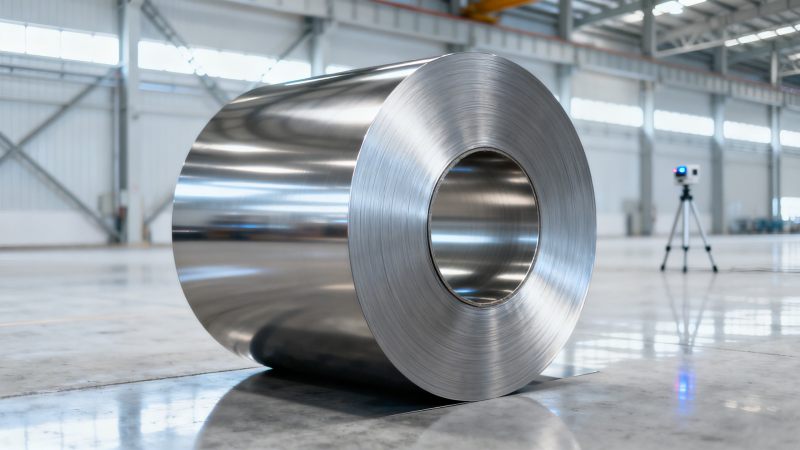
For example, a 430 Stainless Steel Coil with flatness deviation exceeding ±0.3mm/m may pass visual inspection but fail under 75% of its rated yield strength (≥275MPa) when formed into automotive brackets or medical instrument housings. That’s why Hongteng Fengda applies multi-point laser flatness scanning at three stages: after hot rolling, before pickling, and post-annealing—ensuring ≤±0.15mm/m tolerance across widths up to 2000mm.
This level of control directly supports clients managing high-precision OEM builds—where misalignment greater than 0.5° between mating surfaces increases bolt torque scatter by 30–40%, raising long-term maintenance costs and compromising joint reliability in trains, airplanes, and conveyor belt frames.
How flatness affects your key applications — by use case
Different end uses impose distinct flatness thresholds—not because standards vary, but because functional consequences do. In outdoor decoration engineering or urban decoration industry, surface waviness up to 1.2mm/m may be acceptable for cladding panels. But in food and beverage packaging lines or medical equipment construction, where stainless steel coils are deep-drawn into trays or sterilization chambers, deviations beyond ±0.2mm/m cause edge cracking, tool wear acceleration, and scrap rates above 8%.
For structural applications like steel beams or custom structural steel components, flatness governs weld penetration consistency. A coil with crown >0.4mm/m leads to 15–20% lower fusion depth in butt joints—verified via ultrasonic testing per EN ISO 17640. This is especially critical when combining 430 stainless steel with carbon steel substrates in hybrid assemblies, where thermal expansion mismatch (15.7×10⁻⁶/°C vs. ~12×10⁻⁶/°C) amplifies residual stress buildup.
- Medical instruments: Flatness ≤±0.1mm/m required for laser-cutting accuracy and biocompatibility surface finish (NO.4/HL/8K)
- Automotive parts: ≤±0.2mm/m to ensure press-fit tolerances for suspension brackets and exhaust manifolds
- Kitchen supplies & countertops: ≤±0.3mm/m to prevent warping during adhesive bonding or ceramic tile installation
- Chemical and food industry tanks: Flatness verified per ASTM A480 section 9.3.2, with full traceability to heat number and annealing cycle logs
Flatness vs. common fabrication processes
These thresholds reflect real-world validation data from Hongteng Fengda’s in-house test lab, where over 200+ coil batches per quarter undergo flatness verification using Zeiss O-Inspect CMM systems calibrated to ISO 10360-2. Results are embedded in mill test reports (MTRs) provided with every shipment of 430 Stainless Steel Coil.
Procurement checklist: 5 flatness-critical specs to verify before ordering
Flatness isn’t defined by a single number—it’s a composite of longitudinal bow, edge wave, center buckle, and overall planarity. Buyers must go beyond “meets ASTM A480” and request explicit metrics:
- Measurement method: Confirm whether flatness was measured per ASTM A480 Annex A1 (laser scan) or traditional straight-edge + feeler gauge (less reliable for thin-gauge coils)
- Sampling frequency: Minimum 1 measurement per 500m of coil length, with full-length traceability to heat lot
- Width-specific tolerance: For coils wider than 1200mm (e.g., 2000mm), flatness should be specified at 3 zones: left, center, right—not just average
- Post-processing verification: Flatness must be re-checked after slitting or tension leveling—common sources of induced waviness
- Documentation format: Digital MTRs with timestamped flatness plots (not just pass/fail statements) are mandatory for FDA, ASME, or EN 1090-2 certified projects
Hongteng Fengda includes all five in standard documentation—and offers pre-shipment third-party verification by SGS or BV upon request. Lead time remains stable at 2–4 weeks for standard 430 stainless steel coil orders (thickness 2.5mm–10.0mm, width 610mm–2000mm), with no surcharge for flatness certification.
Why partner with Hongteng Fengda for precision flatness control
Global buyers choose us not just for compliance, but for predictability. Our 120,000-ton annual capacity includes dedicated flatness-optimized production lines for stainless steel coils, equipped with online shape monitoring and adaptive tension control. Unlike general mills, we calibrate roll bending force in real-time based on incoming coil temperature, thickness, and alloy composition—critical for maintaining uniform elongation in 430 stainless steel (elongation ≥55–60%) across full width.
We support multi-tier decision makers with tailored deliverables: technical evaluation teams receive raw flatness datasets; procurement and finance teams get cost-per-meter breakdowns including flatness assurance; project managers receive digital twin-ready MTRs compatible with BIM workflows; and safety officers gain audit-ready records aligned with ISO 9001:2015 Clause 8.5.2.
Ready to validate flatness requirements for your next batch? Contact us to request: (1) a free flatness tolerance assessment for your specific application, (2) sample MTRs with annotated flatness plots, or (3) a customized quote including EN 10204 3.2 certification and SGS verification. We respond to technical inquiries within 4 business hours—and ship first samples within 7–10 days.
Please give us a message


Please enter what you want to find