Steel profile tolerance issues can quietly derail installation, causing misalignment, rework, and cost overruns in projects using H-beam, Z-beam, Rebar, and other Profile products. For buyers asking, is cheap steel from China reliable, understanding dimensional accuracy, standard compliance, and quality control is essential before sourcing structural steel for demanding construction and industrial applications.
Why do steel profile tolerance problems create installation risk so quickly?
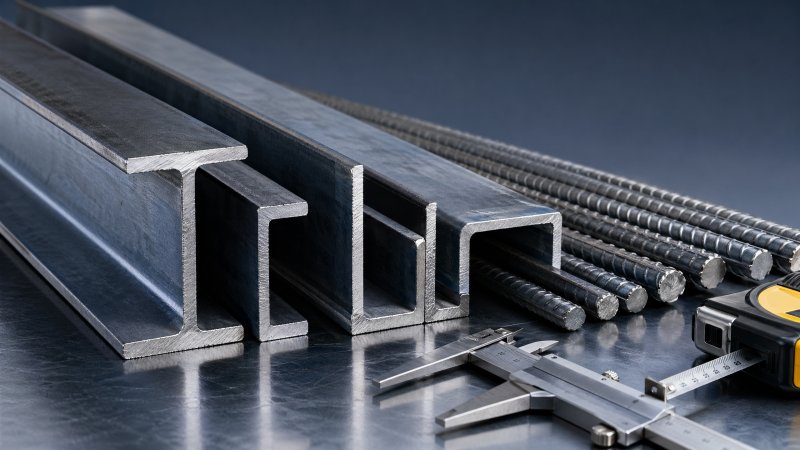
In structural steel projects, tolerance is not a minor paperwork issue. It directly affects fit-up, alignment, welding preparation, bolt hole matching, and final load path performance. Even when the steel grade is correct, dimensional variation in flange width, web thickness, straightness, twist, camber, or cut length can create installation delays within the first 1–3 days on site.
For operators and project managers, the practical problem is simple: steel members must assemble within the expected tolerance range of the connected system. If profiles are outside standard limits, crews spend extra hours on shimming, flame correction, grinding, drilling adjustment, or rejection handling. In tight construction schedules, a deviation of only a few millimeters can interrupt crane time, labor planning, and sequence control.
For procurement teams and business evaluators, the hidden cost is often larger than the unit price difference. A lower purchase price may look attractive, but once rework, delivery interruption, inspection disputes, and replacement freight are included, the total installed cost can rise sharply. This is why tolerance control matters to finance approvers as much as it matters to engineers.
For quality and safety personnel, tolerance also affects compliance. Structural sections produced to ASTM, EN, JIS, or GB requirements must not only meet chemical and mechanical properties but also dimensional rules. Reliable manufacturers reduce sourcing risk by controlling rolling, cutting, cooling, straightening, and final inspection across multiple checkpoints rather than relying on visual inspection alone.
Common tolerance issues that show up during installation
The most frequent site problems are usually not dramatic defects. They are accumulative dimensional mismatches that become obvious only when several members are assembled together. A beam that is slightly out of straightness may still look acceptable in the yard, yet become difficult when connected to base plates, cleats, and cross members over a span of 6–12 meters.
- Length deviation that affects bolt hole position or support bearing at both ends.
- Flange width or web thickness variation that changes fit-up with connection plates and stiffeners.
- Twist, sweep, or camber outside project allowance, causing visible alignment problems.
- Cut-end squareness issues that make erection and welding preparation slower.
Which dimensional checks matter most before steel profiles reach the jobsite?
Not every dimensional item carries the same installation risk. Technical evaluators should focus first on the dimensions that directly affect connection geometry and structural assembly. In most steel profile projects, 5 key checks should be prioritized: length, flange width, web width or depth, thickness, and straightness. For fabricated members, hole position and end preparation become equally important.
The exact tolerance limits depend on the applicable standard and profile category. A hot rolled section under ASTM or EN dimensional rules will not be evaluated exactly the same way as a cold formed profile or a custom fabricated structural component. That is why buyers should confirm both the material standard and the dimensional standard during RFQ review, not after order placement.
The table below summarizes practical installation-sensitive checks and why they matter to procurement, QC, and erection teams. These are not substitute values for a specific standard, but a structured way to decide what must be verified before dispatch.
A disciplined supplier should measure these items at more than one stage, especially on large lots or mixed-size orders. For global buyers, this reduces disputes because the inspection sequence is documented before loading, not argued after material reaches the port or site.
How standards and production method change the tolerance conversation
Hot rolled and cold formed products behave differently in production. Hot rolled profiles often have broader dimensional ranges governed by rolling conditions, while cold formed sections may offer tighter shape consistency in certain geometries but can introduce different concerns such as corner accuracy or residual stress behavior. Buyers should not compare them only by price per ton.
In export sourcing, another common issue is standard mismatch. A buyer may request ASTM A572 or A992 material performance, while the fabricator references a different dimensional expectation. This does not always mean the product is poor; it may mean the order documents failed to align grade, profile designation, dimensional tolerance, and inspection method in one package.
How should buyers evaluate a steel supplier before placing a structural order?
If the question is whether low-cost steel from China is reliable, the correct answer depends less on geography and more on process control. A capable structural steel manufacturer should show stable production capacity, standard familiarity, and a practical QC workflow. For most B2B buyers, 4 decision layers matter: specification clarity, production consistency, inspection transparency, and delivery reliability.
Hongteng Fengda serves buyers in North America, Europe, the Middle East, and Southeast Asia with structural steel products and customized solutions for construction, industrial, and manufacturing applications. That matters because export supply is not only about making steel sections. It also requires understanding document control, packing discipline, standard conversion, and how dimensional accuracy affects downstream installation efficiency.
For projects involving standard sections and OEM requirements, buyers should ask for a clear review of profile type, material grade, dimensional range, inspection items, and shipment format. This is especially important for sections used in steel structure, shipbuilding, bridging, and automobile chassis support systems, where cumulative fit-up errors can affect assembly speed across dozens or hundreds of pieces.
Mid-project product example: where profile data helps reduce installation risk
A practical example is H-beam sourcing for structural frames and machinery support. This profile is commonly selected because of its economical section, strong bending resistance, reasonable strength-to-weight ratio, and simple construction benefits. However, those advantages only translate to site efficiency when dimensional control is stable from rolling through final cutting.
Typical specification ranges include flange thickness from 8–64 mm, web thickness from 5–36.5 mm, flange width from 50–400 mm, web width from 100–900 mm, and length from 1–12 m or as required. Common materials include Q235B, Q345B, Q460C, SS400, S275JR, S355JR, A572, A992, and stainless options such as 201, 202, 304, 310, and 316, depending on the application environment.
When buyers compare options, they should also confirm whether the section is hot rolled or cold rolled, and whether the order must align with JIS G3101, EN10025, ASTM A36, ASTM A572, or ASTM A992. The benefit of reviewing these details early is simple: it narrows the risk of getting a material grade that is acceptable on paper but inconvenient during fabrication or erection.
A practical supplier evaluation checklist
- Confirm 3 document layers: material grade standard, dimensional tolerance basis, and inspection report format.
- Review whether the supplier can support standard sizes and custom lengths within the same production schedule.
- Ask how many checkpoints are used for dimensional verification, especially for straightness and final cut length.
- Check export capability, including packing, marking, lead-time control, and response speed for technical clarification.
What should procurement, QC, and project teams compare before approving an order?
A good sourcing decision balances cost, tolerance reliability, compliance, and delivery. Comparing only price per ton often leads to the wrong conclusion because structural steel value is created at installation, not just at purchase. A profile with tighter process control may reduce field adjustment hours, rental extension, and scrap exposure across a 2–4 week installation window.
The following comparison table can help cross-functional teams review suppliers using criteria that matter to engineering, purchasing, finance, and safety. It is especially useful when evaluating multiple exporters or when deciding whether a low offer carries hidden execution risk.
This comparison is often where internal alignment happens. Engineers focus on fit-up, procurement on source stability, project managers on schedule, and finance on cash impact. When all four functions review the same criteria, approval becomes faster and disputes later in the project become easier to prevent.
How to reduce tolerance-related disputes in 4 practical steps
- Define the applicable standard set before order confirmation, including grade and dimensional basis.
- Approve drawings, cut list, and key dimensions for sections with custom processing.
- Request pre-shipment dimensional records for critical items or first batch verification.
- Agree on non-conformance handling, including replacement, sorting, or repair responsibility.
These 4 steps do not add much cost, but they can save substantial time in projects where crane bookings, subcontract labor, and sequence-sensitive installation leave little room for error.
FAQ: what do buyers and users most often ask about steel profile tolerance?
Tolerance questions come from different angles. Operators want to avoid assembly headaches. Technical teams want standard compliance. Procurement wants fewer claims. Decision-makers want lower total project risk. The following FAQ addresses the questions that most often affect sourcing and installation outcomes.
How much tolerance variation is acceptable for structural steel installation?
There is no single universal number because acceptable limits depend on product type, section size, processing method, and the governing standard. The correct approach is to verify the tolerance requirements under the specified ASTM, EN, JIS, or GB framework and then compare them to the connection sensitivity of the actual project. For critical assemblies, even a small deviation can be significant if multiple members stack error across one frame line.
Is cheap steel from China always low quality?
No. Price alone does not determine reliability. Some suppliers offer cost advantages because of scale, process specialization, or efficient export operations. The real question is whether the supplier can document grade compliance, dimensional inspection, and delivery consistency. Buyers should compare total sourcing risk rather than assume that a lower quote automatically means poor steel profile quality.
What documents should be reviewed before shipment?
At minimum, buyers should review the product specification, material grade reference, dimensional requirement basis, packing list, and relevant inspection records for critical dimensions. For fabricated or custom-length orders, drawing confirmation and marking lists are also important. In many projects, this 5-part document review prevents confusion between what was quoted, what was produced, and what arrived on site.
When should custom structural steel be inspected?
The best timing is not only at the end. Effective control usually happens in 3 stages: in-process inspection, final dimensional verification, and pre-loading review. This sequence is particularly useful for profiles cut to length, drilled, welded, or bundled by installation zone. It reduces the chance that a whole batch reaches site with the same preventable dimensional issue.
Why choose a manufacturer that understands both steel production and project delivery?
Structural steel purchasing is rarely just a commodity transaction. Buyers need a partner that understands profile manufacturing, export coordination, and the practical consequences of tolerance on installation. Hongteng Fengda supports global construction, industrial, and manufacturing projects with structural steel products, OEM solutions, and production control designed to reduce sourcing uncertainty.
Our scope covers angle steel, channel steel, steel beams, cold formed steel profiles, and customized structural steel components. With modern manufacturing facilities and strict quality control, we work to align product output with major international standards such as ASTM, EN, JIS, and GB. For buyers, this means clearer communication during technical review and fewer surprises after arrival.
If your team is evaluating profile tolerance risks, we can support practical discussions around section selection, dimensional review points, grade matching, standard compliance, and shipment planning. We can also discuss typical lead-time expectations, custom length requirements, sample support, and quotation structure for both standard and OEM orders.
Contact us to confirm parameters, compare material options, review certification needs, check delivery timing, or discuss a customized structural steel solution for your project. A well-defined order at the start usually saves far more than it costs, especially when installation windows are tight and rework is expensive.
Please give us a message


Please enter what you want to find