Selecting the right cold-rolled steel coil is critical for automotive stamping precision, durability, and cost efficiency. This article compares SGCD1 coil and DX52D coil—two widely specified grades for deep drawing applications—highlighting formability, surface quality, and compliance with ASTM steel coil, EN, and GB standards. As a Shandong steel manufacturer and exporter, Hongteng Fengda supplies high-performance Z150 steel sheet, coil coated steel, and ASTM steel beam solutions to global automakers and Tier-1 suppliers. Whether you're a procurement professional evaluating DX52D steel for electrical conduit pipe or a project manager sourcing electroplated steel conduit, this technical comparison delivers actionable insights grounded in real-world stamping performance.
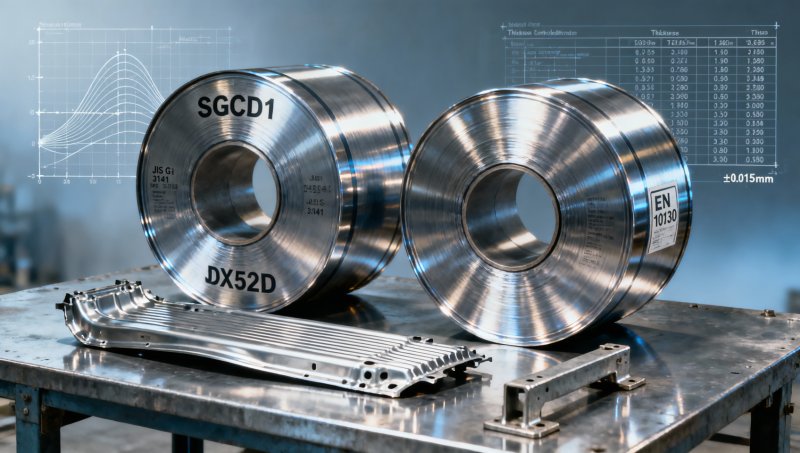
Definition & Standard Origins
SGCD1 coil and DX52D coil are both cold-rolled, low-carbon deep-drawing steels—but they originate from different regional standard systems and serve overlapping yet distinct application scopes. SGCD1 is defined under the Japanese Industrial Standard (JIS G 3141), specifying a non-alloy, fully killed, cold-rolled steel optimized for moderate deep-drawing operations. DX52D, by contrast, falls under the European EN 10130 standard and represents a higher-grade, continuously hot-dip galvanized-compatible variant designed for severe forming—including complex automotive panels and structural housings.
Both grades are routinely supplied as coils in thicknesses ranging from 0.4 mm to 2.5 mm and widths up to 1,600 mm. While SGCD1 is commonly used in domestic Japanese OEM supply chains and Asian-tier manufacturing, DX52D has gained strong traction across Europe, North America, and Southeast Asia—especially where dual compliance with ASTM steel coil and EN specifications is required. Notably, neither grade is interchangeable without process validation: substitution may trigger springback, edge cracking, or surface defects during high-speed progressive die stamping.
Technical Performance Comparison
Formability, tensile behavior, and surface integrity define success in automotive stamping. Below is a side-by-side technical benchmark of key mechanical and metallurgical properties:
The higher r-value and lower yield strength of DX52D translate directly into superior drawability—especially for asymmetric parts like door inner panels or fender reinforcements. SGCD1 remains highly competitive for shallow-draw components such as bracket assemblies or chassis mounting plates, where cost sensitivity outweighs extreme formability demands.
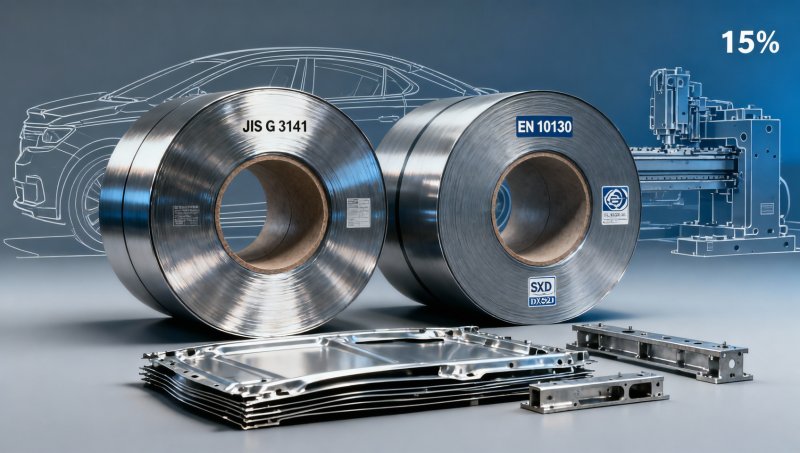
Application Scenarios & Real-World Use Cases
In practice, material selection depends on part geometry, production volume, and downstream processing requirements. For example, DX52D coil is frequently chosen for outer body panels requiring coil coated steel post-stamping—its uniform grain structure supports consistent paint adhesion and corrosion resistance after electrophoretic coating. It also serves as the preferred substrate for electroplated steel conduit used in EV battery enclosures due to its excellent weldability and minimal spatter risk.
Conversely, SGCD1 coil sees widespread deployment in structural subassemblies where dimensional stability matters more than surface aesthetics—such as seat track rails or HVAC duct frames. Its tighter yield strength control simplifies press setup and reduces scrap rates in high-mix, low-volume production lines. Several Tier-2 suppliers in Shandong province have adopted SGCD1 for Z150 steel sheet-based brackets, citing 12% faster tool changeover versus DX52D equivalents.
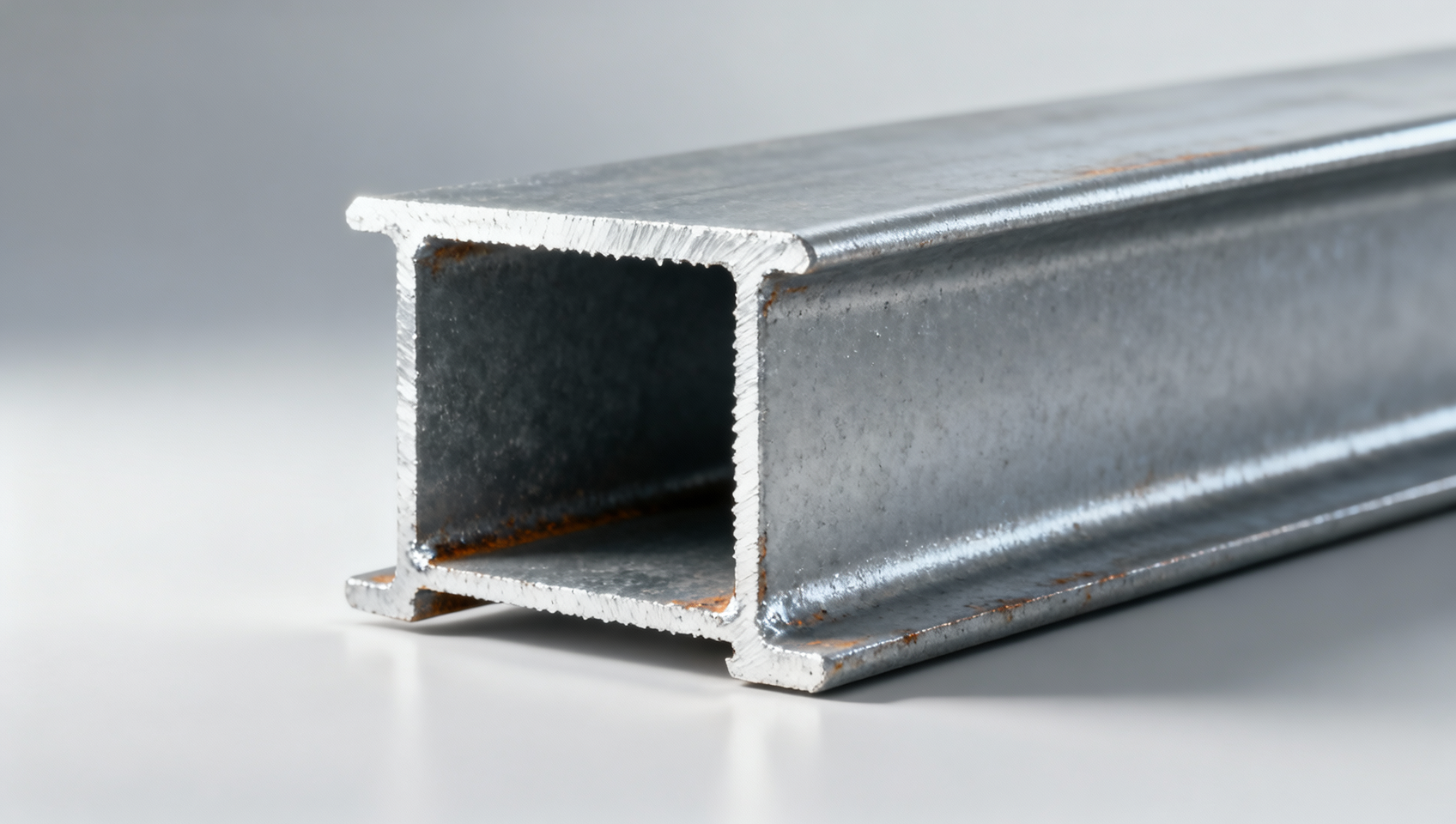
Notably, both grades are increasingly integrated into hybrid structural designs that combine stamped parts with rolled sections—for instance, using DX52D for curved front-end modules while pairing them with standardized I-beam supports compliant with ASTM A36 and EN S235JR. This synergy enables lightweighting without compromising crash energy absorption.
Procurement Guide for Global Buyers
Procurement professionals must weigh four interdependent criteria: specification alignment, supply chain resilience, certification traceability, and logistics readiness. First, verify whether your end-use requires EN 10130 certification (for DX52D) or JIS G 3141 + GB/T 5213 (for SGCD1). Second, confirm mill test reports include r-value, n-value, and surface roughness (Ra ≤ 0.6 μm for BA finishes).
Third, assess vendor capability beyond documentation: Does the supplier operate certified cold-rolling lines with online thickness gauging? Can they provide lot-specific zinc coating mass data for DX52D destined for electroplated steel conduit? Fourth, prioritize partners offering just-in-time coil decoiling, slitting, and tension-leveling services—reducing secondary handling and flatness-related rework.
As a Shandong steel manufacturer and exporter, Hongteng Fengda maintains dual-certified production lines meeting ASTM, EN, JIS, and GB standards. We support customers across North America, Europe, and the Middle East with stable lead times—even during raw material volatility—and offer customized packaging to prevent coil edge damage during sea freight.
Why Choose Hongteng Fengda?
When sourcing SGCD1 coil or DX52D coil for automotive stamping, reliability isn’t optional—it’s foundational. At Hongteng Fengda, every coil undergoes triple-stage inspection: incoming slab analysis, in-process thickness profiling, and final surface defect scanning via AI-powered vision systems. Our cold-rolling facility in Linyi, Shandong, features state-of-the-art universal mills capable of producing Z150 steel sheet with ±0.015 mm thickness tolerance—critical for tight-tolerance electrical conduit pipe fabrication.
We don’t just supply ASTM steel beam or coil coated steel—we co-engineer solutions. From validating DX52D formability on your proprietary die set to advising on optimal annealing atmospheres for SGCD1 coil, our technical team works alongside your engineers—not just your procurement desk. With ISO 9001, IATF 16949, and EN 10204 3.1 certifications across all product lines, we help global buyers reduce sourcing risks, control total landed costs, and accelerate time-to-production.
Contact Hongteng Fengda today for free material samples, mill test reports, and tailored coil logistics proposals—engineered for your next automotive stamping program.
Related recommendations
 How long does acero prepintado retain gloss and color stability in direct desert sunlight?Acero prepintado gloss & color stability in desert sun? Discover real-world performance data, PVDF vs. polyester longevity, and spec-critical insights for GCC projects.
 Does acero pregalvanizado maintain coating integrity after cold bending to 90 degrees?Acero pregalvanizado maintains coating integrity after 90° cold bending — when engineered right. Discover how Hongteng Fengda guarantees real-world performance, adhesion & corrosion resistance.
 Do the advantages of galvanized steel include reduced fire risk compared to untreated carbon steel?Advantages of galvanized steel include measurable fire-risk reduction vs. untreated carbon steel—learn how zinc delays ignition, buys critical escape time, and enhances safety without false 'fireproof' claims.
 What is the minimum bend radius for 12mm steel wire rope without permanent deformation?12mm steel wire rope capacity depends on bend radius — discover the safe 72–96mm minimum to prevent permanent deformation, fatigue & failure. Expert rigging insights inside.
Please give us a message


Please enter what you want to find