On real job sites, understanding Rebar grades is not just a technical detail—it affects safety, cost, and project performance. From comparing H-beam and Z-beam applications to asking is cheap steel from China reliable, buyers and engineers need clear standards-based insight. This guide explains what Rebar grades mean in practice and how they connect with broader structural steel sourcing decisions.
What do rebar grades actually tell you on site?
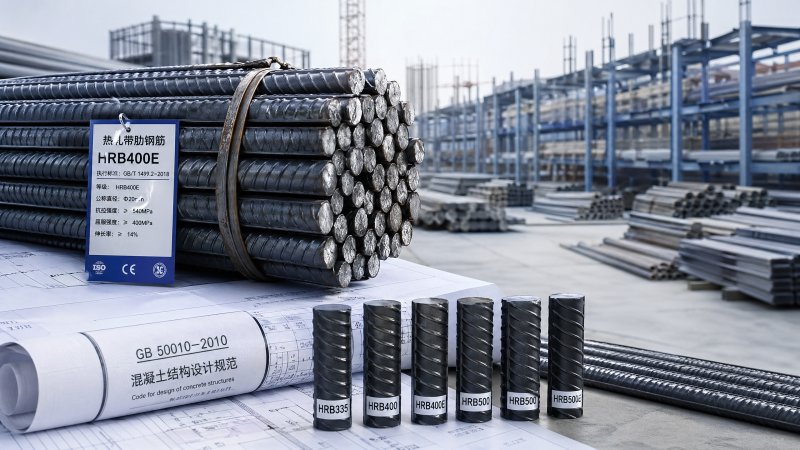
Rebar grades are not just labels on a mill test certificate. In real construction work, they indicate expected yield strength, tensile behavior, weldability considerations, and compatibility with design codes. When a site team receives bars marked to ASTM, EN, JIS, or GB standards, the grade helps engineers confirm whether the material matches the structural calculation, seismic demand, and fabrication method required for that project.
For operators and project managers, the practical question is simple: can this bar safely do the job it was bought for? A grade mismatch can affect bending radius, lap splice length, anchorage performance, and inspection acceptance. Even a small substitution between common strength levels can create redesign work, delay approvals by 2–7 days, or increase downstream risk during concrete placement and curing.
For procurement teams, grade also influences sourcing options. Some buyers focus only on tonnage price, but rebar procurement should balance 3 core factors: mechanical performance, standard compliance, and supply consistency. A lower unit price loses value quickly if the steel fails chemical composition checks, arrives with unclear marking, or causes processing problems at the fabrication yard.
For financial approvers and business evaluators, the most useful mindset is total project cost. Rebar grade selection affects not only material cost per ton, but also waste rate, processing efficiency, inspection frequency, and potential rework. On medium and large projects, a 1–3% mistake in material choice can have a larger impact than the apparent price advantage from a cheaper quotation.
Common job-site meanings behind grade markings
Different standards express grades differently, but site teams usually interpret them through a few shared performance questions. Is the bar strong enough? Can it bend without cracking? Will it weld safely if welding is specified? Is it traceable back to the approved batch? These questions matter more than the label itself.
- Yield strength level affects design capacity and whether the bar can replace another specified grade without redesign.
- Ductility affects seismic performance, field bending behavior, and tolerance to construction variation.
- Chemical composition influences weldability and risk of brittle behavior under certain fabrication conditions.
- Marking and traceability support inspection, quality control, and batch-level acceptance during delivery.
A bar that looks acceptable visually may still be unsuitable if it does not meet the grade required by the structural design. This is why experienced buyers ask for certificates, heat numbers, and standard references before release for shipment rather than after delivery to site.
How do common rebar grades compare for engineering and purchasing?
Because international projects often involve cross-border sourcing, teams frequently compare rebar grades from different standards rather than from a single domestic code. The goal is not to assume direct one-to-one equivalence, but to understand the typical strength range, application logic, and approval risk. This is especially important when a contractor, consultant, and supplier are working across 2–4 jurisdictions.
The table below summarizes a practical comparison framework. It does not replace formal engineering approval, but it helps technical evaluators, distributors, and purchasing managers identify where additional review is needed before placing a bulk order.
This comparison shows why technical review cannot stop at grade numbers alone. Bars with similar nominal strength may differ in ductility category, manufacturing route, or certification package. For projects with seismic, public infrastructure, or consultant-controlled approvals, these differences matter during both bid evaluation and final inspection.
Why simple substitution often creates hidden risk
A common misconception is that a higher-strength rebar grade is always a safe replacement for a lower-grade bar. In practice, substitution may affect crack control, detailing, bend schedule, coupler compatibility, and approval status. Engineering teams should review at least 4 items before allowing a change: code acceptance, bar diameter impact, anchorage implications, and fabrication method.
This same principle applies across the broader structural steel package. Buyers comparing H-beam, channel, angle, cold formed profiles, or customized steel parts face similar issues. Strength is only one part of the decision. Manufacturing tolerance, coating, forming behavior, and compliance paperwork also shape whether the material truly fits the project requirement.
That is why many overseas buyers work with suppliers able to support both standard products and project-based customization. Hongteng Fengda supplies structural steel products to global markets with reference to ASTM, EN, JIS, and GB requirements, helping customers reduce the gap between quotation-stage comparison and actual site performance.
What should buyers, engineers, and QC teams check before ordering?
Before issuing a purchase order, project teams should define whether they are buying by design standard, by equivalent performance, or by a specific approved mill route. This sounds basic, but it prevents many disputes. On international projects, 5 key checks often determine whether a shipment moves smoothly from factory to job site or gets delayed during document review.
The table below is a practical selection and inspection guide for rebar grades and related structural steel sourcing decisions. It is useful for contractors, procurement managers, distributors, and quality personnel who need a checklist that supports commercial and technical alignment.
If these checks are made early, buyers can avoid a common trap: comparing quotes that look similar in price but differ significantly in acceptance risk. A supplier offering stable production, clear documentation, and consistent lead times often protects schedule better than a low-price offer with unclear compliance history.
A 4-step procurement workflow that reduces sourcing risk
- Confirm design basis: identify the required grade, standard, bar size range, and whether substitution is allowed by the consultant or engineer.
- Review documents: check mechanical properties, chemistry where relevant, traceability format, and packing list structure before production starts.
- Control manufacturing and inspection: for export orders, verify sampling plan, production batch logic, and pre-shipment checks within the agreed 7–15 day or 2–4 week schedule window, depending on order size.
- Inspect at arrival: compare delivered goods against purchase order, certificates, and visual condition before unloading into unrestricted site stock.
This workflow is also effective for structural sections, steel beams, channels, angles, and cold formed profiles. For buyers managing mixed steel packages, working with one supplier that understands both standardized production and customized project coordination can simplify communication and reduce document friction.
Related material choice in the middle of a steel package
On many job sites, rebar is only one part of the procurement plan. Roofing, wall systems, industrial enclosures, and auxiliary buildings often require coated sheet products alongside structural steel members. In those cases, corrosion resistance, heat reflectivity, and installation speed become part of the same cost-control discussion.
For projects that need long service life in roofing or wall cladding, PPGL Steel Sheet can be a practical complementary material. It is based on pre-painted galvalume steel with 55% aluminum, 43.4% zinc, and 1.6% silicon, and is commonly used in factories, warehouses, office buildings, schools, hospitals, greenhouses, and residential structures.
Typical supply ranges include thickness from 0.2mm–1.2mm, width from 600mm–1250mm, and coating thickness of top 11–35μm and back 5–14μm. For procurement teams, these ranges help compare service life, installation ease, and maintenance planning against conventional building envelope materials, especially where heat resistance above 300 degrees and more than 25 years of service life are relevant decision factors.
Is cheap steel from China reliable? What separates low risk from high risk?
This question appears in many sourcing discussions, and the honest answer is that reliability depends less on country label and more on production control, standard matching, documentation quality, and supplier discipline. In steel procurement, a cheap offer becomes risky when grade traceability is weak, delivery timing is unstable, or the factory cannot align actual production with the project’s required standard.
Reliable sourcing from China usually means the supplier can explain how it controls raw material input, manufacturing process, quality inspection, and export documentation. It also means the supplier is familiar with destination-market expectations. For example, supplying to North America, Europe, the Middle East, and Southeast Asia often requires different document emphasis, even when the underlying steel product is similar.
Hongteng Fengda operates as a structural steel manufacturer and exporter from China with focus on angle steel, channel steel, steel beams, cold formed steel profiles, and customized structural steel components. For buyers evaluating risk, this matters because mixed-product capability can support coordinated sourcing, while modern manufacturing facilities and strict quality control help reduce inconsistency across batches and shipments.
The more useful question is not “Is cheap steel reliable?” but “What evidence supports this quotation?” Serious buyers should request 4 kinds of proof: applicable standard reference, test documentation structure, production capacity alignment with schedule, and communication clarity on packaging and shipment. If those answers are vague, the apparent savings may not survive the first inspection or schedule review.
Red flags that experienced buyers watch for
- The supplier uses grade names casually but cannot confirm the exact standard edition or required performance basis.
- The quotation omits inspection scope, bundle marking, or documentation format, creating room for later disagreement.
- Lead time promises are unusually short for the order size, such as bulk customized supply claimed within only a few days without production explanation.
- The supplier focuses only on price per ton and avoids technical discussion about processing, tolerances, or end-use conditions.
Low-risk suppliers usually do the opposite. They clarify standard scope, discuss application details, and set realistic lead times such as 2–4 weeks for common export preparation depending on specification mix and quantity. That transparency supports not only engineers and QC teams but also finance and management stakeholders who need predictable procurement outcomes.
FAQ: what do decision-makers still need to know about rebar grades?
The questions below come up repeatedly among information researchers, site users, evaluators, and purchasing teams. They are also useful when rebar is being sourced as part of a wider steel package that includes beams, channels, cold formed members, or coated sheet products.
Can one rebar grade be directly replaced by another?
Not automatically. Even when yield strength appears similar, engineers should review code acceptance, ductility requirements, bending details, and lap or anchorage implications. For controlled projects, substitution should be checked before ordering, not after arrival. A 1-step commercial shortcut can create a 3-stage technical problem involving redesign, approval delay, and installation change.
What should procurement teams prioritize if budget is tight?
Focus first on compliance and consistency, then optimize price. The best value often comes from balancing 5 factors: standard match, mechanical performance, traceability, lead time, and logistics condition. If a cheaper offer increases rejection risk or causes site disruption, the final project cost may rise even if the unit price is lower.
How long does steel sourcing and delivery usually take?
It depends on product type, quantity, customization level, and shipping destination. For common structural steel items, production and pre-shipment preparation may fall within about 7–15 days for some standard orders, while mixed specifications or customized components may require 2–4 weeks or longer. Buyers should confirm the schedule at quotation stage and again before deposit or production release.
Are documents really that important if the material looks fine?
Yes. Visual appearance alone cannot confirm grade, chemistry, or mechanical properties. For project acceptance, documents often matter as much as the material itself. Mill test certificates, heat traceability, packing details, and standard references support receiving inspection, consultant review, and dispute handling if questions arise later.
Which projects benefit most from working with a structural steel exporter that offers customization?
Projects with mixed demand benefit the most: industrial buildings, warehouses, infrastructure support structures, public facilities, agricultural buildings, and commercial developments that require several steel categories in one procurement cycle. A supplier that can support standard specifications plus OEM solutions often reduces coordination time, simplifies communication, and lowers sourcing risk across multiple product lines.
Why choose a supplier that understands both grades and project execution?
Steel buying decisions are rarely about a single number on a certificate. They involve design intent, processing method, inspection expectations, schedule control, and commercial risk. A supplier that understands rebar grades in this broader job-site context can help customers avoid mismatched substitutions, unclear documentation, and fragmented purchasing across different steel categories.
Hongteng Fengda supports global buyers with structural steel manufacturing and export experience across angle steel, channel steel, steel beams, cold formed steel profiles, and customized components. With production aligned to major international standards such as ASTM, EN, JIS, and GB, the company helps customers compare options more clearly and source with better control over quality and lead time.
If you are evaluating rebar grades, related structural steel products, or complementary building materials, it is worth discussing the project in practical terms: required standards, dimensions, coating or finishing needs, target delivery window, inspection requirements, and whether OEM processing is involved. That kind of early technical-commercial alignment often saves more time than late-stage troubleshooting.
Contact us for parameter confirmation, product selection, grade and standard matching, delivery lead time review, customized steel solutions, sample support, certification-related document discussion, or quotation comparison for your next project. A clear inquiry with 3–5 basic details can make sourcing faster, safer, and easier to approve internally.
Please give us a message


Please enter what you want to find