Choosing ss pipe for water supply can be a smart decision if long service life, corrosion resistance, and clean water delivery matter to you. For homeowners and end users, stainless steel piping offers durability, low maintenance, and reliable performance in demanding environments. Understanding its advantages, limitations, and cost value can help you decide whether it is the right solution for your water supply system.
Why More Homeowners Are Reconsidering Water Pipe Materials
In recent years, the discussion around ss pipe for water supply has shifted from a niche upgrade topic to a practical long-term decision. End users are no longer looking only at the initial installation price. They are comparing total service life, risk of leakage, water cleanliness, maintenance frequency, and replacement disruption over 10 to 30 years. This change in buying logic is one of the clearest signals in the residential and light commercial piping market.
Several factors are driving this trend. Water quality concerns have become more visible, especially in areas with hard water, variable pH, or humid coastal environments. At the same time, property owners want piping systems that require fewer repairs and can tolerate daily pressure fluctuations. In this context, ss pipe for water supply is increasingly seen as a durable option rather than a premium extra.
Another important change is that consumers now compare infrastructure materials in the same way they compare appliances: by lifecycle value. A pipe hidden behind walls or under floors should ideally last 20 years or more with minimal intervention. For many buyers, avoiding one major leak repair can justify a higher upfront material cost. That is why stainless steel is receiving more attention in modern water system planning.
Key market signals behind this shift
- Greater focus on lifecycle cost instead of installation cost alone.
- Higher expectations for clean water delivery and low internal scaling.
- Rising concern about corrosion in humid, coastal, or chemically challenging environments.
- Preference for durable building materials that align with long-term property value.
For structural steel manufacturers and exporters serving global construction and industrial projects, this broader material-upgrade trend also matters. Buyers who prioritize durability in building frames, steel profiles, and fabricated components often apply the same logic to water delivery systems. The result is a stronger preference for materials that balance compliance, stability, and long service performance.
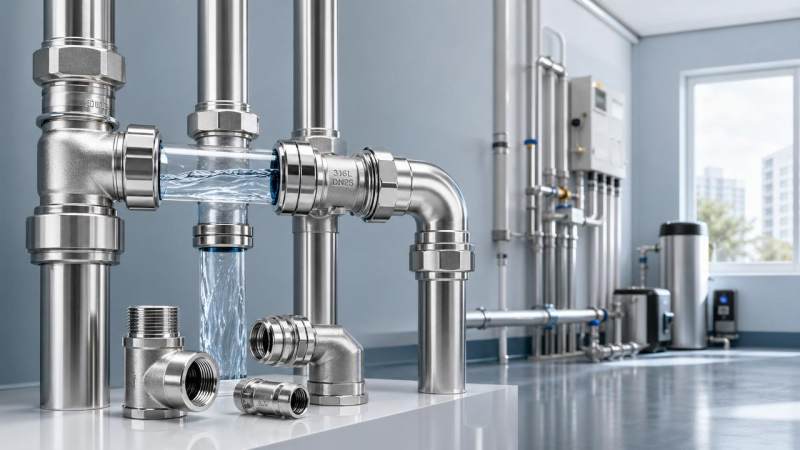
What Is Changing in Long-Service-Life Water Supply Decisions
The biggest change is that long service life is no longer judged by material strength alone. Today, homeowners and end users want a pipe system that performs under real conditions: changing water temperature, daily use cycles, pressure variation, and local water chemistry. That means the best material is often the one that resists corrosion, limits contamination risks, and stays stable over 15 to 30 years, not simply the cheapest one on day one.
This shift favors ss pipe for water supply in many applications because stainless steel combines mechanical strength with strong corrosion resistance. In normal indoor systems, it can maintain reliable performance with relatively low maintenance. It also tends to resist cracking, scaling, and rust-related issues better than many conventional metal alternatives when properly selected and installed.
However, the trend is not about saying one material fits every project. Instead, it reflects more careful matching between use environment and pipe choice. A small apartment renovation may prioritize ease of installation, while a villa, coastal residence, or long-term family property may favor a more durable system. This is why selection decisions are becoming more nuanced.
Trend comparison: what users care about now
The table below shows how end-user decision criteria have changed in many real-world buying situations related to residential and light building water systems.
This comparison explains why ss pipe for water supply is attracting more interest. Buyers are treating hidden building systems as long-term assets. That trend also aligns with the broader steel industry movement toward stronger quality control, standard compliance, and more stable performance across international markets.
Where stainless steel usually stands out
- Projects where the owner expects 20+ years of use before major renovation.
- Buildings in coastal or humid regions where corrosion risk is higher.
- Water systems where cleanliness, taste neutrality, and low contamination risk matter.
- Installations inside walls, ceilings, or slabs where repairs are expensive and disruptive.
Why Stainless Steel Is Gaining Attention for Water Supply
From a material standpoint, stainless steel is gaining attention because it responds well to the three issues end users worry about most: corrosion, hygiene, and service stability. Compared with pipes that may rust, degrade, or scale more heavily over time, stainless steel usually offers a cleaner inner surface and stronger resistance to many everyday water conditions. This matters in homes where water is used every day, often for 5 to 20 pressure cycles or more.
The second reason is durability under demanding environments. In areas where pipes are exposed to humidity, temperature variation, or occasional water chemistry changes, ss pipe for water supply can provide a stronger long-term margin of safety. While actual life depends on grade selection, system design, and installation quality, stainless steel is commonly chosen when the goal is to reduce replacement risk over a multi-decade period.
The third reason is the growing preference for reliable building materials across the broader steel sector. Companies like Hongteng Fengda, a structural steel manufacturer and exporter from China, serve international projects that increasingly demand standard-compliant steel products, steady quality, and dependable lead times. Although structural steel components and water pipes are different products, the same buyer mindset applies: quality steel solutions are expected to perform consistently in real projects.
Material advantages users should understand
Midway through any water system discussion, it is also useful to remember that not all steel-based products serve the same function. For example, in building, lifting, infrastructure, and utility support work, steel accessories such as 0.7mm 0.8mm 1.2mm 1.6mm 1.8mm 2mm diameter Galvanized Steel Wire Rope are selected for strength, corrosion adaptation, and specific environmental demands. Available in structures such as 6X7+FC, 6X19+IWR, and 8x19S+FC, with tensile strength from 1470Mpa to 1960Mpa and zinc coating ranges from 15 to 260 g/m2, this type of steel product shows how modern buyers increasingly match material protection level to service conditions rather than buying by price alone.
That same selection logic applies to ss pipe for water supply. In mild indoor environments, a standard solution may be enough. In more aggressive environments, the correct stainless steel grade and connection method become more important. End users benefit when suppliers and project teams think in terms of environment matching, expected lifespan, and maintenance risk rather than one-size-fits-all material choices.
For consumers, this trend means a more informed purchase process. Instead of simply asking which pipe is cheapest, it makes sense to ask how the pipe will behave after 5 years, 10 years, and 20 years. That is where stainless steel often justifies its role.
Where ss pipe for water supply May Not Be the Best Fit
A balanced judgment is important. Although ss pipe for water supply is often a strong choice for long service life, it is not automatically the best fit for every budget or every installation team. The first limitation is upfront cost. Stainless steel generally costs more than some plastic or basic metal alternatives, and the price difference becomes more noticeable in larger systems or full-house retrofits.
The second limitation is installation quality. A good pipe can still underperform if joints, fittings, or welding procedures are poor. In residential applications, errors in routing, support spacing, or incompatible connections may reduce service performance. For that reason, the installer’s experience matters almost as much as the material itself. A well-designed system should consider water pressure range, temperature conditions, and connection compatibility from the start.
The third limitation is over-specification. If a property is temporary, the water conditions are mild, and the owner plans a full renovation within 5 to 8 years, the lifecycle benefit of stainless steel may be less compelling. In those situations, the decision should be based on actual use horizon rather than material prestige.
Comparison table for practical decision-making
The following table gives a practical view of how end users often compare common water pipe priorities when deciding whether to use stainless steel.
This comparison does not mean lower-cost options are unsuitable. It means the decision should reflect time horizon, installation conditions, and tolerance for future maintenance. For owners planning to stay in a property for 10 years or more, the long-life value of ss pipe for water supply deserves serious consideration.
Questions to ask before deciding
- How long do you expect to keep the building or use the current system?
- Is the property in a coastal, humid, or high-mineral-water area?
- Would future access for pipe repair be difficult or expensive?
- Do you have access to installers familiar with stainless steel systems?
What End Users Should Watch in the Next Phase of Material Selection
The next phase of water supply material selection will likely become more standards-driven and environment-specific. Buyers are expected to pay closer attention to pipe grade, pressure suitability, connection method, and compatibility with local water conditions. Instead of asking only whether stainless steel is good, they will ask which stainless steel solution is suitable for their actual use case. This is a healthier and more practical direction for the market.
Another trend is closer integration between project planning and material sourcing. Whether the project involves structural sections, cold formed steel profiles, beams, or hidden utility components, global buyers increasingly prefer suppliers that understand quality consistency, documentation, and delivery reliability. Hongteng Fengda serves this broader demand through structural steel manufacturing and export support based on international standards such as ASTM, EN, JIS, and GB, helping buyers reduce sourcing risk and improve project stability.
For homeowners, the practical takeaway is simple: treat water piping as a long-term infrastructure decision. If your decision horizon is 15 years or longer, if access for future repairs is limited, or if corrosion resistance is a priority, ss pipe for water supply becomes more relevant. If your project is short-term or highly cost-constrained, alternatives may still be reasonable, but the trade-offs should be clear from the beginning.
Decision signals to monitor
- Expected ownership period: under 8 years, 8–15 years, or 15+ years.
- Water environment: normal municipal supply versus high hardness or corrosive conditions.
- Installation access: exposed pipe runs versus concealed systems in walls or slabs.
- Support capability: availability of proper design, fittings, and skilled installation.
When these signals point toward long-term reliability, stainless steel often becomes easier to justify. The trend is not simply about buying a more expensive product. It is about reducing risk, avoiding disruption, and protecting water system performance over time.
Why Choose Us for Steel-Based Project Support
If you are comparing material options for long-life building systems, it helps to work with a supplier that understands steel performance from both a manufacturing and project-delivery perspective. Hongteng Fengda is a professional structural steel manufacturer and exporter from China, supplying angle steel, channel steel, steel beams, cold formed steel profiles, and customized structural steel components for global construction, industrial, and manufacturing projects.
Our focus is not limited to supplying steel products. We support buyers with specification confirmation, standard matching, OEM discussion, production consistency, and dependable lead time planning. For international customers across North America, Europe, the Middle East, and Southeast Asia, this means clearer sourcing decisions and lower project uncertainty across multiple steel-related categories.
If you are currently evaluating ss pipe for water supply as part of a wider construction or renovation decision, you can contact us to discuss related steel material questions, project environment considerations, standard requirements, and supply coordination. We can help you review parameter confirmation, product selection logic, delivery timing, customized solutions, certification expectations, sample support, and quotation communication so your next purchase is based on practical value rather than guesswork.
Please give us a message


Please enter what you want to find