Selecting the right industrial wire starts with understanding load demands, application environments, and performance standards. From wire mesh and construction wire to Corrosion Resistant Steel used alongside Steel Construction Material systems, each grade affects strength, durability, and project safety. This guide explains how different industrial wire grades match practical uses, helping engineers, buyers, and project teams make informed decisions with confidence.
How load and use determine industrial wire grade selection
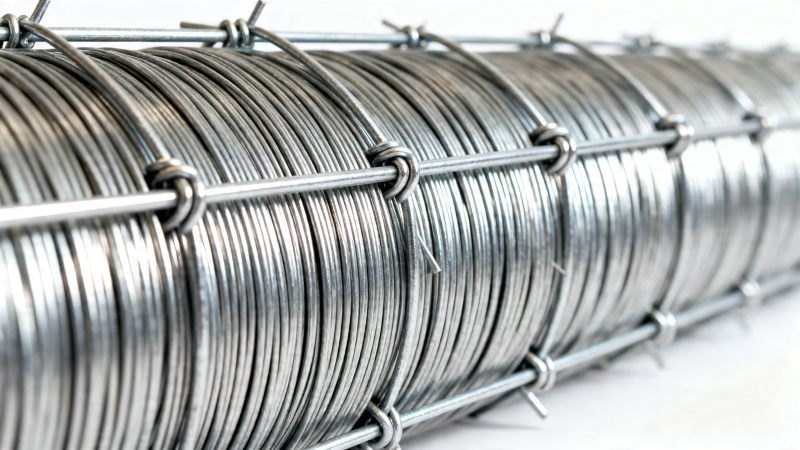
In the steel industry, industrial wire grades are not chosen by diameter alone. Load type, service condition, forming method, and expected lifespan all influence the right grade. A wire used for tying reinforcement in construction has very different requirements from a wire used in welded mesh, fencing, spring applications, or corrosion-prone outdoor environments. For technical evaluators and procurement teams, the first step is to connect mechanical demand with the wire’s chemical composition and processing route.
In practical sourcing, buyers usually review 3 core factors first: tensile requirement, environment exposure, and fabrication method. If the wire must resist static holding loads, moderate carbon grades may be sufficient. If the wire will face repeated stress cycles, abrasion, or deformation, a higher-performance grade or additional treatment may be needed. In coastal, humid, or chemically exposed sites, corrosion resistance becomes a deciding factor rather than a secondary feature.
Project managers also need to consider how wire interacts with the broader structural steel system. In construction and manufacturing, wire is often used together with beams, channels, cold formed profiles, mesh panels, and custom steel components. A mismatch between wire grade and connected steel parts can create premature wear, unstable joining, or inspection failure. That is why many global buyers ask for alignment with ASTM, EN, JIS, or GB specifications before confirming orders.
For operators and end users, wire grade affects day-to-day performance. Softer wire may be easier to bend and tie during installation, but it may not hold shape under higher load. Harder wire may deliver better strength retention, yet it can become less suitable for applications requiring frequent forming. In many projects, the real decision is not “stronger or cheaper,” but whether the selected grade can balance workability, safety, and service life over 6 months, 12 months, or several years of use.
Common decision criteria used by engineering and purchasing teams
- Load condition: static load, impact load, or cyclic load. Cyclic loading often requires tighter control of mechanical properties and forming quality.
- Service environment: indoor dry use, outdoor weather exposure, or corrosive industrial surroundings. This usually determines whether plain carbon steel, coated wire, or corrosion resistant steel is more suitable.
- Processing need: weaving, welding, bending, tying, or straight cutting. Different processes create different risks of cracking, coating damage, or dimensional instability.
- Compliance target: project documents may require ASTM, EN, JIS, or GB references, plus mill test documentation and dimensional inspection records.
Which industrial wire grades fit different applications?
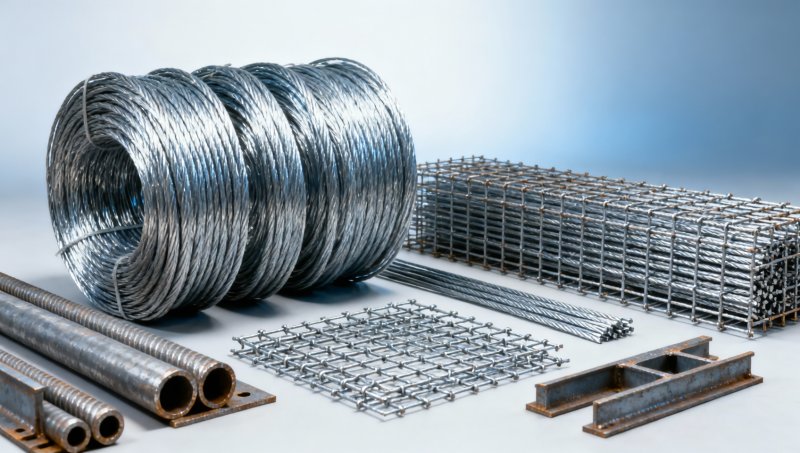
Application fit is where industrial wire grade selection becomes more precise. In steel-related projects, low carbon wire is commonly preferred where bending and tying are frequent, such as binding, mesh preparation, and light construction support. Medium carbon wire is often selected where greater strength and wear resistance are needed. Galvanized or coated wire becomes important in outdoor fencing, water-adjacent structures, agricultural use, and shipment-related packaging that may face moisture exposure for 2–4 weeks or longer in transit.
For welded wire mesh, the wire must not only meet strength targets but also perform consistently under heat input during welding. Poor grade selection can cause brittleness near weld points or uneven wire diameter that affects mesh geometry. For construction wire tied around rebar or steel accessories, flexibility and basic strength retention are often more important than maximum hardness. This is why application-specific evaluation matters more than choosing the highest grade available.
Industrial wire is also widely used around structural steel assemblies, guardrails, handrails, fencing systems, and fabricated parts. In these contexts, wire may serve fastening, reinforcement, spacing, support, or enclosure functions. Buyers should compare not only wire properties, but also how the wire performs with the surrounding steel material, exposure class, and installation process. A suitable wire grade helps reduce field rework, coating damage, and replacement frequency.
The table below summarizes how common industrial wire categories are typically matched to use conditions. These are practical selection references, not substitutes for project-specific engineering review.
A useful rule for buyers is to divide demand into 4 groups: forming-focused, load-focused, environment-focused, and compliance-focused. Once the primary group is clear, shortlisting becomes faster and more accurate. This reduces unnecessary over-specification and helps financial approvers compare material cost with actual project risk.
Where related steel products support the same project system
Many customers sourcing industrial wire are also buying round bars, structural sections, and fabricated steel parts for the same project. In that case, compatibility across steel components matters. For example, when a project includes railings, fences, water supplying supports, shipment fixtures, or construction accessories, a suitable round bar can complement wire-based fabrication and reinforcement tasks.
A practical option for steel-intensive projects is Hot rolled Carbon Steel Round Bar. It is available in Carbon Steel grades such as S235JR, S355JR, ST37, ST52, Q320, Q460, A53(AB), A106(A.B), and 30CrMo, with diameter ranges from 5–2500mm and common lengths of 2m, 5m, 6m, and 12m. For construction, handrail, railing, staircase, balcony, fence, furniture, and shipment applications, the round bar supports design flexibility while aligning with common international standards including ASTM, EN, JIS, DIN, AISI, and GB.
For procurement teams, this kind of insert matters because wire selection is rarely isolated. If a buyer is planning coordinated sourcing of wire, bars, and structural sections, it is more efficient to confirm tensile demand, surface condition, and finishing options in one review cycle. Available surface conditions such as passivation, oiling, lacquer sealing, phosphating, galvanized, PVC, black painting, or anti-rust oil can affect storage and downstream fabrication planning.
What technical performance and standards should you check before buying?
Technical performance review should go beyond the basic question of “How strong is the wire?” In industrial wire sourcing, at least 5 checkpoints are recommended: diameter tolerance, tensile behavior, ductility, surface condition, and compliance reference. Quality control and safety managers often focus on whether the supplied material will remain consistent from batch to batch, because variation can affect welding, forming, and installation safety more than nominal grade labels suggest.
Diameter stability is especially important for wire mesh, automated feeding, and repeatable fabrication. Even small variation may influence panel opening size, tie force, or line stoppage during processing. For projects with documented acceptance procedures, buyers should request confirmation of dimensional inspection, heat number traceability where applicable, and the governing standard basis. This is common in export-oriented transactions and helps reduce disputes after delivery.
Surface condition also matters. Untreated wire may be suitable for short-term indoor use or immediate downstream processing, while galvanized or protected surfaces are often preferred for outdoor storage, marine-adjacent use, or shipment periods lasting 7–15 workdays plus sea transit. In fabrication, the wrong surface may affect welding cleanliness, adhesion, or post-treatment requirements. Procurement decisions should therefore consider both performance in use and handling before installation.
The table below provides a practical review matrix that purchasing teams can use when comparing industrial wire offers from different suppliers.
For global buyers, a supplier with modern manufacturing facilities and strict quality control can simplify these checks. Hongteng Fengda supports international projects with standard specifications and OEM solutions across structural steel categories, helping customers align material selection with ASTM, EN, JIS, and GB expectations. This is especially valuable when one order includes multiple steel items and the project team wants stable production capacity, consistent quality, and dependable lead times.
A 4-step pre-order verification process
- Define use case clearly: indoor or outdoor, static or dynamic load, manual forming or automated processing.
- Match material family: low carbon, medium carbon, coated, or corrosion resistant option.
- Confirm standards and documents: required standard basis, inspection scope, and shipment records.
- Review supply plan: MOQ impact, packaging, transport method, and delivery window.
Why this matters for cost control
A lower initial wire price may not reduce total project cost if field failures, corrosion claims, or rework appear after installation. Finance and business evaluation teams should compare not just unit price, but also inspection burden, expected replacement frequency, and shipping suitability. In many export transactions, standard export seaworthy packaging and transport-compatible finishes help reduce handling loss before the material even reaches the site.
How to compare procurement options, lead time, and total project risk
Industrial wire procurement often involves more than a technical match. Buyers must compare lead time, minimum order quantity, packaging method, shipping route, and source reliability. This is particularly important for distributors, contractors, and project owners working on phased schedules. A wire grade that technically fits the job but cannot arrive within a 2–4 week installation window may create delay costs greater than the savings from a lower quotation.
MOQ is another practical factor. Some steel products and processed items have price structures that change with order volume. Small trial quantities may carry a higher unit cost, while medium and large volumes can improve freight efficiency and production scheduling. Buyers should also check whether the supplier can combine industrial wire with structural steel items such as angle steel, channel steel, beams, cold formed profiles, or round bars in one export plan. That coordination can reduce sourcing complexity and documentation workload.
The next table helps project teams compare procurement paths based on operational needs rather than price alone.
For many overseas customers, working with an experienced structural steel manufacturer and exporter from China can improve sourcing efficiency when they need both standard steel products and project-based customization. Hongteng Fengda serves customers across North America, Europe, the Middle East, and Southeast Asia, helping buyers reduce sourcing risk, control cost, and keep projects moving with dependable delivery planning.
Common purchasing mistakes that increase total cost
- Selecting industrial wire by price per ton only, without checking whether the grade matches forming or welding demands.
- Ignoring packaging and surface protection for export shipments that may remain in storage or transit for several weeks.
- Approving samples but not locking down the exact standard reference, tolerance range, or finish condition for bulk orders.
- Separating wire, structural sections, and related steel accessories across too many suppliers, increasing coordination burden and quality variation.
FAQ and practical next steps for buyers, engineers, and project teams
When teams evaluate industrial wire grades, the same questions tend to appear across engineering, purchasing, and management levels. The answers below focus on application fit, risk control, and sourcing efficiency in steel-related projects.
How do I choose industrial wire for higher load applications?
Start by defining whether the load is static, impact-related, or repetitive. Higher load does not automatically mean using the hardest wire. If the wire also needs bending, weaving, or welding, excessive hardness can create processing problems. Review 3 points together: required load behavior, deformation allowance, and environment exposure. Then confirm the grade and surface condition with the supplier against the intended standard basis.
Which industrial wire is better for outdoor or humid conditions?
For outdoor, humid, or water-adjacent use, galvanized or otherwise protected industrial wire is usually preferred over untreated wire. The actual choice depends on exposure duration, handling condition, and whether the wire will be cut, welded, or bent after delivery. If the material is expected to stay in transit, storage, and installation flow for several weeks, protection method becomes even more important.
What documents should procurement teams ask for?
At minimum, confirm the product specification, applicable standard reference, dimensional details, finish condition, packaging method, and delivery schedule. For projects with tighter quality control, ask about inspection records and available test documentation. If the order is part of a larger structural steel package, request alignment across all supplied steel items to avoid mismatch during installation.
Can one supplier support both industrial wire and structural steel products?
Yes, and this is often more efficient for B2B buyers managing multiple categories. A supplier capable of supporting angle steel, channel steel, steel beams, cold formed steel profiles, custom components, and related products like Hot rolled Carbon Steel Round Bar can simplify communication, document control, and shipment planning. This is especially useful for distributors, EPC teams, and overseas contractors handling mixed steel procurement.
Why do many projects still face wire-related issues after purchase?
The most common reason is not poor material alone, but poor matching. Teams may choose industrial wire without fully reviewing forming method, exposure condition, or compatibility with surrounding steel construction material. Another common issue is incomplete pre-order confirmation, such as missing tolerance details, finish requirements, or realistic lead time planning. A clearer technical and commercial review usually prevents these problems.
Why work with us for steel projects and industrial material planning?
For buyers comparing industrial wire grades and related steel products, the real value lies in technical clarity and supply reliability. Hongteng Fengda is a professional structural steel manufacturer and exporter based in China, serving global construction, industrial, and manufacturing projects with standard products and customized solutions. Our focus is to help customers reduce sourcing uncertainty, improve material matching, and keep procurement decisions practical.
We support a broad steel supply scope, including angle steel, channel steel, steel beams, cold formed steel profiles, and custom structural steel components, while working to align products with major international standards such as ASTM, EN, JIS, and GB. For project teams, this means fewer gaps between technical review and commercial execution. For distributors and resellers, it helps build a more stable supply plan across multiple markets.
If you are evaluating industrial wire grades by load and use, you can contact us to discuss 6 practical points: application environment, load condition, product size, surface treatment, compliance target, and expected delivery window. We can also support discussions around related steel products, coordinated export packaging, sample arrangements, OEM requirements, and quotation planning based on order volume.
Share your drawing, specification, target standard, or current sourcing challenge, and our team can help you review product selection, lead time options, documentation needs, and steel package coordination for your project. This is a more efficient way to compare alternatives, control procurement risk, and move from inquiry to order with clearer decision support.
Please give us a message


Please enter what you want to find