Sourcing high strength A36 Carbon Steel Round Bar from China demands rigorous quality assurance—especially for QA teams managing critical infrastructure, industrial machinery, or structural fabrication. As a trusted A36 Carbon Steel Round Bar supplier in China, Hongteng Fengda supports global buyers with ASTM-compliant, fully traceable round bars backed by in-house metallurgical testing and third-party certification. This guide outlines 5 field-proven, audit-ready checks—from mill test reports and dimensional accuracy to tensile verification and surface integrity—that empower engineers, procurement managers, and quality auditors to validate material integrity before shipment.
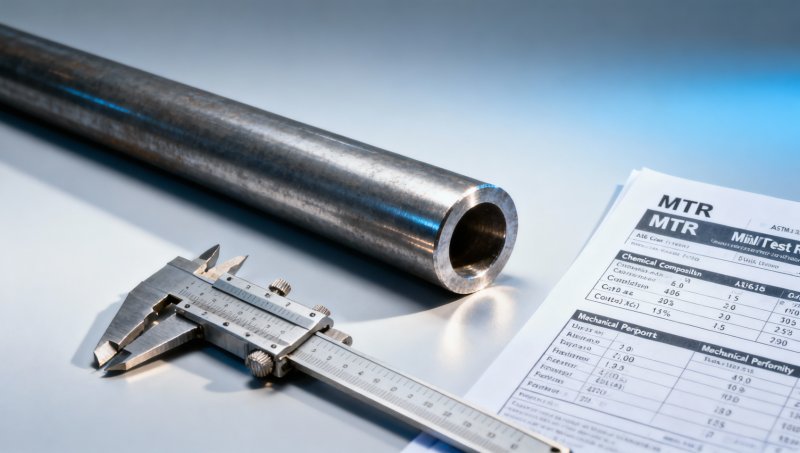
1. Verify Mill Test Report (MTR) Authenticity & Traceability
The Mill Test Report is the foundational document for verifying compliance of any high strength A36 Carbon Steel Round Bar. It must be issued per heat number—not per batch—and include full chemical composition (C ≤ 0.26%, Mn 0.75–1.05%, P ≤ 0.04%, S ≤ 0.05%), mechanical properties (tensile strength ≥ 400 MPa, yield strength ≥ 250 MPa, elongation ≥ 20% in 200 mm), and heat treatment status. For ASTM A36, the MTR must reference ASTM A6/A6M-23 and explicitly state conformance. Counterfeit or generic MTRs—often missing heat numbers, lab seals, or signature lines—are red flags. At Hongteng Fengda, every MTR is generated in real time from our LIMS (Laboratory Information Management System), digitally signed, and cross-referenced with furnace logs and rolling schedules. Buyers should request scanned copies *before* shipment and independently verify the issuing lab’s ISO/IEC 17025 accreditation via the CNAS or ILAC database.
Third-party verification adds further confidence: SGS, Bureau Veritas, or TÜV can perform witnessed sampling and retesting at origin. When reviewing MTRs, always check for consistency between reported tensile values and actual test curves—abnormal flatness or non-linear stress-strain behavior may indicate substandard deoxidation or improper cooling. In parallel, consider material alternatives where corrosion resistance is critical—for example, the 316L Stainless Steel Plate offers superior performance in aggressive chemical or marine environments while maintaining high ductility and weldability.
2. Validate Dimensional Accuracy Against ASTM A29/A29M
Dimensional deviation directly impacts fit-up, machining tolerance, and load-bearing capacity. ASTM A29/A29M specifies permissible tolerances for diameter, ovality, and straightness of hot-rolled carbon steel bars. For a 50 mm nominal diameter round bar, allowable diameter tolerance is ±0.4 mm; ovality (difference between max/min diameters) must not exceed 75% of the diameter tolerance; and straightness must be ≤ 3.2 mm per meter. These are not theoretical limits—they affect thread engagement in anchor bolts, interference fits in shaft assemblies, and fatigue life under cyclic loading.
QA teams should conduct spot checks using calibrated micrometers (±0.001 mm resolution), optical comparators, or CMMs—never rely solely on supplier-provided certificates. Random sampling plans (e.g., ANSI/ASQ Z1.4 Level II) help ensure statistical validity. At Hongteng Fengda, all round bars undergo 100% automated laser scanning post-rolling to map diameter profiles across full length. Data is logged and available for traceability. If deviations exceed specification, root cause analysis must assess rolling mill calibration, die wear, or temperature control during finishing passes. Consistent out-of-tolerance readings often point to aging equipment or insufficient process validation—a key differentiator among A36 Carbon Steel Round Bar supplier in China tiers.
3. Confirm Tensile & Yield Strength via Witnessed Testing
Tensile verification remains the most decisive functional check. While MTRs report values, independent tensile testing confirms real-world performance. Specimens must be machined per ASTM E8/E8M: gauge length = 50 mm (for 12.5 mm diameter specimens), reduced section diameter = 12.5 mm, and surface finish Ra ≤ 3.2 µm. Yield strength must be determined using the offset method (0.2% strain), not the upper yield point—especially critical for A36, which exhibits a distinct yield plateau.
Our internal lab performs 100% tensile testing on first-piece and last-piece samples per heat, with results uploaded to client portals within 24 hours. For high-risk applications—such as seismic bracing or pressure vessel components—we recommend witnessed tests conducted jointly with buyer representatives or certified third parties.
4. Inspect Surface Integrity & Defect Acceptance Criteria
Surface defects—including seams, laps, scabs, and deep scratches—act as stress concentrators and initiate premature fatigue failure. ASTM A29 defines acceptable surface conditions: minor imperfections not exceeding 5% of nominal diameter depth are permitted if removable by grinding without reducing dimensions below tolerance. However, for structural applications involving dynamic loads (e.g., crane booms or turbine shafts), zero visible defects are recommended.
Visual inspection must occur under controlled lighting (≥500 lux), at viewing distance ≤ 600 mm, and with clean, dry surfaces. Magnetic Particle Testing (MT) per ASTM E709 is advised for critical-grade orders to detect subsurface discontinuities invisible to the naked eye. Hongteng Fengda applies automated eddy current scanning to all high-strength A36 Carbon Steel Round Bar shipments, detecting flaws down to 0.1 mm depth with 99.2% repeatability. Any rejected bar is quarantined, retested, and dispositioned per ASME B31.4 or EN 10204 Type 3.1 requirements—ensuring only fully compliant material proceeds to packaging.
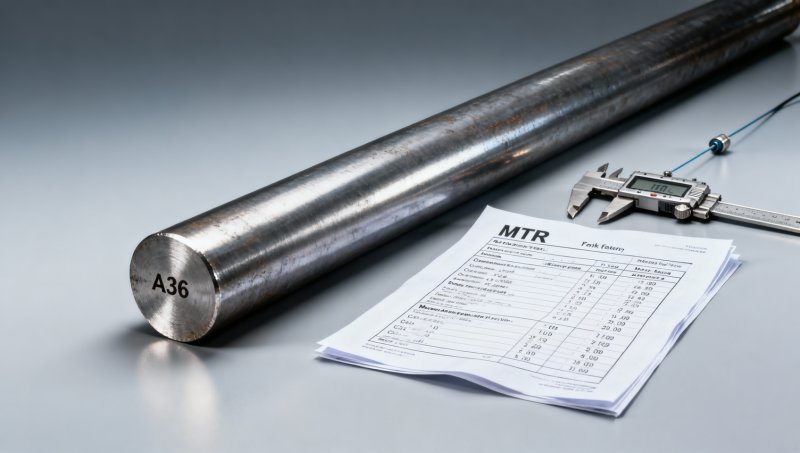
5. Audit Heat Treatment History & Microstructure Consistency
Although ASTM A36 does not mandate specific heat treatment, consistent hot-rolling practice (finishing above Ar3, ~850°C) and controlled cooling are essential to achieve uniform ferrite-pearlite microstructure. Deviations—such as accelerated cooling or reheating—cause banding, grain coarsening, or residual stresses that impair machinability and weld integrity. Metallographic analysis (per ASTM E3/E112) should confirm average grain size ≥ ASTM No. 5 and absence of non-metallic inclusions exceeding ASTM E45 Class B2.0.
At Hongteng Fengda, thermal history is tracked via infrared pyrometry at each rolling stand, with data archived for 10 years. We provide optional microstructure reports upon request—including SEM images and hardness mapping (HV10). This level of transparency enables QA teams to correlate mechanical performance with process parameters—turning raw data into actionable insight. For applications demanding elevated temperature stability or corrosion resistance, alternative materials like 316L Stainless Steel Plate offer enhanced creep strength and immunity to chloride-induced pitting—making them ideal for offshore platforms or pharmaceutical processing systems.
Conclusion: Build Confidence Through Verification, Not Assumption
Verifying a high strength A36 Carbon Steel Round Bar is not a one-time checklist—it’s an integrated discipline combining documentation review, dimensional metrology, mechanical validation, surface assessment, and metallurgical traceability. Each of the five checks outlined here serves as both a gatekeeper and a diagnostic tool: identifying systemic issues early, preventing costly field failures, and strengthening long-term supplier accountability.
As a vertically integrated structural steel manufacturer and exporter, Hongteng Fengda embeds these QA protocols into daily operations—not as add-ons, but as non-negotiable standards. With ISO 9001:2015 certification, dual-standard compliance (ASTM + GB/T), and production facilities audited by North American engineering firms, we deliver more than steel: we deliver predictability. Whether you're sourcing for bridge girders in Canada, mining conveyors in Australia, or modular housing in the UAE, our A36 Carbon Steel Round Bar supplier in China capability is built on transparency, technical rigor, and responsive partnership.
Ready to implement a risk-mitigated sourcing strategy? Contact Hongteng Fengda today for customized QA support—including pre-shipment inspection coordination, sample testing packages, and digital MTR access portals.
Related recommendations
 What Is a Steel Profile? Common Shapes, Uses, and Selection BasicsProfile selection starts with shape, but performance depends on load, fabrication, and standards. Learn common steel profile types, uses, and smart selection basics.
 Steel Roofing Types Explained: Corrugated, Standing Seam, and Metal ShinglesSteel Roofing guide comparing corrugated panels, standing seam, and metal shingles. Discover costs, durability, weather performance, and how to choose the best roof for your home.
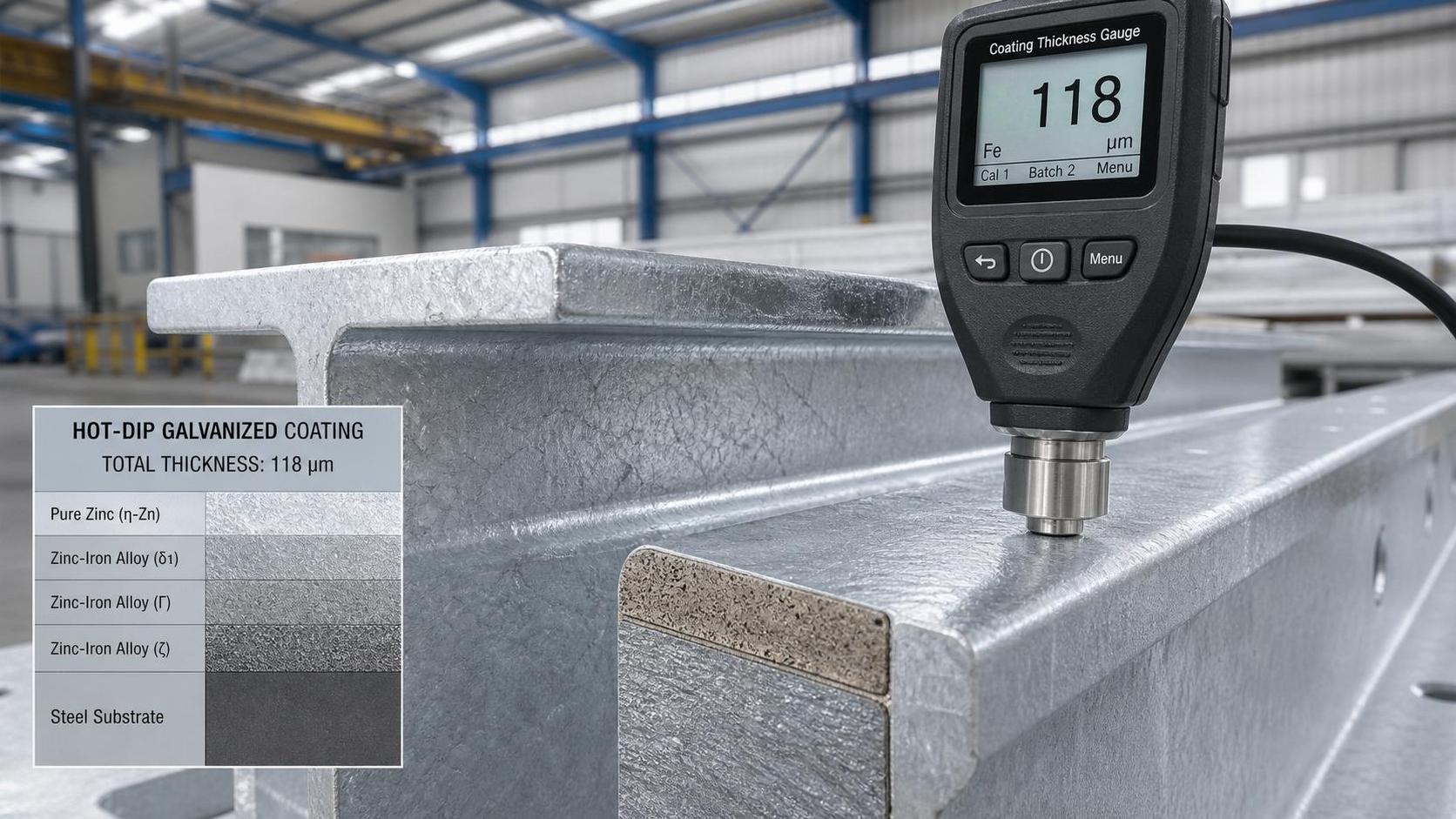
 How Hot-Dip Galvanized Coating Thickness Affects Service LifeHot-dip galvanized coating thickness directly affects steel service life. Learn how the right zinc layer improves corrosion protection, controls cost, and supports smarter project decisions.
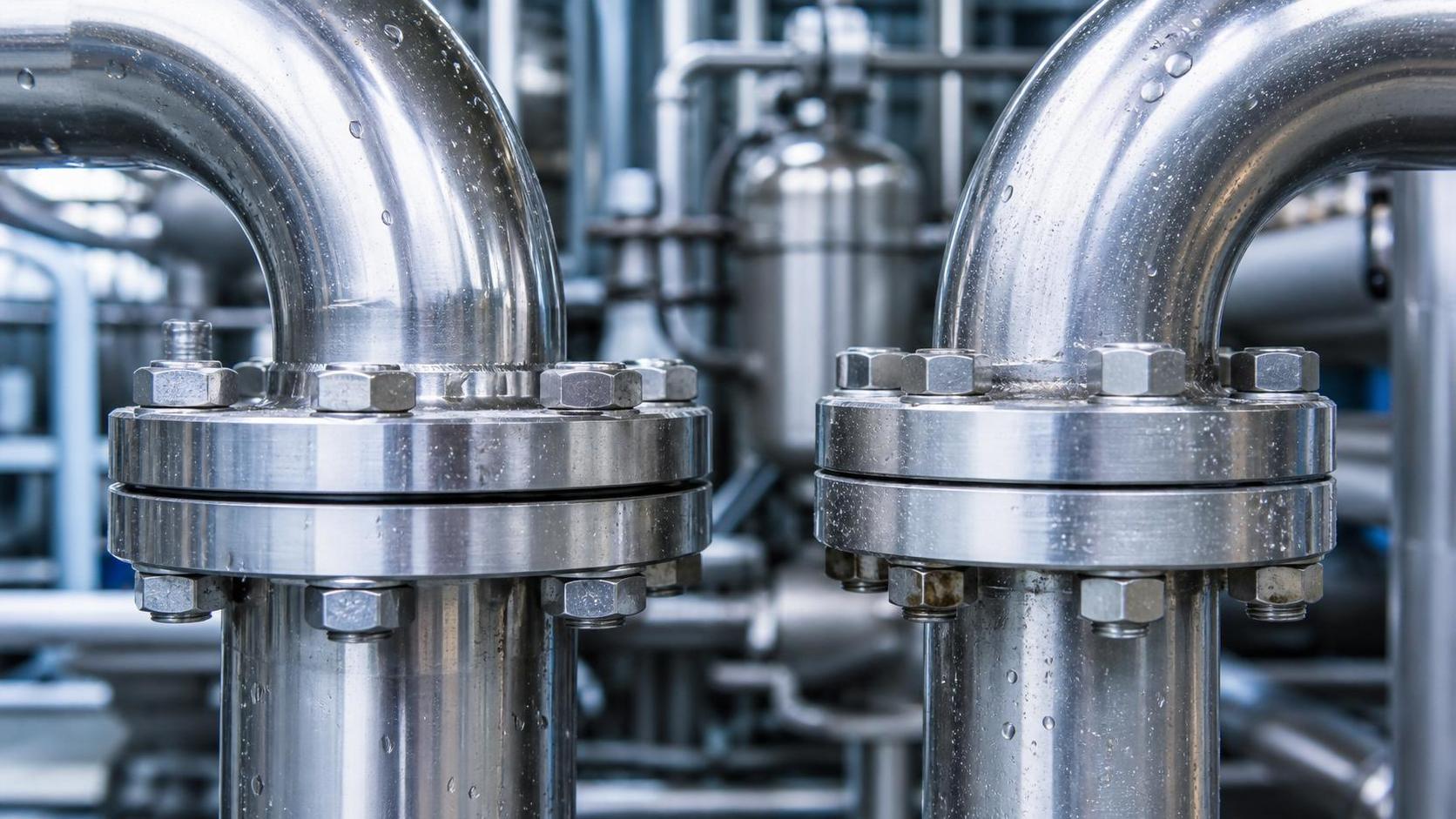
 Pipe Stainless Grades Explained: 304 vs 316 for Corrosion ResistancePipe stainless grades explained: compare 304 vs 316 for corrosion resistance, cost, and service life. Learn which stainless pipe grade fits marine, chemical, and water system applications.
Please give us a message


Please enter what you want to find