Hot galvanizing is a proven method for extending the service life of structural steel by creating a durable zinc coating that resists rust, moisture, and harsh environments. From galvanised steel sheet and galvanised sheet steel to ASTM A36 components, steel rail, steel mesh, and smls pipe, this process helps buyers, engineers, and project managers improve reliability, reduce maintenance costs, and ensure long-term performance.
Why does hot galvanizing matter so much in steel projects?
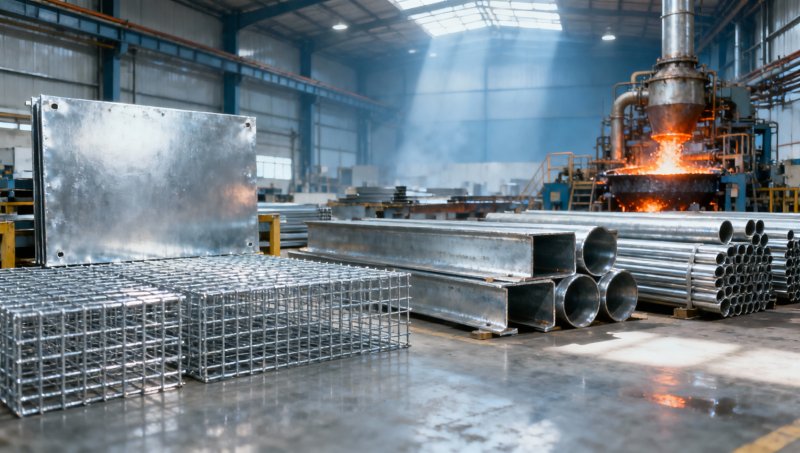
In the steel industry, corrosion is not just a surface issue. It directly affects load safety, maintenance intervals, shutdown risk, and long-term project cost. For structural steel used in construction, transportation, utilities, and industrial facilities, a poor surface protection decision can shorten service life by years and increase repair frequency across the full project cycle.
Hot galvanizing improves corrosion resistance by immersing cleaned steel into molten zinc, typically around 445°C–465°C. During this process, zinc and steel form metallurgical layers instead of a simple paint film. That difference matters for procurement teams, technical evaluators, and quality managers because the coating is bonded to the substrate and resists impact, weathering, and abrasion better than many basic surface treatments.
For buyers comparing lifecycle value, the main advantage is practical: less rust means fewer maintenance interventions over 5–15 years in moderate environments and often much longer in less aggressive exposure conditions. For project managers, that can mean more predictable operation schedules. For finance approvers, it means better cost visibility beyond the initial purchase price.
This is especially important when sourcing steel from a global supply chain. A reliable structural steel manufacturer must not only supply angle steel, channel steel, steel beams, and custom components, but also support coating consistency, dimensional tolerance, and export-ready quality control. That is where an experienced Chinese structural steel exporter with stable production and international standard familiarity can reduce sourcing risk.
What hot galvanizing protects against
- Atmospheric moisture, including rain, humidity, and condensation in open or semi-open structures.
- Mechanical wear during transport, installation, and field handling, where thin paint-only systems may chip.
- Edge and corner exposure, where zinc coating often performs better than conventional coatings because it covers difficult geometry.
- Project delays caused by frequent touch-up work, especially on bridges, towers, rail infrastructure, guardrails, and outdoor steel frames.
How does the process improve corrosion resistance in practice?
The performance of hot galvanizing starts long before zinc immersion. Steel is usually degreased, pickled, rinsed, and fluxed before entering the zinc bath. These 4 core stages are essential because surface contamination, mill scale, or oil residues can affect coating adhesion and uniformity. For quality-sensitive applications, process discipline is as important as steel chemistry.
Once immersed, the steel reacts with molten zinc and forms alloy layers plus an outer zinc layer. This structure gives two forms of protection. First, it creates a physical barrier between steel and the environment. Second, zinc provides sacrificial protection, meaning it corrodes preferentially if the surface is scratched. That is one reason galvanized structural steel is widely selected for exposed service conditions.
Coating performance depends on steel composition, section thickness, surface condition, and processing control. In real procurement work, buyers should not focus only on whether steel is “galvanized.” They should also confirm coating consistency, expected exposure environment, inspection method, and applicable standards such as ASTM, EN, JIS, or GB depending on destination market and project documentation.
For operators and maintenance teams, hot galvanized steel also simplifies site management. In many outdoor applications, there is less need for immediate repainting after installation. That can reduce labor planning pressure during the first 12–36 months of service, especially where access is difficult or work-at-height safety requirements raise maintenance cost.
Key technical factors buyers should verify
The following comparison helps technical evaluators and procurement teams understand what to review when judging corrosion resistance and coating suitability for structural steel components.
This table shows a common procurement mistake: treating galvanizing as a yes-or-no feature. In reality, corrosion resistance depends on process execution, not only the label. Experienced exporters help buyers align steel grade, dimensions, surface treatment, and inspection documents before production starts, which is especially valuable when delivery windows are only 2–4 weeks for standard items.
Which steel applications benefit most from hot galvanizing?
Hot galvanizing is highly relevant for steel that will face outdoor exposure, intermittent wetting, or difficult maintenance access. Common examples include steel beams, channels, angle steel, handrails, guardrails, support frames, pipe-related structures, cable trays, road barriers, light industrial platforms, and agricultural or utility structures. In these cases, long-term corrosion resistance often matters more than the lowest initial coating cost.
In civil engineering, project teams often combine galvanized structural sections with reinforcement-related materials where durability and logistics must be balanced. For example, during mid-stage planning, buyers may also evaluate Wire rod options for construction supply packages. Typical grades such as HRB335, HRB400, and HRB500 are widely used in houses, bridges, roads, railways, tunnels, dams, foundations, beams, columns, walls, and slabs.
When such reinforcement or related steel products are selected, teams usually compare section size, surface treatment, dimensional tolerance, and compliance documents in one combined purchasing workflow. Common size ranges include 6mm–50mm, length options such as 5m–14m, and surface choices including galvanized, PVC, black, color painting, transparent oil, or anti-rust oil. This matters for distributors and contractors that need mixed loads and coordinated delivery rather than single-item sourcing.
For procurement and technical review, multi-standard compatibility is another advantage. Products used in public facilities or structural works may need to align with BS4449-2005, JIS G3112-2004, ASTM A615/A615M, ISO-related quality expectations, or destination-market documentation practice. A supplier familiar with ASTM, EN, JIS, and GB can simplify export communication and reduce mismatch between inquiry and actual site requirements.
Application scenarios and decision priorities
The next table helps users, engineers, and project buyers identify where hot galvanized steel delivers the strongest value compared with basic coated or untreated steel in practical environments.
The best-fit applications are usually those where corrosion is predictable but maintenance is expensive, delayed, or unsafe. That is why galvanised steel sheet, structural sections, steel mesh systems, and certain pipe-related products are frequently specified for infrastructure and export projects requiring balanced cost and durability.
How should buyers compare hot galvanizing with other anti-corrosion options?
Not every project needs the same protection level. Buyers often compare hot galvanizing with paint systems, black steel plus oiling, or combinations such as galvanized plus topcoat in aggressive environments. The right choice depends on 3 major variables: exposure severity, expected service period, and maintenance access. A low-cost coating may look attractive in the quotation stage but become expensive after repeated field repair.
For example, basic anti-rust oil may be suitable for short storage or indoor shipment protection, but it is not a long-term corrosion solution for outdoor structures. Standard paint systems can work well when properly specified and maintained, but they are more vulnerable to chipping, edge damage, and application-quality variation. Hot galvanizing is often preferred when durability and lower maintenance intervention are more important than decorative finish.
This does not mean galvanizing is always the lowest initial-cost option. It means the cost should be judged over the service period, often 3–10 years for budget planning and even longer for infrastructure assets. Procurement teams should compare initial coating price, inspection cost, rework risk, installation damage tolerance, and future access cost before approval.
For distributors and OEM buyers, another practical issue is processing support. If a supplier can provide bending, welding, decoiling, cutting, or punching before delivery, project coordination becomes easier. However, buyers should confirm whether fabrication happens before galvanizing or whether post-process touch-up measures are needed, especially for components with welded details or punched openings.
Decision checklist for procurement teams
- Define the environment first: indoor dry, outdoor urban, industrial, coastal, or intermittently wet. This changes the required protection level.
- Confirm service expectations: short-term use, 3–5 year utility cycle, or longer structural design planning.
- Review fabrication sequence: cutting and welding after galvanizing may affect the protective layer if not planned correctly.
- Request inspection clarity: coating appearance, thickness verification, packing condition, and shipment protection should be written into the order.
- Compare logistics and payment terms early, such as 30% TT advance + 70% balance or LC at sight, to prevent commercial delay after technical approval.
Common evaluation mistakes
One common mistake is comparing only unit price per ton without considering coating life, maintenance labor, and shutdown cost. Another is selecting galvanized steel but ignoring whether the coating is suitable for the actual environment. A third is failing to align tolerances, packaging, and delivery sequence with site needs. In export business, these details can affect both installation efficiency and claim rate.
What standards, inspection points, and sourcing steps should be checked?
For international steel procurement, standards are not a formality. They are the language that connects design, fabrication, inspection, and acceptance. Structural steel buyers commonly work with ASTM, EN, JIS, and GB references depending on region and project type. The same applies to related construction steel products where grade, surface treatment, tolerance, and compliance records need to be cross-checked before production release.
Quality control teams should normally verify at least 5 points: material grade, dimensions, coating condition, marking or traceability, and packing integrity. For project managers, it is also useful to confirm shipment lead time, sample availability, and whether mixed-product loading is supported. Standard export cycles for common steel items may range from 7–15 days for stock-related orders to several weeks for customized rolling or fabrication.
Hongteng Fengda’s advantage in this sourcing environment is practical rather than abstract. As a professional structural steel manufacturer and exporter from China, the company supports angle steel, channel steel, steel beams, cold formed steel profiles, and customized structural steel components with modern manufacturing facilities and strict quality control. For global buyers, this matters because consistency, specification understanding, and dependable lead times often determine whether a project stays on schedule.
For buyers serving North America, Europe, the Middle East, and Southeast Asia, supplier responsiveness is also part of corrosion-control success. If coating requirements, section drawings, OEM modifications, or compliance questions are not clarified in the early stage, the risk of mismatch rises. A responsive exporter can help align technical details and commercial terms before production, reducing sourcing uncertainty and cost leakage.
Suggested sourcing workflow
- Step 1: Confirm steel grade, section type, quantity range, drawing requirements, and whether hot galvanizing is mandatory or optional.
- Step 2: Match the target standard set, such as ASTM, EN, JIS, or GB, and define inspection and document requirements before quotation approval.
- Step 3: Review fabrication services, packing method, and shipping plan, especially for bundled products, long-length sections, or mixed containers.
- Step 4: Request commercial confirmation covering lead time, payment terms, sample support, and after-sales communication route.
FAQ for engineers, buyers, and project teams
Is hot galvanizing suitable for every steel application?
No. It is most suitable when corrosion exposure is meaningful and maintenance access is limited or expensive. For indoor dry service or very short-term use, simpler surface protection may be enough. The decision should be based on environment, service duration, and repair practicality rather than habit alone.
How long is the typical delivery cycle for galvanized structural steel?
It depends on whether the item is standard or customized, the tonnage, and whether additional fabrication is required. In common export practice, stock-related or simple orders may move within 7–15 days, while custom sections, OEM parts, or combined processing orders may require 2–4 weeks or longer depending on capacity planning and shipping arrangements.
What should be checked before approving a purchase order?
At minimum, verify 5 items: material grade, dimensions, coating requirement, inspection method, and packaging. If the project is international, also confirm standard references, destination documents, and whether the supplier can support communication around ASTM, EN, JIS, or GB requirements without ambiguity.
Can galvanized steel still need maintenance?
Yes. Hot galvanizing reduces maintenance frequency, but it does not eliminate the need for inspection. In aggressive environments or where steel is damaged during installation, periodic checks are still recommended. The difference is that the maintenance cycle is often more manageable than with lightly protected carbon steel.
Why choose a structural steel partner that understands corrosion, compliance, and delivery?
When corrosion resistance affects safety, maintenance budgets, and asset life, steel sourcing should not be treated as a commodity-only purchase. Buyers need a partner that understands steel grades, galvanizing suitability, fabrication sequence, export packaging, and multi-standard communication. That combination helps reduce claim risk and prevents costly specification gaps between design, procurement, and site execution.
Hongteng Fengda supports global construction, industrial, and manufacturing projects with structural steel products and customized solutions. The value for customers is clear: stable production capacity, consistent quality control, and dependable lead times for angle steel, channel steel, steel beams, cold formed steel profiles, and customized structural steel components. For many project teams, that means easier supplier coordination and lower sourcing uncertainty.
If you are evaluating hot galvanized steel for a new project, a replacement cycle, or a distributor purchasing plan, it is worth discussing the technical and commercial details before final selection. You can confirm parameters such as steel grade, section size, surface treatment, tolerance expectations, and required standards, then align them with lead time, packing method, sample support, and quotation structure.
Contact us to discuss product selection, galvanizing suitability, OEM processing, delivery schedule, certification expectations, or mixed-order export planning. Whether you need a standard specification or a customized structural steel solution, early consultation helps improve corrosion performance, control procurement cost, and keep the project moving with fewer surprises.
Please give us a message


Please enter what you want to find