Galvanized structural steel is widely used to improve corrosion resistance, extend service life, and reduce maintenance costs in demanding environments. For buyers comparing Steel Beam, Steel Sheet Pile, or S355JR applications, understanding how Galvanized protection works helps improve material selection, project safety, and long-term value across construction, industrial, and infrastructure projects.
Why does galvanized steel resist corrosion better in real projects?
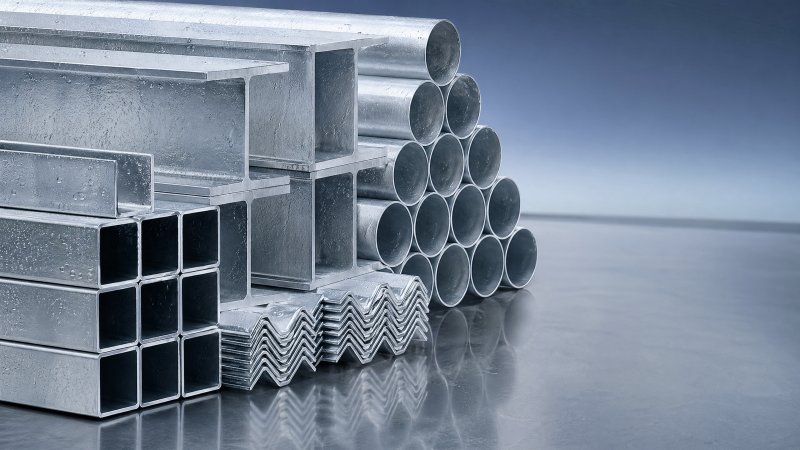
In the steel industry, corrosion is not only a surface issue. It affects structural integrity, maintenance planning, shutdown risk, and lifetime cost. Galvanized steel improves corrosion resistance by adding a zinc layer over the base steel. This zinc coating acts in 2 ways: it creates a physical barrier against moisture and oxygen, and it provides sacrificial protection when the surface is scratched or exposed at edges.
For project managers, technical evaluators, and procurement teams, this matters because unprotected carbon steel can deteriorate quickly in coastal, industrial, humid, or outdoor environments. In many construction and infrastructure applications, the difference between proper galvanizing and inadequate surface treatment can influence inspection intervals over 12–24 months, maintenance planning over 3–5 years, and replacement cycles over much longer service periods.
The zinc layer corrodes first, which helps delay rust formation on the steel substrate. This is especially useful in cut edges, welded areas, and fastener zones where coating continuity often becomes a concern. Compared with simple painted steel, galvanized steel usually offers more reliable protection when abrasion, rainwater, or temperature variation are part of daily service conditions.
For distributors and business evaluators, galvanized structural steel also reduces sourcing risk. It can simplify downstream processing, lower repainting frequency, and improve consistency across batches when supplied by a manufacturer with stable production control and clear compliance with ASTM, EN, JIS, and GB requirements.
What actually happens on the steel surface?
When zinc is applied through hot-dip galvanizing or electro-galvanizing, it forms a protective layer that reacts more readily than iron. In practical terms, the zinc sacrifices itself first. Even if a small area is damaged, nearby zinc can still help protect exposed steel. This is one reason galvanized steel is widely selected for frames, beams, channels, supports, conduits, and fabricated parts used outdoors or in variable humidity.
- Barrier protection: zinc limits contact between the steel and corrosive elements such as water, oxygen, and pollutants.
- Sacrificial protection: zinc corrodes ahead of steel, slowing red rust formation after minor damage.
- Edge and scratch tolerance: performance remains more forgiving than many single-layer painted systems.
- Lower maintenance burden: fewer touch-up cycles can help control labor and shutdown costs.
Which galvanized process and material details should buyers compare?
Not all galvanized steel performs the same way. Buyers should compare at least 4 technical dimensions before approval: galvanizing method, coating condition, base steel grade, and dimensional consistency. In B2B projects, cost problems often come from choosing only by unit price while overlooking thickness tolerance, end-use environment, and compliance documents.
Hot-dipped galvanized steel is commonly preferred for structural and exposed applications because the zinc layer is generally more robust for outdoor service. Electro-galvanized steel can be suitable where appearance, lighter coating, or forming requirements matter more. The correct choice depends on whether the steel will face rain exposure, industrial emissions, contact wear, or indoor utility use.
For quality control and safety managers, thickness tolerance and coating continuity are practical checkpoints. A tolerance such as ±0.15mm may affect fit-up, welding preparation, load calculations, and compatibility with downstream fabrication. For financial approvers, these details translate into fewer rework events, more predictable installation hours, and better control of total procurement cost.
The table below summarizes common decision points when comparing galvanized steel options for structural, industrial, and utility applications.
This comparison shows why purchase evaluation should match service conditions. A lower initial price may not be the most economical choice if repainting, replacement, or downtime starts within the first 2–4 years of operation. For most exposed structural steel applications, durability usually outweighs a small difference in procurement cost.
How product specifications support corrosion control
In utility and industrial applications, product-level details are often just as important as the general galvanizing method. For example, Galvanized Steel Electrical Conduit is designed for applications across construction, light industry, agriculture, transport, machinery, petrochemical systems, and support frame pipe uses. With DX52D material, tensile strength of ≥520MPa, and thickness tolerance of ±0.15mm, it addresses both corrosion resistance and handling consistency.
Its available size range is also relevant for buyers coordinating multiple project packages: length 1–12m, width 0.6–3m, and thickness 0.1mm–300mm, or as required. For technical teams, this broad range can support standard procurement and OEM requests in one supply chain. For importers and distributors, packaging such as standard export seaworthy packing helps reduce transit damage risk during ocean shipment over several weeks.
When a product complies with common standards such as AISI, ASTM, DIN, JIS, GB, SUS, and EN, it becomes easier to communicate requirements among engineering, procurement, and inspection teams. That does not replace project-specific review, but it does improve compatibility with international purchasing workflows and documentation expectations.
Where does galvanized steel create the most value?
Galvanized steel adds the most value where corrosion risk and maintenance access are both critical factors. This includes building frames, support brackets, roof systems, conduits, pipe racks, bridge components, storage and transport equipment, and industrial support structures. In these cases, the right material choice helps teams avoid repeated shutdowns, coating repair, or early component replacement.
For operators and maintenance teams, the benefit is practical: less visible rust progression, less frequent intervention, and more predictable service conditions. For project owners and financial approvers, value comes from better lifecycle planning. A modest premium at the procurement stage can be justified when field maintenance requires labor mobilization, equipment rental, or access systems such as scaffolding or lifts.
The steel industry also uses galvanized products in fluid transport and industrial piping support. Typical scenarios include low-pressure pipelines for water, gas, and oil, oil well and oil pipeline service in selected applications, chemical coking equipment, and support frame pipe for trestle piles or mining pits. These applications require careful matching of coating method, environment, and fabrication process.
The table below helps different buyer groups identify where galvanized steel is usually the more practical choice.
The strongest value usually appears in applications with 3 common conditions: exposure to moisture, difficulty of future maintenance, and a requirement for stable appearance or structural reliability over time. If all 3 apply, galvanized steel often becomes a safer procurement decision than untreated carbon steel.
Which industries benefit most?
- Construction and infrastructure projects that need beams, channels, supports, roof systems, and exposed fabricated steel.
- Industrial manufacturing plants where steel is exposed to humidity, steam, dust, or process contamination.
- Agriculture and fishery facilities where wet conditions make ordinary painted steel less reliable over long service periods.
- Logistics, transport, and storage systems that need durable steel surfaces across repeated handling cycles.
How should procurement teams evaluate galvanized steel before ordering?
A strong procurement decision should combine technical review, compliance review, and supply execution review. Many sourcing problems start when one department focuses only on steel grade, while another assumes coating, packaging, and documentation will be handled later. In practice, galvanized steel procurement works best when teams review at least 5 checkpoints before PO confirmation.
First, define the actual exposure environment: indoor dry area, outdoor weather exposure, coastal atmosphere, industrial contamination, or intermittent chemical contact. Second, confirm the required dimensions and tolerance range. Third, review fabrication needs such as cutting, welding, punching, or bending. Fourth, align required standards such as ASTM, EN, JIS, or GB. Fifth, verify delivery packaging, inspection records, and lead time expectations, which in many export projects fall within 2–6 weeks depending on quantity and processing scope.
For enterprise decision-makers and distributors, supplier capability matters just as much as material specification. A manufacturer with modern facilities, strict quality control, and export experience can reduce risk in batch consistency, production scheduling, and document accuracy. This is especially important when orders include structural sections, custom steel components, or mixed product categories in one shipment.
Hongteng Fengda supports these needs as a structural steel manufacturer and exporter from China, supplying angle steel, channel steel, steel beams, cold formed steel profiles, and customized structural steel components. For global buyers across North America, Europe, the Middle East, and Southeast Asia, stable production capacity and dependable lead times are often as critical as the steel specification itself.
A practical 5-point buying checklist
- Match the galvanized steel type to the service environment, not just to the drawing description.
- Confirm dimensional range, tolerance, and whether custom cut length or OEM fabrication is required.
- Check applicable standards and inspection documents before mass production begins.
- Review packing method, shipping mode, and transit protection for export or inland transfer.
- Ask the supplier to clarify lead time by order scale: sample, trial batch, or regular volume order.
Common mistakes that increase sourcing risk
One common mistake is assuming all galvanized steel has the same corrosion resistance. Another is approving based only on base metal strength while ignoring coating type and post-processing. A third is failing to coordinate engineering and purchasing on tolerance, fit-up, and installation requirements. These gaps often create avoidable delays of several days to several weeks once material reaches the site or fabrication shop.
Buyers should also be careful with mixed-use specifications. A conduit, a beam, and a support pipe may all be galvanized, but their service conditions and inspection priorities differ. The better approach is to define 3 layers of requirements: structural or mechanical need, corrosion environment, and delivery or compliance need.
FAQ: what do buyers and engineers ask most often?
The questions below reflect common concerns from information researchers, operators, technical reviewers, purchasing teams, and project owners. They are especially relevant when comparing galvanized steel with painted steel, stainless alternatives, or untreated structural steel in cost-sensitive projects.
Is galvanized steel always better than painted steel?
Not always. Painted steel may be acceptable for indoor, low-corrosion, easily maintained environments. But if the application involves outdoor exposure, hard-to-access maintenance points, or repeated moisture contact, galvanized steel often provides better long-term value. The decision should consider at least 3 factors: environment severity, maintenance access, and expected service interval.
What should quality teams inspect on galvanized steel deliveries?
Quality teams usually review surface condition, coating uniformity, dimensions, tolerance, packaging integrity, and compliance documents. For fabricated or customized items, they should also inspect ends, holes, weld areas, and transport damage. A 6-item incoming inspection checklist is often more effective than relying only on the mill certificate.
Can galvanized steel be used in pipelines and industrial utility systems?
Yes, in many general low-pressure fluid scenarios such as water, gas, and oil service, galvanized steel is commonly used, subject to project-specific engineering review. It is also used in certain petroleum, support frame, and chemical equipment contexts. However, the final selection must consider medium type, temperature range, coating suitability, and applicable standards.
How long is the typical delivery cycle for export galvanized steel orders?
Delivery depends on size range, order volume, processing requirements, and shipping destination. In common export practice, standard items may move faster, while customized structural components or mixed-container orders may need 2–6 weeks for production and packing before ocean transit. Buyers should confirm schedule in 3 stages: production, inspection, and shipment booking.
Why choose a structural steel manufacturer with export and customization capability?
Corrosion resistance is only one part of a successful steel project. Buyers also need reliable supply, accurate processing, consistent quality, and smooth communication from inquiry to shipment. That is why many global customers prefer a structural steel manufacturer that can support both standard specifications and OEM requirements under one sourcing framework.
Hongteng Fengda focuses on structural steel manufacturing and export from China, serving construction, industrial, and manufacturing projects with angle steel, channel steel, steel beams, cold formed steel profiles, and customized structural steel components. With manufacturing facilities and strict quality control aligned with major international standards such as ASTM, EN, JIS, and GB, the company helps buyers reduce sourcing uncertainty while maintaining project schedule discipline.
For procurement managers, project engineers, distributors, and commercial evaluators, support should go beyond quoting a tonnage price. Practical consultation may include parameter confirmation, corrosion-environment matching, product selection for beams or conduit applications, tolerance review, export packing discussion, and certification document alignment. These details often determine whether a project runs smoothly over the next 30–90 days.
If you are evaluating galvanized structural steel for a current project, you can discuss 6 specific topics before ordering: required dimensions, steel grade, coating method, delivery cycle, customization scope, and inspection or certification expectations. This makes quotation comparison more accurate and helps both technical and commercial teams make faster decisions with lower risk.
- Request technical confirmation for structural sections, support components, or conduit-related applications.
- Ask for guidance on standard sizes versus custom fabrication to balance cost and lead time.
- Confirm applicable ASTM, EN, JIS, or GB requirements before final specification release.
- Discuss sample support, export packing, shipment planning, and quotation details for your target market.
Please give us a message


Please enter what you want to find