In coastal and wet environments, choosing the right Corrosion Resistant Wire is critical for long-term safety, durability, and cost control. For buyers, engineers, and project managers comparing steel wire for construction, understanding coating performance, material grades, and service life can reduce maintenance risks and improve project value. This guide explains how Corrosion Resistant Wire performs under harsh moisture and salt exposure.
Why coastal and wet environments accelerate wire corrosion
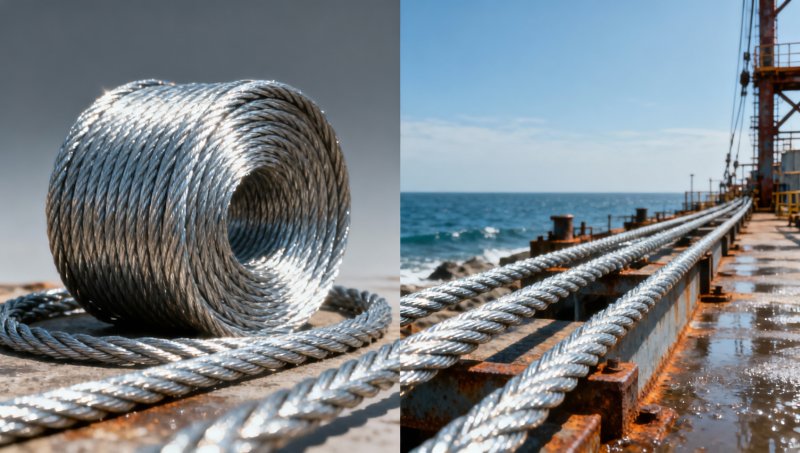
Corrosion in steel wire is not caused by water alone. In coastal zones, chloride salts carried by sea spray break down protective layers faster than in dry inland conditions. In wet industrial areas, standing moisture, condensation, and chemical contaminants can create a continuous electrochemical reaction on the wire surface. This is why Corrosion Resistant Wire is commonly specified for marine construction, agricultural buildings, drainage systems, and outdoor structural applications.
For technical evaluators and quality teams, the first key point is exposure level. A wire installed 500 meters from the shoreline usually faces a much harsher corrosion cycle than one placed 10 kilometers inland. Likewise, a roof support wire exposed to daily condensation may corrode faster than a wire used in a ventilated dry warehouse, even if both are made from the same base steel.
For procurement and project managers, the real cost issue is not only purchase price. Premature rust can trigger repainting, part replacement, shutdowns, and safety inspections within 12–36 months if the wrong wire type is selected. In contrast, a correctly matched wire system can extend maintenance intervals to several years, depending on coating type, installation quality, and local climate severity.
From a steel industry perspective, corrosion resistance depends on a combination of base material, zinc or alloy coating, surface integrity, fabrication quality, and design details such as drainage and contact points. Structural steel suppliers serving global projects must therefore support not only product availability, but also selection guidance aligned with ASTM, EN, JIS, or GB requirements where applicable.
Typical factors that increase corrosion risk
- Salt deposition from marine air, especially in open coastal areas and ports.
- High humidity above common outdoor ranges, with repeated wet-dry cycles.
- Poor drainage, trapped water, or enclosed sections that remain wet for 24–72 hours.
- Surface damage during transport, bending, or installation that exposes bare steel.
How Corrosion Resistant Wire performs under moisture, salt, and load
When buyers ask how Corrosion Resistant Wire performs in coastal and wet areas, the answer should focus on three practical indicators: barrier protection, sacrificial protection, and retention of mechanical function over time. Barrier protection comes from coatings that reduce direct contact between steel and moisture. Sacrificial protection, common with zinc-based coatings, allows the coating to corrode first and protect the steel substrate. Mechanical retention refers to whether the wire still maintains required tension, shape, and structural reliability after prolonged exposure.
In normal outdoor construction use, galvanized wire is often the baseline solution because zinc coating provides effective corrosion delay at a reasonable cost. In more severe coastal zones, heavier galvanizing, zinc-aluminum alloy coatings, or stainless-based alternatives may be considered. The correct choice depends on expected service life, replacement access, inspection frequency, and total installed cost rather than on material price alone.
Engineers also need to consider that corrosion is rarely uniform. The most vulnerable points are bends, cut ends, fixing points, welded zones, and areas where water collects. A wire may appear acceptable over 90% of its length but fail early at a clamp or anchor point. That is why site-specific design and installation practice matter as much as the nominal wire specification.
For operational users, another important point is maintenance visibility. Corrosion Resistant Wire with a stable zinc or alloy surface often gives earlier visible warning signs such as dulling, white corrosion products, or localized red rust. These indicators support scheduled inspection every 6–12 months in aggressive environments and help avoid sudden service disruption.
Performance comparison by common wire solution
The table below helps purchasing teams compare common steel wire solutions used in wet and coastal environments. It is not a substitute for engineering calculation, but it provides a practical selection framework for construction and industrial applications.
For many B2B projects, hot-dip galvanized wire remains the most practical middle-ground option. It offers useful durability in coastal and wet areas without pushing the budget to stainless levels. However, where replacement is difficult or shutdown cost is high, moving one step up in coating performance often makes financial sense over a 3–10 year service window.
What decision-makers should verify
- Whether the coating process is suitable for coastal exposure rather than only general outdoor use.
- Whether the supplier can confirm tolerance, material grade, and consistent batch quality.
- Whether installation details reduce water traps, abrasion, and dissimilar metal contact.
Which steel applications need extra caution in wet regions?
Corrosion Resistant Wire is often part of a larger structural steel system. In practice, the wire performs best when adjacent members, fasteners, and profiles are selected with the same environmental logic. For example, a galvanized wire combined with unprotected support steel can still face premature degradation at contact points. This is why project teams often review wire, purlins, beams, brackets, and fixing components together instead of as separate purchases.
In lightweight roof systems, wall supports, and workshop framing, cold formed sections are frequently used alongside wire or tie components. A practical example is the Z-beam, which is widely applied in steel structure construction purlins, wall beams, lightweight roofs, brackets, and mechanical support members. In coastal or wet projects, buyers often prefer galvanized coated or perforated options that simplify assembly and improve compatibility with corrosion-conscious designs.
For technical review, these structural profiles are commonly available in material grades such as Q235B, Q345B, Q420C, Q460C, SS400, S235, S275, S355, A36, and A572, with thickness ranges of 6–25mm, lengths of 2–12m or customized, and tolerance around ±1%. Those ranges matter because section thickness, coating choice, and dimensional control all influence long-term behavior in humid or saline service conditions.
For distributors and project managers, product ecosystem capability is also important. A supplier that can coordinate wire-related steel products, standard profiles, and OEM structural components reduces sourcing fragmentation. This helps control lead times, usually within standard production cycles of 2–4 weeks for common specifications, while keeping documentation, quality checks, and shipment planning more manageable.
Application scenarios where corrosion planning matters most
The next table summarizes where corrosion resistant steel solutions need tighter specification. It can help engineering, commercial, and finance teams align technical need with budget level and maintenance expectations.
The main takeaway is simple: corrosion planning should match actual exposure, not just project category. Two warehouse projects may look similar on paper, but if one is coastal and the other inland, the wire and supporting steel specification should not be the same.
How to choose Corrosion Resistant Wire for procurement and technical approval
A good procurement decision usually balances five factors: environment severity, target service life, required mechanical performance, compliance needs, and total cost. For finance approvers, the most useful comparison is often lifecycle cost rather than line-item price. For quality and safety teams, traceability, coating consistency, and dimensional tolerance are equally important because corrosion failures are often linked to batch variation or installation mismatch.
When sourcing from an experienced structural steel manufacturer and exporter, buyers should ask for a clear review process. Hongteng Fengda supports global construction, industrial, and manufacturing projects with structural steel products, cold formed steel profiles, and customized steel components. This matters for international buyers because stable production capacity, major standard familiarity such as ASTM, EN, JIS, and GB, and dependable lead times all help reduce sourcing risk in cross-border projects.
For project teams working across North America, Europe, the Middle East, and Southeast Asia, specification consistency is especially important. A supplier should be able to discuss standard specifications, OEM options, and practical quality checkpoints before production starts. In many cases, 4-step coordination works best: confirm environment, verify grade and coating, lock dimensions and tolerance, then align inspection and shipment documents.
If the wire is part of a structural package, do not evaluate it in isolation. Confirm compatibility with purlins, channels, beams, fasteners, and formed profiles. This reduces the chance of galvanic mismatch, field modification, and unexpected corrosion at connection points within the first 6–18 months of service.
A practical 5-point selection checklist
- Define the exposure zone clearly: inland wet, coastal atmospheric, direct splash, or chemically influenced humidity.
- Confirm wire type and coating process, not just the word “galvanized” on a quotation sheet.
- Check material grade, dimensional tolerance, and whether cut or formed areas require extra treatment.
- Ask about normal production and export timing, typically 2–4 weeks for standard items and longer for customized components.
- Review required certificates or third-party inspection expectations before contract finalization.
Common procurement mistakes
One frequent mistake is selecting by initial cost only. Another is assuming that all galvanized products deliver the same field performance. A third is underestimating logistics and handling damage. Even a suitable Corrosion Resistant Wire can lose durability if the coating is scratched during bundling, port handling, or site installation. That is why packaging, loading method, and receiving inspection should be included in the procurement plan.
FAQ and final recommendations for long-term project value
Before final approval, most stakeholders still have a few practical questions about service life, replacement timing, and supplier support. The answers below are designed for researchers, engineers, buyers, and project decision-makers who need a clearer path from comparison to purchase.
How long can Corrosion Resistant Wire last in coastal or wet areas?
There is no single service-life number that fits every project. Performance depends on salt concentration, humidity cycle, coating type, surface damage, and inspection quality. In practice, maintenance review every 6–12 months is a reasonable starting point in harsh environments. For less severe wet conditions, inspection intervals may be longer. The better approach is to match the wire specification to the expected maintenance plan instead of relying on a generic lifespan claim.
Is hot-dip galvanized wire enough for every coastal project?
Not always. For many general coastal building applications, hot-dip galvanized wire is a practical and economical choice. However, in direct marine exposure, splash zones, or sites with both salt and industrial pollutants, higher-performance coatings or stainless options may be more suitable. The decision should also consider how difficult replacement will be after installation.
What should quality control teams inspect on delivery?
Focus on at least 4 points: coating continuity, visible damage from transport, dimensional tolerance, and identification against the purchase specification. If the order includes structural profiles or related members, check that lengths, thickness ranges, and finish type match the approved documents. Early inspection reduces downstream claims and avoids installation delays.
Why do many buyers work with a structural steel exporter instead of separate vendors?
Because bundled sourcing can reduce coordination time, documentation gaps, and compatibility issues. A manufacturer-exporter with experience in structural steel, formed profiles, and customized components can help align wire-related needs with beams, channels, angle steel, and accessory parts. This is often valuable for projects with tight schedules, complex shipping plans, or multi-market compliance requirements.
Why choose us for corrosion-conscious steel sourcing?
Hongteng Fengda supports global buyers with structural steel manufacturing and export capability from China, covering standard specifications and OEM solutions for construction, industrial, and manufacturing projects. Our strengths include modern production facilities, strict quality control, experience with ASTM, EN, JIS, and GB related requirements, and coordinated supply across angle steel, channel steel, steel beams, cold formed steel profiles, and customized structural components.
If you are evaluating Corrosion Resistant Wire or related structural steel for coastal and wet environments, you can contact us for practical support on parameter confirmation, grade and coating selection, matching steel components, delivery cycle review, certification needs, sample arrangements, and quotation discussion. This helps your team move faster from technical review to commercial decision while controlling sourcing risk and long-term maintenance cost.
Please give us a message


Please enter what you want to find