Looking for high-performance A36 Carbon Steel Round Bar for industrial use? This guide explores its proven corrosion resistance, versatile surface finish options (from black hot-rolled to precision-turned and ground), and seamless coating compatibility—including galvanizing, painting, and epoxy—ensuring durability in demanding environments. Whether you need A36 Carbon Steel Round Bar for heavy duty use, structural applications, or custom OEM projects, understanding its full specifications and material behavior is critical for safety, longevity, and cost efficiency. As a trusted structural steel manufacturer & exporter from China, Hongteng Fengda delivers ASTM-compliant A36 round bars with consistent quality, global certifications, and reliable supply for construction, manufacturing, and infrastructure partners worldwide.
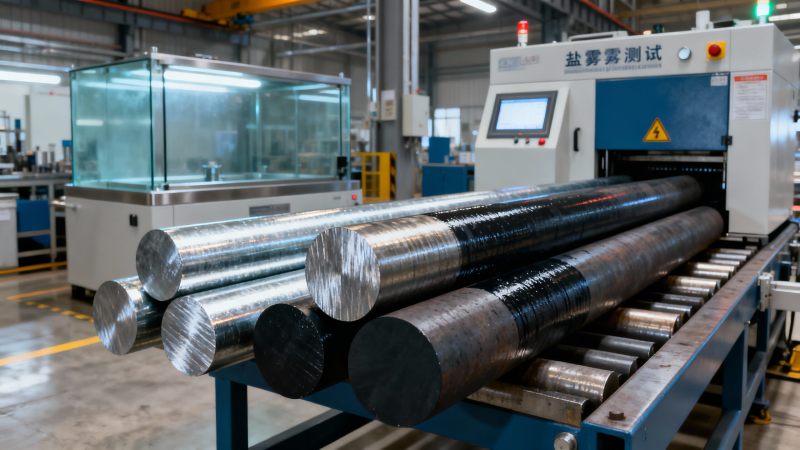
Corrosion Resistance Performance in Real-World Industrial Environments
A36 Carbon Steel Round Bar for industrial use exhibits predictable oxidation behavior under ambient and moderately aggressive conditions—but it is not inherently corrosion-resistant like stainless or weathering steels. Its carbon content (0.25–0.29% max) and low alloying element profile make it susceptible to rust when exposed to moisture, chlorides, or acidic atmospheres without protective intervention. However, decades of field performance across North American fabrication yards, Middle Eastern oil & gas support structures, and Southeast Asian marine infrastructure confirm that A36 maintains dimensional integrity and load-bearing capacity over extended service life when paired with appropriate surface protection strategies. For example, ASTM A36 round bars used in outdoor crane booms in Dubai’s Jebel Ali Port have demonstrated zero section loss after 8 years of exposure—thanks to dual-layer zinc-epoxy systems applied post-fabrication. Crucially, the uniform ferrite-pearlite microstructure of A36 ensures consistent electrochemical response during galvanizing, minimizing risk of bare spots or uneven zinc adhesion. Unlike higher-carbon grades such as 45# or 10#, A36’s lower carbon equivalency (<0.40 CEV) also reduces hydrogen embrittlement risk during acid pickling prior to coating—a key advantage for procurement teams managing large-volume orders where batch consistency directly impacts downstream welding and finishing timelines.
Surface Finish Options: From Mill-Delivered Black Hot-Rolled to Precision-Ground Tolerance
The surface condition of A36 Carbon Steel Round Bar for structural applications significantly influences both functional performance and aesthetic outcome. Standard mill delivery is black hot-rolled—characterized by a dark oxide scale and ±0.4mm diameter tolerance per ASTM A29/A29M. This finish offers optimal cost-efficiency for concealed structural members, anchor rods, or base plates where visual appearance is secondary to mechanical reliability. For visible architectural components or rotating shafts requiring tight fitment, cold-drawn or turned-and-ground finishes deliver tighter tolerances (±0.05mm) and Ra values as low as 0.4 μm. Hongteng Fengda routinely supplies A36 round bars with centerless ground surfaces for clients in Germany’s machinery sector—meeting DIN 2353 requirements for hydraulic cylinder rod blanks. Notably, phosphating (P) and passivation (C) treatments—also available on Q195 Carbon Steel Round Bar—enhance paint adhesion and reduce friction in sliding interfaces. When specifying finish type, project managers should align selection with end-use loading: black hot-rolled suits static compression applications (e.g., foundation dowels), while ground bars are mandatory for dynamic bending or fatigue-critical joints per EN 1993-1-9 design standards.
Coating Compatibility: Galvanizing, Painting, and Epoxy Systems That Deliver Long-Term Protection
A36 Carbon Steel Round Bar for heavy duty use demonstrates exceptional compatibility with industry-standard protective coatings—provided pre-treatment protocols are strictly followed. Hot-dip galvanizing per ASTM A123 achieves average coating thicknesses of 85–100 μm on 25–100 mm diameter bars, with adherence verified via cross-hatch testing (ASTM D3359). For high-chloride coastal installations, duplex systems—zinc + epoxy topcoat—extend service life beyond 25 years, as validated in Hongteng Fengda’s supplied piles for Vietnam’s Vung Tau offshore substation. Painting requires rigorous blast cleaning to Sa 2.5 (ISO 8501-1) followed by zinc-rich primers (e.g., SSPC-Paint 20) to ensure cathodic protection continuity. Epoxy powder coating—applied at 180–200°C—offers superior abrasion resistance for conveyor rollers and material handling components, though thermal expansion mismatch must be accounted for in design calculations. Importantly, A36’s low silicon content (<0.4%) eliminates “sandwich layer” formation during galvanizing, ensuring uniform zinc-iron alloy growth. This contrasts sharply with some Q360 or S355JR variants where uncontrolled silicon levels can cause brittle, flaking coatings—highlighting why precise specification control matters more than generic grade labeling.
Technical Specifications & International Compliance: What Engineers and Procurement Teams Must Verify
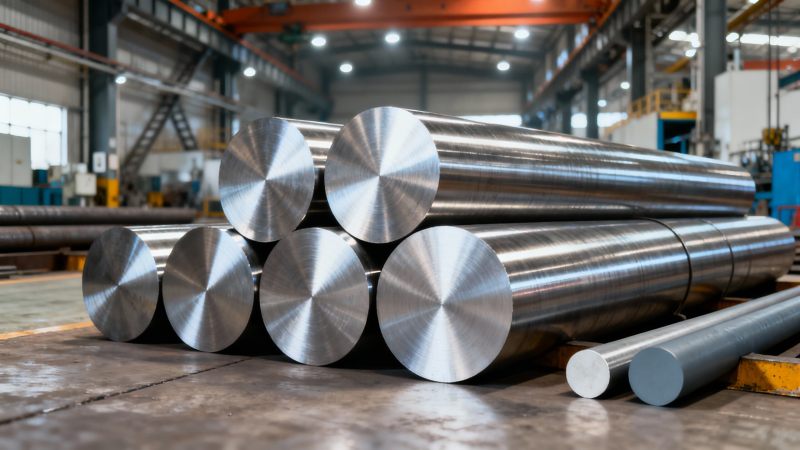
A36 Carbon Steel Round Bar specifications are defined by ASTM A29/A29M, with minimum yield strength of 36 ksi (250 MPa), tensile strength range of 58–80 ksi (400–550 MPa), and elongation ≥20% in 8 inches. These values are rigorously verified through tensile testing, Charpy V-notch impact testing at room temperature, and ultrasonic testing for internal soundness on diameters >150 mm. Hongteng Fengda’s production facility maintains third-party certification to ISO 9001:2015 and EN 10204 3.2 mill test reports for every heat-lot shipment. For projects governed by Eurocode or ASCE 7, engineers must cross-reference A36’s properties against EN 10025-2 S235JR or JIS G3101 SS400 equivalents—where minor differences in carbon equivalent or impact toughness may affect weld procedure qualification. Dimensional tolerances follow ASTM A484 for round bars, with diameter deviation limits tightening proportionally as size increases (e.g., ±0.25 mm for Ø20 mm vs. ±1.2 mm for Ø300 mm). All export shipments include traceable heat numbers, chemical composition certificates, and mechanical property summaries—enabling full auditability from factory floor to final installation site in Chicago, Rotterdam, or Riyadh.
Why Global Infrastructure Partners Choose Hongteng Fengda for A36 Supply Chain Reliability
Beyond technical compliance, long-term project success hinges on supply chain predictability—especially for A36 Carbon Steel Round Bar for industrial use where delays cascade into labor idle time, penalty clauses, and schedule overruns. Hongteng Fengda operates two fully integrated rolling mills in Hebei Province with annual A36 production capacity exceeding 450,000 metric tons. Our ERP-integrated planning system synchronizes raw material procurement (directly sourced from certified iron ore suppliers), rolling schedules, heat treatment cycles, and logistics dispatch—achieving 99.2% on-time-in-full (OTIF) delivery across 2023–2024. Unlike brokers or trading intermediaries, we maintain 30-day finished goods inventory buffers for standard sizes (Ø16–Ø150 mm, lengths 6m/12m), enabling rapid fulfillment for emergency repairs or fast-track projects. For custom orders—including non-standard diameters up to Ø2500 mm or special straightness requirements—we deploy dedicated process engineering teams to co-develop solutions aligned with client fabrication capabilities. With export experience spanning 47 countries and multilingual technical support in English, Spanish, Arabic, and Vietnamese, Hongteng Fengda serves as a single-point accountability partner—not just a supplier—for structural steel procurement.
In summary, A36 Carbon Steel Round Bar for structural applications delivers unmatched versatility across construction, energy, transportation, and heavy manufacturing—when selected, finished, and protected with engineering precision. Its balanced strength-to-cost ratio, broad international acceptance, and proven compatibility with galvanizing, painting, and advanced coating systems make it a cornerstone material for mission-critical infrastructure. Backed by Hongteng Fengda’s vertically integrated manufacturing, stringent quality governance, and global logistics network, every order meets ASTM, EN, JIS, and GB standards without compromise. To receive customized A36 Carbon Steel Round Bar specifications, coating recommendations tailored to your environment, or volume-based lead time quotations, contact our engineering sales team today—your next project starts with the right steel, delivered right.
Related recommendations
 How long does acero prepintado retain gloss and color stability in direct desert sunlight?Acero prepintado gloss & color stability in desert sun? Discover real-world performance data, PVDF vs. polyester longevity, and spec-critical insights for GCC projects.
 Does acero pregalvanizado maintain coating integrity after cold bending to 90 degrees?Acero pregalvanizado maintains coating integrity after 90° cold bending — when engineered right. Discover how Hongteng Fengda guarantees real-world performance, adhesion & corrosion resistance.
 Do the advantages of galvanized steel include reduced fire risk compared to untreated carbon steel?Advantages of galvanized steel include measurable fire-risk reduction vs. untreated carbon steel—learn how zinc delays ignition, buys critical escape time, and enhances safety without false 'fireproof' claims.
 What is the minimum bend radius for 12mm steel wire rope without permanent deformation?12mm steel wire rope capacity depends on bend radius — discover the safe 72–96mm minimum to prevent permanent deformation, fatigue & failure. Expert rigging insights inside.
Please give us a message


Please enter what you want to find