When do structural steel solutions truly save more—at purchase, during fabrication, or across the full project lifecycle? For buyers comparing an angle steel supplier, steel profile manufacturer, or materials like high strength steel rebar and galvanized steel sheet for construction, the answer depends on performance, compliance, lead time, and total cost. This guide explores how smarter sourcing decisions can reduce risk, improve efficiency, and create lasting value.
Where do structural steel solutions create the biggest savings?
In steel procurement, the lowest unit price rarely delivers the lowest project cost. Structural steel solutions save more when they reduce rework, simplify fabrication, shorten installation time, and support compliance from the start. For procurement teams, project managers, and financial approvers, the real question is not only price per ton, but cost across 3 stages: sourcing, processing, and project execution.
This matters even more in international purchasing. If a shipment misses a specification, arrives with unstable tolerances, or lacks required documents, the impact can spread through 2–4 weeks of schedule pressure, extra site labor, and replacement sourcing. In construction and industrial steel applications, these hidden costs often exceed any small savings achieved at order placement.
Hongteng Fengda, as a structural steel manufacturer and exporter from China, supports buyers who need reliable steel products for global construction, industrial, and manufacturing projects. With experience in angle steel, channel steel, steel beams, cold formed steel profiles, and customized structural steel components, the company helps customers balance specification accuracy, lead time stability, and practical cost control.
For technical evaluators and quality teams, savings also come from consistency. Products aligned with ASTM, EN, JIS, and GB requirements make review easier, especially when projects involve multiple stakeholders across design, procurement, safety, and installation. Stable production capacity and dependable delivery windows are often as important as the steel grade itself.
Three cost areas buyers should evaluate together
- Material cost: base steel price, coating option, processing level, and packaging requirements.
- Operational cost: cutting loss, welding time, drilling accuracy, installation labor, and handling efficiency.
- Risk cost: delays, compliance failure, inconsistent dimensions, replacement orders, and claim exposure.
When suppliers can support standard specifications and OEM solutions under strict quality control, buyers usually gain better predictability in all 3 areas. That is where structural steel solutions begin to save more in a measurable and defensible way.
How should buyers compare cost, performance, and project impact?
A sound comparison should go beyond “cheap versus expensive.” In steel sourcing, the better decision usually sits between technical fit and commercial practicality. Information researchers may focus on product categories, while purchasing teams may prioritize lead time and payment terms. However, technical, quality, and project stakeholders need a common evaluation framework with at least 5 key checks.
Those 5 checks typically include material grade suitability, dimensional tolerance, coating or surface treatment, certification support, and fabrication readiness. If any one of these is weak, downstream costs can rise quickly. For example, a profile that is slightly cheaper but outside a ±1% tolerance target may create alignment issues in framing, brackets, or purlin systems.
For distributors and engineering buyers, product standardization also affects stock planning and resale confidence. Standard lengths such as 2–12 m, common grades like Q235B, Q345B, S235, S355, A36, or A572, and traceable inspection processes make future repeat orders easier. This reduces sourcing friction and improves procurement speed in recurring projects.
The table below helps compare structural steel solutions from a lifecycle perspective rather than a quotation-only perspective.
For many buyers, the better lifecycle value option becomes more economical once labor, schedule, and risk are included. This is especially true for export projects, multi-site construction, or projects with strict acceptance standards.
What does a practical procurement review include?
Technical review
Confirm grade, dimensions, tolerance, edge type, perforation needs, coating requirements, and compatibility with drawings. In many projects, 4 technical details cause most rework: hole position, thickness deviation, length accuracy, and coating mismatch.
Commercial review
Check MOQ, shipment batch planning, packing method, lead time range, and document readiness. A typical planning cycle for standard items may be shorter than custom fabricated components, so coordination at RFQ stage can prevent later disputes.
Which product choices reduce waste in fabrication and installation?
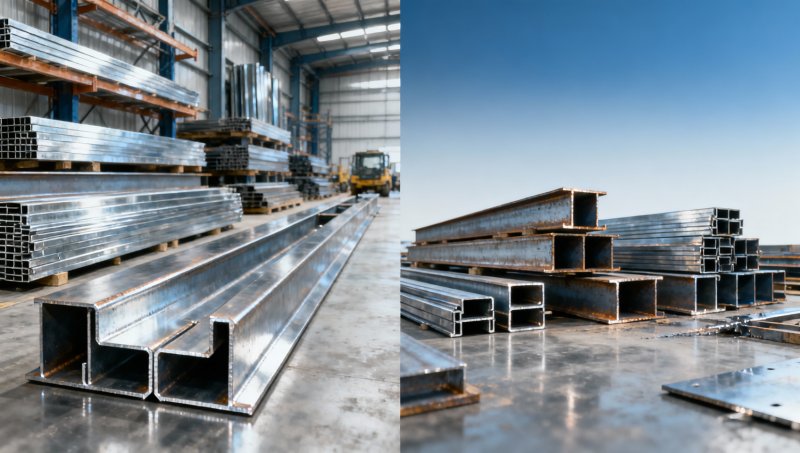
The right steel profile often saves more in fabrication than it does at purchase. Cold formed and structural profiles that match the design load and connection method can reduce cutting steps, support lighter assemblies, and improve installation speed. This is particularly useful in workshops, wall systems, lightweight roofs, support brackets, and light manufacturing structures.
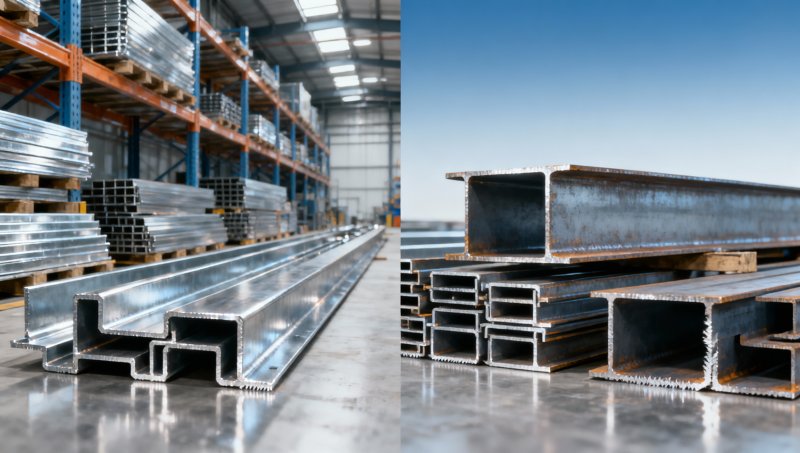
A practical example is Z-beam, which is commonly used in steel structure construction purlins, wall beams, lightweight roof systems, brackets, mechanical columns, and arms. Depending on project design, it can support efficient framing layouts while reducing unnecessary material use compared with less optimized section choices.
From a specification standpoint, this Z-shaped steel profile is available in thicknesses from 6–25 mm, standard lengths of 2–12 m or customized, and tolerance control at ±1%. Available material options include Q235B, Q345B, Q420C, Q460C, SS400, SS540, S235, S275, S355, A36, A572, G50, and G61, which gives engineers flexibility across different load, regional standard, and cost scenarios.
Buyers evaluating profile steel should also review finish and fabrication details. Perforated, galvanized coated, mill edge, and slit edge options can influence both handling and assembly performance. In corrosive or exposed conditions, zinc or silver appearance associated with galvanized coating may improve service suitability, while pre-perforated options may help reduce secondary processing on site.
Selection factors for profile steel in project execution
- Match the section shape to the structural role, such as purlin, wall beam, bracket, or light-load beam.
- Choose grades based on load demand, fabrication route, and target standard, not on strength alone.
- Use galvanized coated options when environmental exposure or maintenance intervals require added protection.
- Check whether ancillary products such as color steel tile, rock wool sandwich panel, or floor deck are part of the project package.
The following table gives a practical view of how profile selection can influence procurement and installation decisions.
For buyers who need cold formed steel profiles in repetitive structural applications, these details often determine whether the steel solution saves more in the workshop, on the truck, or on the jobsite.
Why do standards, certification, and supplier capability affect total cost?
In B2B steel sourcing, compliance is not only a quality issue. It is a cost issue. If steel products do not align with project standards, approval delays and site rejection can interrupt progress immediately. Buyers serving North America, Europe, the Middle East, or Southeast Asia often need material and production alignment with ASTM, EN, JIS, or GB, depending on project documentation and local acceptance practice.
Certification support also matters when internal approval involves engineering, procurement, finance, and quality departments. Product documentation linked to common certifications such as CE, SGS, BV, and ISO can support smoother review, provided that the certificate scope is relevant to the delivered product and process. This is why document readiness should be confirmed before order release, not after production.
Supplier capability influences consistency over multiple batches. Modern manufacturing facilities, strict quality control, and stable production planning can reduce the chance of variation between trial samples and mass shipment. For long-term buyers, this is often more valuable than securing a one-time lower price that cannot be repeated under the same conditions.
For quality control personnel and safety managers, a useful approval process usually includes 4 checkpoints: grade verification, dimensional inspection, surface condition review, and document matching. When these checks are built into the order process, project teams can manage risk earlier and more efficiently.
Common compliance checks before purchase order confirmation
- Confirm the applicable standard set, such as ASTM, EN, JIS, or GB, according to project drawings and contract terms.
- Verify the required material grade range and whether substitute grades are acceptable.
- Define inspection items, including dimensions, tolerance, coating, and packaging condition.
- Align on documents needed for customs, project filing, or quality review before shipment.
This structured approach helps business evaluators and project owners avoid a common mistake: approving steel based on quotation speed alone while underestimating compliance cost later.
What procurement mistakes make structural steel more expensive?
Many cost overruns in structural steel do not begin on site. They begin in specification gaps, unclear communication, or incomplete supplier assessment. A buyer may request “steel beam” or “profile steel” without defining grade, coating, edge condition, hole requirements, or acceptable tolerance range. That creates pricing ambiguity first and execution risk later.
Another common issue is using one decision rule for every project. A low-volume urgent order, a distributor stock replenishment order, and a large industrial construction package should not be evaluated the same way. The decision criteria often differ across 3 dimensions: time sensitivity, technical complexity, and repeat-order potential.
Project teams also underestimate the cost of delivery instability. Even a 7–15 day shift in shipment timing can affect crane booking, labor allocation, subcontractor sequencing, or downstream fabrication. For this reason, dependable lead time is not just a logistics issue; it is a commercial and operational control issue.
The final mistake is failing to ask for solution support. A capable structural steel manufacturer can often suggest more suitable profiles, practical size ranges, or packaging and shipment adjustments that reduce waste. When buyers limit the conversation to a line-item quote, they may miss useful optimization options.
FAQ for buyers, engineers, and project teams
How do I know whether a structural steel solution is truly cost-effective?
Review at least 5 points together: material grade fit, dimensional accuracy, fabrication readiness, lead time reliability, and compliance documentation. If the steel reduces field modification and supports predictable installation, it may save more even when the purchase price is slightly higher.
Which applications benefit most from optimized profile steel?
High-repeat applications usually benefit first, such as purlins, wall beams, lightweight roof framing, brackets, and light manufacturing structures. In these cases, small improvements in profile matching or pre-processing can multiply across dozens or hundreds of pieces.
What should distributors or resellers prioritize?
Focus on standard grade availability, stable dimensions, document readiness, and repeatable lead times. These factors support easier stock turnover, fewer after-sales issues, and more confidence when serving contractors or industrial end users.
How early should compliance and certification be discussed?
Ideally at RFQ stage. Confirm standards, required documents, and any third-party inspection expectations before production begins. This avoids mismatch between commercial assumptions and project acceptance requirements.
Why choose a structural steel partner that supports real project decisions?
Structural steel solutions save more when the supplier understands more than the product list. Buyers need support with specification confirmation, grade selection, customization, compliance matching, and shipment planning. Hongteng Fengda serves global customers with structural steel products and customized solutions for construction, industrial, and manufacturing applications, helping reduce sourcing risk and improve execution confidence.
For procurement personnel, the value is practical: stable production capacity, consistent quality control, and dependable lead times. For technical teams, the value lies in products aligned with major international standards and in clearer communication on dimensions, tolerance, and application fit. For decision-makers and finance approvers, the value is better cost predictability over the full project lifecycle.
If you are comparing an angle steel supplier, steel beam exporter, or cold formed steel profile manufacturer, a focused discussion can clarify what really drives savings in your case. The right solution may depend on quantity, grade, coating, fabrication detail, destination market, or installation method. In many projects, these factors matter more than the first quoted number.
Contact us to discuss parameter confirmation, product selection, delivery schedule, custom structural steel solutions, certification requirements, sample support, and quotation planning. If your project involves standard sections or OEM steel components, sharing drawings, target grades, quantity range, and delivery timing is the fastest way to receive a practical recommendation.
Please give us a message


Please enter what you want to find