Angle Steel price per ton Philippines is shaped by raw material costs, Galvanized processing, grade requirements such as S355JR, and supply chain dynamics. For buyers comparing Steel Beam, Steel Wire, or even Steel Sheet Pile solutions, understanding these price drivers helps control budgets and sourcing risks. This guide explains the key factors behind market changes and how to evaluate reliable structural steel offers.
For contractors, distributors, project engineers, procurement teams, and financial approvers, angle steel pricing is not just a number on a quotation sheet. It reflects upstream steelmaking inputs, fabrication complexity, coating choices, specification tolerance, shipment planning, and the reliability of the supplier. In the Philippines, where infrastructure, industrial buildings, utility works, and private developments all consume structural steel, even a difference of USD 20–80 per ton can affect overall project margins.
Buyers also need to compare local availability with imported supply from China and other export sources. A lower base price may become less competitive once galvanizing, testing, inland trucking, port handling, and lead-time risks are added. That is why a practical price analysis must go beyond headline rates and look at the full landed cost, specification fit, and delivery certainty.
Core Market Factors Behind Angle Steel Price in the Philippines
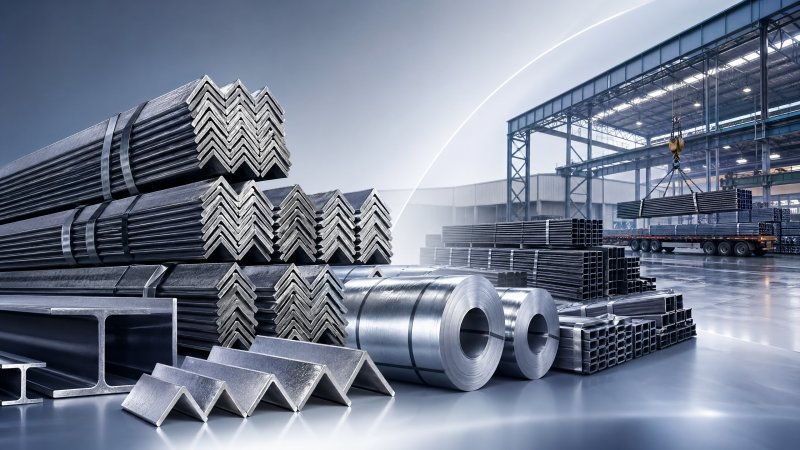
The first and most direct driver of angle steel price in the Philippines is the cost of raw steel feedstock. Mills producing equal angle or unequal angle sections are influenced by billet, slab, scrap, and energy prices. When steelmaking inputs move sharply within 2–6 weeks, export quotations for structural sections often follow. This is especially relevant for buyers booking multiple containers or planning phased deliveries across 30–90 days.
The second major factor is steel grade. Standard commercial grades may be priced lower than higher-strength or tighter-specification materials such as S355JR, Q345B, or ASTM equivalents. A project requiring improved yield strength, impact performance, or stricter dimensional tolerance usually carries a premium. For technical evaluators, the price difference is justified only when the end-use load condition and code requirement truly demand that grade.
Third, processing requirements can add meaningful cost per ton. Black finish angle steel is usually the lowest-cost form, while galvanized angle steel includes zinc coating, additional handling, and inspection steps. Depending on coating thickness, order volume, and whether pre-galvanizing or hot-dip galvanizing is specified, the premium can become one of the most visible components in the final quotation.
Supply chain conditions also matter. Ocean freight, vessel schedule reliability, container availability, customs clearance, and domestic transport from port to project site all affect the delivered price. In practical procurement, a “good” offer is not the cheapest ex-works number. It is the quotation that balances unit cost, acceptable lead time, low claim risk, and consistent quality over repeated shipments.
Main pricing components buyers should track
The table below shows the most common pricing variables that influence angle steel offers for the Philippine market. These are useful for comparing quotations from different mills, traders, and exporters.
The key takeaway is that the angle steel price per ton Philippines should always be evaluated as a package of grade, finish, tolerance, freight, and timing. A quote that looks lower by USD 30 per ton may become more expensive after galvanizing or delay-related site costs are included.
How Specifications and Processing Change the Final Cost
Many buyers underestimate how strongly technical specification affects structural steel cost. Size range, thickness, leg dimensions, length tolerance, hole punching, cutting, and bundle packaging all influence production efficiency. If a project requires uncommon sizes or mixed lengths in one batch, the supplier may allocate extra rolling, sorting, or fabrication time. That additional handling is often reflected in the unit price even before shipment starts.
Galvanizing is another major variable. For outdoor supports, utility frames, coastal works, or humid environments common in many Philippine regions, corrosion protection is often necessary. However, not all galvanized products are priced the same. Coating thickness, surface uniformity, and after-treatment requirements may create different cost bands. From a lifecycle perspective, paying more for suitable protection can reduce repainting, early replacement, or field maintenance later.
Dimensional and testing requirements also need attention. Buyers working under ASTM, EN, JIS, or GB-based project documents should verify whether mill test certificates, third-party inspection, or specific tensile and chemical reports are required. These quality documents are standard in serious export business, but the inspection scope still changes total cost and lead time. For example, added testing and verification can extend dispatch by 3–7 days.
In many procurement cases, a supplier offering customized structural steel can improve total project efficiency. Instead of purchasing only angle steel in isolation, buyers may bundle related profiles such as channels, beams, or cold formed sections in one sourcing plan. This approach can simplify documentation, reduce supplier coordination time, and improve shipment utilization per container or per lot.
Inserted product option for related structural applications
For projects that combine angle steel with roof framing, wall members, or lightweight structural systems, it is often practical to review other cold formed profiles during the same sourcing cycle. One example is Z-beam, a Z-shaped steel profile widely used in large-scale steel structure workshops, purlins, wall beams, lightweight roof systems, brackets, mechanical columns, and light manufacturing frames.
Typical material options include Q235B, Q345B, Q420C, Q460C, SS400, SS540, S235, S275, S355, A36, A572, G50, and G61. Common thickness is 6–25 mm, standard length is 2–12 m or customized, and tolerance can be controlled to about ±1%. Available forms may be perforated or non-perforated, with zinc or silver appearance, and common certification references include CE, SGS, BV, and ISO depending on supply scope and inspection arrangement.
Specification points that frequently affect steel quotation
- Material grade selection: Q235B or S235 for standard use versus Q345B or S355 for higher structural demand.
- Finish requirement: black steel, pre-galvanized, or hot-dip galvanized depending on corrosion exposure.
- Processing scope: cutting, punching, marking, drilling, or customized OEM fabrication.
- Dimensional control: standard tolerance versus project-specific tolerance and inspection.
- Packaging and export handling: seaworthy bundling, label traceability, and destination-specific loading plans.
These details may look minor on paper, but in structural steel procurement they directly shape both price and execution risk. Technical teams should therefore align the true use condition with the specification before purchasing, rather than upgrading every item by default.
Import Supply, Lead Time, and Landed Cost Evaluation
For the Philippine market, imported angle steel often competes closely with locally available stock. The right choice depends on order size, urgency, required standards, and whether the project needs non-stock specifications. If a buyer needs common sizes immediately, local inventory may save 1–3 weeks. If the project requires large tonnage, mixed structural profiles, or customized fabrication, direct sourcing from an experienced Chinese manufacturer may provide stronger cost control and specification consistency.
Lead time should be assessed in stages rather than as a single number. A realistic schedule usually includes quotation confirmation, production slot arrangement, rolling or fabrication, galvanizing if required, inspection, port delivery, ocean transit, and customs release. Depending on order complexity, total cycle time may range from 3–8 weeks. Financial approvers and project managers should compare this full timeline against site installation milestones.
Landed cost analysis is where many commercial decisions become clearer. A buyer may receive one offer with a lower base ton price but weaker packing, slower lead time, or incomplete quality documentation. Another supplier may quote slightly higher yet offer stable production capacity, standard-compliant documentation, and predictable shipping support. In B2B structural steel purchasing, these service elements often reduce hidden costs such as project delay, claim handling, and reordering risk.
Hongteng Fengda serves global construction, industrial, and manufacturing buyers with angle steel, channel steel, steel beams, cold formed profiles, and customized structural steel components. For import buyers, the value is not only manufacturing capability but also disciplined quality control, standard compliance, and dependable lead-time coordination that supports repeat procurement planning.
Typical landed cost comparison points
The following table helps procurement and business evaluation teams compare offers on a practical basis instead of focusing on ex-works price alone.
This comparison shows why import supply is often preferred for structured project procurement, while local stock is often chosen for urgent replenishment. The best decision depends on quantity, complexity, and schedule risk rather than price alone.
How Buyers Can Control Budget and Sourcing Risk
The most effective way to control angle steel price risk in the Philippines is to improve specification discipline before RFQ release. Procurement teams should issue a clear inquiry package covering grade, dimensions, finish, tolerance, standard, quantity, packing, destination port, and required documents. Incomplete RFQs often result in misleading quotations that look attractive but later change after technical clarification.
It is also wise to compare at least 3 dimensions of value: unit price, quality confidence, and schedule reliability. A structurally critical order should not be awarded based only on the lowest ton rate. Technical evaluators and quality teams should review whether the supplier can meet mechanical property requirements, coating expectations, inspection scope, and batch traceability. These checks are especially important when the material will be used in load-bearing frames, supports, or exposed service environments.
For repeat buyers and distributors, price stability can often be improved through phased procurement planning. Instead of waiting until the last possible week, some buyers lock part of the volume earlier and leave a smaller percentage for later adjustment. This strategy can reduce exposure to sudden raw material or freight increases. It is not always possible, but for projects with clear demand forecasts, it provides better budget visibility over 30–60 days.
Supplier capability should be reviewed in operational terms. Does the manufacturer have modern production equipment, stable export handling, and familiarity with international standards? Can it support customized structural steel items rather than only standard stock? Can it maintain consistent quality from batch to batch? These are the practical questions that reduce total ownership cost far more effectively than chasing the cheapest initial quote.
A practical 5-step procurement checklist
- Define the exact angle steel grade, dimensions, coating, and applicable standard before inquiry.
- Request quotation validity, production lead time, and shipment terms in writing.
- Verify mill test documentation, inspection scope, and tolerance control requirements.
- Compare landed cost, not just base ton price, including galvanizing, freight, and inland delivery.
- Check supplier consistency for future orders if the project needs staged or repeat procurement.
Common mistakes that increase steel purchasing cost
- Over-specifying high grades where standard structural grades are technically sufficient.
- Ignoring coating requirements until after award, which causes repricing and schedule shifts.
- Comparing offers with different delivery terms such as FOB versus landed destination.
- Failing to align procurement timing with a quotation validity window of only a few days.
- Accepting incomplete quality documents for projects that require full traceability.
When buyers avoid these errors, they usually improve both budget control and execution reliability. This is particularly important for distributors, project managers, and commercial teams balancing cost pressure with operational accountability.
FAQ for Evaluating Angle Steel Offers in the Philippine Market
Buyers often ask similar questions when comparing angle steel offers from different sources. The answers below are designed to support information researchers, engineers, procurement staff, and decision-makers who need practical guidance rather than generic pricing advice.
How often can angle steel prices change?
In active market conditions, quotations can change within 3–7 days, especially when billet, scrap, zinc, freight, or currency conditions move quickly. For larger project orders, it is advisable to confirm price validity, lead time, and shipment window at the same time, because locking only the ton price without securing production schedule may not fully protect the budget.
Is galvanized angle steel always the better choice?
Not always. Galvanized angle steel is generally preferred for outdoor, humid, or corrosion-prone environments, but it adds cost. For indoor dry applications or protected structural areas, black steel with suitable downstream coating may be acceptable. The right decision depends on service environment, maintenance access, and the project’s design life expectations.
What should be included in a serious steel quotation review?
At minimum, review 6 points: grade, size range, coating requirement, applicable standard, document package, and delivery term. For larger orders, also check tolerance, bundle marking, inspection method, and expected shipment schedule. Commercial and technical review should happen together so that the awarded quote reflects both actual cost and actual usability.
When is importing from China a good option?
Import sourcing is often suitable when the order volume is large, the specification is not easily available from stock, or the buyer wants to combine multiple structural steel products from one source. It can also be attractive when consistent quality, OEM processing, and standards-based documentation are important. The decision becomes stronger if the buyer can plan 3–8 weeks ahead and optimize shipment loading.
Angle steel price in the Philippines is driven by much more than the posted per ton figure. Raw material movements, galvanized processing, grade choice such as S355JR, specification complexity, freight, and supplier execution all shape the final landed cost. Buyers who compare offers on a full-package basis usually make better technical and commercial decisions.
For companies sourcing angle steel, channel steel, steel beams, cold formed profiles, or customized structural steel components, working with a manufacturer that offers stable production, consistent quality control, and international standard compliance can reduce sourcing risk over the long term. If you need a tailored quotation, technical clarification, or a combined structural steel supply plan, contact Hongteng Fengda to get customized solutions and discuss your next project requirement.
Please give us a message


Please enter what you want to find