In large-scale infrastructure developments, the steel pile for retaining walls plays a vital role in ensuring ground stability and long-term structural safety. As a trusted structural steel manufacturer and exporter, Hongteng Fengda supplies high-performance steel products including steel bar for power plants, Steel Channel for modular construction, and cold rolled steel sheet. Our advanced manufacturing capabilities and adherence to ASTM, EN, JIS, and GB standards make us a reliable partner for engineers, project managers, and contractors seeking durable steel solutions for critical projects worldwide. With specialized expertise in steel pile for offshore platforms, carbon steel for aerospace, and steel profile for greenhouse construction, we deliver comprehensive solutions that improve structural integrity, sustainability, and operational efficiency across industries.
Definition and Overview of Steel Piles for Retaining Walls
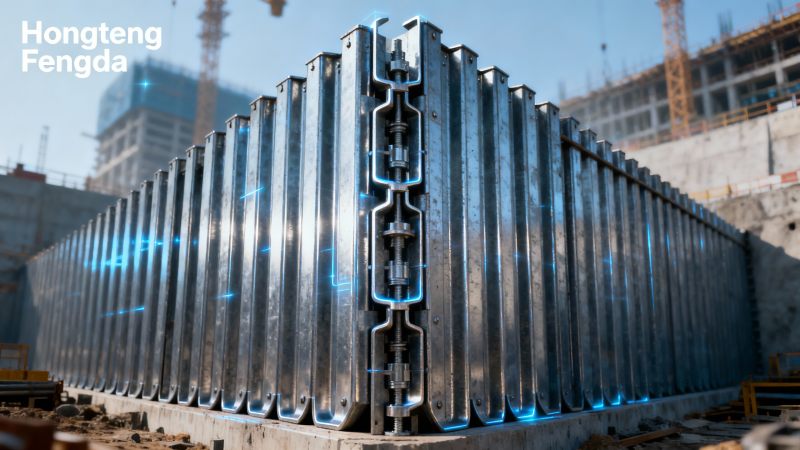
A steel pile for retaining walls functions as the primary structural support in the stabilization of soil and prevention of ground movement in deep excavations or waterfront structures. These piles are long, slender columns driven deep into the earth to resist lateral pressures and to ensure that the retaining wall can withstand the loads imposed by the surrounding terrain. Various configurations exist depending on engineering requirements, including U-shaped, Z-shaped, and H-shaped profiles. A representative product, Hot Rolled Steel Sheet Pile, demonstrates how carefully engineered shapes and interlocking mechanisms contribute to forming a continuous and watertight barrier ideal for retaining wall and water retaining wall applications. Manufactured from steel grades such as S275, S355, S390, and ASTM A690, these piles deliver significant strength-to-weight advantages and long-term corrosion resistance. The flexibility in design allows them to be freely combined, forming continuous and tight retaining systems that meet the specific structural demands of modern infrastructure. As global projects increase in scale and technical complexity, the precision and quality of steel pile production have become a key determinant in project success and lifecycle performance.
Market Overview: Global Demand and Industry Dynamics
The demand for steel pile for retaining walls has been expanding rapidly in response to rising investment in infrastructure across North America, Europe, the Middle East, and Southeast Asia. Urbanization, port upgrades, subway construction, and land reclamation projects all present opportunities for advanced retaining systems. Countries with coastal or flood-prone regions increasingly rely on steel pile solutions because of their adaptability and immediate load-bearing capability. As environmental regulations tighten, designers also appreciate the recyclability of carbon steel for aerospace-level integrity and the compatibility of steel rebar for precast concrete with green construction principles. From an economic standpoint, producers such as Hongteng Fengda strengthen competitiveness by integrating modern rolling equipment, computer-aided forming, and precision welding technologies. These capabilities ensure consistent production quality, compliance with ISO9001, ISO14001, ISO18001, and CE FPC certifications, and cost-effective supply chains. Market analysts predict that by 2030, steel sheet piles will capture a larger share of the retaining wall sector, especially where modular construction techniques rely on standardized Steel Channel for mezzanine floors or temporary wall systems adaptable for re-use. This changing landscape requires suppliers who can offer not just materials but strategic support, technical advice, and logistics optimization tailored for each project's engineering context.
Technical Performance and Material Advantages
From a technical standpoint, steel piles for retaining walls must meet rigorous performance criteria: high yield strength, superior bending resistance, corrosion durability, and manufacturability over extensive lengths. The Hot Rolled Steel Sheet Pile conforms to standards such as EN10248, JIS5528, and ASTM specifications while offering Larssen locks, hot rolled and cold rolled interlock types. Single lengths can exceed 80 meters, enabling efficient installation in large foundation works, quay walls, or excavation perimeters. Compared with concrete piles, steel piles minimize installation time and are easily extracted or recycled at project completion. The U Sheet Pile model provides interlocking precision and high driving accuracy, ensuring watertight joints and reliable deformation control. Material grades like SY295 and SY390 enhance toughness against dynamic loads such as those experienced in power plants or harbor structures. Engineers value these mechanical properties not only for strength but also for predictable performance under repeated environmental cycles. The production technologies used by Hongteng Fengda ensure tight dimensional tolerances and consistent thickness distribution, which contribute to uniform stress transfer throughout the retaining wall system. This reliability is critical in large infrastructure works where safety margins depend on material traceability and mill-level quality assurance.
Application Scenarios and Engineering Benefits
Steel piles for retaining walls are indispensable across a range of applications beyond traditional civil engineering. They reinforce excavation pits in high-rise building foundations, support embankments for highways and railway underpasses, and stabilize slopes in hydropower and bridge approaches. In the energy sector, steel bar for agricultural machinery frames and steel bar for power plants provide integrated material networks that complement retaining systems. For water management facilities, retaining walls formed from hot rolled sections act as flood barriers and erosion control structures, protecting both built and natural environments. Modular construction also utilizes Steel Channel for modular construction to assemble temporary retaining barriers quickly and cost-efficiently. The cold rolled steel sheet option specializes in lightweight auxiliary stabilization structures when site conditions restrict heavy machinery. Hongteng Fengda’s capacity to customize dimensions and deliver special profiles ensures seamless adaptation to project-specific layouts. For developers, such flexibility translates into reduced lead time, simplified logistics, and lower risk of on-site adjustments. Combined with professional engineering support, this approach aligns material supply with the exact performance and aesthetic targets defined by architects and structural designers. Each scenario emphasizes that retaining wall systems are not simply passive barriers but dynamic components of sustainable and resilient construction.
Procurement Guide and Cost Considerations
Selecting the optimal steel pile for retaining walls requires balancing technical performance with budgetary and operational requirements. Procurement officers should evaluate the following parameters before placing orders: steel grade, interlock type, corrosion protection method, and available length per unit. Given that the length of U Sheet Pile can be specially customized up to 80 meters, logistics planning becomes a crucial consideration in both domestic and international supply chains. Buyers should also review compliance documents such as inspection certificates or CE FPC declarations to ensure conformity with ASTM and EN standards. A key economic advantage of steel piles lies in their reusability; compared to concrete or timber alternatives, they can be dismantled and redeployed, significantly reducing lifecycle costs. For projects demanding high load capacities and minimal environmental impact, carbon steel for aerospace-grade consistency offers remarkable reliability over extended service periods. Through Hongteng Fengda’s integrated export channels, clients benefit from stable pricing models and predictable delivery schedules, minimizing sourcing risks. Cost comparisons further reveal that the use of standardized sections like Steel Channel for mezzanine floors can consolidate inventories and streamline procurement, enhancing overall budget efficiency. Comprehensive consultations with our technical team help determine whether hot rolled or cold rolled profiles best align with geotechnical and structural conditions.
Standards, Certification, and Quality Control
Every structural element produced by Hongteng Fengda undergoes stringent quality control to meet international specifications. Our steel pile for retaining walls is manufactured in accordance with EN10249 and JIS5523 norms, ensuring strength uniformity and durability. Key certifications include ISO9001 for quality management, ISO14001 for environmental management, and ISO18001 for occupational health and safety. In addition, our products meet CE FPC requirements for structural components used in the European construction market. These certifications assure buyers that all manufacturing processes, from raw material selection through final inspection, maintain full traceability and compliance. Dimensional tolerances are verified using automated measuring systems, while mechanical performance tests confirm yield and tensile strengths correspond to design expectations. Surface protection options such as galvanization, epoxy coating, and cathodic protection are available to prolong pile service life in marine or chemically aggressive soils. Quality assurance extends to welding procedure qualification, material identification, and document verification, all of which simplify subsequent certification or project audits. With these standardized practices, Hongteng Fengda delivers consistent, code-compliant solutions capable of integrating into infrastructure projects across different national regulatory systems, minimizing compatibility concerns for global partners.
Case Studies and Successful Practices
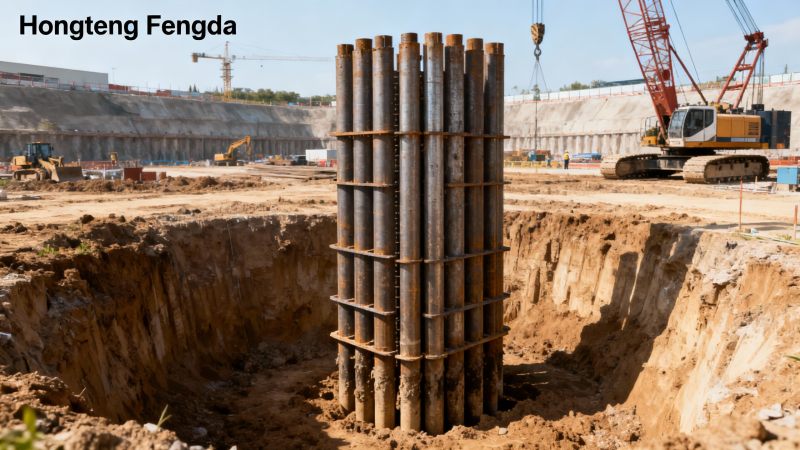
In Southeast Asia, Hongteng Fengda supplied over 3,000 tons of steel pile for retaining walls to a coastal port upgrading project. These piles, with a mix of S355 and ASTM A690 grades, provided excellent seawater corrosion resistance and reduced construction time by 18% compared with conventional sheet pile designs. Another notable application took place in the Middle East, where steel rebar for precast concrete and modular Steel Channel applications were integrated to create advanced flood defense structures. The system’s adjustable interlock ensured minimal leakage in water retaining sections while allowing for disassembly for future expansion. In a power infrastructure project in North America, our cold formed steel profiles combined with hot rolled piles improved soil stabilization around turbine foundations, achieving long-term durability through layered corrosion protection. Across these cases, common benefits emerged: enhanced project efficiency, improved structural reliability, and evidence of cost optimization through reduced installation cycles. Hongteng Fengda engineers contribute on-site technical assistance, guiding correct pile driving procedures, interlock alignment checks, and load testing. These real-world success stories not only validate product performance but also highlight how coordination between suppliers and contractors can ensure predictable results under complex geotechnical and environmental conditions.
Trends and Future Insights
The future of steel pile applications for retaining walls will revolve around smart manufacturing, digital monitoring, and eco-efficient material development. Automation in rolling and forming allows precise control over geometry, reducing waste and energy consumption. Predictive maintenance systems using embedded sensors can monitor strain and corrosion, offering real-time data for infrastructure management. At the material level, research into advanced coatings, hybrid composites, and recycled alloys will enhance performance while aligning with environmental goals. The inclusion of steel bar for agricultural machinery sectors and modular steel systems indicates integration between industries previously considered separate. Global infrastructure spending trends suggest steady growth, with public and private investment favoring materials providing both sustainability and structural security. Manufacturers from China, such as Hongteng Fengda, are uniquely positioned to meet this demand through ongoing innovation, high productivity, and adherence to major global standards. As customers prioritize lifecycle value over initial costs, innovations in steel pile design—ranging from lighter sections to improved interlock tightness—will redefine how retaining walls are planned and executed worldwide.
Why Choose Hongteng Fengda
Hongteng Fengda stands as a dependable structural steel manufacturer and exporter from China offering a full portfolio of high-performance materials for modern infrastructure. From angle steel, channel steel, and steel beams to customized structural steel components, we provide both standard and OEM solutions tailored to complex engineering requirements. Our flexible production lines and commitment to ASTM, EN, JIS, and GB compliance ensure consistent quality, while our export expertise simplifies coordination across continents. Whether procuring steel pile for retaining walls, Steel Channel for modular construction, or specialized carbon steel for aerospace applications, clients benefit from technical advisory, fast delivery, and sustainable sourcing. We uphold partnerships grounded in transparency, reliability, and long-term collaboration. To learn more or discuss your next infrastructure project, connect with our specialists and explore how Hongteng Fengda’s products—engineered for performance and precision—can strengthen your foundation for success.
- channel steel
- angle steel
- cold rolled steel
- hot rolled steel sheet
- Hot Rolled Steel
- structural steel
- steel beams
- steel profiles
- Structural Steel
- Steel Beams
- Profile
- Rebar
- Steel Sheet Pile
- Steel Beam
- Steel Channel
- carbon steel
- steel sheet
- steel rebar
- steel profile
- steel pile
- steel bar
- Steel Channel for mezzanine floors
- steel bar for agricultural machinery
- steel pile for retaining walls
- steel profile for greenhouse construction
- steel rebar for precast concrete
- cold rolled steel sheet
- carbon steel for aerospace
- Steel Channel for modular construction
- steel bar for power plants
- steel pile for offshore platforms
Related recommendations
 Structural Steel Benefits: Comparing Lifecycle Value in Commercial BuildingsStructural steel benefits for commercial buildings: compare lifecycle value, speed, adaptability, maintenance, and sourcing risks to make smarter investment decisions.
 Where Are Structural Steel Applications Most Effective in Industrial Facilities?Structural steel applications deliver clear spans, crane support, adaptable warehouses, and durable process platforms—discover where steel adds the most value in industrial facilities.
 Why SS Steel Plate Prices Vary by Grade, Origin, and Delivery Requirementss steel plate price varies by grade, origin, certification, dimensions, and delivery terms. Compare landed costs, compliance, and lead times to source with confidence.
 Budgeting for SS304 Sheet Price Changes in Long-Term Manufacturing ContractsLearn how to manage ss304 sheet price volatility in long-term manufacturing contracts with cost models, purchasing strategies, margin triggers, and practical risk controls.
Please give us a message


Please enter what you want to find