Steel beam factory price can vary widely depending on steel grade, size, processing, coating, and market demand. For buyers comparing Steel Beam options, I beam vs H beam differences, or checking how to calculate i beam weight, understanding these cost drivers is essential. This guide explains what affects pricing and how structural steel buyers can make smarter sourcing decisions.
What really changes steel beam factory price?
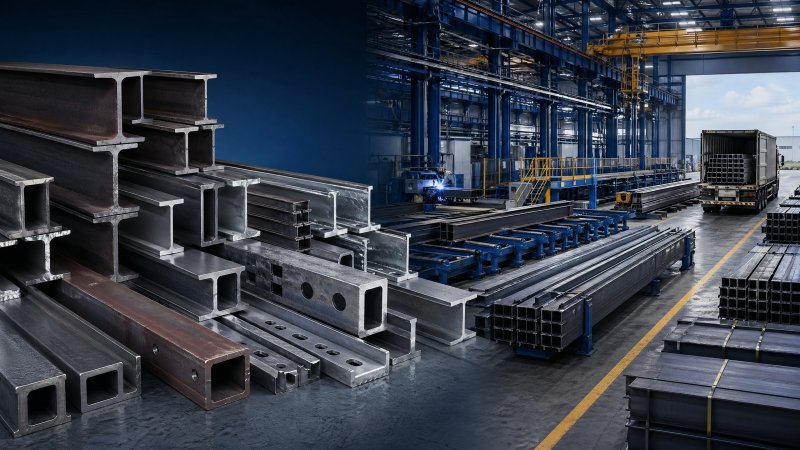
For most buyers, steel beam factory price is not determined by one factor. It is usually built from 4 core layers: raw material cost, beam specification, processing scope, and delivery conditions. In the steel industry, even a small change in grade or section size can shift the unit price per ton and the total project budget.
Raw material is the first variable. Carbon structural steel grades such as Q235B and Q345B are commonly used for structural beams, while stainless or duplex options serve corrosion-sensitive environments at a much higher cost level. When buyers compare quotations, they should first confirm whether prices are based on equivalent grades under ASTM, EN, JIS, or GB related standards.
Specification is the second major driver. A beam with greater section height, thicker web, wider flange, and longer length naturally uses more steel. Typical project lengths often fall in the 6–12 m range, and custom lengths may introduce extra rolling, cutting, or packaging cost. This is why price comparison without exact dimensions often leads to misleading conclusions.
Processing and coating also matter. Drilling, punching, beveling, welding preparation, hot-dip galvanizing, and custom marking each add cost. In export projects, lead time can range from 2–4 weeks for standard stock-like items to 4–8 weeks for customized production, depending on quantity, mill schedule, and inspection requirements.
The 5 cost inputs buyers should verify before asking for a quote
- Steel grade and standard equivalency, such as Q235B, Q345B, ASTM-related or EN-related requirements.
- Section type and exact dimensions, including web thickness, flange width, section height, and beam length.
- Surface condition, for example black steel, primer-coated, hot-dip galvanized, or project-specific anti-corrosion treatment.
- Processing details such as cutting tolerance, hole positions, welding preparation, bundling, and label traceability.
- Delivery and inspection terms, including quantity, Incoterms, destination port, third-party inspection, and packing method.
I beam vs H beam: which one affects your budget more?
Many procurement teams search for steel beam factory price without separating I beam and H beam requirements. This creates confusion because these two beam types differ in geometry, weight distribution, and application value. In many structural projects, the right choice is not the cheaper beam per ton, but the beam that reduces fabrication waste, installation difficulty, and lifecycle risk.
I beams usually have narrower flanges and are often selected where bending resistance is important but full heavy-duty flange capacity is not necessary. H beams generally have wider flanges and stronger structural balance, making them common in industrial buildings, large-span frames, columns, and heavy-load support systems. The cost difference depends on both rolling complexity and final steel consumption.
For project managers and technical evaluators, the smarter question is this: which section meets the load requirement with the least total installed cost? A lower initial purchase price can become a more expensive result if extra stiffeners, connectors, or fabrication hours are needed later. This is why design review and supplier consultation should happen before final budget approval.
The table below gives a practical comparison for sourcing discussions. It is not a substitute for structural design, but it helps buyers, distributors, and financial approvers understand why two beam quotes can differ even when both are called structural steel beams.
A good sourcing decision should therefore compare not only price per ton, but also 3 additional dimensions: structural suitability, fabrication complexity, and on-site installation efficiency. This wider view is especially useful for engineering contractors, distributors, and multinational procurement teams managing several project phases at once.
How to calculate beam weight and estimate price more accurately
If you want a realistic steel beam factory price, weight calculation must come first. In practice, buyers often estimate cost by multiplying unit weight per meter by total length, then converting the result into total tonnage. For standard sections, suppliers usually provide section weight tables. For custom fabrication, confirmed drawings are needed before final calculation.
A basic workflow includes 4 steps: confirm section type, verify dimensions, check theoretical weight per meter, and multiply by required length and quantity. After that, add processing charges, coating, packaging, inspection, and shipping terms. This method helps procurement and finance teams compare quotes on the same basis instead of comparing incomplete numbers.
Tolerance also affects budgeting. In structural steel supply, tolerances may involve thickness, section height, length, camber, and straightness. When a buyer requests tighter-than-standard tolerances, production efficiency can decrease and rejection risk can increase. That usually leads to a higher unit price, even if the steel grade itself remains unchanged.
For adjacent structural components, channel sections are often sourced together with beams. In purlins, wall beams, brackets, lightweight roof systems, and mechanical support assemblies, buyers may also evaluate Channel In Steel as part of the total steel package. Typical options include carbon structural steel and galvanized channel profiles with thickness from 1.5 mm to 25 mm, height from 80 mm to 160 mm, and length in the 6–12 m range.
Quick procurement checks for related structural sections
When beams and channels are purchased together, consistent standards and processing tolerances reduce installation mismatch. For example, channel products may follow AISI, ASTM, DIN, JIS, BS, or GB/T references, while material grade options can include Q195, Q235, Q345B, Duplex, and 201/202/304/316 according to application environment and corrosion exposure.
For quality control teams, practical checks usually focus on 5 points: dimensional tolerance, coating condition, weldability, marking traceability, and packing integrity. If anti-corrosion performance is critical, hot-dip galvanized or hot-blown galvanized finishes should be clearly specified before production scheduling.
This kind of structured estimate is useful for operators, engineers, and commercial teams because it converts a broad steel inquiry into measurable cost elements. It also helps distributors and agents consolidate several item categories into one clearer negotiation package.
What should buyers compare beyond the quoted price?
A low beam quote can still become an expensive purchase if the supplier cannot maintain consistency, documentation, or delivery control. In B2B structural steel buying, serious evaluation should cover at least 6 areas: grade compliance, dimensional consistency, production capacity, lead time reliability, export experience, and after-sales communication speed.
For procurement personnel and business evaluators, standards alignment is especially important. A beam supplied under one national system may still be acceptable if the mechanical and dimensional requirements match your project, but this must be confirmed in writing. ASTM, EN, JIS, and GB references are commonly discussed in cross-border structural steel projects, and mismatch here can delay approval by days or even weeks.
For project managers, lead time and delivery discipline often matter as much as factory price. A supplier with stable production planning can help prevent site delays, crane rescheduling, and installation interruption. In many export projects, documentation coordination, inspection release, and container loading are just as critical as rolling the steel itself.
For finance approvers, risk-adjusted value is the key concept. The right supplier is not simply the one with the lowest number on page one, but the one that reduces hidden cost across quality claims, rework, missed deadlines, and fragmented purchasing. That is where an experienced structural steel manufacturer and exporter can bring measurable savings.
A practical supplier assessment framework
- Confirm whether the supplier can provide standard steel beams, channel steel, angle steel, cold formed steel profiles, and OEM structural components under one sourcing plan.
- Check whether the factory supports international standards commonly requested in global construction and industrial projects.
- Ask how quality control is handled across raw material verification, dimensional inspection, surface review, and pre-shipment checks.
- Review whether export experience covers regions such as North America, Europe, the Middle East, and Southeast Asia, where documentation and compliance expectations often differ.
Why this matters in real purchasing cycles
Hongteng Fengda works as a structural steel manufacturer and exporter from China, supplying standard and customized products for construction, industrial, and manufacturing use. For buyers, this means one source can support multi-item coordination, quality control discipline, and scheduling stability instead of splitting the same project across several less aligned vendors.
That supply model is particularly helpful when a project includes beams, channels, profiles, and fabricated structural parts with different specifications but one delivery target. Fewer handoff points usually mean lower sourcing risk, smoother communication, and better cost control over the full 3-stage path of inquiry, production, and shipment.
Common mistakes, compliance questions, and FAQ for steel beam sourcing
Even experienced buyers can make avoidable mistakes when comparing steel beam factory price. The most common issue is comparing offers that are not technically equal. A quote for a base beam section without galvanizing, machining, or inspection cannot be fairly compared with a quote that includes all three. Clear scope definition is the starting point of accurate purchasing.
Another frequent mistake is treating standard compliance as a simple label. In fact, a project may require not only a named standard, but also mill documentation, dimensional tolerances, marking rules, or third-party review. Quality teams and safety managers should therefore request the document set early, not after production is finished.
Below are several frequently asked questions that often appear during technical review, purchasing approval, and distributor negotiations. They help narrow the gap between an initial search and a workable sourcing decision.
How should I compare steel beam quotations from different factories?
Compare 5 matched items: grade, section size, length, processing scope, and delivery term. Then check whether coating, testing, packing, and inspection are included. If one supplier quotes EXW and another quotes FOB or CFR, the apparent price gap may have little meaning until the same trade basis is applied.
How long is a typical delivery cycle for structural steel beams?
For common specifications, a typical cycle may be around 2–4 weeks depending on quantity and stock availability. For custom beams with fabrication, galvanizing, or strict inspection procedures, lead time can move into the 4–8 week range. Final timing should always be tied to confirmed drawings and quantity breakdown.
What compliance points should quality and safety teams focus on?
Focus on material grade confirmation, dimensional tolerance, surface condition, traceability markings, and documentation completeness. If the project involves adjacent structural products, related certifications and standards such as ISO, CE, SGS, BV, BIS, UL, or NEMA may also be discussed depending on product category and destination market, but the exact requirement should follow the project scope.
Is the cheapest beam always the best purchasing option?
Usually no. The lowest unit price can lead to higher total cost if the product requires rework, arrives late, lacks documentation, or does not match the approved standard. Procurement teams should review total installed cost, not only factory price, especially in multi-country or deadline-sensitive projects.
Why work with a structural steel manufacturer that supports global sourcing?
When you are buying beams for construction, industrial production, or manufacturing projects, the best result usually comes from a supplier that can combine cost control with specification clarity and dependable execution. That means stable production capacity, consistent quality control, and practical support for both standard products and OEM structural steel components.
Hongteng Fengda supports global buyers with structural steel products including angle steel, channel steel, steel beams, and cold formed steel profiles. This broad product coverage helps reduce split sourcing, especially when one project needs several section types under one schedule. It also supports distributors and agents who want a more integrated product line for their local market.
If you are reviewing steel beam factory price, comparing I beam vs H beam, planning custom dimensions, or checking how to calculate i beam weight for budgeting, a detailed inquiry will save time on both sides. Useful information includes grade, standard, dimensions, quantity, surface treatment, destination port, and any required documents or inspection points.
Contact us to discuss 6 practical items: parameter confirmation, product selection, delivery cycle, custom processing, certification requirements, and sample or quotation support. With clearer technical input at the beginning, your team can reduce sourcing risk, control cost more effectively, and move the project forward with fewer revisions.
Please give us a message


Please enter what you want to find