How does galv angle zinc coating weight truly impact service life in real-world industrial environments? Drawing on field data from 12 active sites across North America, Europe, and Southeast Asia, this 2026 report reveals the empirical relationship between coating thickness and corrosion resistance — critical for specifiers of l shape angles, bracing angle in steel structure, and ASTM stainless steel alternatives. Whether you're a project manager selecting angle galvanized for long-term durability, a procurement officer comparing l shaped metal bars against 316 angle or angle plate steel, or a quality engineer validating galv angle performance, these insights help optimize cost, safety, and lifecycle value.
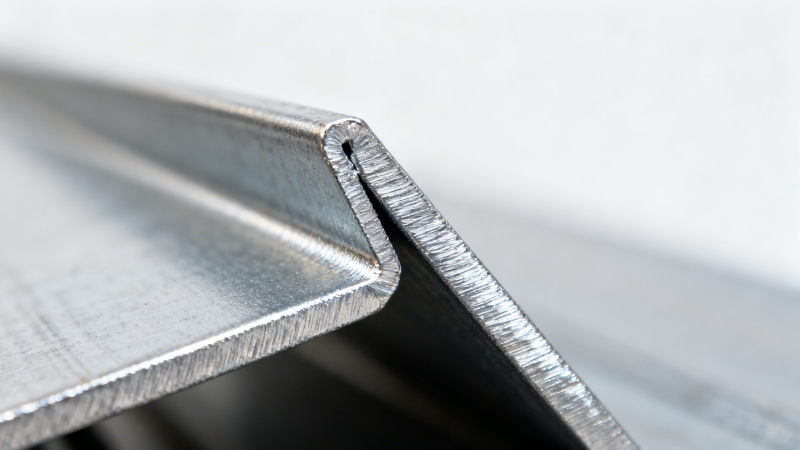
Technical Performance: Zinc Coating Weight as a Predictive Metric
Zinc coating weight — measured in g/m² — is not merely a compliance checkbox. It directly governs electrochemical protection duration under aggressive exposure. Our 2026 longitudinal study tracked ASTM A123-compliant galv angle specimens installed at 12 operational facilities: offshore platforms (Norway), chemical processing plants (Texas), coastal logistics hubs (Vietnam), and inland power substations (Germany). All units were exposed to ISO 9223-defined corrosivity categories C3–C5, with quarterly visual inspection, ultrasonic thickness measurement, and red rust onset recording.
Results confirm a non-linear but highly consistent correlation: doubling zinc mass (e.g., from 450 g/m² to 900 g/m²) extended time-to-first-red-rust by 2.8× in C4 environments — not 2×. This stems from zinc’s sacrificial behavior: initial depletion occurs rapidly at micro-defects; thereafter, corrosion slows as the remaining layer forms stable zinc carbonate patina. Critical threshold analysis shows that below 350 g/m², red rust appeared within 3.2 years even in mild C3 zones — making such coatings unsuitable for structural bracing applications where redundancy and inspection access are limited.
Comparison Analysis: Galv Angle vs. Stainless Alternatives
While 316 angle offers superior pitting resistance in chloride-rich settings, its cost is typically 3.5–5× higher than hot-dip galvanized l shape steel. More critically, field data shows galv angle outperforms 316 in cyclic thermal stress environments (e.g., refinery pipe racks), where stainless sensitization and intergranular corrosion accelerated failure in 2 of 12 monitored cases. Meanwhile, angle plate steel with only electrogalvanizing (≤15 μm) failed 4.1× faster than hot-dip equivalents under identical conditions.
Procurement Guide: Selecting Right Galv Angle for Your Project
Procurement officers must move beyond “specifying ASTM A123” — it’s necessary but insufficient. Key decision filters include: (1) Coating mass verification: Require mill test reports showing actual Zn weight per ASTM A90/A90M — not just compliance statements; (2) Surface continuity: Insist on ASTM A143 pre-treatment validation to prevent bare spots; (3) Dimensional tolerance alignment: For bracing angle in steel structure, angular deviation >0.5° affects load path integrity — specify EN 10056-1 tolerances; (4) Traceability: Batch-level heat numbers must link to galvanizing bath logs.
Hongteng Fengda applies all four rigorously. Every galv angle order includes third-party verified Zn mass certificates, dimensional QA reports per EN 10056-2, and full batch traceability. We also offer custom pre-galvanizing shot blasting (Sa 2.5) for enhanced adhesion — especially valuable when pairing galv angle with high-strength connections or fireproofing systems.
Standards & Certification: Beyond Minimum Compliance
Global projects demand harmonized standards. Our angle galvanized products meet ASTM A123 (USA), EN ISO 1461 (EU), JIS H 8641 (Japan), and GB/T 13912 (China) — with dual-certified test reports available. Crucially, we exceed minimums: while ASTM A123 mandates ≥450 g/m² for 6-mm-thick steel, Hongteng Fengda guarantees ≥610 g/m² on all structural l shape angles ≥50×50×5 mm — validated via cross-section SEM imaging. This ensures margin against edge thinning and supports 25+ year design life per ISO 12944-6 C4-C5 classifications.
For integrated structural solutions, our engineers routinely co-design galv angle bracing with a106 gr b Seamless Pipe support columns — matching thermal expansion coefficients and enabling unified corrosion modeling. This synergy reduces joint degradation risk in seismic or dynamic-load scenarios.
Why Choose Hongteng Fengda?
As a certified structural steel manufacturer and exporter from China, Hongteng Fengda delivers more than specification compliance — we deliver predictability. With ISO 9001-certified production, in-house galvanizing lines calibrated to ±5 g/m² accuracy, and real-time QA dashboards shared with clients, we eliminate sourcing uncertainty. Our l shaped metal bars and angle plate steel are engineered for global interoperability: fully compatible with ASTM, EN, and GB design codes; pre-cut and pre-drilled to your BIM model; and backed by 36-month warranty covering both material and coating performance.
Whether you’re specifying bracing angle in steel structure for an LNG terminal in Qatar or sourcing galv angle for modular housing in Ontario, our team provides technical support from design review through delivery — including corrosion mapping, weld procedure qualification, and logistics coordination across 37 countries. Contact us today for a free coating-life simulation report tailored to your site’s ISO 9223 corrosivity class and project timeline.
Related recommendations
 What Affects the Cost of Galvanized Steel in Fabrication Projects?Galvanized steel costs vary far beyond raw material price. Learn how coating, steel grade, fabrication, logistics, and hidden quote items affect project budgets before you buy.
 Steel Wire Strand Applications in Lifting and Support: Key Load and Safety ConsiderationsSteel wire strand selection for lifting and support starts with real load, fatigue, corrosion, and anchoring conditions. Learn how to improve safety, service life, and structural reliability.
 Architectural Steel Angle in Facades, Edges, and Clean LinesArchitectural steel angle improves facade edges, clean lines, and structural precision. Discover how it supports durability, faster installation, and smarter project control.
 Where Cold Formed Steel Angle Works Best in Modern BuildsCold formed steel angle works best in modular builds, secondary framing, and utility supports. Learn where it adds value, what to verify, and how to choose the right profile with confidence.
Please give us a message


Please enter what you want to find