Choosing the wrong steel rebar supplier can trigger delays, quality disputes, and rising steel rebar cost across construction projects. For buyers comparing a steel rebar manufacturer, h beam manufacturer, or steel plate for construction source, early supplier mistakes often lead to hidden risks in compliance, delivery, and budget control. Understanding these risks is the first step to safer, more efficient steel sourcing.
Why does the wrong steel rebar supplier create risks so early?
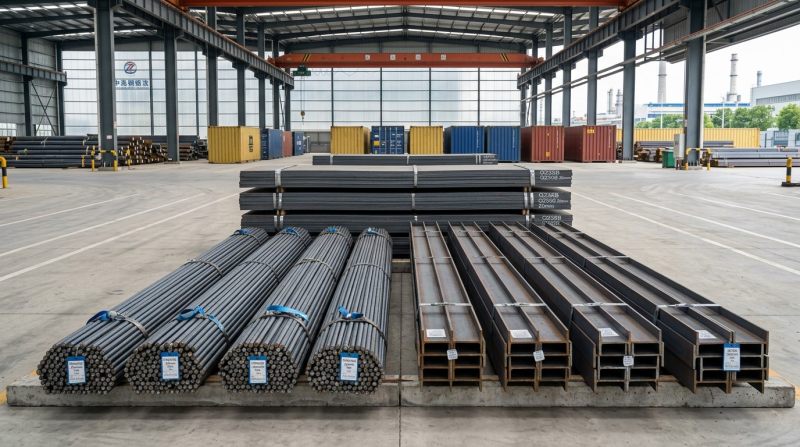
In steel procurement, supplier risk rarely starts at the moment of shipment. It usually begins during quotation, specification review, and document confirmation. A supplier may offer an attractive base price, but if grade interpretation, mill source, dimensional tolerance, or coating requirements are not aligned in the first 3 stages, the project can absorb avoidable cost within 2–4 weeks.
For procurement teams, project managers, and technical evaluators, the real problem is not only whether rebar arrives. The bigger issue is whether it arrives with the right chemistry, mechanical properties, traceability, and packaging for site handling. A wrong supplier can affect installation schedules, inspection acceptance, and downstream steel fabrication at the same time.
This is especially important when buyers source from overseas. Global construction and industrial projects often require reference to ASTM, EN, JIS, or GB. If the supplier cannot explain how its material maps to the required standard, buyers face a higher risk of retesting, rejection, or engineering clarification that delays site work by 7–15 days or more.
Hongteng Fengda supports buyers who need more than a simple product list. As a structural steel manufacturer and exporter from China, the company supplies angle steel, channel steel, steel beams, cold formed steel profiles, and customized structural steel components with practical attention to quality consistency, lead time control, and specification matching for international projects.
Typical early warning signs before the first purchase order
- The quotation is fast, but the supplier does not confirm grade, standard, tolerance, or test certificate format in writing.
- Lead time sounds short, but no production window, rolling schedule, or packing method is clearly stated.
- The material price is lower than market expectation, yet logistics terms, inspection scope, and claim procedure remain vague.
- The supplier sells many steel products, but cannot explain how rebar sourcing affects related beams, plates, or fabricated sections in one project package.
What supply risks usually follow a poor steel rebar supplier decision?
When a steel rebar supplier is selected mainly on headline price, 5 major risks typically appear: non-compliance, unstable quality, delivery slippage, cost escalation, and claim complexity. These risks do not stay isolated. In most projects, one issue triggers another. A quality deviation can lead to site hold, re-inspection, replacement freight, and schedule compression for follow-on trades.
For example, even small dimensional inconsistency or poor bundling may slow unloading and installation. If the mechanical property or surface condition does not meet the project requirement, quality control staff may request segregation, extra testing, or full batch review. That can turn a low-cost order into a budget problem within a single delivery cycle.
The table below helps buyers compare common supply risks by source of failure. It is useful for procurement, QA teams, and business decision-makers who need a practical view before confirming a steel rebar manufacturer or a broader structural steel partner.
The key lesson is simple: steel rebar cost is not only the invoice unit price. Buyers should compare at least 4 layers of cost—material, compliance, logistics, and delay exposure. In many cases, the supplier with the second-lowest quotation becomes the better commercial choice because the execution risk is lower and the documentation is stronger.
How these risks spread across different roles
Operators and site users feel the effect through handling difficulty, unclear bundle marking, and work interruptions. Technical teams face document review pressure. Procurement teams must negotiate claims. Decision-makers then face the final budget consequence. This is why supplier selection should involve at least 3 functions: purchasing, quality, and engineering.
Distributors and agents face another layer of exposure. If they resell imported steel into local markets, any inconsistency in standard references, batch traceability, or dimensions can damage customer trust quickly. For them, a reliable steel rebar manufacturer is not just a source of inventory, but a source of repeatable commercial credibility.
How should buyers evaluate a steel supplier before risk becomes cost?
A practical evaluation system should cover 6 checkpoints before order release: specification accuracy, production capability, quality control, certification support, packing and logistics, and claim response process. Buyers who verify these points early reduce uncertainty across both standard sections and customized steel components.
For structural projects, supplier capability often matters beyond rebar alone. A project may require coordinated procurement of channel steel, steel beams, angle steel, cold formed profiles, and steel plate for construction. If one supplier can support a broader package with stable manufacturing and export handling, coordination becomes easier and lead-time risk usually drops.
In the middle of many industrial or construction projects, buyers also need complementary metal mesh or corrosion-resistant screening materials for filtration, chemical processing, architecture, or plant equipment protection. In such cases, it helps to work with a partner familiar with specification-driven products like Stainless Steel Welded Mesh, available in grades such as SS 201, 304, 304L, 316, 316L, and 430, with mesh ranges from 2–635 mesh and wire diameter from 0.0008″–0.12″.
That kind of product knowledge matters because it reflects a supplier’s ability to communicate parameters clearly. For mesh products, buyers often compare roll width up to 240″, roll length up to 2000′, micron retention ranges, cloth thickness, and corrosion resistance. The same discipline of parameter control is exactly what serious buyers want to see when reviewing structural steel and rebar supply.
A 6-point pre-order supplier review
- Confirm standards and grades line by line, including equivalents, tolerances, and any project-specific notes.
- Review production scope, including whether the supplier manufactures directly or depends on multiple mills.
- Check quality documents such as MTC format, inspection records, and traceability by heat or batch.
- Verify export handling details including bundle marking, packing protection, and container loading method.
- Ask for realistic lead times by order size, for example stock-based, small batch, and project batch.
- Clarify the non-conformance and claim process before shipment, not after arrival.
What a useful evaluation table looks like
The following table gives a simple but effective review format. It supports procurement comparison across multiple suppliers and is especially useful when the project includes rebar, beams, channels, and other structural steel products in one sourcing decision.
A supplier that answers these questions clearly is usually easier to work with throughout the order cycle. Hongteng Fengda’s advantage lies in combining manufacturing, quality control, and export support for global buyers who need dependable communication across standard and customized structural steel requirements.
Which standards, quality controls, and documents matter most?
In international steel trade, the correct document set often determines whether material moves smoothly from factory to project acceptance. Buyers should not rely on verbal promises. They should request a defined documentation package that matches the project scope and receiving procedure before production starts.
For most structural steel and rebar sourcing, 4 document groups matter: product specification, production traceability, inspection evidence, and shipment records. If any one of these is missing, quality teams may need additional review, and the importer may carry higher claim exposure after unloading.
Because Hongteng Fengda serves buyers across North America, Europe, the Middle East, and Southeast Asia, standard alignment is a practical part of project support. Products are manufactured with reference to major international standards including ASTM, EN, JIS, and GB, which helps buyers reduce confusion when comparing regional specification systems.
Still, buyers must remember that “standard compliance” is not a generic phrase. It should be tied to the exact item, grade, dimensional range, tolerance, and testing scope. A careful supplier will confirm these details before mass production, especially for OEM solutions and custom structural components.
A practical compliance checklist
- Product standard and grade reference, with no ambiguity between local and international equivalents.
- Dimensional tolerance and length range, especially where cut-to-length or fabricated sections are involved.
- Mill test certificate availability linked to batch, heat, or production lot.
- Packing list, marking method, and shipment documents aligned with receiving inspection.
- If required by the project, pre-shipment inspection scope and sampling method agreed in advance.
Why quality control should be checked before payment terms
Many buyers negotiate payment first and technical control later. That sequence creates risk. A better order is to lock the specification, inspection, and packaging details first, then finalize commercial terms. Doing so reduces disputes in the final 1–2 weeks before shipment, when schedule pressure is usually highest.
Quality assurance teams should also ask whether inspection is performed only at final packing or at multiple stages. For formed sections and customized structural components, in-process checks can be as important as final visual review because correction becomes harder after fabrication is completed.
How can buyers control steel rebar cost without creating bigger project losses?
Cost control in steel sourcing is not the same as choosing the lowest offer. A disciplined buyer reviews total acquisition cost over at least 5 elements: base material price, manufacturing scope, testing or inspection needs, freight and packing, and delay-related exposure. This is the difference between apparent savings and real savings.
A supplier with stable production capacity often helps reduce hidden cost even when the initial quotation is not the lowest. Consistent quality lowers the chance of rework. Dependable lead times reduce site standby loss. Better packaging cuts receiving damage. These are practical cost advantages that decision-makers should measure, especially on multi-batch projects.
For large or recurring projects, buyers should ask for a phased supply plan rather than one broad promise. A 3-stage supply arrangement—sample or first batch confirmation, mid-volume supply, and final balance delivery—can improve cash flow planning and reduce exposure if design changes appear during execution.
Hongteng Fengda works well for this model because the company combines standard specification supply with OEM-oriented flexibility. For buyers managing construction, industrial, and manufacturing projects, that means fewer supplier handoffs and a more predictable sourcing path from quotation to shipment.
Common pricing mistakes that increase total cost
- Comparing only ex-works price while ignoring packing quality, inland transport, and export handling.
- Accepting broad lead-time claims without weekly production visibility for urgent batches.
- Skipping pre-shipment review to save a small fee, then facing larger non-conformance costs later.
- Using too many small suppliers for one project package, which increases communication and claim complexity.
Frequently asked questions before choosing a steel rebar manufacturer
The questions below reflect common search intent from procurement teams, engineers, distributors, and project owners. They also help clarify what should be discussed before issuing an inquiry or comparing formal quotations.
How do I compare one steel rebar supplier with another fairly?
Use the same checklist for both suppliers: standard and grade, dimensional tolerance, documentation, packing, lead time, and claim process. Compare not just unit price but full delivered scope. A fair comparison usually includes at least 6 items and should be documented in one side-by-side review sheet.
What lead time should I expect for structural steel export orders?
Lead time depends on product type, quantity, and processing depth. For common structural steel products, buyers often see typical planning windows of 2–6 weeks for production, plus shipping time based on destination. Custom fabrication, special packaging, or mixed-item project orders may require additional coordination.
What is the biggest mistake when buying steel plate for construction or rebar overseas?
The biggest mistake is assuming that a low quotation means equal value. Many problems come from unclear specification mapping, incomplete documentation, or unrealistic shipment promises. Buyers should always verify the technical and export details before confirming commercial terms.
Why does a supplier’s broader structural steel capability matter?
Because many projects do not buy rebar alone. They also need beams, channels, angle steel, cold formed profiles, or custom components. A supplier with a wider manufacturing range can reduce coordination time, improve consistency across documents, and support bundled delivery planning for 2 or more steel categories.
Why choose us for lower-risk structural steel sourcing?
Hongteng Fengda is positioned for buyers who need a practical balance of quality, reliability, and export execution. The company manufactures and exports structural steel products from China, with capability across angle steel, channel steel, steel beams, cold formed steel profiles, and customized structural steel components for global projects.
For procurement teams and engineering evaluators, the main value is not a broad catalog alone. It is the ability to align product scope, production capacity, quality control, and delivery planning under one supply relationship. That helps reduce sourcing risk, control cost, and keep project schedules more stable across repeated orders or multi-item requirements.
If you are comparing a steel rebar manufacturer, an h beam manufacturer, or a supplier for steel plate for construction, you can contact us to discuss 6 practical topics: parameter confirmation, standard matching, product selection, delivery cycle, customized solution needs, and sample or quotation arrangements. This makes early supplier evaluation more efficient and reduces back-and-forth during formal purchasing.
Share your required grades, dimensions, quantities, destination port, and document expectations, and we can help review the sourcing path before you commit. For many buyers, the safest way to reduce supply risk is to clarify the technical, commercial, and delivery details at the beginning rather than manage avoidable problems after shipment.
Please give us a message


Please enter what you want to find