Technical Foundations of Steel Profile Selection for Stadium Construction
Selecting the right steel profile for stadium construction requires a deep understanding of structural performance, material standards, and cost efficiency. From steel channel for shelving systems to carbon steel for chemical plants and steel rebar for infrastructure projects, each material serves a distinct engineering purpose. As a trusted structural steel manufacturer and exporter, Hongteng Fengda provides high‑quality steel profile for stadium construction, steel sheet for roofing, and steel pile for riverbank protection—supporting builders and project managers in creating durable, safe, and sustainable large‑scale facilities.
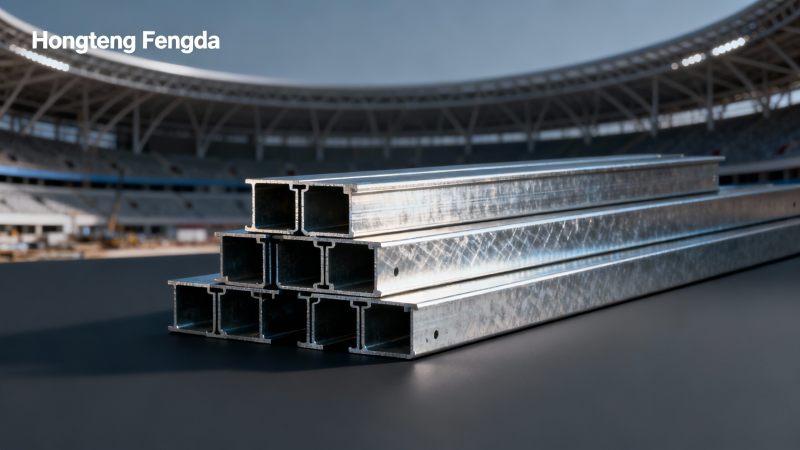
When it comes to choosing the optimal steel profile for a stadium, engineers must evaluate multiple performance factors including load-bearing capacity, fatigue resistance under dynamic crowds, aesthetic integration, and compliance with global standards such as ASTM, EN, and JIS. Hongteng Fengda, as a professional structural steel supplier, integrates these standards into every production stage to ensure consistency and strength. From the main truss systems that span large roofs to complex cantilevered seating structures, the choice of profile determines not only performance but also long-term durability under various environmental stresses, including corrosion resistance and vibration impact. Stadium projects also require tailored steel options such as steel channel for mezzanine flooring and steel rebar for highway construction when parking zones or complementary urban infrastructures are part of the design.
Understanding Key Steel Profile Types and Their Applications
Different components of a stadium demand corresponding steel profiles. For instance, hollow structural sections (HSS) and steel beams are often chosen for main frames due to their superior strength-to-weight ratio and aesthetic flexibility. Angle steel and channel steel facilitate fast assembly and modular connections for internal platforms, catwalks, and service areas. Hongteng Fengda’s series of carbon steel and cold-formed steel profiles meets both mechanical and architectural specifications, offering precision and uniformity across thousands of tons of supply.
Among these materials, carbon steel for heavy machinery and petrochemical plants features reliable toughness and machinability, which makes it also suitable for critical stadium load paths. Structural specialists rely on standardized products like steel bar for transmission towers and steel sheet for roofing to coordinate between utility areas and external cladding. The quality of welding surfaces and the precision of dimensional tolerances have direct effects on construction efficiency. That’s why selecting profiles produced under controlled facilities with stringent testing, such as tensile strength verification and ultrasonic flaw detection, is vital for modern stadiums with complex roof architecture. Manufacturers like Hongteng Fengda continuously upgrade technologies to match the evolving requirements of large-scale projects around the world.
Critical Technical Considerations: Load, Durability, and Compliance
Every steel profile used in a stadium’s framework must balance between load capacity and structural economy. Engineers must account for permanent loads such as seating, roof equipment, and façade weights, as well as transient loads such as wind, crowd movement, and seismic impacts. The steel profile for stadium construction typically adheres to strength grades such as Q355, S355, or ASTM A572. These grades deliver the necessary yield strength and plasticity for flexible yet safe performance under varying conditions. A major benefit of precision‑rolled channels and beams is that they can be prefabricated and assembled on-site quickly, minimizing lead time and construction risk.
Corrosion protection remains another core factor. Stadium projects exposed to coastal or humid climates frequently apply galvanizing or epoxy coating processes. Hongteng Fengda provides tailored surface treatments compatible with carbon steel for chemical plants and carbon steel for heavy machinery, ensuring long-term structural integrity. Meanwhile, rigorous compliance with ASTM and EN standards ensures the safety and service life of the project. Every stadium project allotted under Hongteng Fengda’s supply chain undergoes standardized inspection reports and mechanical testing approvals to maintain consistency for international collaboration teams.
Integrating Reinforcement Solutions and Product Adaptability
Beyond the main truss and columns, reinforcement materials like high‑strength bars are crucial for concrete sections of the stadium. Products such as Rebar conforming to models GB1499.2 HRB400, HRB500, and ASTM A615 Grade 60 ensure high yield strength and ductility. With carbon content between 0.06% and 0.22%, this carbon steel structural bar provides excellent formability and weldability in complex casting scenarios. Typically, stadium foundations and seating tiers use rebar lengths between 1–12 meters depending on design, offering flexible assembly for both precast and on‑site casting modules. Certified under ASTM, GB, EN, DIN, and JIS, these bars have shown proven performance in auto manufacturing, shipbuilding, and building material sectors as well, affirming their versatility for stadium concrete bases.
By utilizing such standardized reinforcement systems in combination with structural profiles like steel channel for shelving systems or steel pile for riverbank protection for foundation support, builders can maintain both stability and cost efficiency. Hongteng Fengda’s controlled rolling processes also secure uniform diameter and rib design, which enhances bonding between steel and concrete. In a world where project lead time and resource optimization matter most, the capability to provide comprehensive materials under one manufacturer significantly supports project managers and quality control personnel, reducing coordination complexity across suppliers.
Market Dynamics and Future Trends in Structural Steel for Stadiums
The global stadium construction market continues to evolve toward sustainability and modular design. Engineers increasingly specify lightweight yet high-strength steel profiles, while project owners focus on lifecycle cost reduction. Demand for recycled carbon steel for heavy machinery applications and sustainable steel sheet for roofing grows as environmental compliance becomes stricter. Advanced simulation tools enable designers to model structural behaviors of steel profile for stadium construction long before production begins, reducing waste and improving precision. This trend aligns with Hongteng Fengda’s commitment to digitalized manufacturing and green production methods.
Additionally, innovations such as weathering steel, corrosion‑resistant coatings, and smart monitoring systems are changing maintenance cycles. Projects in regions with high rainfall or chemical exposure benefit greatly from carbon steel for chemical plants due to its weldability and mechanical endurance. Similarly, steel bar for transmission towers and steel channel for mezzanine flooring are modified for multi‑industry interchangeability, enhancing supply chain flexibility. By integrating these technological trends into product design and logistics systems, Hongteng Fengda supports architects, project managers, and procurement specialists in fulfilling complex engineering requirements with predictable scheduling and minimized environmental risks.
Case Insights: Applying Optimized Steel Profiles in Global Sports Venues
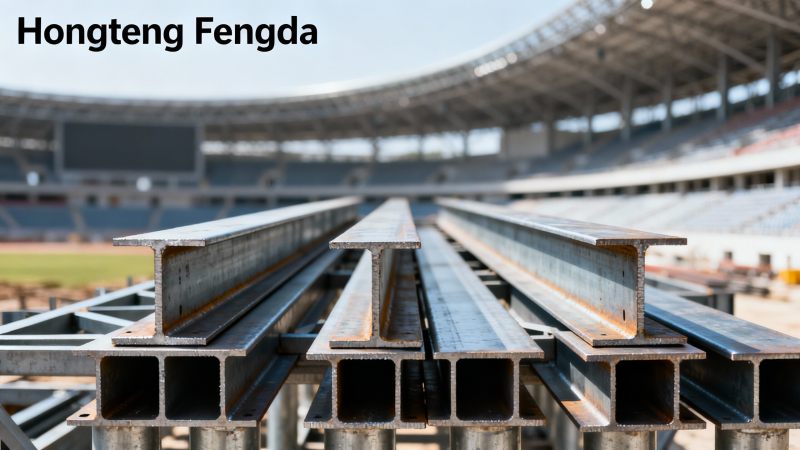
In real-world projects, selecting suitable steel profiles influences both construction efficiency and spectator experience. For example, when designing a modern stadium in Southeast Asia, engineers opted for a welded space frame utilizing a combination of cold‑formed steel channels and high‑tensile beams. This choice provided lightweight stiffness while supporting wide roof spans under tropical conditions. In another case study in the Middle East, steel pile for riverbank protection was applied as foundational support to stabilize nearby infrastructure and parking areas adjacent to the sports complex, improving both longevity and safety.
Hongteng Fengda contributed by customizing structural sections compliant with ASTM and EN standards, manufactured through precision CNC equipment. The result was a reduction in fabrication time by 20% and a material utilization rate exceeding 95%. With extensive experience in supplying steel rebar for infrastructure projects and custom channel beams for mezzanine flooring systems, Hongteng Fengda exemplifies how collaborative engineering design and manufacturing expertise can bring complex sports facilities to life efficiently and economically. The company’s seamless export experience also enables clients in North America and Europe to maintain stable project schedules regardless of geographic differences.
Conclusion and Partnership Opportunities
Choosing the optimal steel profile for stadium construction demands technical precision, material knowledge, and reliable supply chain management. Whether the requirement is for structural trusses, façade systems, or underground supports, the correct combination of carbon steel, angle sections, and reinforcement bars ensures the stadium’s strength and visual excellence. Hongteng Fengda’s international production network supplies comprehensive solutions covering steel sheet for roofing, steel pile for riverbank protection, steel channel for shelving systems, and customized sections, verified through rigorous quality control and international certification. By collaborating with Hongteng Fengda, project managers and decision‑makers gain access to a partner capable of balancing performance and cost efficiency across global construction ventures.
From precision‑rolled beams to quality‑tested reinforcement like Rebar, every product reflects decades of metallurgical expertise and customer‑oriented service. For architects and procurement teams aiming to develop next‑generation sports facilities, it is crucial to partner with a manufacturer who not only understands steel technology but also delivers consistent reliability and global logistics support. Contact Hongteng Fengda today to explore customized steel profile solutions that meet international standards and advance the vision of modern stadium engineering.
- channel steel
- channel beam
- angle steel
- ASTM A572
- steel supplier
- structural steel
- steel beams
- steel profiles
- Structural Steel
- Steel Beams
- Profile
- Rebar
- Steel Beam
- Steel Channel
- carbon steel
- steel sheet
- steel rebar
- steel profile
- steel pile
- steel bar
- steel rebar for infrastructure projects
- carbon steel for heavy machinery
- Steel Channel for mezzanine flooring
- steel bar for transmission towers
- steel pile for riverbank protection
- steel profile for stadium construction
- steel rebar for highway construction
- steel sheet for roofing
- carbon steel for chemical plants
- Steel Channel for shelving systems
Related recommendations
 What Affects the Cost of Galvanized Steel in Fabrication Projects?Galvanized steel costs vary far beyond raw material price. Learn how coating, steel grade, fabrication, logistics, and hidden quote items affect project budgets before you buy.
 Steel Wire Strand Applications in Lifting and Support: Key Load and Safety ConsiderationsSteel wire strand selection for lifting and support starts with real load, fatigue, corrosion, and anchoring conditions. Learn how to improve safety, service life, and structural reliability.
 Architectural Steel Angle in Facades, Edges, and Clean LinesArchitectural steel angle improves facade edges, clean lines, and structural precision. Discover how it supports durability, faster installation, and smarter project control.
 Where Cold Formed Steel Angle Works Best in Modern BuildsCold formed steel angle works best in modular builds, secondary framing, and utility supports. Learn where it adds value, what to verify, and how to choose the right profile with confidence.
Please give us a message


Please enter what you want to find