Choosing the right Angle Steel supplier in UAE can directly affect project cost, delivery speed, and supply reliability. For procurement evaluators, the real question is not simply whether to buy locally or import. It is whether local stock can truly match the required grade, quantity, documentation, and timeline, or whether importing from a qualified Chinese manufacturer will deliver better total value. In many cases, local stock works best for urgent and standard needs, while import sourcing becomes more competitive for larger volumes, custom specifications, and stricter cost control.
For business evaluators, the decision should be based on total procurement outcome rather than unit price alone. That means comparing stock availability, technical compliance, lead time stability, logistics risk, cash flow impact, and after-sales coordination. This article breaks down both sourcing routes to help buyers in the UAE make a practical and commercially sound decision.
What procurement evaluators really need to know before choosing an Angle Steel supplier in UAE
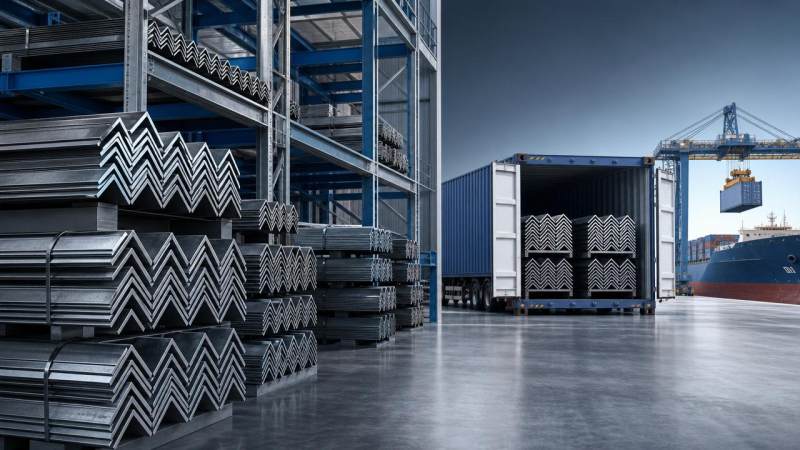
When buyers search for an Angle Steel supplier in UAE, their intent is usually highly commercial. They are not looking for a basic product definition. They want to know which sourcing route is more reliable for their project, which option reduces hidden cost, and how to avoid delays or specification mismatches.
For procurement teams, the key concerns are usually straightforward. Can the supplier provide the exact section size and steel grade? Is the material available now or only theoretically available? Are test certificates and standards traceable? Can the supplier support repeat orders if project demand changes? And most importantly, will the chosen route protect the project schedule instead of creating risk?
This is why the local-versus-import question matters. A local trader may offer speed and convenience, but available stock may be limited to standard dimensions and common grades. An overseas mill or exporter may offer broader customization and better ex-factory pricing, but lead time, shipping planning, and coordination become more important. The better choice depends on the project profile, not on a generic preference for local or imported steel.
When local UAE stock is the better option
Local sourcing is usually the strongest choice when speed is more important than optimization. If the project requires immediate delivery, small-to-medium quantities, or replacement material for an active site, buying from local stock can reduce procurement cycle time significantly. It avoids ocean freight planning, customs uncertainty, and long production windows.
This route is especially practical for standard equal angle or unequal angle sections that are widely traded in the regional market. If the material requirement is common, local warehouses may already hold stock from multiple origins. That can help procurement teams compare available options quickly and issue purchase orders with shorter internal approval cycles.
Another benefit is operational simplicity. Buyers can often inspect available stock more easily, arrange partial deliveries, and communicate in the same time zone. For urgent maintenance, fit-out work, or fast-moving subcontract packages, this convenience can outweigh any price premium.
However, local buying only works well when the stock actually matches project needs. Procurement evaluators should verify whether the warehouse inventory is physical stock, not future arrival stock. They should also confirm section dimensions, thickness tolerance, steel grade, surface condition, and certification before committing. In some cases, “available” material may still require substitution approval, which can create hidden delays.
When importing angle steel from China offers better value
Import sourcing becomes more attractive when the order volume is larger, the technical requirement is more specific, or cost competitiveness matters across the full project package. A qualified Chinese structural steel manufacturer can often provide better pricing, wider grade options, and more flexible production support than a stock-based local channel.
For buyers handling major construction, industrial fabrication, or long-cycle infrastructure projects, importing can improve sourcing strategy in three ways. First, it gives access to mill production rather than only available warehouse inventory. Second, it allows better control over dimensions, lengths, grades, and finishing requirements. Third, it reduces dependence on regional stock fluctuations that can affect both price and availability.
China-based manufacturers with export experience can also support compliance with international standards such as ASTM, EN, JIS, and GB. That matters when project documentation, consultant approval, or end-user specification is strict. For evaluators comparing sources, this is often where import sourcing starts to outperform local trading channels: not only lower base cost, but stronger specification alignment.
That said, importing is not automatically the better route. It only works well when the supplier has stable production capacity, clear quality control, reliable export documentation, and realistic lead-time management. Procurement teams should evaluate manufacturing strength, past export markets, packaging standards, and communication discipline before making the decision.
Local stock vs import route: compare the total cost, not only the steel price
One of the most common evaluation mistakes is comparing only the quoted price per ton. A local quote may look higher, but it can reduce schedule risk and internal handling time. An import quote may look lower, but total landed cost must include freight, customs clearance, inland delivery, insurance, and potential buffer stock.
The most useful comparison model is total delivered cost against project requirement. This should include material price, transport cost, lead-time value, financing impact, inspection cost, and the possible cost of delay. If local supply shortens the delivery cycle by several weeks, that may justify a higher unit rate for urgent packages. If import sourcing saves substantially on a large order and the schedule allows for planning, then import may create better overall value.
Evaluators should also factor in quantity efficiency. Import procurement often becomes more economical as tonnage increases, especially when container or bulk loading can be optimized. On small urgent orders, local stock usually remains more practical. On larger planned orders, direct sourcing from a manufacturer can improve budget control and reduce cost volatility over multiple deliveries.
Another point is specification-related waste. If local stock does not match the desired size or length, the buyer may accept substitutions that increase cutting loss or fabrication inefficiency. A mill-based supply program can reduce this waste by producing material closer to actual project demand.
How to judge supply reliability beyond the quotation
Reliable sourcing is not only about who can send a quote fastest. It is about who can deliver consistently under project conditions. Procurement evaluators should review four areas: production or stock reality, quality consistency, documentation control, and responsiveness during exceptions.
For local suppliers, check whether they hold actual stock in the UAE, what turnover rate they have on key angle sizes, and whether they can support repeat releases. For imported supply, verify whether the company is a real manufacturer or only a trading intermediary, and whether production slots are controlled internally.
Quality consistency should be supported by test certificates, dimensional control, and traceability. The more the project depends on consultant review or downstream fabrication, the more important documentation becomes. Mill test certificates, packing lists, heat numbers, inspection records, and standard references should be available in a usable format, not only promised verbally.
Responsiveness also matters. Delays rarely come from one dramatic problem. They usually come from poor follow-up: unclear drawings, undocumented substitutions, slow shipping confirmation, or weak coordination after order placement. A supplier that communicates clearly before the order is more likely to support the project properly after the order is issued.
What types of projects fit each route best
Local UAE stock is usually a good fit for urgent construction needs, maintenance jobs, temporary works, and smaller orders where delivery speed matters more than optimization. It is also suitable when the specification is standard and approval risk is low. If a buyer needs common angle sections for immediate fabrication, local stock can be the shortest path to execution.
Import sourcing is often better for planned developments, industrial facilities, steel structure packages, OEM fabrication, and projects with recurring volume demand. When the buyer needs repeated supply, non-standard dimensions, tighter cost management, or a broader structural steel package beyond angle steel alone, working with an experienced manufacturer can bring stronger procurement leverage.
In many real situations, the best solution is hybrid sourcing. Buyers may use local stock for emergency quantities and import for the main volume. This reduces project interruption while keeping long-term cost under control. For procurement evaluators, this blended model is often more practical than treating local and import routes as mutually exclusive choices.
Why broader structural steel capability can improve angle steel sourcing decisions
Procurement teams do not always buy angle steel in isolation. Many projects require coordinated sourcing of channels, beams, cold formed profiles, and custom steel components. In that context, selecting a supplier with wider structural steel capability can reduce communication complexity and improve package consistency.
For example, some projects that use angle steel in framing or support systems also require purlins, wall members, or lightweight roof structures. In such cases, integrating related profiles into one sourcing discussion may improve both technical coordination and commercial efficiency. A relevant example is Z-beam, a Z-shaped steel profile widely used in steel structure construction purlins, wall beams, lightweight roofs, brackets, mechanical columns, and light manufacturing beams.
This type of profile can be supplied in materials such as Q235B, Q345B, Q420C, Q460C, SS400, S235, S355, A36, and A572, with thickness from 6-25mm, length from 2 to 12 meters or customized, and tolerance around ±1%. Options may include perforated, galvanized coated, mill edge, and slit edge finishes, with certifications such as CE, SGS, BV, and ISO. For buyers evaluating a broader steel package, access to such complementary products may reduce sourcing fragmentation and support better project planning.
Questions every buyer should ask before making the final decision
Before selecting any Angle Steel supplier in UAE, evaluators should ask a few direct questions. Is the required material physically available or made to order? Which standards and grades can be documented? What is the realistic delivery timeline from order confirmation to site arrival? What are the substitution rules if stock changes? And who will handle problems if the documentation or dimensions do not match?
For import routes, buyers should also ask about production lead time, export packing, inspection options, shipping terms, and document turnaround. Requesting a clear delivery schedule with milestones is often more useful than simply asking for the “fastest” lead time. The goal is not an optimistic promise. The goal is a supply plan the project team can actually trust.
It is also wise to compare suppliers on risk transparency. Strong suppliers explain limitations early. Weak suppliers often say yes to everything and leave the buyer to manage the consequences later. In steel procurement, honest scope definition is usually a better predictor of performance than aggressive pricing alone.
Final decision guide for procurement evaluators
If your requirement is urgent, standard, and limited in volume, local stock in the UAE is often the most practical choice. It reduces waiting time and simplifies coordination. If your requirement is larger, more technical, cost-sensitive, or part of a broader structural steel package, importing from a qualified Chinese manufacturer may deliver stronger overall value.
The best decision is not based on whether local or imported steel sounds better in theory. It depends on how well the source matches your project’s timeline, specification, quantity, and risk tolerance. For procurement evaluators, the smartest approach is to assess total delivered value, verify actual supply capability, and choose the route that protects both budget and schedule.
In short, a dependable Angle Steel supplier in UAE is not only a seller with available material. It is a sourcing partner whose supply model fits your project reality. When buyers compare local stock and import routes with that mindset, they make better decisions and reduce procurement risk from the start.
Please give us a message


Please enter what you want to find