Mild Steel Plate is often chosen for its affordability, but rising demands for strength, corrosion resistance, processing, and compliance with steel standards can quickly change the cost equation. For buyers comparing steel sheet metal, corrosion resistant steel, or related structural options, understanding when mild steel stops being the low-cost choice is essential to controlling project budgets, performance, and long-term value.
Why does mild steel plate lose its low-cost advantage in real projects?
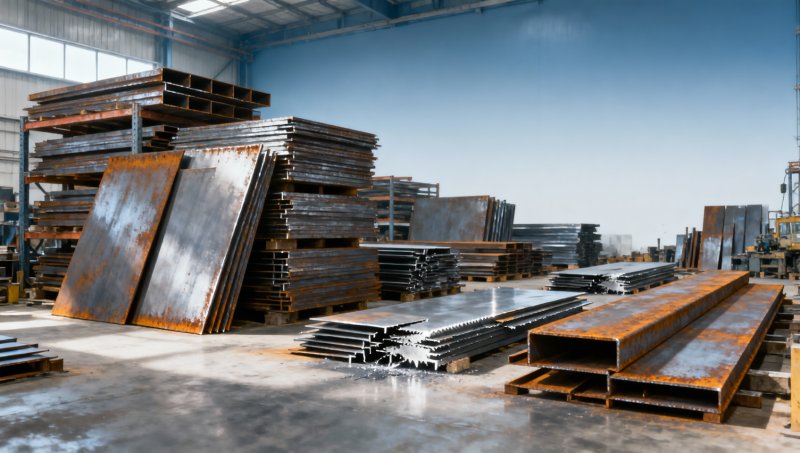
At the quotation stage, mild steel plate often appears to be the most economical choice because the base material price is usually lower than stainless steel, alloy steel, or specialized corrosion resistant steel. However, purchasing teams, technical evaluators, and project managers rarely buy steel on base price alone. In most steel projects, the total cost includes material grade, cutting, welding, surface treatment, compliance checks, transport, installation efficiency, service life, and replacement risk over 1–3 project phases.
This is where the real cost equation changes. If a plate needs repeated painting, tighter dimensional control, more welding hours, or earlier replacement due to corrosion, the initial savings can disappear quickly. For some outdoor, marine-adjacent, petrochemical, or high-humidity environments, the cost gap can shift within a single procurement cycle of 2–6 months, especially when maintenance shutdowns are expensive.
For operators and maintenance teams, low upfront price does not help if the plate causes frequent inspection, coating damage, or deformation under load. For finance approvers, the key issue is not whether mild steel plate is cheap today, but whether it remains the lowest total-cost solution over 12–36 months. For distributors and resellers, the risk is even greater because one unsuitable recommendation can affect repeat business and after-sales credibility.
In structural steel sourcing, the lowest invoice value and the lowest ownership cost are often two different things. A practical decision requires comparing at least 4 dimensions: raw material cost, fabrication cost, compliance cost, and lifecycle cost. Once two or more of these increase, mild steel plate may stop being the low-cost option.
The most common cost triggers buyers overlook
- Surface protection requirements add extra cost through galvanizing, priming, epoxy coating, or periodic repainting.
- Higher strength demands may require thicker plate, which increases weight, freight, and installation time.
- International compliance under ASTM, EN, JIS, or GB may require traceability documents, test certificates, and tighter QC procedures.
- Complex fabrication such as laser cutting, drilling, bending, and welding can make low-grade material less economical than a better-fit alternative.
Which cost factors matter more than the price per ton?
Procurement decisions in the steel industry are increasingly driven by total project efficiency rather than only spot pricing. A buyer comparing mild steel plate with coated steel sheet, weather-resistant material, or higher-grade structural products needs to evaluate where cost accumulates. In many tenders, price per ton is only 1 line item inside a broader decision involving lead time, process loss, inspection frequency, and long-term maintenance exposure.
For example, a lower-cost plate may require 2 additional process steps before installation, such as blasting and coating. It may also require more frequent field touch-up every 6–12 months in aggressive environments. That means labor, downtime, and site coordination costs rise. For large-volume projects, even a small difference in scrap rate, coating area, or weld preparation can significantly influence the final budget.
The table below helps buyers compare mild steel plate cost drivers with more durable alternatives using practical project criteria rather than only material price.
The key message is simple: if protection, maintenance, or compliance adds 2–3 extra cost layers, mild steel plate may no longer be the cheapest option in practical terms. This is especially relevant for international buyers balancing shipment cost, local labor rates, and project risk.
At Hongteng Fengda, this is why steel selection discussions should start with application conditions, fabrication route, and standards first. As a structural steel manufacturer and exporter from China, we support global construction and industrial buyers with standard and OEM structural steel solutions under ASTM, EN, JIS, and GB frameworks, helping reduce sourcing mistakes before production begins.
A 5-point ownership cost checklist
- Estimate coating and surface preparation cost over 12–24 months.
- Check whether higher strength can reduce thickness or total tonnage.
- Review required documents such as MTC, inspection records, and grade traceability.
- Calculate freight impact if larger plate thickness increases shipment weight.
- Assess replacement and shutdown risk if corrosion or wear is likely.
In which applications does mild steel plate stop being cost-effective?
Mild steel plate remains a practical solution for many indoor, dry, moderate-load, and cost-sensitive applications. However, once service conditions become more demanding, the apparent savings can fade. This often happens in structural supports exposed to weather, equipment bases near chemicals, heavy-use industrial platforms, transport frames, and fabrication projects where corrosion control and service life matter as much as purchase price.
In construction and industrial manufacturing, one common turning point is the environment. Another is the amount of post-processing. If the plate needs repeated cutting, bending, welding, and coating, then the total fabrication burden may outweigh the advantage of buying a lower-cost material. A project manager typically sees this in the form of delayed installation, extra coordination, or increased rework during the first 2–4 weeks of fabrication.
The same logic applies when plate is compared with other structural steel products. In reinforced concrete and structural frameworks, buyers may source plate together with bars, beams, channels, and custom sections. In such mixed procurement packages, the best value often comes from selecting each steel product according to its actual structural role instead of forcing mild steel plate into every position.
For reinforced applications, buyers evaluating complementary products may also consider Rebar when the design calls for concrete reinforcement rather than plate-based load distribution. Available grades such as GB1499.2 HRB400, HRB500, ASTM A615 Grade 60, BS4449 460B, 500B, 500C, and AS/NZS 4671 500N cover a broad range of project standards. As a carbon steel bar with good formability and weldability, it is commonly supplied in round shape and lengths of 1–12 m or as customer request, with reference compliance across ASTM, GB, EN, DIN, and JIS systems.
Application signals that suggest a different steel choice
The table below shows when mild steel plate still works well and when project conditions often justify a different material or structural solution.
This comparison matters because buyers often lose money not by choosing a poor steel product, but by choosing a good product for the wrong function. Matching steel type to structural duty is one of the fastest ways to control both initial cost and downstream risk.
Typical industries where the decision changes fast
- Shipbuilding and coastal infrastructure, where corrosion protection can become a recurring expense within 6–12 months.
- Petrochemical plants, where shutdown costs may be far higher than the original plate price difference.
- Wind-engine and power-related structures, where weight, fatigue, and compliance pressure can shift selection priorities.
- Auto manufacturing and metallurgical machinery, where process precision and fabrication repeatability influence total cost.
How should buyers evaluate standards, processing, and supply risk?
A steel sourcing decision is rarely just a metallurgy question. It is also a supply chain question. Technical teams need material suitability. Procurement teams need stable lead time. Quality control teams need documentation. Finance teams need cost visibility. If mild steel plate requires more corrective actions, more supplier coordination, or more on-site adaptation, then the apparent savings may be lost before the material enters service.
Standards are a good example. When a project requires ASTM, EN, JIS, or GB compliance, the buyer is not only buying steel plate. The buyer is also buying consistency in chemistry, mechanical properties, dimensional tolerance, inspection procedures, and paperwork. For export projects, 3 document layers are often reviewed: grade conformity, mill test certificate records, and shipment identification. Missing any of these can delay customs clearance or site approval.
Processing is another hidden factor. General mild steel is valued because it is easy to cut, weld, and form. But if the project also needs close tolerance, repeated fabrication, CNC cutting, hole positioning, cold forming, or assembly integration with beams, channels, and custom profiles, then supplier capability matters as much as the steel grade itself. Poor processing control can create scrap, mismatch, or assembly delay within a single batch.
This is where working with an experienced structural steel manufacturer becomes valuable. Hongteng Fengda supplies angle steel, channel steel, steel beams, cold formed steel profiles, and customized structural steel components for global buyers. With modern manufacturing facilities and strict quality control, we help customers compare not only material options, but also manufacturability, standard matching, and dependable delivery windows.
A practical procurement review framework
- Confirm 4 basic inputs before RFQ: environment, load condition, fabrication route, and target standard.
- Check 5 quality items: grade, size tolerance, surface condition, traceability, and document consistency.
- Review 3 delivery issues: production slot, inspection timing, and shipment packaging.
- Compare 2 cost models: purchase-only cost versus total installed and maintained cost.
What technical and commercial teams should align on
Technical evaluators should define where mild steel plate is structurally acceptable and where stronger or more corrosion-resistant alternatives are preferable. Procurement should then request quotations in comparable conditions, including processing scope, coating assumptions, and delivery terms. Without this alignment, two quotations can look different in price but not actually cover the same project needs.
For international buyers in North America, Europe, the Middle East, and Southeast Asia, consistent lead time is another decision factor. In many projects, a stable 2–4 week production schedule with complete documentation is more valuable than a lower price paired with uncertain release timing. The cost of missing a project milestone often exceeds the savings from selecting the lowest initial steel offer.
FAQ: how to decide whether mild steel plate is still the right buy?
How do I know if mild steel plate is still the lowest-cost option?
Start with a total-cost review over at least 12–24 months. Include plate price, fabrication, coating, maintenance, inspection, and replacement risk. If the project has outdoor exposure, chemical contact, high humidity, or difficult access for maintenance, the lowest initial material cost may not remain the lowest total project cost.
Which projects are most likely to outgrow mild steel plate?
Projects in coastal, petrochemical, heavy industrial, and high-compliance environments are the most likely to outgrow standard mild steel plate. This also happens when the design requires thinner yet stronger sections, reduced structural weight, or lower maintenance frequency over multi-year operation.
Does good weldability always mean lower overall cost?
Not always. Good weldability helps reduce fabrication difficulty, but overall cost also depends on thickness, joint preparation, coating repair after welding, and dimensional consistency. A material that is easy to weld may still become expensive if it needs extra protection or replacement in service.
What should purchasers ask suppliers before placing an order?
Ask for grade options, applicable standards, processing capability, document availability, packaging method, and realistic lead time. It is also useful to confirm whether the supplier can provide related structural steel products in the same project package, because combined sourcing often improves consistency and coordination.
Why work with a structural steel supplier that understands total project value?
When mild steel plate is evaluated only by price per ton, buyers can miss the bigger picture. The better approach is to match steel grade and product form to the real application, then align material choice with fabrication needs, compliance expectations, and delivery planning. This reduces change orders, maintenance surprises, and sourcing risk.
Hongteng Fengda supports this process as a professional structural steel manufacturer and exporter from China. We provide angle steel, channel steel, steel beams, cold formed steel profiles, and customized structural steel components for global construction, industrial, and manufacturing projects. Our team can help you review standard specifications, OEM requirements, and practical alternatives based on use condition rather than price alone.
If you are comparing mild steel plate with other steel solutions, contact us for application-based support. We can discuss 6 key areas: material grade confirmation, product selection, processing scope, delivery cycle, documentation requirements, and quotation structure. This is especially useful for buyers who need to balance technical performance, project timing, and budget approval in one decision.
You can send your drawings, target standard, size range, estimated tonnage, and destination market. We will help you evaluate whether mild steel plate is still the right economical choice, or whether another structural steel option will deliver better long-term value for your project.
Please give us a message


Please enter what you want to find