When comparing l shaped structural steel and flat bar in support work, project managers need more than a simple material preference—they need a solution that balances load performance, fabrication efficiency, and cost control. This guide explains the key differences, practical applications, and selection factors to help engineering teams choose the right steel profile for safer, more efficient project execution.
In steel support systems, the decision is rarely about shape alone. It affects deflection control, welding time, bolt layout, corrosion exposure, procurement lead time, and installation labor across 1 project phase or an entire multi-site program.
For project managers handling industrial buildings, equipment bases, secondary framing, platform reinforcement, or temporary supports, understanding where l shaped structural steel performs better than flat bar can reduce rework, improve stability, and support more predictable budgeting.
Understanding the structural difference in support work
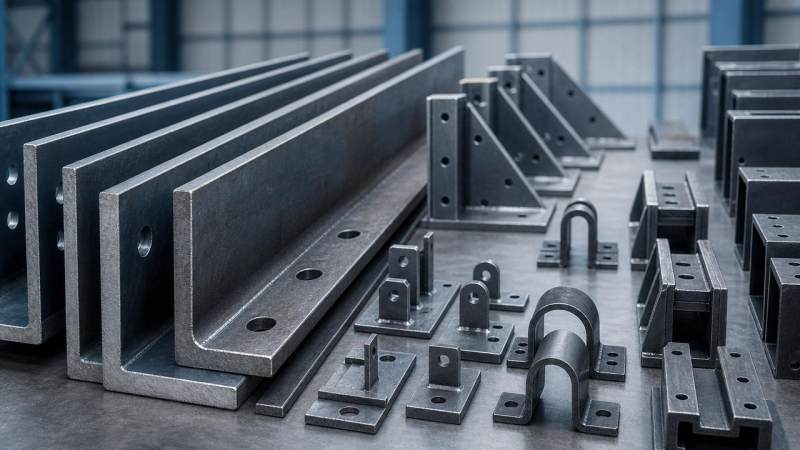
At the most basic level, l shaped structural steel is an angle profile with 2 legs set at 90 degrees, while flat bar is a rectangular strip with a single flat section. That geometric difference creates major changes in stiffness, connection behavior, and load response.
In support work, angle steel often provides better resistance to bending and local instability than a flat bar of similar thickness. Flat bar remains useful, but it is usually selected for bracing straps, cleats, simple connectors, edge reinforcement, and non-primary support members.
Why profile geometry matters
A 2-leg section spreads material away from the neutral axis more effectively than a single flat strip. In practical terms, that means l shaped structural steel can deliver stronger support behavior in light-to-medium framing applications without increasing thickness as aggressively.
For many fabricated assemblies, this allows project teams to use a 5 mm to 10 mm angle section instead of upgrading a flat bar to 12 mm or more just to meet rigidity targets. That difference can influence not only weight, but also drilling speed and weld volume.
Typical support tasks for each steel type
Before selecting a profile, engineering and procurement teams should align the member with the actual support function. The table below compares common use cases in day-to-day steel construction and fabrication planning.
The key conclusion is simple: flat bar works best when the load path is direct and primarily in tension or simple plate action, while angle steel is usually stronger for support conditions involving eccentricity, seat-bearing, or multi-directional fixing.
Common misconception in project planning
A frequent mistake is assuming equal thickness means equal performance. A 75 x 8 mm flat bar and a 75 x 75 x 8 mm angle do not behave the same under bending, torsion, or bracket loading. Section shape changes the performance far more than many buyers initially expect.
Load performance, fabrication efficiency, and cost implications
For project managers, the right comparison is not only steel price per ton. It should include total installed cost across 4 checkpoints: section efficiency, fabrication hours, connection complexity, and on-site adjustment risk. This is where l shaped structural steel often gains an advantage.
Load and stiffness considerations
In support work, serviceability can be as important as strength. Excess deflection of only 3 mm to 5 mm may create alignment issues in machinery supports, facade subframes, or platform edges. Angle sections generally perform better where a support member must carry vertical and lateral effects together.
Flat bar is more likely to twist if its restraint is limited or if the connection loads are offset from the member centerline. In temporary works, maintenance access frames, and bracket supports, that can add hidden risk during installation.
Fabrication and assembly differences
A major reason buyers choose l shaped structural steel is fabrication simplicity. The profile already provides a 90-degree geometry, reducing the need to build the same shape from 2 separate flat plates. That can cut fit-up steps, reduce weld length, and shorten workshop processing by 1 to 2 operations per part.
Flat bar still has advantages in cutting, slotting, and laser processing, especially for simple connection plates produced in high quantities. If a project requires 500 identical tabs or straps, flat bar can be faster to process and easier to stack, bundle, and galvanize.
Installed cost comparison
The following comparison helps decision-makers evaluate where cost is created or saved during procurement and construction rather than focusing only on the raw section rate.
In many B2B projects, the lower fabricated cost comes from using the profile that reduces secondary processing, not the one with the lowest unit price. This is especially true when labor rates, inspection hold points, and schedule pressure are high.
Where sheet pile support systems enter the discussion
Not all support work is solved by angle steel or flat bar alone. In retaining structures, excavation support, and water barrier applications, a profile with interlocking behavior may be the more appropriate choice than either open angle or flat strip members.
For example, Hot Rolled Steel Sheet Pile is designed for retaining wall and water retaining wall use, where sections must combine into a continuous barrier. Available in U Sheet Pile configuration, it can be produced to EN10248, EN10249, JIS5528, JIS5523, and ASTM standards, with material options such as S275, S355, S390, S430, SY295, SY390, and ASTM A690.
This type of product supports Larssen locks, cold rolled interlock, and hot rolled interlock systems, with single lengths extending to over 80 m when required. For project teams managing marine, underground, or hydraulic works, it offers a very different support strategy: a continuous and tight wall rather than a discrete bracket or secondary member.
Its rich model range, customizable dimensions, and certifications including ISO9001, ISO14001, ISO18001, and CE FPC can simplify specification matching for infrastructure packages that demand both structural integrity and controlled construction cost.
How project managers should choose between the two profiles
A practical selection process should move through 5 steps: define the support function, confirm the load path, check connection details, compare fabrication effort, and review supply lead time. This method is more reliable than choosing by habit or past project preference.
Step 1: Define whether the member is carrying load or only linking parts
If the steel element acts as a real support seat, bracket arm, frame edge, or corner stiffener, l shaped structural steel is often the stronger starting point. If the part mainly serves as a strap, tab, packing strip, or flat connector, flat bar is usually enough.
Step 2: Check eccentric loading and connection faces
Supports rarely receive perfectly concentric load. A pump base, cable tray support, or platform toe member may see offset loading, vibration, or side forces. If the detail requires 2 fixing faces or a right-angle seat, angle steel reduces complexity immediately.
Step 3: Compare fabrication route and site conditions
Ask 4 questions before finalizing material: How many cuts are required? How many weld passes are needed? Is galvanizing part of the scope? Will installers have enough room for alignment and bolting? These factors can shift the preferred profile even when design loads are modest.
Quick decision checklist
- Choose angle steel when the support must hold load on 2 planes or create a stable 90-degree seat.
- Choose flat bar when the component is flat, repetitive, tension-based, or used as a simple plate element.
- Review thickness tolerance, hole position tolerance, and straightness if assembly fit is critical.
- For export projects, align grade and standard early, such as ASTM, EN, JIS, or GB equivalents.
Step 4: Match the profile to procurement and delivery realities
For many international buyers, the best section is the one that can be produced consistently within a 2 to 6 week manufacturing window and delivered with complete MTC, dimensional control, and surface treatment coordination. A good supplier should support both standard sections and OEM fabrication details.
Hongteng Fengda, as a structural steel manufacturer and exporter from China, supports global construction and industrial buyers with angle steel, channel steel, steel beams, cold formed profiles, and customized structural steel components. For project managers, that matters because mixed-profile packages often reduce sourcing fragmentation and schedule risk.
Risk control, standards, and practical procurement advice
The wrong profile choice does not always fail immediately. More often, it creates 3 avoidable problems: fabrication delay, fit-up correction on site, and performance margin loss. That is why support steel procurement should be reviewed as both a technical and supply-chain decision.
Key checks before placing an order
Before issuing a PO, project teams should verify section dimensions, steel grade, surface condition, tolerance requirements, coating scope, and document package. Even a small mismatch in leg size, bar thickness, or hole location can delay assembly by several days on a tight site sequence.
The table below outlines practical control points that reduce commercial and technical risk in support steel orders.
A disciplined pre-order review can prevent expensive corrective work later. For repeated industrial projects, even a 1% to 3% reduction in rework can justify more detailed front-end coordination between design, procurement, and fabrication teams.
Common selection mistakes to avoid
One mistake is overusing flat bar because it appears simpler. In many support details, that simplicity disappears once additional welding, gussets, or stiffeners are added. Another mistake is using angle steel in purely flat tension details where flat bar would be lighter and easier to process.
A third issue is failing to account for export packaging, batching, and mixed-standard procurement. On cross-border orders, it is worth confirming from day 1 whether the steel will follow ASTM, EN, JIS, or GB references, especially when replacement parts may be required later.
Best-fit guidance for project teams
If your support work involves brackets, edge framing, corner reinforcement, or two-plane connections, l shaped structural steel is usually the more reliable and fabrication-friendly choice. If the scope centers on tabs, straps, splice plates, or planar reinforcement, flat bar often remains the efficient option.
The right result comes from matching profile behavior to actual site conditions, not from treating steel sections as interchangeable. For project managers under cost and schedule pressure, that distinction can improve both installation quality and delivery control.
Choosing between l shaped structural steel and flat bar in support work is ultimately a decision about function, fabrication route, and project risk. Teams that compare geometry, connection demands, processing steps, and supply requirements early are more likely to achieve stable performance and fewer installation issues.
Hongteng Fengda supports global buyers with structural steel products, customized processing, and standards-based manufacturing for construction and industrial applications. If you need help selecting the right profile, refining support details, or sourcing a mixed steel package, contact us now to get a customized solution and discuss product specifics for your project.
Please give us a message


Please enter what you want to find