Choosing the right L-Shaped Steel for framing directly affects load performance, installation efficiency, and long-term durability. For operators and project users, understanding size, thickness, material grade, and standard compliance is essential to avoid costly mistakes. This guide highlights practical selection tips to help you match framing needs with reliable structural steel solutions.
How to Understand L-Shaped Steel in Framing Work
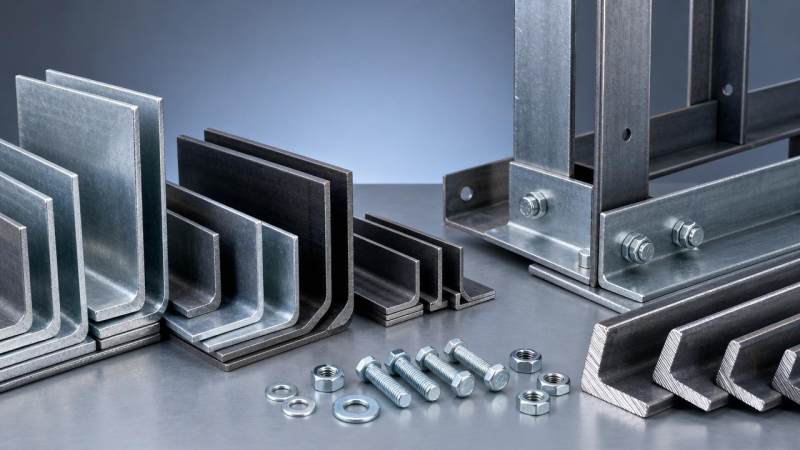
L-Shaped Steel, often called angle steel, is widely used in framing because it combines simple geometry with reliable structural support. Operators prefer it for brackets, edge reinforcement, frames, racks, equipment bases, and light-to-medium structural connections.
In practical use, the value of L-Shaped Steel is not only its strength. It also affects cutting speed, welding convenience, bolt alignment, transport efficiency, and on-site handling. A poor selection can lead to distortion, connection mismatch, or unnecessary weight.
For users in construction, manufacturing, and industrial installation, the right framing material should match both design load and operating conditions. That means looking beyond nominal size and checking grade, tolerance, finish, and applicable standards.
- Use equal or unequal angle sections based on load direction and connection layout.
- Check whether the member works mainly in compression, tension, edge support, or local reinforcement.
- Confirm if the framing system will be welded, bolted, galvanized, or exposed to moisture or chemicals.
Which Selection Factors Matter Most for L-Shaped Steel?
When choosing L-Shaped Steel for framing, operators should focus on dimensions, wall thickness, steel grade, connection method, and project environment. These factors determine whether the section can safely carry loads without wasting budget or slowing installation.
The table below helps compare the main selection factors for L-Shaped Steel in framing applications. It is useful for workshop users, fabricators, and site teams who need a practical starting point before ordering.
This comparison shows that L-Shaped Steel selection should not be based on size alone. In many framing jobs, a slightly better-matched grade or thickness reduces rework, improves connection stability, and lowers the total installed cost.
Size and thickness: where mistakes usually happen
Many users choose the section by visual judgment. That is risky. Two angle sections may look similar but perform very differently under load. Thickness is especially important in welded frames, base supports, and repeated load conditions.
If the section is too thin, local deformation may occur around bolt holes or weld zones. If it is too large, the frame becomes heavier, harder to install, and more expensive to ship. Balanced selection is the goal.
Material grade and environment: always assess together
A dry indoor rack and an outdoor support frame do not need the same material strategy. Standard carbon steel may be suitable for indoor fabrication, while galvanized or stainless options are more appropriate for moisture, salt exposure, or corrosive environments.
Hongteng Fengda supplies structural steel products under major standards such as ASTM, EN, JIS, and GB, helping buyers align material choices with local compliance and project specifications. This reduces sourcing uncertainty when projects involve multiple regions or approval requirements.
How to Match L-Shaped Steel to Different Framing Scenarios
Not every framing task places the same demand on L-Shaped Steel. A machine guard frame, warehouse support bracket, and bridge accessory frame all require different balances of rigidity, corrosion resistance, fabrication ease, and cost control.
The application guide below can help operators identify which framing conditions usually require thicker sections, higher grades, or better corrosion protection before placing an order.
For many users, the most practical approach is scenario-based selection. When the project environment, loading mode, and fabrication method are defined early, L-Shaped Steel can be specified more accurately and purchased with less risk.
- Indoor dry use often prioritizes economy and machining convenience.
- Outdoor use usually requires a stronger corrosion protection plan.
- Dynamic or vibration-loaded frames should pay closer attention to thickness and connection detail.
What Operators Should Check Before Purchase and Installation
A framing project can fail at the purchasing stage long before material reaches the site. The most common issues are unclear specifications, grade mismatch, inconsistent lengths, and missing inspection expectations. Operators should use a checklist before confirming the order.
- Confirm section type: equal angle or unequal angle, with full leg dimensions and thickness.
- Verify material grade required by drawings, code references, or end-use conditions.
- Check surface treatment, especially for outdoor, coastal, or humid environments.
- Define delivery length, cutting requirements, and tolerance expectations in advance.
- Ask for applicable standard compliance, such as ASTM, EN, JIS, or GB, when needed by the project.
- Review packing, shipping mode, and lead time if the material is for export or urgent installation.
Hongteng Fengda supports global buyers with standard specifications and OEM solutions, which is especially useful when framing projects require non-stock lengths, special grades, or coordinated export delivery. Stable production capacity can help reduce scheduling pressure for multi-batch jobs.
A useful mid-project alternative for heavier framing needs
In some projects, operators begin with L-Shaped Steel but later find that the frame needs stronger bending performance or wider section coverage. For heavier support zones, main load members, or steel structure transitions, it may be practical to evaluate H-beam options as part of the full framing solution.
Available material options may include Q235, Q345B, Q460C, SS400, S275JR, S355JR, A572, A992, as well as stainless grades such as 201, 202, 304, 310, and 316. Typical specifications include hot rolled and cold rolled types, flange thickness from 8-64mm, web thickness from 5-36.5mm, flange width from 50-400mm, web width from 100-900mm, and lengths from 1m-12m or as required.
For users working on mechanical manufacture, steel structure, shipbuilding, bridging, or automobile chassis applications, this kind of section offers strong bending resistance, simple construction, and a reasonable strength-to-weight ratio. It can complement angle steel when the framing design shifts from edge support to major load-bearing members.
How Standards and Compliance Affect L-Shaped Steel Selection
Standard compliance matters because L-Shaped Steel is often used in projects that cross regions, design codes, and inspection systems. Even when dimensions appear similar, mechanical properties, tolerances, and acceptance criteria may differ between standards.
The following table shows why operators should confirm standards before buying framing steel, especially when materials are sourced internationally or integrated into certified structural systems.
For exporters and international buyers, this is not a minor detail. It directly affects customs documentation, project acceptance, and engineering approval. A supplier familiar with ASTM, EN, JIS, and GB can simplify communication between purchasing teams and technical users.
Common Mistakes When Choosing L-Shaped Steel
Many framing problems come from simple but avoidable selection mistakes. These errors often appear during fabrication or installation, when correcting them becomes expensive and time-consuming.
- Choosing only by price and ignoring grade equivalency or actual thickness tolerance.
- Using untreated carbon steel outdoors without a realistic corrosion protection plan.
- Assuming equal angle steel fits all connection layouts, even where unequal legs would work better.
- Ordering stock lengths without considering waste, transport limits, or site cutting efficiency.
- Ignoring how welding, drilling, and bolting may weaken thin sections around connection zones.
The safer approach is to combine design intent with fabrication reality. A section that looks economical on paper may become costly if it causes misalignment, high scrap rates, or repeated installation adjustments.
FAQ: Practical Questions About L-Shaped Steel for Framing
How do I choose the right thickness for L-Shaped Steel?
Start with the expected load, span, connection method, and whether the frame faces impact or vibration. Thicker sections generally improve local strength and reduce deformation, but they also add weight and cost. If welding or bolting is involved, check the connection zone carefully rather than sizing by appearance alone.
Is galvanized L-Shaped Steel necessary for all outdoor applications?
Not always, but outdoor framing usually needs a defined corrosion strategy. In mild environments, coating systems may be enough. In humid, coastal, or industrial exposure, galvanized or stainless solutions are often more practical over the service life. The correct choice depends on maintenance access and replacement cost.
What should operators check when receiving L-Shaped Steel on site?
Check dimensions, thickness, straightness, surface condition, length, and quantity against the order. Also verify whether the delivered grade and standard match the purchase documents. Early receiving inspection helps prevent fabrication delays and material mixing in the yard or workshop.
Can L-Shaped Steel be used for main structural members?
It can be used in many structural roles, but not every main member is best served by angle sections. For major bending loads or long spans, other profiles may be more efficient. L-Shaped Steel is often strongest as a framing support, secondary member, reinforcement piece, or connection element within a wider structural system.
Why Many Global Buyers Work with a China-Based Structural Steel Supplier
For operators and procurement teams, material sourcing is not only about unit price. It also involves stable quality, lead time control, specification accuracy, and export coordination. These points become more important when a project uses multiple steel profiles and requires dependable supply across batches.
Hongteng Fengda focuses on structural steel manufacturing and export from China, supplying angle steel, channel steel, steel beams, cold formed steel profiles, and customized structural steel components. This creates a practical advantage for buyers who want one supplier that can support both standard items and project-based OEM requirements.
With modern manufacturing facilities and strict quality control, the company supports projects across North America, Europe, the Middle East, and Southeast Asia. For users, this means better consistency in production planning, clearer communication on standards, and less sourcing risk when deadlines are tight.
Why Choose Us for L-Shaped Steel Framing Support
If you are selecting L-Shaped Steel for framing, we can help you confirm the section size, thickness, steel grade, and standard requirement before production. This is especially useful when drawings are still being optimized or when local code references must match export supply documents.
You can consult us about parameter confirmation, product selection, delivery time, custom lengths, OEM processing, surface treatment options, and applicable standards such as ASTM, EN, JIS, and GB. We can also support quotation communication for mixed-profile orders when your framing system includes angle steel together with beams, channels, or other structural sections.
For project users who want to reduce sourcing risk and improve installation efficiency, a clear technical discussion before ordering saves time later. Share your application scenario, load concern, environmental condition, and required delivery schedule, and we can help you build a more suitable structural steel solution.
Please give us a message


Please enter what you want to find