Choosing lightweight structural steel can improve efficiency, reduce installation loads, and support cost control, but the right option depends on your project goals and performance needs. From structural steel properties to high strength structural steel applications, every specification matters. This guide also touches on related solutions such as rebar for retaining wall systems, helping engineers, buyers, and project teams evaluate practical, standards-compliant steel choices.
For construction firms, fabricators, distributors, and procurement teams, the key question is not whether lighter steel is better in general, but whether it is the right fit for load demand, span, connection design, fabrication method, compliance target, and lifetime cost. A warehouse extension, modular building, railway platform structure, bridge railing support, and industrial mezzanine can all require different answers.
In B2B sourcing, poor material selection often creates problems in 3 areas: underperformance, overdesign, and avoidable cost. Selecting a lightweight structural steel solution should therefore involve both engineering review and supply-chain review. That includes checking section efficiency, dimensional tolerance, coating needs, standard compliance, delivery window, and the manufacturer’s ability to provide stable quality across repeated batches.
What Lightweight Structural Steel Really Means in Practice
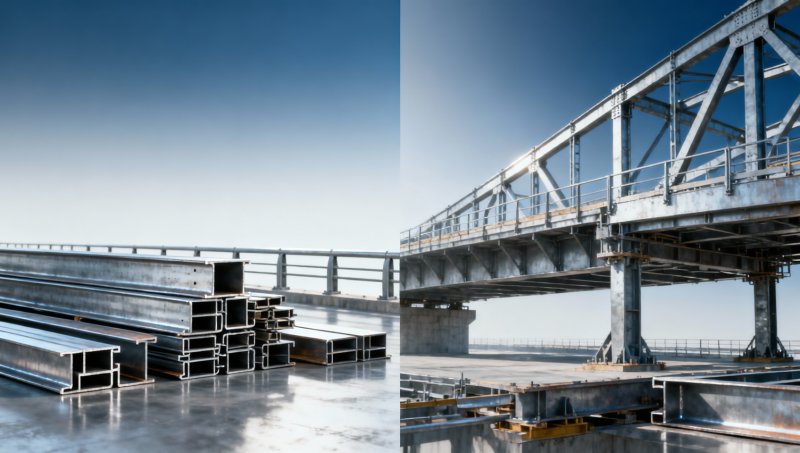
Lightweight structural steel does not simply mean thin steel. In most projects, it refers to steel sections or fabricated members that achieve required strength and stiffness with lower self-weight than heavier conventional alternatives. This can be done through optimized profile geometry, cold formed steel profiles, thinner but stronger grades, or better load-path design. The target is usually to reduce dead load by 10% to 30% without compromising safety or service life.
For technical evaluators, the first distinction is between material grade and section design. A high strength structural steel section may weigh less because it carries more stress per unit area, but a lightweight solution can also come from using angle steel, channel steel, or cold formed sections more efficiently. That is why design review should focus on section modulus, local buckling control, deflection limits, and connection behavior, not only nominal weight per meter.
Operators and project managers often value lightweight steel because it simplifies lifting, transport, and on-site positioning. If a member can be handled by a smaller crane, fewer workers, or fewer lifting cycles, installation efficiency may improve noticeably. In remote or congested job sites, reducing unit weight by even 15% can lower logistics pressure and shorten erection time by several shifts over a medium-size package.
For purchasing and finance teams, the important point is that lighter sections do not always mean lower total cost. Material savings can be offset by tighter tolerances, more complex fabrication, added stiffeners, or upgraded coatings. The best decision comes from comparing total installed cost, not just mill price per ton.
Common project situations where lightweight steel is considered
- Modular buildings where transport weight and fast assembly are critical.
- Industrial platforms and mezzanines where reduced dead load lowers foundation demand.
- Roof systems with long spans that benefit from optimized section efficiency.
- Bridge railings, deck railings, and handrail supports where weight and corrosion protection must be balanced.
- Retrofit projects where existing columns, walls, or slabs have limited reserve capacity.
The table below shows how lightweight structural steel is typically assessed against standard heavier alternatives in steel construction and fabrication decisions.
The main takeaway is simple: lightweight structural steel works best when engineering, fabrication, and installation are coordinated early. If the design team, manufacturer, and buyer align on performance requirements from the start, the weight reduction can deliver practical value instead of design risk.
How to Decide If It Fits Your Load, Span, and Compliance Requirements
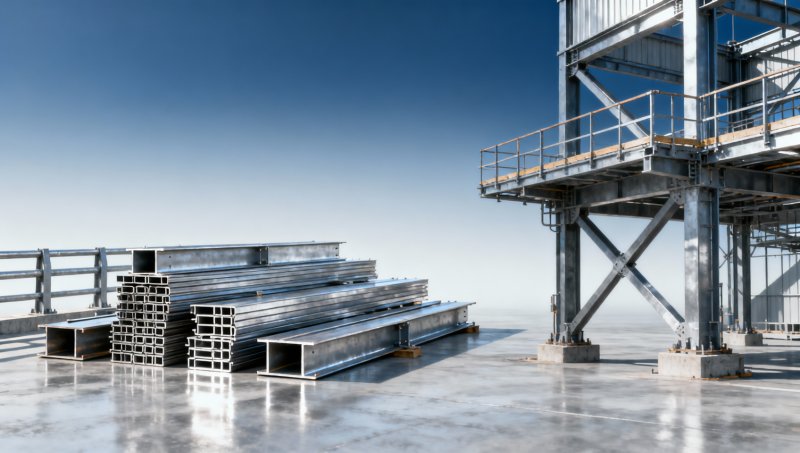
The right choice starts with 4 basic questions: what load must the structure carry, what span must it cover, what service environment will it face, and which code or standard applies. These questions sound simple, but they shape everything from steel grade selection to coating system, connection type, and acceptable tolerance. In export projects, buyers often need sections that align with ASTM, EN, JIS, or GB requirements, depending on the target market and design authority.
For structural steel properties, decision-makers should evaluate yield strength, tensile strength, ductility, weldability, and corrosion protection needs. In lighter sections, deflection and stability become especially important. A member that meets strength requirements can still fail serviceability criteria if vibration, lateral torsional buckling, or excessive deflection is ignored. This is common in long-span roof framing, platforms, and handrail support structures.
Procurement teams should also review dimensional tolerance and repeatability across supply lots. A tolerance of ±1% may be acceptable in many rail and structural applications, but connection-intensive assemblies can require tighter control at hole positions, cut lengths, and profile straightness. If the project includes 200 to 500 repeated members, small deviations can create measurable assembly delays and rework cost.
When evaluating a Chinese structural steel manufacturer, global buyers often compare three supply capabilities: stable output volume, quality documentation, and lead-time reliability. A supplier with modern production facilities and standard-based quality control can support both standard sections and OEM structural steel components, helping reduce sourcing risk across multi-stage projects.
A practical 5-point selection checklist
- Confirm design load combinations, including dead load, live load, wind, vibration, and impact where relevant.
- Verify section efficiency against span and deflection limits, not strength only.
- Match steel grade and coating to service environment, especially for outdoor or humid locations.
- Check manufacturing tolerance, welding process, and inspection requirements before PO release.
- Review logistics constraints such as 12m, 18m, 24m, or custom length handling and unloading conditions.
The following table can help technical and commercial teams review whether lightweight structural steel is a good fit based on project conditions.
If your project falls into the “extra review needed” category, that does not automatically rule out lightweight structural steel. It simply means the engineering package and supplier coordination need to be more detailed before fabrication starts.
Material Options, Related Components, and a Mid-Project Sourcing Perspective
Many projects do not rely on one structural steel type alone. A practical package may combine beams, channels, angle steel, cold formed profiles, base plates, brackets, fasteners, and reinforcement elements. In retaining wall systems, for example, engineers may review both structural framing members and rebar solutions together because foundation restraint, load transfer, and lateral stability are connected. This broader view helps avoid isolated purchasing decisions that create incompatibility later.
Another point often missed by buyers is that specialized steel products outside the main frame can affect total project performance. Railway-related platforms, industrial logistics areas, bridge safety systems, and deck access structures may require profiles designed for rolling contact, pressure transfer, or edge protection. That means related items should be evaluated with the same care as primary beams and columns.
A useful example is Rail, which is relevant in railway rail applications as well as certain bridge railings and deck handrail systems. Available grades can include U74, U71Mn, PD2, PD3, BNbRE, Q235, 55Q, 50Q, U71, and 45Mn, using carbon steel or medium manganese steel depending on service demand. Typical technical ranges include 12m–30m lengths, 3mm–24mm thickness, rail height of 134–170mm, head width of 68–73mm, base width of 114–150mm, and tolerance around ±1%.
From a sourcing perspective, such related products matter because they show how a supplier handles specification diversity, export documentation, and delivery planning across multiple steel categories. Common specification options include 4kg/m, 8kg/m, 12kg/m, 15kg/m, 18kg/m, 22kg/m, 24kg/m, 30kg/m, 38kg/m, 43kg/m, 50kg/m, and crane rail types such as QU70, QU80, QU100, and QU120. Surface options like oil, black, galvanized, or painted finishes also affect storage, corrosion protection, and installation sequence.
Why related steel products should be reviewed together
- They influence logistics planning, especially when mixed lengths range from 12m to 30m.
- They may require different grades, such as carbon steel versus medium manganese steel.
- Inspection checkpoints change depending on wear, wheel pressure, railing safety, or decorative finish requirements.
- Packaging and export batching become easier when one manufacturer coordinates several structural steel categories.
For distributors and project managers, this integrated approach can reduce handover friction between civil, structural, and installation teams. It also helps commercial buyers compare suppliers on a package basis rather than by isolated tonnage alone, which is often a more realistic way to control total procurement risk.
Procurement, Quality Control, and Delivery Risks to Review Before Ordering
In steel procurement, the decision is rarely won by the lowest quotation alone. Buyers should compare at least 6 points before approval: grade consistency, standard compliance, dimensional tolerance, coating scope, inspection method, and delivery reliability. For global projects, missing even one document package can delay customs clearance or site acceptance by 7 to 14 days, especially when multiple lots arrive in sequence.
Quality control personnel and safety managers usually focus on mill certificates, dimensional checks, visual inspection, weld quality, and surface condition. These are necessary, but not always sufficient. In lightweight structural steel applications, it is also important to verify camber, straightness, hole accuracy, and any local deformation caused by handling. A small shape deviation can create fit-up issues in prefabricated assemblies where tolerance stacking matters.
From a business review standpoint, buyers should ask whether the manufacturer can deliver standard sections and customized structural steel components in the same timeline. This matters for projects running on 3-stage schedules: shop drawing confirmation, batch fabrication, and phased shipment. If one supplier can keep stable output across all three stages, project managers gain better control over installation sequencing and inventory pressure.
Hongteng Fengda, as a structural steel manufacturer and exporter from China, focuses on angle steel, channel steel, steel beams, cold formed steel profiles, and customized steel components for global construction and industrial use. For buyers in North America, Europe, the Middle East, and Southeast Asia, practical value often comes from stable production capacity, standards-based manufacturing, and dependable lead times rather than from headline pricing alone.
Pre-order review table for procurement teams
Before issuing a purchase order, the following decision table helps align technical, commercial, and quality expectations.
The table shows that quality and delivery control are closely linked. Even a technically sound steel section can become a commercial problem if documents, coating, or batch timing are not managed well. That is why B2B buyers should evaluate the supply process, not only the product specification.
Common Mistakes, Maintenance Factors, and Final Decision Guidance
A common mistake is assuming lightweight means universally cheaper. In reality, cost savings depend on the whole system. If a lighter beam requires more frequent bracing, more precise fabrication, or stronger connections, the final installed cost may stay flat or even increase. The more complex the structure, the more important it becomes to compare steel tonnage, fabrication hours, coating scope, transport loading, and erection time together.
Another mistake is overlooking maintenance exposure. Outdoor steel in industrial, coastal, or humid conditions may need galvanized or painted finishes with planned inspection every 12 to 24 months, depending on environment and access conditions. Lightweight steel sections with thinner walls can perform well, but only when drainage, coating continuity, and edge protection are properly addressed. Maintenance teams should review these points before installation, not after corrosion appears.
For after-sales and operation personnel, inspection routines should focus on 4 items: coating damage, deformation, bolt loosening, and weld-area cracking. In dynamic or impact-prone environments, the inspection frequency may need to increase during the first 3 to 6 months of service so early issues can be corrected before they affect the whole assembly.
If you are still asking whether lightweight structural steel is right for your project, the answer is yes when the design is load-appropriate, the section is stability-checked, the standard is clearly defined, and the supply chain is reliable. It is less suitable when the project has severe dynamic demand, uncertain load conditions, or unresolved serviceability requirements that have not been engineered in detail.
FAQ for engineers, buyers, and decision-makers
How do I know if lightweight structural steel is strong enough?
Check more than nominal strength. Review load combinations, span, deflection limit, buckling resistance, and connection design. In many applications, a lighter optimized section performs well, but it must still satisfy both strength and serviceability requirements under the applicable code.
Is it suitable for industrial and infrastructure projects?
Often yes, especially for platforms, modular units, mezzanines, roof systems, rail-related structures, and railing supports. For projects with high wheel loads, repeated impact, or fatigue exposure, a more detailed review is needed before final selection.
What should procurement teams ask suppliers first?
Ask for standard compliance, available grades, tolerance control, coating options, document package, and delivery schedule. It is also useful to confirm whether the supplier can support OEM parts and mixed-product shipments under one project plan.
How long does delivery usually take?
Typical production windows vary by specification complexity and order volume, but many standard or semi-custom structural steel orders are planned in 2–4 weeks, with additional time for coating, inspection, and export shipment. Exact timing should be confirmed against project quantity and destination.
Choosing the right structural steel solution is ultimately about fit, not trend. When lighter sections are matched to the real load case, manufacturing quality, and installation method, they can improve efficiency, reduce unnecessary dead load, and support predictable project execution. If you need support comparing steel sections, custom structural components, or related rail and profile options, contact Hongteng Fengda to get a tailored recommendation, review specifications, and discuss the most practical solution for your project.
Please give us a message


Please enter what you want to find