Choosing the right Steel Beam manufacturer takes more than comparing quotes. Buyers, engineers, and project managers should assess production capacity, structural steel grades, quality control, delivery reliability, and customization support. For global sourcing, a dependable supplier can reduce risk, control total cost, and ensure consistent performance across structural steel components and demanding construction applications.
What should you compare first when evaluating a steel beam manufacturer?
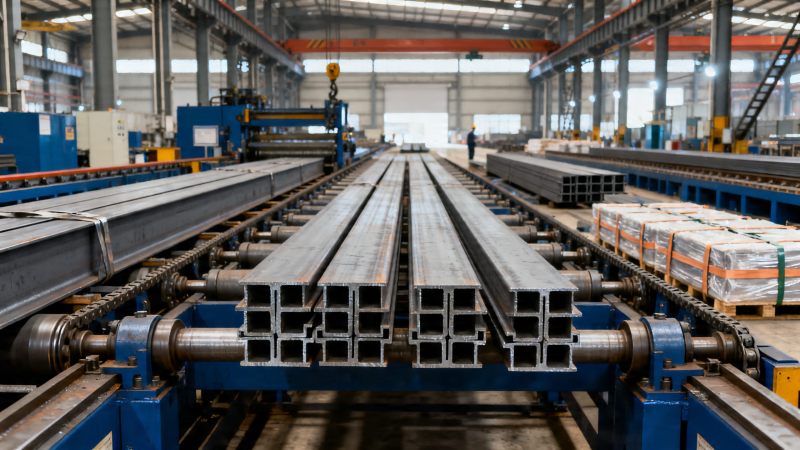
A low quotation may look attractive in the first round, but steel beam procurement is rarely decided by unit price alone. In structural projects, one wrong supplier decision can create delays of 2–6 weeks, extra inspection costs, site rework, and disputes over dimensional tolerance or material grade. That is why experienced buyers compare a manufacturer across at least 5 core dimensions before they compare final numbers.
For procurement teams, the real question is simple: can the supplier deliver the right beam, in the right grade, with the right documents, on the agreed schedule? For technical evaluators, the focus often shifts to section accuracy, weldability, mechanical consistency, and standards compliance such as ASTM, EN, JIS, or GB. For finance and management teams, the concern is total landed risk rather than ex-works price alone.
In global steel sourcing, especially from China, the most reliable structural steel partners usually demonstrate stable production capacity, traceable quality control, and clear communication through every order stage. Hongteng Fengda serves this need by supplying angle steel, channel steel, steel beams, cold formed steel profiles, and customized structural steel components for construction, industrial, and manufacturing projects across multiple overseas markets.
A practical comparison starts by separating visible cost from hidden cost. Visible cost includes base price and freight. Hidden cost includes sampling time, document gaps, nonconforming material replacement, packaging damage, and delivery uncertainty. In many cases, a quote that is 3%–8% lower can become more expensive once rejection risk and project interruption are included.
Five essential comparison factors
- Manufacturing capability: check whether the supplier can handle standard beams, special lengths, OEM processing, and repeat orders across small, medium, and large batch volumes.
- Material and standards control: confirm available grades, chemistry consistency, mechanical properties, and compliance with the standards required by your market or project specification.
- Quality system execution: ask how many inspection points are built into production, from raw material verification to dimensional checks and final release documentation.
- Delivery reliability: evaluate lead time range, shipment planning, export packing method, and how the supplier handles urgent schedule changes.
- Technical and commercial support: compare response speed, drawing review ability, customization support, and whether the team can help reduce sourcing risk before order confirmation.
The table below helps procurement teams, project managers, and technical reviewers compare steel beam manufacturers with a more decision-oriented framework. It is especially useful when you are evaluating 2–4 suppliers in parallel and need a structured internal review.
This comparison model works because it translates supplier selection into project outcomes. If a manufacturer can support standard and custom structural steel components, maintain inspection discipline, and communicate clearly across quotation, production, and shipping, it often delivers better long-term value than a lower-priced but inconsistent source.
How do production capability and quality control affect your real project cost?
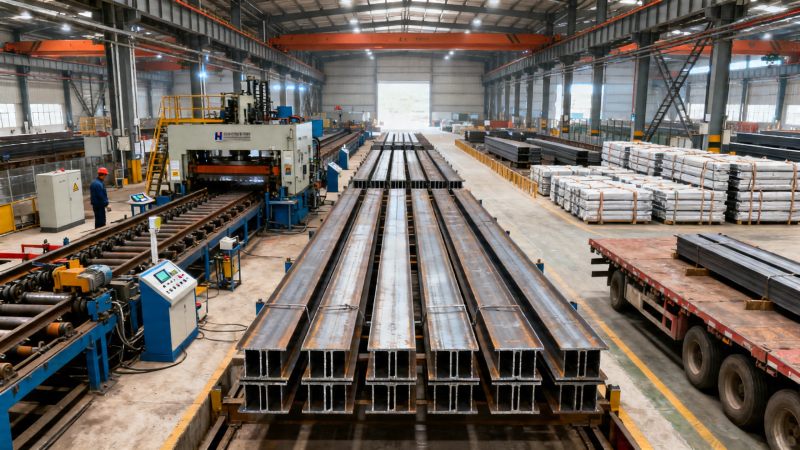
When buyers compare steel beam manufacturers, production capability is not only about plant size. It is about whether the supplier can maintain consistency across 3 key stages: raw material sourcing, forming or rolling accuracy, and final inspection before shipment. A manufacturer with stable process control can usually support tighter execution for recurring orders, urgent replenishment, and mixed product loading.
Quality control has direct cost impact. If a beam arrives with dimensional deviation outside project tolerance, missing test documentation, or surface damage from weak export packing, the downstream cost can include delayed installation, secondary machining, or site rejection. Even a 7–10 day replacement delay may affect crane booking, subcontractor scheduling, and monthly cash flow planning.
For this reason, professional buyers often ask a steel manufacturer to explain inspection checkpoints in detail. A practical review includes chemistry confirmation, dimensional checks, visual surface inspection, marking and traceability verification, and packing review before loading. For high-volume export orders, document consistency is almost as important as the product itself.
Hongteng Fengda focuses on stable production capacity and strict quality control for structural steel exports. This matters to overseas buyers because beam orders often move together with channels, angle steel, cold formed profiles, or customized components. Coordinated supply from one capable source can simplify 4-step project execution: technical confirmation, production planning, inspection release, and shipment scheduling.
A practical supplier review checklist
- Confirm whether the manufacturer can produce standard sections and custom specifications within realistic lead times, such as 2–4 weeks for common items and longer for special processing.
- Check how tolerance control is managed from line setup to final measurement, especially when beams must fit prefabricated structures or welded assemblies.
- Review what inspection records can be provided before shipment, including material traceability, dimensions, quantity verification, and standards-related documentation.
- Evaluate export support, including loading method, anti-rust protection when needed, and packaging suitable for sea transport or inland distribution.
Mid-project sourcing often requires cross-product support
Many steel beam projects also involve plates, brackets, bearing plates, base parts, or fabricated accessories. In such cases, it is useful to work with a supplier that understands related material options. For example, a buyer comparing beam suppliers may also need a compatible plate source for building frames, pipe supports, bridges, storage tanks, fixtures, or mechanical parts.
One relevant option in broader structural procurement is Carbon Steel Plate Manufacturer. Typical grades such as A36, Q235, and S235JR are widely used in building frames, vehicle chassis, brackets, piles, and general fabrication. Common size ranges include Width 100mm–3000mm, Length 1m–12m, and Thickness 0.1mm–400mm, which helps buyers consolidate standard and customized material planning.
From a technical perspective, carbon steel plates with carbon content at or below 0.22%, yield strength around 235MPa, tensile strength in the 375–500MPa range, and elongation of at least 26% are often selected for applications requiring weldability, cold working performance, and balanced mechanical properties. For buyers, this kind of product integration reduces supplier coordination time and improves consistency across structural steel components.
Which standards, documents, and technical details should buyers verify?
A steel beam manufacturer should not only say that products meet standards; the supplier should also be able to align documentation with project and destination-market expectations. In international steel trade, common reference systems include ASTM, EN, JIS, and GB. The required combination depends on engineering design basis, local approval practice, and customer documentation policy.
Technical buyers usually review 3 types of information before placing the order. First, the material grade and specification scope. Second, the dimensional requirements, including length range, tolerance expectation, and processing details. Third, the quality documents required before or after shipment. If any one of these is unclear, the risk of rework rises quickly.
This is where supplier communication quality becomes a decisive factor. A strong manufacturer can clarify whether your beam order is based on standard mill supply, custom cut-to-length production, or OEM fabrication. That distinction affects lead time, inspection sequence, and packaging method. It also affects whether associated components such as channels, angles, or plates can be loaded together.
Hongteng Fengda supports global buyers by supplying structural steel products under major international standards and by coordinating standard and custom requirements for construction, industrial, and manufacturing use. This is especially useful when the procurement team, technical reviewers, and commercial approvers need one consistent answer set during supplier evaluation.
Key items to verify before approval
- Material grade equivalence and whether substitution is allowed by the project engineer or end customer.
- Dimensional range, including standard lengths and custom cutting capability, especially if assemblies require fit-up within a narrow installation window.
- Inspection and traceability documents, including piece marking or batch identification where needed for quality tracking.
- Surface condition and packaging detail for export routes that may involve 20–40 days of transit depending on destination.
The following table summarizes what different stakeholders usually care about during steel beam manufacturer evaluation. It can also help internal approval teams align technical, commercial, and risk-control priorities before issuing a purchase order.
The main takeaway is that standards verification is not an isolated paperwork task. It connects directly to fabrication fit, shipment acceptance, site installation, and payment approval. A supplier that can answer technical and commercial questions together is usually easier to work with over multiple project cycles.
How can buyers compare total cost instead of only unit price?
Total cost in steel beam sourcing includes more than material rate per ton or per piece. It includes processing suitability, packaging reliability, document completeness, loading efficiency, lead-time predictability, and replacement risk if something goes wrong. A lower ex-works price may still produce a higher delivered cost when delays or quality claims are added.
A useful way to compare suppliers is to divide cost into 4 categories: direct material cost, logistics cost, quality risk cost, and coordination cost. Coordination cost is often ignored, but it matters in projects with 3–5 product types, staged deliveries, or engineering changes. If procurement must repeatedly chase revisions, packing lists, or clarification on standards, the apparent savings often disappear.
Buyers should also compare whether a steel beam manufacturer can support consolidated sourcing. When one supplier can provide beams, channel steel, angle steel, cold formed profiles, and custom structural steel components, there may be fewer handover points and better schedule control. This can be valuable for distributors, EPC teams, and project managers working under fixed delivery milestones.
For practical procurement, request a quote that identifies at least 6 elements: grade, section specification, quantity, processing detail, packing method, and estimated lead time. If possible, compare 2 or 3 suppliers using the same technical basis. This avoids the common mistake of comparing prices from mismatched assumptions.
Common hidden costs in steel beam procurement
- Re-cutting or secondary fabrication when supplied lengths do not match approved drawings.
- Site delays caused by incomplete shipping documents or material traceability gaps.
- Damage during transport due to weak packing, poor bundling, or inadequate corrosion protection for long transit routes.
- Multiple supplier coordination time when beams, channels, plates, and custom parts are sourced separately.
A buyer-side decision rule
If two suppliers offer similar steel beam specifications, choose the one that gives clearer quality documentation, steadier lead time, and better customization communication, even when the quote is modestly higher. In many B2B steel projects, a 2%–5% difference in purchase price is less important than avoiding one failed delivery window or one rejected batch.
This is especially relevant for importers and distributors who need repeatable supply, not just one-time pricing. Consistency improves warehouse planning, customer satisfaction, and order profitability over time. For project-based buyers, it protects schedule integrity from engineering approval through installation.
What mistakes do buyers often make, and what should they ask before ordering?
One common mistake is assuming that all steel beam manufacturers offering the same nominal grade will deliver the same usability. In reality, purchasing success depends on a combination of section accuracy, standards understanding, processing ability, document discipline, and shipping execution. That is why pre-order questions are not a formality; they are part of risk control.
Another mistake is evaluating the supplier only through sales communication. Buyers should also test technical response quality. Can the manufacturer review drawings, clarify tolerance expectations, and explain lead time changes transparently? Strong support at this stage usually indicates better order management later, especially for custom structural steel components.
A third mistake is failing to define approval checkpoints. For example, many successful teams use a 3-stage confirmation process: pre-quotation technical alignment, pre-production specification confirmation, and pre-shipment document review. This workflow reduces misunderstanding and helps finance, procurement, and engineering teams approve the same order on consistent information.
Below are practical questions that help information researchers, purchasing officers, project managers, and decision-makers compare manufacturers beyond headline price and sales promises.
FAQ for steel beam manufacturer comparison
How many suppliers should I compare before making a decision?
For most industrial and construction purchases, comparing 2–4 qualified suppliers is practical. Fewer than 2 reduces benchmark visibility, while too many can slow evaluation without adding decision value. Use the same drawing set, grade requirement, quantity range, and delivery target for all suppliers so that price and capability are compared on equal terms.
What lead time is typical for steel beam export orders?
Lead time depends on section type, quantity, stock availability, and whether processing is standard or customized. For common structural steel items, buyers often see production planning in the range of 2–4 weeks, while custom fabrication or mixed-product export programs may require longer. Transit time then varies by route and destination, often adding several weeks more for overseas delivery.
What should I request besides a quotation?
Ask for grade details, standards basis, dimensional range, quantity tolerance if relevant, packaging method, expected lead time, and document list. If the order is custom, request drawing confirmation and approval checkpoints. If the steel beam order is part of a larger package, also ask whether the supplier can coordinate angles, channels, profiles, plates, or other structural steel components in one shipment.
How can I reduce sourcing risk when buying from overseas?
Reduce risk by choosing a manufacturer with stable export experience, standards familiarity, clear documentation habits, and responsive communication. It is also wise to confirm inspection steps, labeling logic, packing method, and shipment schedule before production starts. A supplier that answers these points clearly is usually better prepared to support global projects without avoidable confusion.
Why work with a structural steel partner that supports both standard supply and custom solutions?
The best steel beam manufacturer for your business is not necessarily the cheapest one. It is the supplier that can align material quality, project timing, standards compliance, and communication efficiency with your actual use case. For distributors, that means reliable replenishment. For project teams, it means schedule stability. For engineering buyers, it means fewer technical surprises after order placement.
Hongteng Fengda works as a structural steel manufacturer and exporter from China, supplying angle steel, channel steel, steel beams, cold formed steel profiles, and customized structural steel components for global construction, industrial, and manufacturing projects. With modern manufacturing facilities and strict quality control, the company supports buyers who need stable production, consistent quality, and dependable delivery planning rather than price alone.
If you are comparing steel beam manufacturers, the most productive next step is to review your requirement in a structured way. Prepare 4 items before inquiry: material grade, section or drawing, quantity, and target delivery schedule. Then confirm whether you also need related products, OEM processing, or standards-based documentation for import or project approval.
You can contact Hongteng Fengda to discuss parameter confirmation, beam and structural steel product selection, delivery lead time planning, custom processing solutions, standards and certification requirements, sample support, and quotation communication. A detailed inquiry at the start usually shortens the full sourcing cycle and helps your team compare manufacturers on real project value, not just on price.
Please give us a message


Please enter what you want to find