Choosing between steel ka angle, galvanized iron angle, and right angle metal plate is critical for project durability, cost control, and compliance—especially for project managers overseeing infrastructure, electrical galvanised conduit systems, or galvanized plumbing installations. At Hongteng Fengda, a leading structural steel manufacturer & exporter from China, we compare galvanized iron angle vs mild steel angle across five key dimensions: corrosion resistance (e.g., galvanized metal pipe vs untreated steel), load capacity, weldability, lifecycle cost, and suitability for applications like conduit pipe galvanized runs or galvanized tube pipe frameworks. Backed by ASTM/EN/GB-certified production, our insights help decision-makers, engineers, and distributors select the optimal angle steel—without compromising safety, standards, or supply chain reliability.
Definition & Material Fundamentals
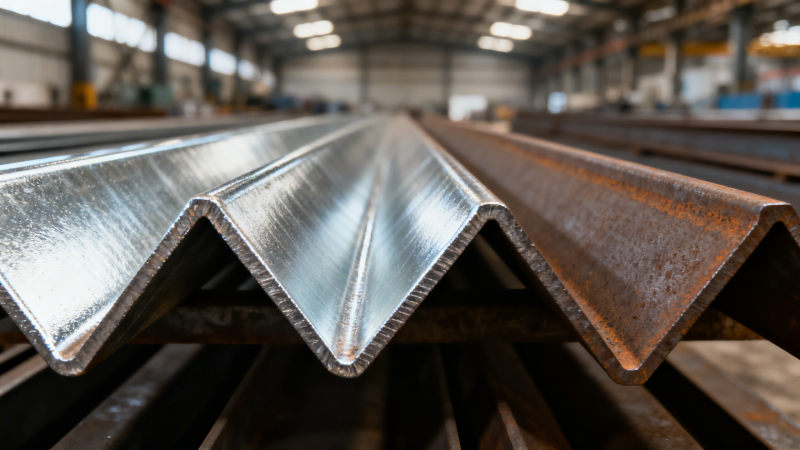
Galvanized iron angle (often misnamed “galvanized iron” but technically low-carbon steel with zinc coating) and mild steel angle (uncoated carbon steel, typically ASTM A36 or GB/T 700 Q235) serve identical structural roles—but differ fundamentally in composition, protection method, and long-term behavior. Mild steel angle relies on paint, epoxy, or field-applied coatings for corrosion defense. In contrast, galvanized iron angle undergoes hot-dip galvanizing—a metallurgical bond where molten zinc forms Zn-Fe alloy layers over the base steel, delivering self-healing, abrasion-resistant protection even at cut edges.
The term “steel ka angle” is commonly used regionally (especially in South Asia) to denote standardized equal-leg angle sections—regardless of surface treatment. Meanwhile, “right angle metal plate” refers not to rolled angles but to bent or laser-cut flat plates formed into L-shapes, often used for light-duty brackets or custom fixtures. Understanding these distinctions prevents specification errors during procurement—particularly when sourcing for galvanized electrical pipe support frames or galvanized plumbing hangers.
Corrosion Resistance & Environmental Suitability
Corrosion performance is the most decisive differentiator—especially for outdoor, coastal, or high-humidity applications such as galvanized conduit pipe installations in industrial plants or galvanized tube pipe scaffolds near chemical processing zones. Mild steel angle exposed to moisture, chloride, or industrial pollutants begins rusting within weeks unless continuously maintained. Galvanized iron angle, by contrast, provides 20–50 years of maintenance-free service depending on environment—per ISO 1461 and ASTM A123 exposure zone classifications.
In aggressive settings—like wastewater treatment facilities using galvanized plumbing or marine cofferdam structures—zinc’s sacrificial anode action protects exposed steel at scratches or weld zones. This is why Steel Sheet Piles used in deep-water construction rely on the same galvanizing principle for long-term integrity. Mild steel angles simply cannot match this passive resilience without costly secondary coatings.
Technical Performance Comparison
Below is a side-by-side comparison of core technical attributes relevant to engineering validation and safety-critical deployments:
Procurement Guidance for Global Project Managers
When specifying for international projects—whether supplying electrical galvanised conduit supports in Dubai or galvanized metal conduit frameworks in Texas—clarity in documentation avoids delays and rework. Always specify: (1) Base material grade (e.g., ASTM A36, EN S235JR, GB Q235B), (2) Galvanizing standard (ASTM A123 or EN ISO 1461), (3) Minimum coating thickness (e.g., 85 µm average), and (4) Dimensional tolerance (per EN 10056 or ASTM A6). Avoid ambiguous terms like “hot-dip galvanized finish”—require test reports and batch traceability.
Hongteng Fengda supports global buyers with full mill test reports (MTRs), third-party inspection (SGS/BV), and dual-standard compliance (e.g., EN + ASTM). Our OEM capability allows custom punching, drilling, or pre-galvanizing of welded assemblies—ideal for ready-to-install galvanized electrical pipe racks or modular galvanized plumbing manifolds. With production capacity across 12 rolling lines and ISO 9001/14001/18001 certification, we ensure consistent lead times—even for urgent tenders requiring galvanized metal pipe framing across multiple sites.
Lifecycle Cost & Risk Mitigation
Upfront, mild steel angle costs 15–25% less than galvanized iron angle. But lifecycle analysis tells another story: painting mild steel every 3–5 years adds labor, scaffolding, downtime, and environmental compliance overhead. In offshore or high-ceiling facilities—where access for recoating galvanized metal conduit is difficult—the ROI of galvanizing exceeds 300% over 15 years. For project managers accountable for total cost of ownership (TCO), this isn’t just metallurgy—it’s financial governance.
Moreover, supply chain risk is real. Uncoated angles sourced from uncertified mills may lack tensile consistency or contain hidden impurities—compromising weld integrity in galvanized plumbing joints. Hongteng Fengda’s end-to-end quality control—from raw billet spectroscopy to final salt-spray testing—ensures every batch meets EN 10248, ASTM A6, and JIS G3101 requirements. That reliability directly reduces site rejection rates and warranty claims.
Why Choose Hongteng Fengda?
As a structural steel manufacturer & exporter from China with 18+ years’ experience, Hongteng Fengda delivers more than product—we deliver predictability. Whether you’re specifying steel ka angle for a solar farm’s grounding grid, right angle metal plate for HVAC duct supports, or galvanized iron angle for a pharmaceutical plant’s cleanroom conduit pipe galvanized raceways, our team provides engineering-grade documentation, multi-language support, and logistics coordination across 40+ countries.
We don’t just meet ASTM, EN, or GB standards—we validate them in-house. Every coil is traceable. Every galvanizing bath is monitored hourly. Every shipment includes MTRs, zinc thickness reports, and dimensional certificates. For project managers who need zero compromise on safety, compliance, or continuity—contact Hongteng Fengda today for a customized quotation, sample pack, or factory audit invitation.
- l angle
- angle steel
- galvanized conduit pipe
- galvanized tube pipe
- galvanized plumbing
- galvanized electrical pipe
- electrical galvanised conduit
- galvanized metal pipe
- conduit pipe galvanized
- galvanized metal conduit
- right angle metal plate
- galvanized iron angle
- steel ka angle
- hot-dip galvanized
- ASTM A36
- structural steel
- Steel Angles
- Structural Steel
- Galvanized
- Steel Sheet Pile
- carbon steel
- steel sheet
- steel angle
Related recommendations
 How much does 2 inch ss pipe price increase when upgrading from Schedule 40 to Schedule 80 for high-pressure systems?2 inch ss pipe price increases 18–35% when upgrading from Sch 40 to Sch 80—discover why, when it’s truly needed, and how to avoid overpaying.
 Which 304 stainless steel coil suppliers meet ISO 9001 and EN 10088-2 for food-grade fabrication?Discover verified 304 stainless steel coil suppliers meeting ISO 9001 & EN 10088-2 for food-grade fabrication—traceable, audited, and ready for regulatory validation.
 How does 2 inch ss pipe price compare between 304 and 316 grades for marine environments?2 inch ss pipe price varies significantly between 304 and 316 — but in marine environments, choosing 304 risks costly failures. Discover why 316 is the true value choice.
 Is 20 feet square pipe price affected more by raw material volatility or regional logistics costs?20 feet square pipe price is driven primarily by raw material volatility—not logistics. Discover why billet costs dominate pricing & how to forecast smarter with Hongteng Fengda.
Please give us a message


Please enter what you want to find