Buying the wrong Steel Sheet Pile can lead to delays, cost overruns, and performance risks in demanding projects. From comparing Steel Beam options to checking Galvanized coatings, S355JR grades, and even questions like I beam vs H beam, global buyers often miss critical details. This guide explains the most common purchasing mistakes and helps procurement, engineering, and project teams make safer, smarter sourcing decisions.
In steel-intensive projects, a sheet pile purchase is rarely an isolated item. It affects installation speed, structural safety, corrosion resistance, logistics planning, welding compatibility, and even downstream cash flow. For buyers, technical evaluators, project managers, distributors, and quality teams, avoiding a few common mistakes can save weeks of delay and significant rework costs.
For global sourcing teams working with Chinese structural steel manufacturers, the challenge is not only getting a competitive quote. It is making sure the specification, grade, coating, dimensional tolerance, and delivery scope match the real service environment. That is where disciplined procurement decisions matter most.
Mistake 1: Buying by Price Alone Instead of Total Project Fit
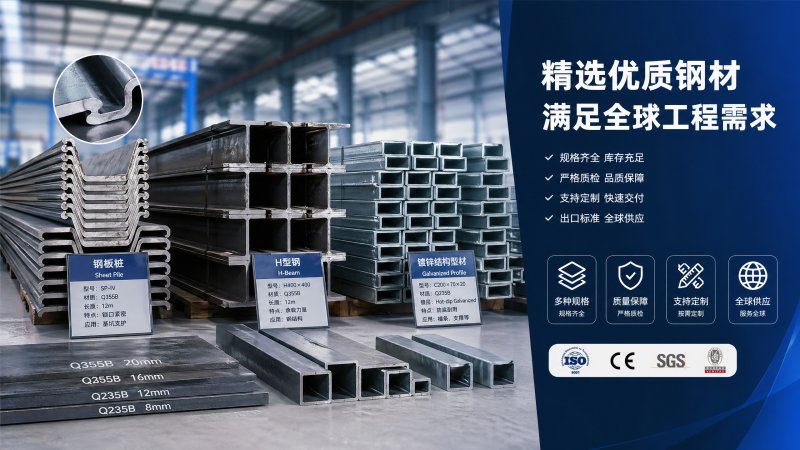
One of the most common Steel Sheet Pile buying mistakes is selecting the lowest quoted price without checking total project fit. A cheaper unit rate may look attractive at bid stage, but if the section modulus, steel grade, or coating system does not match the design load and exposure conditions, the final cost can rise quickly through redesign, reinforcement, or replacement.
In practice, total cost includes at least 5 major factors: material price, fabrication or processing cost, freight, installation efficiency, and service life. A sheet pile that is 3% to 5% cheaper on paper can become 10% to 20% more expensive when driving difficulty, poor interlock performance, or corrosion loss leads to downtime and remedial work.
This problem is especially common when buyers compare only tonnage prices across different suppliers. Two offers may both be for “sheet pile steel,” but the actual effective section, thickness tolerance, length range, and straightness control may differ. For marine works, retaining walls, temporary cofferdams, and excavation support, these differences can materially change field performance.
What buyers should compare beyond price
A more reliable evaluation method is to compare commercial and technical items side by side. That includes steel grade such as S355-class material where applicable, coating type, tolerance limits, mill test documentation, packaging method, and realistic lead time, often ranging from 2 to 6 weeks depending on tonnage and processing requirements.
- Confirm whether the quoted section matches the required moment capacity and section modulus.
- Check if the offer includes galvanized or other corrosion-protection treatment where the service environment demands it.
- Review length tolerance, straightness, and interlock consistency, especially for multi-batch shipments.
- Ask whether export packing, marking, and test certificates are included in the base price.
The table below shows why unit price should never be the only decision point in steel procurement.
The key takeaway is simple: the cheapest steel sheet pile is not always the lowest-cost choice for the project. Procurement teams should evaluate technical compliance and field practicality before approving final purchase orders.
Mistake 2: Overlooking Grade, Coating, and Environmental Exposure
Another serious mistake is assuming that all steel grades and finishes perform similarly. They do not. A sheet pile used in dry inland shoring has very different exposure conditions from one used in tidal zones, high-humidity industrial areas, or chemically aggressive soil. Choosing the wrong grade or skipping protective treatment can shorten service life dramatically.
Buyers often focus on names they already know, such as S355JR, ASTM grades, or common hot rolled sections, but the real question is suitability. Grade selection should reflect yield strength, weldability, fabrication plan, and compliance with the project’s design code. Coating decisions should reflect corrosion category, expected service duration, and whether the pile is temporary or permanent.
For many structural steel applications adjacent to sheet pile systems, galvanized members can improve durability in exposed conditions. The same procurement discipline applies when selecting secondary framing and profile sections. Mid-project substitutions often create compatibility issues, especially where wall beams, roof supports, or lightweight structural members are involved.
A practical example from adjacent steel components
When projects require both retaining elements and lightweight structural framing, buyers may also evaluate cold formed profiles for purlins, wall beams, brackets, or mechanical support members. In such cases, a product like Z-beam can be relevant for steel structure construction, particularly where galvanized coated profiles, roll forming accuracy, and export-ready packaging are needed.
Typical specifications for this type of Z-shaped steel profile include thickness from 6 mm to 25 mm, length from 2 m to 12 m or customized, and tolerance around ±1%. Common materials include Q235B, Q345B, Q420C, Q460C, SS400, S235, S275, S355, A36, and A572 grades. Certification options may include CE, SGS, BV, and ISO, depending on supply scope and inspection needs.
Questions to ask before finalizing material and coating
- Is the steel sheet pile intended for temporary use under 12 months, or permanent use beyond 10 years?
- Will the pile face fresh water, salt spray, industrial pollutants, or abrasive soil contact?
- Does the design require a specific standard such as ASTM, EN, JIS, or GB compliance?
- Will cutting, welding, or field modifications affect coating continuity or corrosion performance?
The lesson here is that steel procurement should be environment-specific. Grade and coating decisions that look adequate in procurement spreadsheets may fail in real operating conditions if exposure is underestimated.
Mistake 3: Confusing Profiles, Load Paths, and Structural Roles
Many sourcing errors happen because buyers compare steel products that are not meant to do the same job. Questions like I beam vs H beam, or whether a steel beam can replace a sheet pile section, are common during early procurement research. The answer depends on load path, installation method, soil interaction, and whether the member resists bending in open air or lateral earth pressure in embedded service.
Steel sheet piles are designed to interlock and form a continuous wall. Standard I beams and H beams are primarily open structural sections used for columns, girders, transfer beams, and frames. Although both may be made from similar steel grades, their geometry and engineering role are fundamentally different. Confusing them can result in underperformance or unnecessary redesign.
This issue becomes more complex in mixed projects where main frames, support beams, and enclosure systems are purchased together. A procurement package may contain sheet piles for excavation, H beams for heavy load transfer, and cold formed sections for roofing or wall support. Each should be reviewed against its own performance criteria.
Profile selection is not interchangeable
The comparison table below helps teams separate common steel profiles by role, not just by appearance or price.
A correct purchase decision starts with the structural role. If the project team cannot clearly define whether the steel element must interlock, span, brace, or carry vertical load, the quote comparison is incomplete. Technical and commercial reviewers should align before supplier selection.
Three checks before approving an alternative profile
- Verify the design load case, including bending moment, embedment behavior, and support conditions.
- Confirm whether the profile needs interlocks, perforations, galvanizing, or cold forming precision.
- Check fabrication and installation constraints, including lifting limits, transport length, and welding access.
A disciplined profile review can prevent one of the costliest sheet pile buying mistakes: using a familiar steel section in a duty it was never designed to perform.
Mistake 4: Ignoring Tolerances, Documentation, and Quality Control
Even when the grade and section are correct, a steel sheet pile order can still fail if quality documentation and dimensional control are weak. In international sourcing, quality risk often appears in details such as heat numbers, mill test certificates, coating thickness records, welding traceability, or inconsistent tolerances between batches.
For engineering and QA teams, tolerance control is not a paperwork issue. It directly affects alignment, driving resistance, interlock engagement, and assembly efficiency. A tolerance deviation of more than the expected range, whether in thickness, straightness, or profile geometry, can slow installation and increase rejection rates on site.
Reliable suppliers usually define the inspection route before production starts. That may include raw material verification, in-process dimensional checks, surface inspection, final quantity count, packing inspection, and document review before shipment. For export orders, this process becomes even more important because field correction after delivery is expensive.
Minimum quality checkpoints for buyers
The following checklist is useful for procurement, QC, and safety teams evaluating steel supply offers.
If a supplier cannot explain how these 3 checkpoints are controlled, the buyer should ask more questions before release of deposit or final approval. Good steel quality is measurable, documented, and repeatable across production lots.
Common document gaps that create downstream disputes
- The purchase order lists a generic steel name, but not the exact standard or grade.
- Tolerance requirements are assumed rather than written into the contract.
- No inspection stage is defined for pre-shipment review or third-party witness checks.
- Packaging and marking are not specified, causing confusion at destination unloading.
These gaps may look minor at the quotation stage, but they often become the reason for claims, delays, and avoidable commercial friction later.
Mistake 5: Failing to Plan Lead Time, Logistics, and Supplier Coordination
A technically correct order can still damage project performance if delivery planning is weak. Steel sheet pile procurement often involves production scheduling, surface treatment, bundling, port transport, customs documents, and site unloading coordination. Missing any of these steps can create delays of 7 to 21 days, even when the steel itself is already manufactured.
This is especially relevant for international buyers sourcing from China. A dependable structural steel manufacturer should not only quote product specifications but also clarify production capacity, batching logic, packaging method, and realistic dispatch timing. For many projects, a stable lead time is more valuable than a slightly lower unit price.
Hongteng Fengda supports global construction, industrial, and manufacturing buyers with structural steel supply, customized solutions, and strict quality control aligned with major international standards such as ASTM, EN, JIS, and GB. For project teams that require coordination across angle steel, channels, steel beams, cold formed profiles, and customized components, supplier responsiveness and consistency can reduce sourcing risk materially.
A practical sourcing workflow for fewer mistakes
The most effective procurement teams follow a structured sequence instead of moving directly from inquiry to order confirmation.
- Define the exact section, grade, coating, length, tolerance, and standard requirements.
- Request a technical and commercial quotation with clear inclusions and exclusions.
- Review certificates, inspection route, and packaging details before contract approval.
- Align production and shipment schedule with the site installation plan.
- Verify documents before dispatch, including packing list, marking, and test certificates.
In many B2B steel purchases, this 5-step workflow prevents the majority of avoidable issues. It improves communication between engineering, procurement, finance, and site management while making supplier evaluation more objective.
FAQ for steel sheet pile buyers
Below are four questions that frequently arise during technical and commercial review.
How should buyers compare suppliers for the same sheet pile requirement?
Compare at least 6 items: grade, section properties, tolerance, coating specification, document package, and delivery schedule. If one offer is lower by 5% but excludes coating or testing, it may not be the better procurement choice.
When is galvanized steel worth the added cost?
Galvanized treatment is usually worth closer evaluation in exposed outdoor conditions, humid industrial sites, or where maintenance access is limited. The value depends on service duration, environmental severity, and whether the steel is temporary or permanent.
What lead time should buyers expect?
For standard steel sections, production may take around 2 to 4 weeks, while customized processing, coating, or mixed export loads can extend the full cycle to 4 to 8 weeks. Final timing depends on order volume, inspection scope, and shipping route.
What is the biggest avoidable risk in sheet pile procurement?
The biggest avoidable risk is mismatch between quoted material and actual project conditions. That includes wrong profile role, insufficient corrosion protection, missing tolerance controls, and unrealistic delivery assumptions.
Avoiding common Steel Sheet Pile buying mistakes requires more than checking price and availability. Buyers need to verify structural role, grade suitability, coating needs, tolerance control, documentation, and logistics planning as one connected decision. That approach reduces technical risk, protects budgets, and helps projects stay on schedule.
For companies sourcing structural steel from China, a capable manufacturing partner can make this process more predictable by supporting specification review, standards compliance, stable production, and dependable lead times across multiple steel categories. If you are comparing sheet piles, steel beams, galvanized profiles, or customized structural components, now is the right time to get a more precise sourcing plan.
Contact us today to discuss your project requirements, request product details, or get a customized structural steel solution that fits your technical and commercial goals.
Please give us a message


Please enter what you want to find