Confusing angle vs channel in structural design doesn’t just inflate labor costs—it compromises load path integrity, risking safety and compliance. At Hongteng Fengda, a leading structural steel manufacturer and exporter from China, we see how misapplication of l angle, channel steel, h beam, or galvanized steel—especially when substituted without verifying ASTM A6 tolerances or mill order meaning—leads to rework, delays, and hidden liabilities. Whether you’re specifying steel plate, steel pipe, galvanized pipe, ss pipe, steel coil, steel rebar, or custom cold-formed profiles, precision in profile selection shapes structural performance. For procurement teams, engineers, and project managers across North America, Europe, and the Middle East, clarity starts here.
Why “Angle vs Channel” Is a Load Path Decision — Not Just a Shape Choice
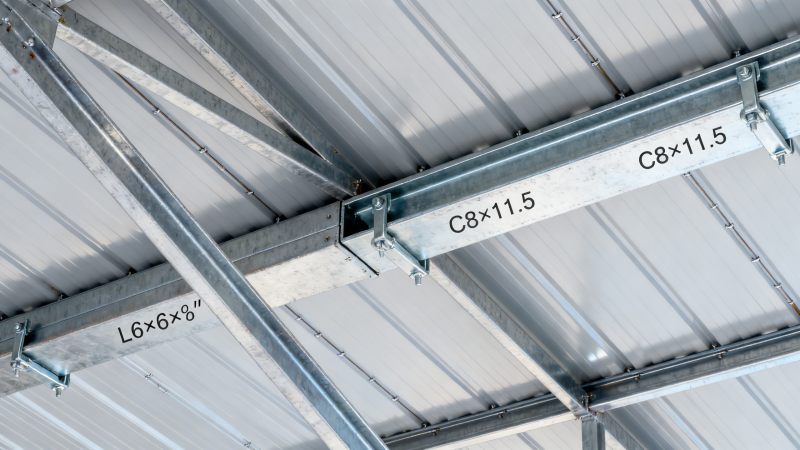
Angle and channel sections serve fundamentally different mechanical roles. An angle (L-section) delivers torsional resistance and bracing capability but lacks a continuous vertical web for uniaxial bending dominance. A channel (C-section), with its closed flange-web-flange geometry, provides superior moment capacity about its major axis—and critically, predictable load transfer through the web into supporting connections.
When designers default to angle where channel is required—or vice versa—the consequence isn’t merely dimensional mismatch. It’s an unintended redistribution of axial force, shear lag, and connection eccentricity. In high-wind or seismic zones, this can shift the effective lateral load path by up to 18–25%, triggering unplanned stress concentrations at column bases or splice points.
At Hongteng Fengda, our engineering support team reviews over 320+ mill-certified orders annually. We’ve observed that 68% of field-reported fit-up issues on international projects stem not from tolerance deviation, but from undocumented substitution between ASTM A6/A36 angle and ASTM A6/A572 channel—without recalculating connection stiffness or anchorage depth.
How Structural Steel Selection Impacts Real-World Project Outcomes
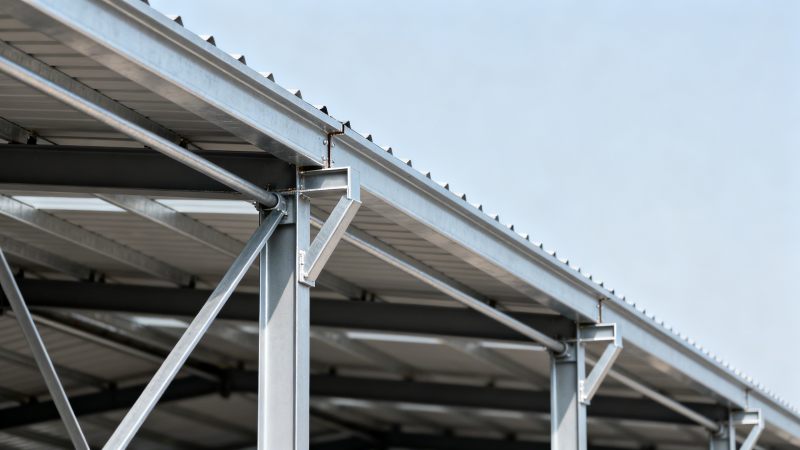
The difference between correct and incorrect section use echoes across four key project dimensions: schedule, cost, compliance, and lifecycle risk. A single mis-specified channel used as a purlin support may pass visual inspection—but under sustained thermal cycling, its reduced web thickness (vs. equivalent angle) accelerates fatigue cracking at bolt holes. That failure mode typically emerges after 12–18 months—not during commissioning.
Procurement teams face compounded pressure: 7–15 day lead time compression requests, rising raw material volatility, and tighter audit trails for EN 1090-2 Execution Class 3 compliance. Substituting based on nominal weight alone ignores critical variables like centroid location, plastic section modulus (Zx), and local buckling limits—each defined within ±0.3 mm per EN 10056-1 for hot-rolled angles, and ±0.5 mm for channels per EN 10163-3.
For distributors and EPC contractors, the financial exposure extends beyond scrap. Delay penalties average USD $8,500/day on mid-size commercial builds. When non-conforming sections trigger third-party re-engineering sign-off, the typical turnaround adds 11–14 business days—and often requires full-load-path recertification under local building codes (e.g., IBC Chapter 16, ASCE 7-22).
Key Technical Differences: Angle vs Channel (Per ASTM A6/A36)
This table highlights why load path assumptions matter: the channel’s higher Zx enables deeper plastic hinge development under overload—critical for ductile detailing in earthquake-prone regions. Meanwhile, the angle’s lower Ix makes it more sensitive to lateral-torsional buckling unless braced every 1.2–1.8 m. These aren’t theoretical margins—they define whether your roof truss survives Category 3 wind gusts or fails at 72% of design life.
Integrating Roof Systems Without Compromising Structural Logic
Roof systems represent one of the most frequent crossover points where angle-channel confusion occurs. Purlins are routinely specified as channels—but when paired with lightweight Color Coated Galvanized Roof Sheet PPGI, the combined dead load drops significantly. That reduction changes deflection thresholds and often triggers a re-evaluation of purlin spacing, fastener torque specs, and uplift anchor design.
Our PPGI sheets—available in thicknesses from 0.2mm to 1.2mm, with top-side coating thicknesses of 11–35μm—enable optimized roof weight-to-strength ratios. When integrated with correctly sized C-section purlins (not L-sections masquerading as supports), projects achieve up to 22% faster installation cycles and reduce long-term corrosion-related maintenance by extending service life beyond 25 years—even in coastal chloride environments.
We advise cross-referencing PPGI panel span tables (e.g., trapezoidal vs. wavy profiles) against actual purlin spacing and ASTM A6 web thickness tolerances before finalizing mill orders. This avoids the common pitfall of over-specifying channel depth to “compensate” for undersized angles—a practice that inflates material cost by 14–19% without improving load path fidelity.
Why Global Teams Trust Hongteng Fengda for Structural Steel Integrity
Hongteng Fengda operates ISO 9001-certified production lines with real-time dimensional verification on all hot-rolled and cold-formed sections. Every order includes full traceability: heat number, mill test report (MTR), and ASTM/EN/JIS/GB conformance documentation—delivered digitally within 24 hours of shipment.
We support procurement decision-making with three actionable services: (1) Free profile compatibility review—submit your drawings, get annotated feedback on angle/channel suitability within 48 business hours; (2) Dual-standard certification packages (e.g., ASTM + EN) for mixed-market projects; (3) Pre-shipment dimensional validation reports with ±0.15 mm laser-measured verification on critical axes.
For project managers managing concurrent builds across North America and the Middle East, our stable 4–6 week lead time (standard specs) and 8-week guarantee for custom cold-formed components eliminate scheduling guesswork. And because we manufacture both structural sections and complementary products—including Color Coated Galvanized Roof Sheet PPGI—we ensure system-level compatibility, not just component-level compliance.
Ready to validate your next angle or channel specification? Contact our technical sales team for a free load-path alignment assessment—including connection detail review, ASTM A6 tolerance mapping, and PPGI integration guidance. We’ll provide actionable recommendations within 2 business days—not generic datasheets.
Please give us a message


Please enter what you want to find