Choosing the right steel angle for construction means balancing corrosion resistance, cost, and service life. For projects exposed to moisture, outdoor weather, or demanding jobsite conditions, galvanized angle iron for construction can be a smart investment. This guide explains when galvanizing is worth it, how it compares with standard options, and what buyers, engineers, and project teams should evaluate before sourcing structural steel.
When is galvanized angle iron actually worth the extra cost?
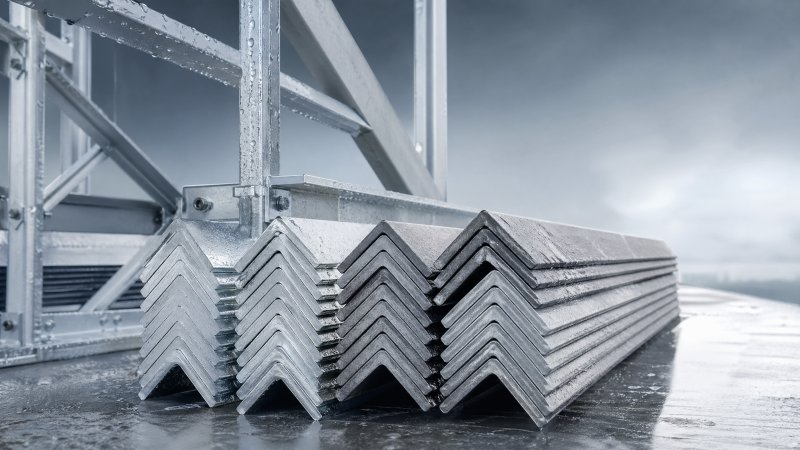
The short answer is this: galvanized angle iron is usually worth it when the steel will face moisture, weather exposure, intermittent wet-dry cycles, or difficult maintenance conditions over a long service life. If the angle will be used outdoors, near coastal air, in agricultural settings, in factories with humidity, or in structural details that are hard to repaint later, galvanizing often lowers total lifetime cost even if the purchase price is higher.
For indoor, dry, and well-controlled environments, standard black steel angle or primed steel may be sufficient. In these cases, paying for galvanizing may not create enough practical value, especially if the component is non-critical, easy to inspect, and easy to replace. This is why the best material choice is not simply about the lowest upfront cost. It is about matching protection level to real exposure and maintenance risk.
From an engineering and procurement perspective, the decision should be based on service environment, required design life, access for future maintenance, appearance expectations, and project budget. Buyers who evaluate angle iron only by unit price often miss the downstream cost of repainting, corrosion-related failures, delays, and safety issues. In construction, galvanizing becomes worth it when the cost of corrosion is likely to exceed the coating premium.
What galvanizing changes in real construction use
Galvanizing applies a zinc coating to the steel surface, creating a barrier that helps protect the base metal from corrosion. More importantly, zinc also offers sacrificial protection. If the coating is scratched or slightly damaged, the zinc can still protect nearby exposed steel to some extent. This makes galvanized angle iron more forgiving in transportation, handling, storage, and installation than many paint-only systems.
On active jobsites, steel rarely stays in ideal conditions. It may sit outside before installation, be exposed to rain during construction, or be used in structures where condensation forms regularly. In those situations, untreated steel can begin surface rusting quickly. Galvanized material provides a practical buffer against those common field realities, which is one reason site teams often prefer it for outdoor framing details, supports, brackets, edge members, and secondary structural components.
Galvanizing also improves consistency in long-term maintenance planning. A painted angle may perform well if coating preparation and application are excellent, but quality varies more depending on labor, environment, and site discipline. Galvanized angle iron offers a factory-finished corrosion protection layer that is easier to standardize. For project managers and quality teams, that means fewer variables and less dependence on perfect field coating conditions.
Projects where galvanized angle iron usually makes sense
Galvanized angle iron is commonly a strong choice for outdoor construction, steel support frames, rooftop structures, solar mounting subframes, fencing supports, warehouse extensions, light industrial structures, agricultural buildings, and infrastructure-related components. It is especially useful where members are regularly exposed to rainfall, humidity, drainage splash, or pollution.
It is also worth serious consideration in concealed or hard-to-access areas. If an angle is built into a wall cavity, roof edge, equipment platform, service bracket, or elevated connection where later repainting is difficult or costly, galvanizing can save substantial maintenance effort. This matters not only to owners and facility managers, but also to contractors who want to reduce callback risks.
For export projects or international procurement, galvanized options often provide additional assurance because shipment, storage, and installation may take place across multiple climates and schedules. Delays at ports, temporary outdoor storage, and variable handling conditions all increase corrosion risk. In these cases, galvanized angle iron helps protect material quality from factory to final assembly.
When standard angle iron may be the better choice
Galvanized steel is not automatically the best answer for every application. If the angle iron will be installed in a dry, climate-controlled interior space with minimal corrosion exposure, black steel or primed angle may be more economical. This is often true for interior support systems, non-visible plant structures in dry buildings, machinery frames in controlled facilities, or temporary construction use.
Budget-sensitive projects with short service life expectations may also lean toward standard material. If the structure is temporary, replaceable, or part of equipment that will be upgraded soon, the long-term corrosion advantage of galvanizing may not justify the premium. In those cases, buyers should avoid over-specifying protection that the application does not need.
There are also fabrication considerations. If extensive cutting, welding, drilling, or surface modification will happen after delivery, galvanized steel may require additional touch-up or process control. Some buyers prefer to fabricate first and galvanize later, while others choose non-galvanized material if post-processing is extensive and the operating environment is mild. The right choice depends on production flow as much as on corrosion resistance.
How to evaluate cost: upfront price versus lifetime value
The most common purchasing mistake is comparing galvanized and non-galvanized angle iron only by ton price or piece price. That comparison is incomplete. A better method is to estimate total installed and operating cost across the expected service life. This includes initial purchase, coating or repainting labor, downtime for maintenance, inspection frequency, replacement risk, and consequences of corrosion-related failure.
For example, if galvanized angle costs more at purchase but avoids one or two repainting cycles, prevents premature replacement, and reduces maintenance access equipment costs, it may become the lower-cost option over time. This is particularly true for high or remote installations, marine-adjacent environments, and industrial facilities where shutdowns are expensive. Finance approvers and business decision-makers usually respond well to this total-cost logic because it connects material choice to measurable operational savings.
Procurement teams should also consider waste and quality costs. Corrosion during storage or transit can lead to rejected material, rework, cleaning, and schedule delays. Galvanized products can reduce those risks, especially in global sourcing programs. In practical terms, galvanizing is often worth it not because it is the cheapest material, but because it lowers the probability of hidden project costs.
What engineers, buyers, and QA teams should check before ordering
Before sourcing galvanized angle iron for construction, teams should confirm more than just dimensions. The intended standard, steel grade, coating type, tolerance, and mechanical requirements all matter. Reputable structural steel suppliers should be able to provide products aligned with relevant international standards such as ASTM, EN, JIS, or GB, depending on the project location and specification framework.
Material grade selection is also important. Different projects may call for grades such as Q235B, Q345B, SS400, S275, S355, A36, or A572, depending on load requirements and regional practice. Tolerances, edge condition, and length control influence not only fit-up quality but also installation speed on site. For project teams trying to reduce field adjustments, consistency from the steel manufacturer is a major value point.
Quality and safety personnel should review surface condition, coating uniformity, dimensional accuracy, and traceability documentation. If the steel will be used in structural or semi-structural functions, buyers should request mill test information, inspection records, and relevant certifications where required. Reliable suppliers with modern manufacturing and controlled export processes help reduce sourcing risk, especially for international buyers managing multiple stakeholders.
Related profiles in the same corrosion-risk discussion
In many construction systems, angle iron is only one part of the steel package. Purlins, wall beams, brackets, and lightweight secondary framing members may face the same exposure conditions and should be evaluated with the same corrosion logic. For example, projects that use galvanized angles outdoors often also benefit from coated cold-formed profiles in roofing and wall systems.
One relevant option is the Z-beam, a Z-shaped steel profile commonly used in steel structure construction purlins, wall beams, lightweight roofs, brackets, mechanical columns, light manufacturing beams, and support arms. Available material options include Q235B, Q345B, Q420C, Q460C, SS400, SS540, S235, S275, S355, A36, A572, G50, and G61, with thickness from 6-25mm, length from 2-12m or customized, and tolerance of ±1%.
For buyers comparing secondary steel members across a project, useful features may include galvanized coated and perforated specifications, mill edge or slit edge options, and certifications such as CE, SGS, BV, and ISO. Looking at related profiles this way helps purchasing teams standardize corrosion protection strategy across the wider structure instead of treating each item separately.
How environment affects the galvanizing decision
Environment is the single most important factor in deciding whether galvanized angle iron is worth it. A covered interior warehouse in a dry climate is very different from an open-sided plant in a humid coastal region. Rain, condensation, salt, industrial fumes, fertilizer exposure, and standing water all accelerate corrosion. Even if the steel is not directly submerged, regular moisture contact can dramatically shorten the life of unprotected material.
Design details matter too. Horizontal surfaces, crevices, connection pockets, and areas where debris or water can collect are higher-risk zones. Angle iron is often used in supports and edge details where water may sit longer than expected. In such cases, galvanizing may deliver more value than broad environmental labels like “indoor” or “outdoor” suggest. Engineers should evaluate how the member actually behaves in service, not just where it is located.
Maintenance access changes the equation as well. If workers can easily inspect and repaint a steel angle, standard material may remain acceptable in moderate conditions. If the part is high above ground, behind equipment, above production lines, or integrated into occupied spaces, the maintenance burden rises. Galvanizing becomes more attractive when future access is costly, disruptive, or unsafe.
Common concerns about galvanized angle iron
Some buyers worry that galvanized steel costs too much, but this concern is often based on incomplete comparison. The real question is not whether galvanized angle is more expensive at purchase, but whether it lowers overall project cost and risk. In many outdoor and humid applications, it does. The premium is easier to justify when the owner expects long service life or low maintenance.
Others are concerned about fabrication after galvanizing. This is a valid issue. If field cutting or welding is expected, the project team should plan touch-up methods and sequence carefully. The best practice is to finalize fabrication requirements early and coordinate them with the steel supplier. For many projects, pre-planned holes, custom lengths, and manufactured details reduce later coating disruption and improve installation efficiency.
Appearance can also come up, especially in visible architectural or commercial projects. Galvanized steel typically has a zinc or silver finish that is functional rather than decorative, although many projects accept or even prefer that industrial look. If visual consistency is important, teams should review finish expectations in advance and align them with the selected production and coating process.
A practical decision checklist for project teams
If you are deciding whether galvanized angle iron is worth it, start with five questions. First, will the steel face outdoor weather, humidity, or frequent wet-dry cycles? Second, is the required service life long enough that corrosion protection matters economically? Third, will future maintenance access be difficult or expensive? Fourth, could corrosion cause safety, quality, or operational problems? Fifth, does the project involve shipping, storage, or installation conditions that increase exposure risk?
If the answer to several of those questions is yes, galvanizing is often the right choice. If most answers are no, standard angle iron may be enough. This kind of structured evaluation helps align engineering, purchasing, finance, and project management. It also reduces the chance of conflict later between those prioritizing low initial cost and those responsible for long-term performance.
For global buyers, it is equally important to choose a supplier that can support specification review, material consistency, custom sizing, and export reliability. A capable structural steel manufacturer can help compare grades, dimensions, and coating options based on actual use conditions rather than one-size-fits-all recommendations. That support often has real value in reducing procurement risk.
Conclusion: galvanized is worth it when corrosion risk is real and maintenance is costly
Galvanized angle iron for construction is worth the extra cost when it protects the project from meaningful corrosion exposure, high maintenance burden, premature replacement, or avoidable operational risk. It is especially valuable for outdoor use, humid or industrial environments, concealed structural details, and projects that demand long service life with minimal intervention.
On the other hand, dry indoor applications, short-life installations, or easy-to-maintain components may not need galvanizing. The smartest choice comes from evaluating exposure, lifespan, maintenance access, fabrication needs, and total cost rather than focusing only on purchase price. For engineers, buyers, and decision-makers, that is the most reliable way to choose steel that fits both performance goals and budget discipline.
In practical terms, galvanizing is not always necessary, but when corrosion risk is real, it is often one of the most cost-effective decisions a project can make.
Please give us a message


Please enter what you want to find