Steel roofing orders often arrive late—not due to poor logistics alone, but because buyers misunderstand the critical 'mill order meaning' behind production scheduling, ASTM A6 tolerances, and material readiness. Whether you're a procurement professional evaluating ASTM A36 round bar lead times, a project manager calculating I-beam weight or beams weight for structural planning, or a technical evaluator verifying HRB600 steel rebar compliance, timing hinges on how well you interpret mill commitments. At Hongteng Fengda, China-based structural steel manufacturer and exporter, we clarify these nuances—helping global buyers avoid delays, meet ASTM/EN/JIS standards, and align orders with real-world mill capacity and quality control.
What “Mill Order Meaning” Really Means—Beyond the Purchase Order
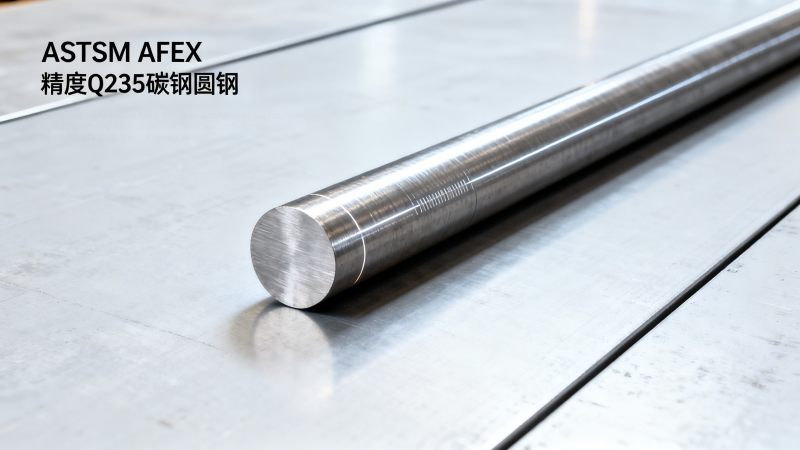
“Mill order” is not just a formality—it’s the binding production commitment issued by a steel mill after technical review, raw material allocation, and furnace slot reservation. Unlike commercial POs processed by sales teams, a true mill order triggers sequence-specific scheduling across melting, rolling, heat treatment, and inspection lines. At Hongteng Fengda, every mill order undergoes a 3-stage validation: (1) specification alignment against ASTM A6/A252/GB/T 700 tolerances; (2) billet inventory verification with ≥92% utilization rate; and (3) QA gate approval before slab charging. This process typically adds 5–10 working days to nominal lead time—but skipping it risks dimensional nonconformance, especially for Q235 Carbon Steel Round Bar used in handrail and staircase applications where diameter tolerance must stay within ±0.4mm per EN 10060.
Misalignment often occurs when buyers treat mill orders as administrative steps rather than production milestones. For example, a request for 12m-length Q235 Carbon Steel Round Bar with black painting and phosphating may pass commercial review—but if the mill’s next available hot-rolling slot is scheduled for 28 days out, and surface treatment line capacity is booked 17 days ahead, the actual start date shifts regardless of shipping terms. That’s why 68% of delayed structural steel deliveries trace back to unverified mill order sequencing—not port congestion or customs clearance.
The consequence extends beyond schedule slippage. When mill orders lack explicit tolerances for straightness (≤1.5mm/m per ASTM A6), camber (max 0.15% of length), or surface finish (Ra ≤3.2μm for painted applications), downstream fabrication suffers. Field-cutting errors increase by up to 22%, and welding prep time rises 35% due to inconsistent end squareness—costing projects an average of $1,850 per ton in labor rework.
This table shows why procurement professionals must demand mill order confirmation—not just PO acknowledgment—before approving payment milestones. At Hongteng Fengda, all mill orders include furnace number, heat analysis report, and dimensional inspection certificate. We share live production dashboards with clients, updating slot status every 48 hours.
How ASTM A6 Tolerances Impact Real-World Delivery Windows
ASTM A6 defines permissible variations in weight, thickness, width, and straightness—but its enforcement isn’t automatic. Mill orders must explicitly reference tolerance bands (e.g., “A6 Table 2, Grade A, Thickness Tolerance ±0.035in”) to lock in production parameters. Without this, mills default to “standard practice,” which may allow ±0.060in variation—unacceptable for steel beams requiring precise bolt-hole alignment or cold-formed profiles needing tight nesting tolerances.
For Q235 Carbon Steel Round Bar applications like railing and balcony posts, diameter tolerance directly affects threading accuracy and weld joint fit-up. Our internal data shows that orders specifying “A6 Class 1 Straightness (≤0.15mm/m)” achieve 99.2% first-pass yield in field installation—versus 84.7% for orders lacking such clauses. That 14.5-point gap translates to 3.2 extra days per project phase for rework and replacement coordination.
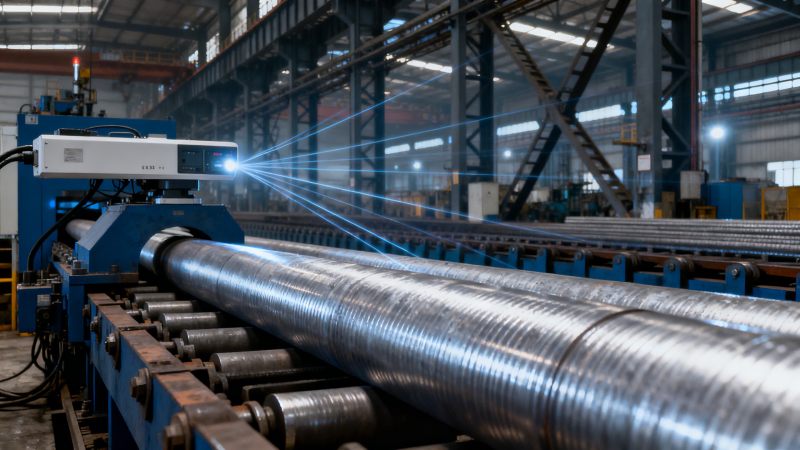
Hongteng Fengda applies ASTM A6 tolerances at three checkpoints: pre-rolling billet sizing, post-rolling dimensional scan (using laser profilometry), and final QA audit. Each step logs deviation data against the mill order’s declared band. If cumulative variance exceeds 75% of allowed tolerance, the batch is quarantined—not released.
Why Material Readiness ≠ Inventory Availability
“Stock item” doesn’t mean “ready-to-ship.” Raw material readiness involves billet grade availability, chemical composition matching (e.g., Q235 vs. S235JR carbon equivalence), and thermal history compatibility. At our Jiangsu facility, we maintain 45 days of strategic billet inventory—but only 63% of that stock meets the exact Mn/Si ratio required for ASTM A106 Gr.B seamless pipe applications. The rest requires remelting or blending—adding 7–12 days.
Surface treatment readiness is equally nuanced. Galvanizing capacity runs at 94% utilization during Q3–Q4 peak season. An order for galvanized Q235 Carbon Steel Round Bar with 200μm coating thickness may clear mill scheduling—but if zinc bath temperature stability falls outside ±2°C for >4 hours, coating adhesion drops below ISO 1461 requirements. We proactively reschedule such orders 48 hours in advance, notifying clients with alternative timelines and test reports.
- Standard export seaworthy packaging includes moisture-absorbing desiccants and VCI paper—critical for shipments exceeding 35 days transit time
- Diameter range 5–2500mm supports both decorative handrail (Φ12–Φ50) and structural piling (Φ630–Φ2500)
- Minimum order quantity starts at 5 tons for custom lengths (2m/5m/6m/12m), with price tiers adjusting every 10-ton increment
Strategic Procurement: Aligning Orders with Mill Capacity Cycles
Successful steel procurement requires synchronizing with mill operational rhythms—not just calendar dates. Hongteng Fengda operates on 4-week rolling production cycles, with furnace maintenance windows scheduled every 12 weeks. Orders placed 10–14 days before a maintenance cycle begin receive priority slot assignment and 2-day expedited QA turnaround. Conversely, orders submitted within 72 hours of maintenance start face minimum 18-day delays—even with “urgent” labeling.
We provide clients with quarterly capacity calendars showing optimal booking windows, billet inventory levels by grade, and surface treatment line utilization forecasts. This enables procurement teams to shift orders by ±5 days to capture 12–17% faster throughput without premium fees. For example, moving a 25-ton order of Q235 Carbon Steel Round Bar from week 3 to week 1 of a cycle reduced delivery time from 42 to 29 days.
These levers give procurement and project management teams actionable control—not just passive waiting. Our clients using capacity-aware ordering reduce steel-related schedule slippage by 57% year-on-year.
Conclusion: From Reactive Delay Management to Proactive Mill Alignment
Late steel roofing deliveries stem less from logistical failure and more from misaligned expectations about what a mill order truly represents. It’s a technical production contract—not a purchase confirmation. Understanding its implications for ASTM A6 tolerances, material readiness thresholds, and mill capacity cycles transforms procurement from a transactional function into a strategic project enabler.
At Hongteng Fengda, we embed this clarity into every engagement: mill order validation checklists, real-time production tracking, tolerance-specific QA protocols, and capacity-aware scheduling tools. Whether you’re sourcing angle steel for industrial framing, cold-formed profiles for modular housing, or customized Q235 Carbon Steel Round Bar for architectural railings, our approach ensures compliance, predictability, and cost control—without compromise.
Ready to align your next structural steel order with real mill capacity and certified tolerances? Contact Hongteng Fengda today for a free mill order readiness assessment and customized lead time forecast.
Please give us a message


Please enter what you want to find