When a shipment of 2 stainless pipe ordered as Schedule 40 arrives labeled as Schedule 10, the risk to structural integrity, corrosion resistance, and project compliance escalates immediately—especially for applications requiring 316 stainless steel pipe or seamless stainless steel tube. As a trusted stainless steel tube manufacturer and structural steel supplier, Hongteng Fengda emphasizes on-site verification before acceptance: check mill test reports (MTRs), measure wall thickness with calibrated tools, confirm material grade (e.g., 316L stainless steel pipe vs. standard 316), and cross-reference against ASTM/EN standards. This applies equally whether you’re buying stainless steel pipe for chemical processing, roofing (lightweight steel roofing), or industrial frameworks. Avoid costly delays—verify first.
Why Schedule Mismatch Is a Critical Acceptance Risk
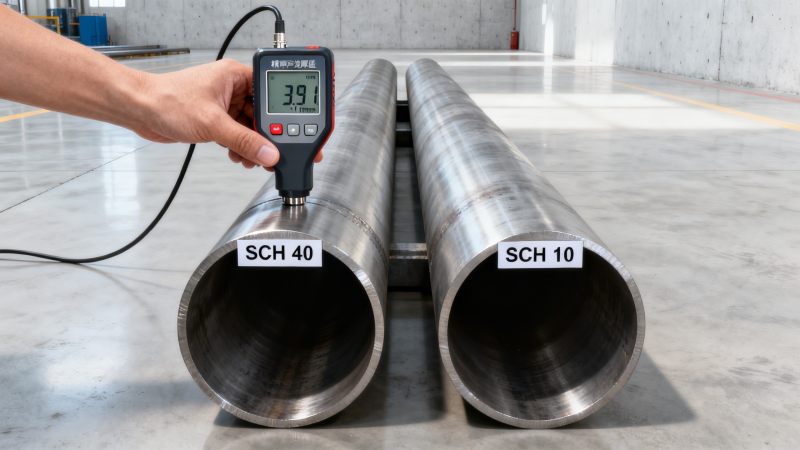
A Schedule 40 stainless steel pipe (e.g., 2" OD) has a nominal wall thickness of 3.91 mm, while Schedule 10 of the same size measures only 2.77 mm — a 29% reduction in wall thickness. That difference directly translates to ~42% lower pressure rating and significantly reduced load-bearing capacity. For critical applications like offshore piping, pharmaceutical cleanrooms, or high-temperature exhaust systems, this deviation may violate ASME B31.3 process piping requirements or EN 10217-7 design codes.
From a procurement standpoint, mismatched schedules trigger 3–5 business days of inspection hold time, retesting, and potential rejection — adding up to $8,500–$22,000 in project delay costs per incident (based on average engineering labor + downtime estimates across North American mid-size EPC firms). Worse, if accepted without verification, it introduces latent liability during commissioning or third-party audit.
Hongteng Fengda’s quality control protocol mandates dual-stage schedule verification: pre-shipment dimensional sampling (per ISO 2859-1 Level II AQL 1.0) and full batch MTR reconciliation. This prevents mislabeling at origin — but final responsibility remains with the receiving party.
5-Step On-Site Verification Protocol Before Acceptance
Follow this field-proven checklist before signing delivery documents. All steps can be completed within 90 minutes using portable equipment commonly available on construction or fabrication sites.
- Step 1: Cross-check shipping label, packing list, and purchase order — verify nominal size (e.g., 2" NPS), schedule (SCH 40), material grade (e.g., ASTM A312 TP316L), and heat number.
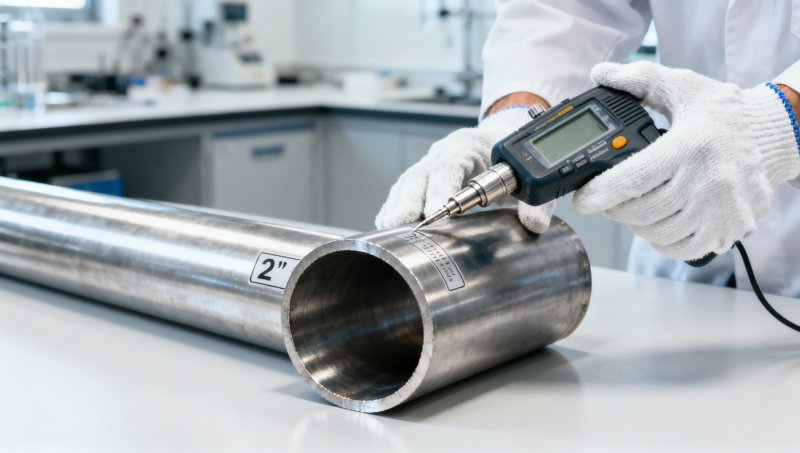
- Step 2: Randomly select ≥3 pipes from different bundles; use ultrasonic thickness gauge (calibrated to ±0.05 mm) to measure wall thickness at 4 quadrants per pipe, 3 locations along length (start/mid/end).
- Step 3: Confirm actual measured thickness falls within ASTM A999 tolerances: ±12.5% for hot-finished, ±10% for cold-finished pipe.
- Step 4: Scan QR code or request digital MTR from supplier — validate that reported chemistry, tensile strength (≥515 MPa for 316L), and intergranular corrosion test (ASTM A262 Practice E) match physical sample.
- Step 5: Log all data in your QA register with timestamp, inspector name, tool ID, and photo evidence — required for ISO 9001:2015 clause 8.6 traceability.
Schedule Comparison Reference Table (2" NPS Stainless Steel Pipe)
Use this table to quickly assess tolerance thresholds and performance implications. Values conform to ASTM A312/A999 and ASME B36.19M.
Note: If measured thickness averages ≤3.3 mm across samples, reject immediately — this exceeds allowable negative tolerance and indicates either mis-scheduling or post-production thinning. Retest with certified lab if dispute arises.
How Structural Steel Specifications Intersect With Piping Integrity
While piping and structural components serve distinct functions, their specification alignment is essential for integrated systems — especially in modular fabrication, offshore platforms, or plant retrofitting. For example, when stainless pipe connects to H Shape Beam supports carrying HVAC ductwork or process lines, mismatched corrosion resistance or thermal expansion coefficients cause premature joint fatigue.
Hongteng Fengda supplies both ASTM A572 Grade 50 H-beams and ASTM A312 TP316L pipe under unified QA protocols. Our engineers routinely co-validate dimensional stability (e.g., thermal expansion δL = α·L·ΔT) across mixed-material assemblies — ensuring long-term reliability where carbon steel beams interface with stainless piping.
This integrated approach reduces coordination overhead by up to 40% compared to sourcing piping and structural elements from separate vendors — a key advantage for EPC contractors managing multi-tier supply chains across Southeast Asia and the Middle East.
Why Partner With Hongteng Fengda for Verified Structural & Piping Solutions
As a China-based structural steel manufacturer and exporter serving global markets since 2008, Hongteng Fengda embeds verification into every stage — not just as a checkpoint, but as a collaborative safeguard. We offer:
- Pre-shipment dimensional certification: Third-party verified ultrasonic thickness reports issued 72 hours prior to loading — accessible via secure portal.
- Batch-level traceability: Heat number mapping to MTR, raw material certs (EN 10204 3.1), and weld procedure qualification records (WPQR).
- On-demand technical support: Our application engineers assist with ASTM/EN cross-referencing, pressure rating recalculations, and joint design validation — free of charge for qualified buyers.
- Flexible logistics coordination: Consolidated shipments of structural sections (e.g., H Shape Beam) and stainless piping with synchronized documentation — reducing port clearance time by 2–4 working days.
Whether you're verifying a single shipment of 2 stainless pipe or planning a multi-container structural package for an industrial plant in Texas or Riyadh, our team provides actionable clarity — not just compliance paperwork. Contact us today to request a custom verification checklist, MTR review template, or schedule-compatibility assessment for your next order.
Please give us a message


Please enter what you want to find