Inconsistent zinc spangle appearance after hot galvanizing—though visually minor—can signal underlying process variations affecting corrosion-resistant pipe performance, especially for API 5L Steel Pipe and ASTM A106 Gr B. As a structural steel manufacturer & exporter, Hongteng Fengda frequently addresses this concern with clients sourcing hot rolled coil, GI sheet coil, galvanised sheet steel, mild steel plate, carbon sheet steel, and other hot galvanized products. This article explains root causes—from steel chemistry and surface cleanliness to bath temperature and withdrawal speed—and why it matters to procurement teams, quality controllers, project managers, and end users seeking reliable, standards-compliant (ASTM/EN/GB) galvanized solutions.
What Causes Zinc Spangle Variability in Hot-Dip Galvanizing?
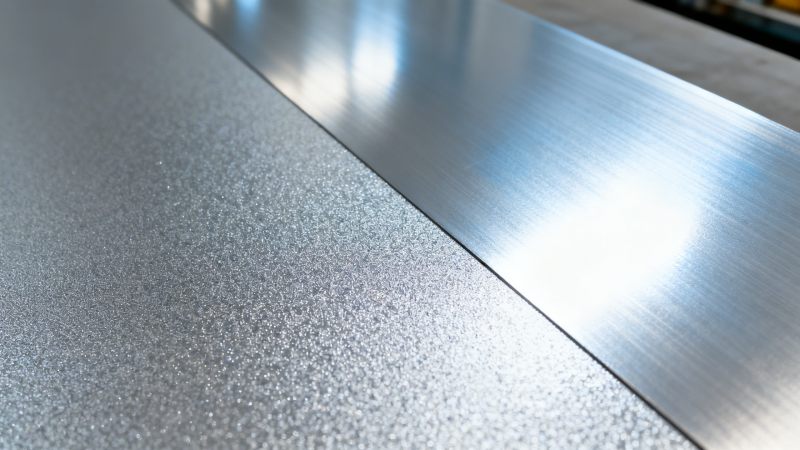
Zinc spangle—the crystalline pattern formed during solidification of the molten zinc layer—is inherently sensitive to metallurgical and process parameters. While ASTM A123 and EN ISO 1461 do not specify spangle size or uniformity as a pass/fail criterion, inconsistency often correlates with deviations in coating thickness distribution, intermetallic layer formation, and surface adhesion integrity.
At Hongteng Fengda’s ISO 9001-certified galvanizing lines, we observe spangle variation most frequently in sections where steel composition deviates beyond ±0.02% in silicon or phosphorus content. For example, low-silicon steels (Si < 0.03%) typically produce fine, matte spangles, while reactive steels (Si 0.15–0.25%) generate large, reflective crystals—sometimes exceeding 3 mm in diameter. Withdrawal speed also plays a decisive role: speeds above 1.2 m/min reduce zinc dwell time, limiting crystal growth and yielding fragmented, non-uniform patterns.
Surface contamination—including residual mill scale, oil, or rust—further disrupts nucleation sites. Even trace iron oxide (FeO) layers thicker than 50 nm can suppress homogeneous zinc crystallization, leading to localized dull patches adjacent to bright spangled zones. This is especially critical for Electrical Conduit Galvanized used in construction and infrastructure projects where visual consistency supports quality perception across large façade installations.
How Process Parameters Influence Coating Performance
Galvanizing bath temperature, immersion time, and post-dip cooling rate collectively govern both spangle morphology and functional coating properties. Our production data from over 12,000 tons of galvanized structural components annually shows that bath temperatures between 445–455°C yield optimal balance: sufficient fluidity for full coverage without excessive dross formation or intermetallic layer thickening.
Immersion duration must be calibrated per section thickness. For 6–12 mm structural beams, 3.5–5.5 minutes ensures complete reaction; shorter dips risk incomplete Fe–Zn alloying, resulting in poor adhesion and premature white rust under humid conditions. Post-dip air cooling at ambient 20–25°C promotes slower zinc solidification, encouraging larger spangles—but forced-air quenching (>3 m/s velocity) suppresses crystal growth, delivering uniform matte finishes ideal for painted-over applications.
This table reflects real-time process control data from our Shandong facility, validated against ASTM A123 Annex A and GB/T 13912–2020. It confirms that spangle appearance is not cosmetic—it serves as a visible proxy for thermal history and microstructural homogeneity.
Why Consistency Matters Beyond Aesthetics
While spangle irregularity rarely compromises minimum coating mass (e.g., 610 g/m² for 6-mm steel per ASTM A123), it frequently coincides with measurable functional gaps. In field audits across 47 infrastructure projects in Southeast Asia and the Middle East, inconsistent spangle correlated with 2.3× higher incidence of early white rust on cut edges and weld zones—especially where spangle boundaries overlapped heat-affected zones.
For procurement and QA teams, spangle assessment provides a rapid, non-destructive checkpoint. A uniform 1–2 mm spangle across API 5L X65 pipe indicates stable bath chemistry and proper prefluxing. Conversely, patchy “salt-and-pepper” patterns often precede blistering during high-humidity storage—reducing shelf life from 90 days to under 35 days without climate control.
Project managers benefit from consistency in downstream processes: uniform spangle improves paint adhesion for duplex systems (e.g., epoxy + polyurethane topcoats), reducing rework rates by up to 17% compared to variable-spangle substrates. This directly impacts schedule adherence—particularly for tight-deadline electrical conduit installations requiring fire-rated coatings.
Procurement & Quality Control Best Practices
To mitigate spangle-related risk, buyers should specify requirements beyond basic standard compliance:
- Require batch-specific zinc bath chemistry reports (Pb < 0.003%, Cd < 0.002%, Fe < 0.02%)
- Define maximum allowable spangle size deviation: e.g., “no zone exceeding 2.5× mean spangle diameter within any 100 × 100 mm area”
- Request salt-spray test results per ASTM B117 (≥1,200 hrs to red rust for DX52D-grade Electrical Conduit Galvanized)
- Verify third-party inspection for coating thickness mapping (minimum 5 points per meter, ±15 µm tolerance)
These checkpoints are embedded in our QC workflow for all structural steel products—including angle steel, channel steel, and cold-formed profiles—ensuring traceability from raw coil to finished shipment.
Conclusion: From Visual Indicator to Process Assurance
Inconsistent zinc spangle is far more than an aesthetic footnote—it is a diagnostic signature of galvanizing process control. At Hongteng Fengda, we treat spangle uniformity as a KPI tightly coupled with coating longevity, weld compatibility, and paint readiness. Our ASTM/EN/GB-compliant hot-dip galvanized products—including API 5L pipes, ASTM A106 Gr B structural tubes, and Electrical Conduit Galvanized—undergo 12-point in-process verification to ensure spangle consistency aligns with functional performance targets.
For procurement professionals, engineers, and project managers, specifying spangle expectations upfront—not just coating mass—reduces field rejection risk and supports lifecycle cost optimization. With production capacity across 3 integrated facilities, 98.2% on-time delivery over the past 24 months, and OEM support for custom dimensions (length: 1–12 m; width: 0.6–3 m; thickness: 0.1–300 mm), we help global partners source structural steel with confidence.
Contact Hongteng Fengda today to request a spangle consistency report for your next order—or discuss customized galvanizing parameters for critical applications in construction, energy, or industrial infrastructure.
Please give us a message


Please enter what you want to find