Understanding what affects ss 304 pipe price per meter is essential for buyers comparing ss304 pipe price, ss pipe price per meter, and overall project costs. From raw material fluctuations and wall thickness to standards, finish, and order volume, each factor directly impacts value. This guide explains the key pricing drivers while helping procurement teams, engineers, and distributors make smarter sourcing decisions for reliable stainless steel pipe supply.
What Buyers Really Want to Know About SS 304 Pipe Price Per Meter
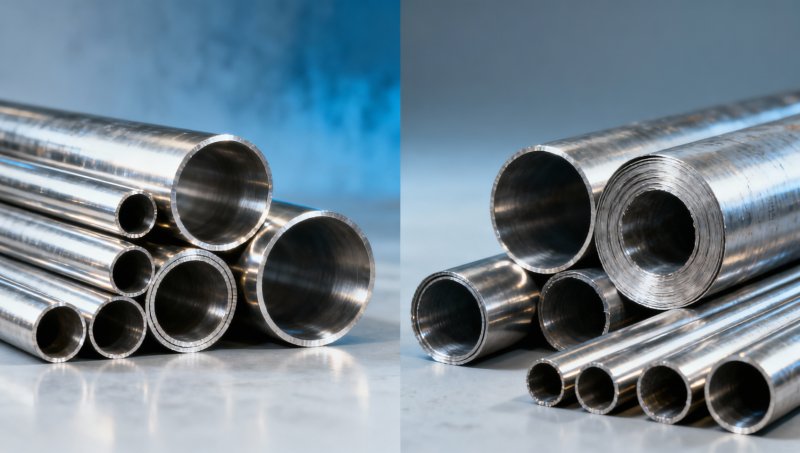
The main search intent behind “What Changes SS 304 Pipe Price Per Meter?” is practical: buyers want to know why one quote is higher than another, what factors truly drive cost, and how to judge whether a price is reasonable for their application. They are not just looking for a number. They want a clear basis for comparison.
For most readers—especially procurement teams, engineers, project managers, distributors, finance reviewers, and quality personnel—the biggest concerns are usually:
- Why ss304 pipe price varies between suppliers
- How wall thickness, size, and weight change the ss pipe price per meter
- Whether lower pricing means lower quality or hidden sourcing risk
- How standards, testing, and surface finish affect project value
- How to estimate cost more accurately before placing an order
The short answer is this: SS 304 pipe price per meter changes mainly because of raw material cost, dimensions, production method, standard requirements, finishing, inspection scope, and order conditions. In many cases, the cheapest offer is not the lowest total procurement cost once scrap rate, compliance risk, delivery delays, or replacement costs are considered.
The Biggest Factor: Raw Material and Nickel Market Movement
One of the most important drivers of ss304 pipe price is the stainless steel raw material market. Grade 304 contains chromium and nickel, and nickel prices can move significantly based on global supply, energy costs, mining output, and international demand.
When nickel rises, suppliers usually adjust quotes quickly. Even if pipe dimensions stay the same, the stainless steel pipe price per meter may increase because the base input cost has changed. Chromium, energy, freight, and steel mill operating costs also play a role.
For buyers, this means a quote is often time-sensitive. If you are budgeting for a project, it is smart to ask:
- How long the quotation remains valid
- Whether the supplier has material stock or needs a new production run
- If the quoted price is tied to current raw material conditions
This is especially important for larger projects where approval cycles are slow and final purchase decisions may happen weeks after technical review.
Pipe Size, Wall Thickness, and Weight Directly Change Price Per Meter
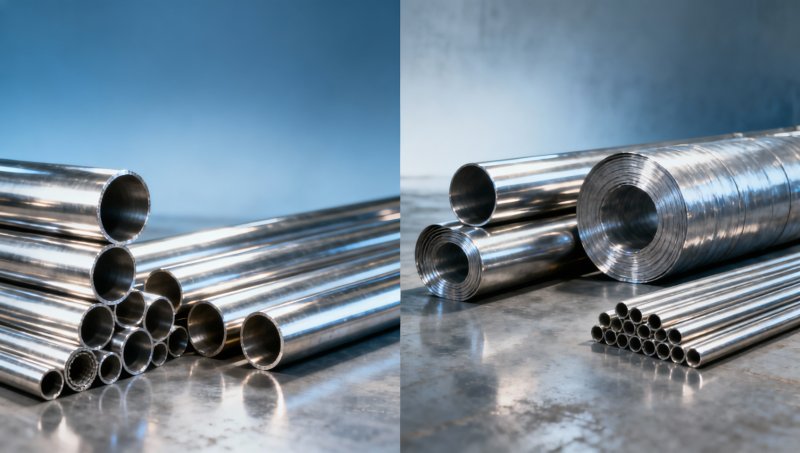
When comparing ss pipe price per meter, dimensions matter immediately. Larger outside diameter and thicker wall mean more stainless steel per meter, so the price rises accordingly. This is often the first reason buyers see wide quote differences.
A pipe with the same grade but a heavier schedule will cost more because:
- It uses more raw material
- It may require different forming and welding conditions
- Processing time and handling cost can increase
That is why buyers should avoid comparing quotes based only on nominal size. A valid comparison should include:
- Outside diameter
- Wall thickness or schedule
- Length per piece
- Theoretical or actual weight
- Welded or seamless construction
In many procurement mistakes, two suppliers are not actually quoting the same specification. One may offer a lighter wall or different tolerance range, making the unit price appear cheaper while reducing actual value.
Seamless vs Welded: Why Manufacturing Method Matters
Another major factor that changes ss 304 pipe price per meter is whether the pipe is seamless or welded. In general, seamless stainless steel pipe costs more because production is more complex, material conversion is higher, and quality control requirements are stricter.
Welded pipe is often more cost-effective for many structural, low-to-medium pressure, architectural, and general industrial applications. Seamless pipe is often selected where higher pressure, elevated temperature, or stricter service conditions apply.
This distinction matters because some buyers compare prices without confirming the manufacturing route. If one quote is for welded pipe and another is for seamless pipe, the price gap can be substantial.
To make a fair decision, match the pipe type to the application instead of assuming the higher-cost option is always necessary. Over-specifying can increase project cost without improving practical performance.
Standards, Tolerances, and Testing Also Add Cost
Compliance requirements often have a direct effect on ss304 pipe price. Pipes produced to ASTM, EN, JIS, or other international standards may carry different testing, dimensional tolerances, material traceability, and documentation requirements.
Cost typically increases when the order requires:
- Mill test certificates
- Third-party inspection
- PMI or chemical verification
- Hydrostatic testing
- NDT or additional mechanical testing
- Tighter dimensional tolerance
- Special marking and traceability control
For quality managers and technical evaluators, this is not a minor detail. A lower pipe price that excludes required testing may create approval delays, installation rejection, or safety concerns later. For procurement teams, the better approach is to compare total delivered compliance, not just the base meter rate.
Surface Finish, End Treatment, and Packaging Can Shift the Final Quote
SS 304 pipe price per meter is also influenced by finishing details. Pipes with polished surfaces, pickled and passivated treatment, or decorative appearance usually cost more than standard industrial finish material.
Other quote variables include:
- Plain end, beveled end, or threaded end
- Protective film or wrapping
- Export seaworthy packaging
- Special palletizing or container loading method
These details may seem secondary, but for distributors, project contractors, and export buyers, they can make a noticeable difference to landed cost, damage risk, and handling efficiency.
Companies serving international markets often look beyond production alone. A professional structural steel manufacturer and exporter with stable quality control and export experience can reduce hidden costs through better packing, documentation accuracy, and dependable lead times.
Order Quantity, Lead Time, and Supply Chain Conditions Influence Unit Cost
Volume has a strong effect on stainless steel pipe price per meter. Small trial orders usually cost more per meter than larger production orders because setup cost, packaging, and logistics are spread over fewer units. Mixed-size orders may also carry a different pricing structure than single-size bulk orders.
Lead time matters too. If buyers need urgent production, accelerated scheduling may raise the quote. If the pipe must be sourced during peak demand periods or under unstable freight conditions, the final offer may increase further.
Distributors and project buyers should also consider whether the supplier can support repeat supply. A lower first order price is less valuable if future batches are inconsistent in finish, chemistry, or dimensional control.
How to Judge Whether an SS 304 Pipe Quote Is Actually Competitive
Instead of asking only “What is the current ss304 pipe price?”, smart buyers ask “What exactly is included in this price?” That question leads to much better decisions.
A competitive quote should be checked against:
- Correct grade and applicable standard
- Matching dimensions and tolerances
- Pipe type: welded or seamless
- Testing and certification scope
- Surface finish and end condition
- Packing and shipping terms
- Production lead time
- Supplier reliability and past consistency
For example, a lower-cost offer may exclude testing, use looser tolerances, or rely on uncertain delivery timing. On paper it looks cheaper, but in project reality it can increase installation risk and total spend.
In broader steel sourcing, many buyers also compare related products for structural and manufacturing projects. Depending on application, materials such as Wire Rod may also be part of the supply plan. Carbon steel options like round-shape rod produced to ASTM, GB, EN, DIN, or JIS standards are widely used in auto manufacturing, shipbuilding, petrochemical plants, metallurgical machinery, precision tools, and building material applications, especially where excellent formability and weldability are required. This kind of cross-category sourcing can help buyers standardize supplier management and improve overall procurement efficiency.
How Buyers Can Reduce Cost Without Creating Quality Risk
If your goal is to control cost while keeping reliable quality, focus on specification accuracy first. Many avoidable expenses come from over-specification, under-specification, or incomplete RFQs.
Useful cost-control steps include:
- Confirm whether welded pipe is acceptable instead of defaulting to seamless
- Review whether the selected wall thickness exceeds actual design need
- Define test requirements clearly to avoid unnecessary extras
- Consolidate order quantity when possible for better pricing
- Request complete quote breakdowns for fair supplier comparison
- Choose suppliers with stable export and quality management capability
For financial approvers and business evaluators, the best procurement result is not simply the lowest ss pipe price per meter. It is the lowest total risk-adjusted cost over the full project cycle.
Conclusion: SS 304 Pipe Price Per Meter Changes for Good Reason
SS 304 pipe price per meter is shaped by a combination of raw material market movement, size and wall thickness, manufacturing method, standards, testing, finish, order volume, and delivery conditions. That is why price differences between suppliers are common—and often justified.
If you want to compare ss304 pipe price accurately, make sure you are comparing the same grade, dimensions, compliance level, and delivery terms. For engineers, buyers, distributors, and project teams, the right decision comes from balancing cost, quality, reliability, and application fit.
In short, a good quote is not just cheaper per meter. It is clearer, safer, and more suitable for the real demands of your project.
Please give us a message


Please enter what you want to find